This site is supported by our readers. We may earn a commission, at no cost to you, if you purchase through links.
Most new snake owners obsess over enclosure size, lighting, hides—and then grab whatever bag of substrate looks reasonable at the pet store.
That one decision quietly shapes everything else: your snake’s humidity levels, its ability to burrow, how fast bacteria build up, and whether shedding goes smoothly or turns into a nightmare.
The floor of the enclosure isn’t an afterthought. It’s the foundation your snake lives on, literally and biologically.
Snake substrate bedding for beginners can feel overwhelming with so many options on shelves, but each one has a specific job to do—and matching it to your species makes all the difference.
Table Of Contents
Key Takeaways
- The substrate you choose is the foundation of your snake’s enclosure, shaping humidity, temperature gradients, burrowing, hygiene, and overall health, so it has to match your species and climate rather than be an afterthought.
- Different substrates have specific jobs—paper towels/newspaper for hatchlings and quarantine, dry-climate snakes, aspen for dry‑climate snakes, coconut fiber and cypress mulch for higher humidity, and reptile carpet for non‑burrowers that don’t need humidity help.
- Safe setup depends on depth, moisture, and cleaning habits: give most burrowers 2–4 inches (3–4+ for heavy diggers), keep humidity in the right range for the species, spot clean daily, replace fully every 4–6 weeks, and prevent mold and ammonia buildup.
- The biggest beginner mistakes are using toxic woods like cedar/pine, ignoring humidity or burrowing needs, using substrate that’s too shallow or easy to ingest, and you avoid them by copying your snake’s natural habitat and choosing safe, species‑appropriate materials.
Snake Substrate Bedding: Key Functions
Substrate does a lot more than just fill the bottom of your snake’s enclosure.
It affects humidity, hygiene, and your snake’s ability to burrow — check out this beginner’s guide to snake substrates to find the right fit for your setup.
It controls humidity, facilitates natural behaviors, and plays a direct role in your snake’s health.
Here’s a closer look at the key functions it provides.
Maintaining Humidity and Temperature
Substrate does more than cushion your snake — it’s your first line of defense for humidity control and heat gradient monitoring. Get these four things right:
- Place your hygrometer in the enclosure’s center for accurate hygrometer calibration
- Use coconut fiber or cypress mulch for moisture retention strategies
- Monitor thermostat placement so warm and cool sides stay distinct
- Adjust substrate depth seasonally for seasonal humidity adjustments
Consider using misting systems boost humidity when needed.
Supporting Natural Behaviors
Beyond humidity, the bedding you choose directly shapes how your snake behaves every day.
Loose coconut fiber, cypress mulch, and aspen shavings create burrowing zones where snakes can fully bury themselves — reducing stress and glass‑surfing. Add hiding patches with varied texture variety and foraging layers beneath the surface.
At least 2–3 inches of substrate depth gives snakes real microhabitat zones that support natural burrowing behavior. Consider using a hygroscopic bark substrate(https://www.visionproducts.us/blog/reptile-substrate/) for moisture regulation.
Promoting Hygiene and Odor Control
Good hygiene starts with what’s under your snake — not just how often you clean.
Absorbent Materials like Coconut Fiber and Aspen Shavings lock in waste before odors spread. Daily Spot Cleaning within 24 hours keeps ammonia from building up. Pair that with smart Ventilation Strategies and Mold-Resistant Substrates, and your enclosure stays fresh for weeks.
- Remove feces and wet spots immediately
- Scoop surrounding damp Aspen Shavings too
- Avoid non-absorbent surfaces like Reptile Carpet near water bowls
- Use Paper Towels for hatchlings — easy swaps, zero odor buildup
Impact on Shedding and Health
Humidity‑Driven Shedding comes down to one thing: stable moisture. When substrate choices can’t hold 50–70% humidity, old skin sticks — especially around the tail and eyes. Retained eye caps, an Eye Cap Prevention failure, follow dry sheds almost every time. Poor Scale Integrity, impaction risk from loose particles, and the stress‑immune link all trace back to substrate.
When substrate fails to hold stable moisture, old skin sticks and snake health unravels from the outside in
| Health Factor | Substrate Impact |
|---|---|
| Shedding Success | Moist substrate = clean, one-piece sheds |
| Respiratory Safety | Dusty particles irritate airways over time |
| Snake Health | Stable humidity reduces chronic stress |
| Humidity Control | Coconut fiber holds 60–80% consistently |
Factors to Consider When Choosing Substrate
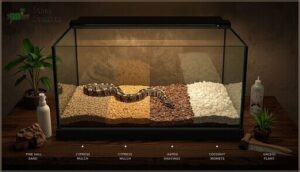
Choosing the right substrate starts with knowing your snake’s needs and your own maintenance routine.
Bedding types work better for certain species or climates, while others make cleaning easier.
What you should look for before picking an option for your enclosure.
A flexible sensor probe and quick 10-second updates make digital terrarium thermometers for corn snakes a smart pick for tracking both hot and cool zones accurately.
Species-Specific Requirements
Your snake’s natural habitat is the single biggest clue for reptile substrate selection.
Desert species like sand boas need dry, loose substrate — desert humidity must stay below 40%.
Ball pythons need forest burrowing support with 3–6 inches of depth.
Aiming for at least 3–4 inches gives them room to burrow naturally, as outlined in these ball python substrate and environment setup tips.
Grassland snakes regulate grassland temperature through substrate thickness.
Arboreal species prioritize traction.
For juvenile feeding safety, always start hatchlings on paper.
Humidity and Absorbency Needs
If you want steady Humidity Control, pay close attention to Moisture Retention and Absorbent Layering.
Coconut Fiber and Cypress Mulch trap moisture in deeper layers, keeping the top dry—helpful for Humidity Stability and Scale Rot Prevention.
Aspen Shavings work for drier setups.
Adjust Substrate Depth for your species, and manage Dampness to avoid soaked spots and bacterial growth.
Safety and Toxicity Concerns
Not every substrate is safe — and that’s the part beginners often learn too late.
Cedar and pine release phenols that damage lung tissue, while essential oil risks extend to scented bedding additives. Watch for:
- Dust inhalation from fine coconut chips or soil mixes
- Substrate ingestion and impaction risk during feeding
- Mold growth in wet pockets
Eco-friendly substrates like ReptiChip support snake health without these hidden hazards.
Ease of Cleaning and Maintenance
Cleaning isn’t glamorous, but it’s where snake care and maintenance actually lives.
Paper towels make spot cleaning frequency almost simple — lift, toss, replace.
Reptile carpet needs a spare set ready while one dries.
Loose eco-friendly substrates like coconut fiber handle partial substrate refresh well, containing waste in patches.
Keep a basic cleaning tools kit nearby, and terrarium maintenance never becomes overwhelming.
Popular Beginner-Friendly Substrate Options
Not every substrate works for every snake, and the options can feel overwhelming when you’re just starting out.
The good news is that a handful of beginner-friendly choices cover most common species and setups.
Here’s a closer look at the ones worth considering.
Paper Towels and Newspaper
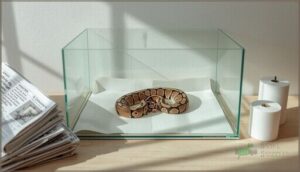
Paper towels are the simplest substrate you can start with — and honestly, they earn their place in serious snake care and maintenance. Their visibility of waste makes spot cleaning instant, and their disposable convenience means you’re never scrubbing old bedding.
They’re the go-to for quarantine use and hatchlings.
Absorbency comparison aside, newspaper works similarly but won’t hold humidity.
Cost efficiency wins here.
Aspen Shavings
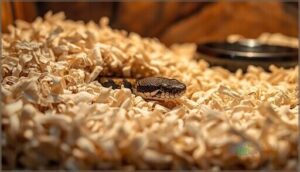
Aspen shavings are a solid first substrate for dry‑climate snakes — affordable, loose, and great for burrowing behavior. Kingsnakes, milksnakes, and sand boas thrive in it.
For humidity control, keep levels between 30–50%; damp aspen invites mold fast, so mold prevention means checking for wet spots daily. The cost efficiency and natural enclosure setup make it a reliable beginner pick.
Coconut Fiber
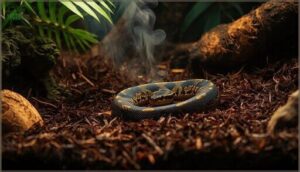
If your snake needs more humidity than aspen can offer, coconut fiber is the natural next step. This eco-friendly material excels at moisture retention and humidity control — usually holding 60–80% — making it ideal for ball pythons and tropical species.
Its loose texture facilitates burrowing behavior, while strong odor absorption keeps things fresh. Just maintain proper substrate depth to prevent mold.
Cypress Mulch
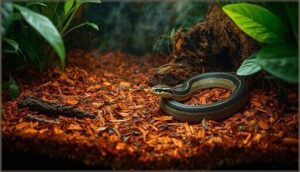
Cypress mulch takes humidity control a step further than coconut fiber. It excels at moisture retention while giving your enclosure a genuinely natural aesthetic — think forest floor, not science lab.
It’s a strong match for tropical snake substrate setups where burrowing behavior matters. Just source from a pest‑free source—untreated only. Temperature insulation is a quiet bonus too.
Reptile Carpet
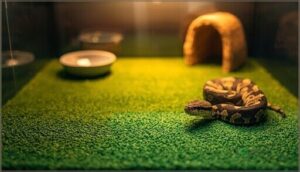
Not every snake needs to dig. Reptile carpet skips burrowing behavior entirely — it’s a flat, reusable liner built for traction benefits and stability.
It won’t help with humidity control, but it keeps things simple.
Cleaning techniques are straightforward: pull it out, rinse, sanitize.
Material durability makes it last through repeated washes, supporting animal health and wellness without the mess of loose snake substrate.
Substrate Setup and Maintenance Tips
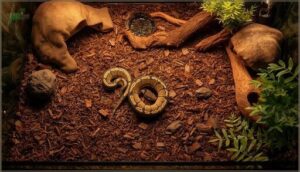
Getting the substrate in place is only half the job — keeping it healthy is where the real work begins.
How you set it up and how often you clean it makes a bigger difference than most beginners expect.
what you need to know to do it right.
Measuring and Installing Proper Depth
Getting substrate depth right isn’t guesswork — it’s measurable. Use a ruler placed straight down to the enclosure floor as your go-to depth measurement tool. For most non-burrowers, 1–2 inches work well; burrowing behavior calls for 2–4 inches.
Apply the layer leveling method by hand after pouring. Over a heat mat, keep it around 1–2 inches for safe heat transfer and humidity control.
Adjusting for Species and Enclosure Size
Your snake’s species and enclosure size should drive every substrate decision.
A four-foot corn snake covering eight square feet needs size-based substrate volume that stays practical and affordable.
For burrowing species, burrow depth scaling means 3–4 inches minimum.
Larger tanks allow microclimate zoning and humidity gradient design — drier on the cool side, moisture-retentive on the warm side.
Match substrate depth to both snake enclosure dimensions and species weight load.
Spot Cleaning Versus Full Replacement
Think of terrarium maintenance as two-speed — spot cleaning is your daily habit, full replacement is your reset. Remove feces and wet spots immediately to cut ammonia management time and preserve scent retention for less snake stress.
Full swaps every 4–6 weeks deliver a true hygiene reset and better humidity control. For cost efficiency, spot cleaning stretches your reptile substrate selection budget considerably longer.
Preventing Mold and Ammonia Build-Up
Mold and ammonia don’t announce themselves — they build quietly until your snake’s health takes a hit. Coconut fiber and cypress mulch both offer natural antifungal properties, buying you up to six weeks of protection.
Layer drainage with cypress mulch beneath coconut fiber, keep substrate depth under four inches, and monitor humidity above 70% RH as a red flag.
If you’re prone to allergies or asthma, it’s worth reading this guide to allergy-friendly reptile substrate options before choosing what goes beneath your cypress mulch and coconut fiber layers.
Good ventilation design, spot cleaning frequency, and aspen shavings around water bowls keep ammonia spikes in check.
Top 5 Snake Substrate Bedding Products
Choosing the right bedding makes all the difference for your snake’s health and comfort.
There are a handful of trusted products that cover most beginner needs. Here’s a quick look at the top options worth considering for your setup.
1. Zilla Jungle Mix Terrarium Bedding
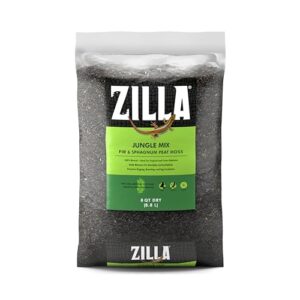
Zilla Jungle Mix blends aged Douglas fir bark with sphagnum peat moss — a combination that mimics the humid forest floors tropical snakes actually evolved on. It absorbs moisture gradually, helping you hold steady humidity without soaking the enclosure.
Spread it 1–2 inches deep, keep it damp enough to pack without dripping, and it facilitates natural burrowing and nesting behaviors.
One heads-up: it can dry out within 24–30 hours, so check moisture levels daily.
| Best For | Reptile owners looking to recreate a humid, natural environment for frogs, rainforest geckos, toads, and snakes. |
|---|---|
| Material | Douglas fir bark & peat moss |
| Humidity Control | High absorbency |
| Organic | 100% organic blend |
| Suitable Species | Snakes, frogs, geckos, toads |
| Odor Control | Earthy scent, natural |
| Burrowing Support | Encourages digging behavior |
| Additional Features |
|
- Mimics natural forest floors and encourages digging, nesting, and breeding.
- Maintains humidity well and is easy to clean.
- 100% organic blend with a soft, earthy texture.
- Dries out quickly and needs frequent moisture checks.
- Larger, sharp pieces may not suit salamanders and can cause splinters.
- Might require mixing with other substrates for best results.
2. Riare Coconut Fiber Terrarium Bedding
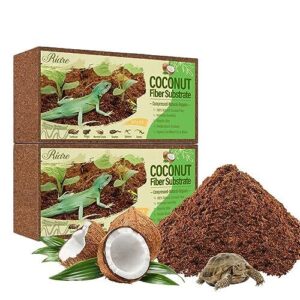
Riare’s coconut fiber comes as a compressed brick — just soak it in water, and it expands into a soft, fluffy substrate ready to fill your enclosure. It holds humidity well, facilitates natural burrowing behavior, and breaks down odors without any added chemicals. The natural brown color also makes waste easier to spot during daily cleaning.
One thing to watch: it can dry out within a day or two, so mist regularly if your snake needs consistent tropical-level humidity.
| Best For | Reptile and amphibian owners who want a natural, chemical-free substrate that supports burrowing and helps maintain humidity in their enclosure. |
|---|---|
| Material | Coconut fiber |
| Humidity Control | Retains humidity well |
| Organic | Natural and organic |
| Suitable Species | Snakes, turtles, lizards, frogs |
| Odor Control | Odorless, absorbs odors |
| Burrowing Support | Stimulates natural digging |
| Additional Features |
|
- Expands from a compact brick into a soft, fluffy bedding — easy to store and prep
- Holds moisture well and breaks down odors naturally, no chemicals needed
- Works for a wide range of animals, from snakes and turtles to geckos and spiders
- Dries out fast — you’ll need to mist regularly to keep humidity levels stable
- Can stick to your hands and the enclosure glass, making cleanup a bit messier
- May attract flies if you’re also keeping crickets in or near the tank
3. Zilla Coconut Husk Brick Reptile Bedding
Looking for a substrate that does more than just cover the floor?
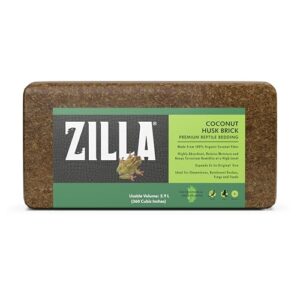
The Zilla Coconut Husk Brick expands fivefold with hot water, filling a 55-gallon tank and locking in humidity for tropical snakes.
Its soft, organic coconut fiber encourages burrowing and stays gentle on skin—no chemicals or dyes.
You’ll get reliable moisture retention without soggy messes, but expect some clumping and a strong earthy smell when first hydrated.
Ideal for ball pythons, rainforest geckos, and egg incubation, this substrate keeps your habitat stable and safe.
| Best For | Reptile owners who need reliable humidity control and want a natural, safe substrate for tropical species and egg incubation. |
|---|---|
| Material | Coconut fiber |
| Humidity Control | Natural humidity control |
| Organic | 100% organic |
| Suitable Species | Chameleons, geckos, frogs, toads |
| Odor Control | Neutral when dry |
| Burrowing Support | Encourages burrowing behavior |
| Additional Features |
|
- Expands up to five times its size for great coverage
- Maintains humidity and encourages natural burrowing
- Made from 100% organic coconut fiber with no chemicals
- Can be messy and clumpy when rehydrating
- Has a strong earthy smell at first
- Takes some patience to break up after adding water
4. Fluker’s Tropical Cypress Reptile Bedding
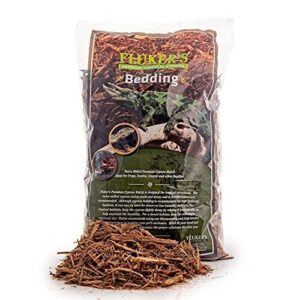
Where coconut fiber excels at moisture retention, cypress mulch brings something different to the table — a chunkier, more naturalistic feel that tropical species seem to genuinely prefer.
Fluker’s Tropical Cypress Reptile Bedding is twice-milled, so the texture is consistent and refined — no sharp sticks, no dusty mess. It holds humidity well without staying soggy, making it a solid pick for ball pythons and corn snakes. Layer it 2–4 inches deep, spot clean daily, and swap fully every 4–6 weeks.
| Best For | Reptile owners keeping tropical species like ball pythons, corn snakes, frogs, or tortoises who want a natural-looking substrate that holds humidity without turning into a soggy mess. |
|---|---|
| Material | Cypress mulch |
| Humidity Control | Maintains tropical humidity |
| Organic | Natural cypress |
| Suitable Species | Frogs, snakes, lizards, tortoises |
| Odor Control | Distinct hay-wood scent |
| Burrowing Support | Comfortable burrowing surface |
| Additional Features |
|
- Twice-milled for a consistent, chunk-style texture that feels natural and lets reptiles burrow comfortably
- Holds moisture well and helps maintain humidity in tropical setups without getting waterlogged
- Easy to spot-clean daily, so full substrate changes don’t have to happen as often
- Can dry out faster than coconut fiber, so you may need to mist it regularly to keep humidity where it needs to be
- Some buyers have received product that was more dry sticks than actual cypress mulch — quality control can be hit or miss
- The woodsy, hay-like scent is noticeable, which might bother some people even if the reptiles don’t mind it
5. ReptiChip Coconut Substrate for Reptiles
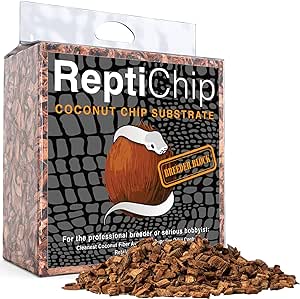
If cypress mulch is the naturalistic option, ReptiChip takes coconut substrate to another level entirely. Each compressed brick expands to 72 quarts — that’s a serious amount of bedding from a compact package. It’s 100% organic, dust‑free, and triple‑washed, so you won’t deal with respiratory irritation or enclosure staining.
Ball pythons especially thrive in it. Layer it 3–4 inches deep, spot clean regularly, and replace fully every 4–6 weeks. The odor control alone makes it worth the slightly higher price.
| Best For | Reptile owners — especially ball python keepers — who want a clean, organic substrate that handles humidity and odor really well. |
|---|---|
| Material | Coconut husk |
| Humidity Control | Humidity-retentive |
| Organic | 100% organic |
| Suitable Species | Snakes, turtles, tortoises |
| Odor Control | Odor-absorbing |
| Burrowing Support | Bioactive burrowing substrate |
| Additional Features |
|
- One compressed brick goes a long way — expands to a full 72 quarts, so you get a ton of bedding without a bulky bag
- 100% organic and triple-washed, so no dust, no chemicals, and no weird smells right out of the package
- Naturally absorbs odors and holds humidity great, which makes it a solid fit for snakes, turtles, and tortoises
- It costs more than a lot of other substrate options, so budget-conscious keepers might hesitate
- You’ll need to stay on top of hydration — let it dry out and mold becomes a real risk
- Not a one-size-fits-all solution — some reptile species or setups just aren’t a good match for coconut substrate
Common Substrate Mistakes Beginners Make
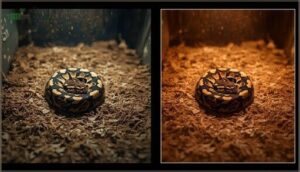
Even with the best intentions, small substrate missteps can quietly stress your snake or create real health problems down the line.
Most of these mistakes are easy to fix once you know what to look for. Here are the most common ones beginners run into.
Using Unsafe Materials (Cedar, Pine)
Even if pine bark or cedar shavings look natural, they’re a real threat to snake health. Phenol toxicity from these woods triggers respiratory irritation, skin absorption issues, and even neurological effects—think wheezing, blisters, or seizures.
Long-term health declines fast.
For solid animal welfare and smart reptile care, never use unsafe snake substrate.
Safer options always exist.
Ignoring Humidity or Burrowing Needs
Getting humidity wrong is just as damaging as using toxic wood.
Ball pythons need 50–60% humidity — drop below that consistently, and you’re looking at humidity control failures that cause poor sheds, scale rot risk, and feeding refusal tied to dehydration stress.
Burrowing species like hognose snakes need at least 3–4 inches of substrate depth — deny that, and stress behaviors, thermoregulation issues, and weight loss follow quickly.
Neglecting Regular Cleaning
Skipping cleanups is one of the fastest ways to wreck your snake’s health. Waste left sitting releases ammonia within 48 hours — that’s ammonia toxicity quietly damaging lung tissue before you notice anything wrong.
Scale rot risks spike in 3–5 days on damp, soiled bedding. Here’s what neglect triggers:
- Mite proliferation overtakes enclosures within a week
- Respiratory infections develop from bacterial buildup in dirty substrate
- Stress hormone surge reduces feeding success by up to 30%
Spot clean daily. Full swap every 4–6 weeks.
Inadequate Depth or Incorrect Substrate Type
Depth matters more than most beginners realize.
Too-shallow snake substrate — under 3 inches — causes burrowing failure, leaving your snake exposed and stressed.
Wrong materials create humidity instability, leading to shedding issues and respiratory risk.
Bark or wood chips carry a real impaction hazard if swallowed.
Match your snake bedding to your species, nail humidity control, and give burrowing snakes the depth they actually need.
Frequently Asked Questions (FAQs)
Can substrate affect my snakes feeding response?
Yes — substrate acts like a silent mood dial. Wrong humidity, rough texture, or fine particle size spikes stress levels fast, and a stressed snake simply won’t eat.
How do I transition my snake to new substrate?
Swap out 20–30% of the old snake substrate at a time.
Preserve scent, maintain temperature consistency and humidity control, monitor appetite, and minimize handling stress.
Full change usually takes one to two weeks.
Is bioactive substrate suitable for beginner snake keepers?
Bioactive substrate looks stunning, but it’s not the easiest starting point.
learning curve is steep — microfauna management, ventilation needs, and scale rot risk make it better suited for keepers with some experience first.
Can I mix different substrates together safely?
You can mix EcoFriendly Substrates like coconut fiber and cypress mulch for humidity layering and texture balance.
But always use safe mixing ratios, test for mold prevention, and watch for impaction risk—spot cleaning and humidity control are essential.
How does substrate choice impact enclosure temperature gradients?
Your substrate acts like a thermostat.
Coconut fiber’s thermal mass holds heat 3–5°C longer than aspen.
Depth effects, moisture interaction, and conductivity variance all shape your temperature gradient — directly influencing basking surface influence and burrowing comfort.
Conclusion
A craftsman is only as good as his tools—and your snake is only as healthy as the ground beneath it. Choosing the right snake substrate bedding for beginners isn’t about finding the most expensive option; it’s about matching the material to your species, your humidity targets, and your cleaning routine.
Get that foundation right, and everything else—shedding, behavior, long-term health—follows naturally. The enclosure you build today shapes the animal thriving inside it tomorrow.