This site is supported by our readers. We may earn a commission, at no cost to you, if you purchase through links.
Wrong sand can send a desert snake to the vet with a blocked gut, and it happens more than most owners realize. Grain size, dust levels, and moisture retention all decide whether a substrate allows natural burrowing or turns into a hazard hiding in plain sight. Desert species evolved to dig, hide, and thermoregulate in specific ground conditions, so the material lining their enclosure carries more weight than most care sheets admit.
Picking the right snake substrate bedding for desert setups means balancing burrow stability, heat conduction, and impaction risk, all at once. Get it wrong, and you’re troubleshooting shed problems or respiratory issues for months. Get it right, and your snake digs, basks, and rests the way its wild ancestors did.
Since desert species are especially sensitive to trapped moisture, keeping tabs on tank conditions with this guide to reading a humidity gauge accurately can help you catch mold-friendly conditions before they take hold.
Here’s a breakdown of nine substrate options worth your money, and the setup details that make each one work.
Table Of Contents
- Key Takeaways
- Top 9 Desert Snake Substrate Products
- 1. Joshs Frogs BioBedding Desert Substrate
- 2. BNOSDM Natural Desert Reptile Sand
- 3. Exo Terra Desert Sand Red 10 Pound Bag
- 4. Premium Tropical Cypress Reptile Bedding
- 5. Zoo Med ReptiSand Desert White
- 6. Zoo Med Vita-Sand Sonoran White
- 7. Exo Terra Desert Sand Black 10 Pound
- 8. Zoo Med Desert White Reptile Sand
- 9. Zoo Med Vita Sand Sahara Slate
- Comparing Desert Snake Bedding Types
- Choosing Safe Desert Snake Substrate
- Setting Up Desert Substrate Bedding
- Cleaning Desert Snake Substrates
- Frequently Asked Questions (FAQs)
- What is the best substrate for desert snakes?
- What is the best substrate to create tropical environment for snakes?
- What is a desert substrate for reptiles?
- What is the best substrate for snake burrowing?
- What substrate for desert kingsnake?
- What is an arid snake substrate?
- What substrate is good for high humidity?
- Can substrate affect a desert snakes feeding response?
- How do escape attempts relate to substrate choice?
- What substrate works best for snake egg incubation?
- Conclusion
Key Takeaways
- Grain size and dust levels matter more than looks—particles under 1.5mm raise impaction risk, while fine dust can harm your snake’s lungs over time.
- Pure sand crumbles fast, so blending it with clay (roughly 70/30 to 50/50) gives burrows the structural stability they need to hold their shape.
- Depth should match purpose: 2-3 inches for resting zones and 4-6 inches wherever your snake actually digs and tunnels.
- Always feed your snake on a separate surface away from loose substrate, since this simple habit is one of the easiest ways to prevent impaction.
Top 9 Desert Snake Substrate Products
Picking the right sand for a desert snake isn’t guesswork, it’s about knowing what’s actually on the market. Some blends burrow well, others hold their shape, and a few are built for looks over function. Here are nine options worth putting on your shortlist.
For a deeper breakdown of grain size, moisture retention, and burrowing texture, check out this guide to picking the best reptile substrate before making your final call.
1. Joshs Frogs BioBedding Desert Substrate
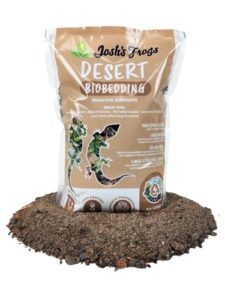
Josh’s Frogs BioBedding Desert Substrate takes a different approach than plain sand, blending coconut coir and natural binders to jump-start a bioactive setup. It works well with springtails and isopods, which quietly clean waste so you’re not scrubbing tanks every week.
Expect it dusty and water-resistant out of the bag, so pre-soak before use. It can dry fast without upkeep, and the black sand may separate when wetted. Still, for semi-arid geckos wanting humid hides, it’s a solid bioactive base.
| Best For | Reptile keepers setting up bioactive enclosures for semi-arid species like leopard or fat tail geckos who want a substrate that supports burrowing and humid hide zones. |
|---|---|
| Material Type | Bioactive soil blend |
| Weight | 4 quarts |
| Color | Brown |
| Digging Support | Yes |
| Dye Free | Yes |
| Dust Concerns | Moderate |
| Additional Features |
|
- Jump-starts a bioactive desert environment with a blend suited to cleaner invertebrates like springtails and isopods
- Balances low humidity overall while still retaining moisture where humid hides are needed
- Encourages natural digging and burrowing behavior in appropriate gecko species
- Arrives dusty and water-resistant, so it needs pre-soaking before use
- Can dry out too quickly for some soil invertebrates if not properly maintained
- Black sand component may settle separately from the soil once first wetted
2. BNOSDM Natural Desert Reptile Sand
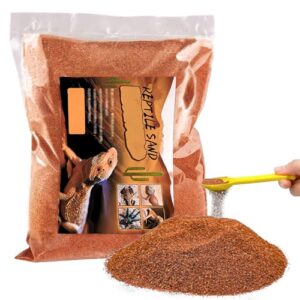
If bioactive setups feel like too much upkeep, BNOSDM Natural Desert Reptile Sand offers a simpler route. It’s screened for uniform grain size, so edges stay smooth enough to protect burrowing snakes from cuts.
No dyes, no added chemicals, just sand that keeps dust low and breathing easy. At 2.2 pounds, it’s better suited to smaller enclosures or top-dressing than a full substrate overhaul. Just watch for scatter into water bowls.
| Best For | Owners of bearded dragons, geckos, snakes, tortoises, or invertebrates who want a simple, naturalistic desert setup without the upkeep of a bioactive substrate. |
|---|---|
| Material Type | Natural desert sand |
| Weight | 2.2 lbs |
| Color | Orange Red |
| Digging Support | Yes |
| Dye Free | Yes |
| Dust Concerns | High |
| Additional Features |
|
- Made from natural desert sand with no added dyes or chemicals
- Fine, uniform texture supports digging, burrowing, and egg-laying behaviors
- Excellent thermal conductivity helps heat-loving reptiles thermoregulate naturally
- Small 2.2 lb bag may not be enough for larger enclosures without frequent restocking
- Fine particles can scatter into food and water bowls, requiring regular cleanup
- Not suitable for humid or tropical setups due to its dry desert composition
3. Exo Terra Desert Sand Red 10 Pound Bag
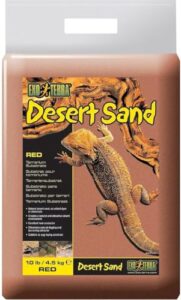
Want something closer to the real desert floor? Exo Terra’s Desert Sand Red is sourced from natural deposits, not dyed or chemically treated, with rounded quartz grains left over from real wind and weathering.
It’s sifted for uniform grain size, works as an excellent heat conductor for belly heat, and doubles as an egg-laying substrate. At 10 pounds, it covers more ground than BNOSDM’s bag, though it turns powdery when wet and hard when dry, so mixing with clay helps.
| Best For | Reptile and small pet owners who want a natural-looking desert substrate for terrariums, egg-laying, or sand baths, and don’t mind mixing in clay for better stability. |
|---|---|
| Material Type | Natural desert sand |
| Weight | 2.12 lbs |
| Color | Yellow |
| Digging Support | Yes |
| Dye Free | Yes |
| Dust Concerns | High |
| Additional Features |
|
- Natural, undyed sand sifted for uniform grain size and a clean desert look
- Retains heat well, making it great for belly heat and thermoregulation
- Versatile use across reptiles, hamsters, and other small pets
- Turns powdery when wet and hardens when dry without added clay
- Lacks enough clay content on its own for firm, compactable burrows
- Can produce dust if not moistened or prepared properly
4. Premium Tropical Cypress Reptile Bedding
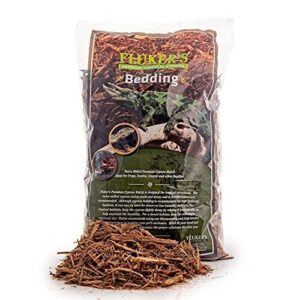
Sand isn’t the only route to a desert-mimicking floor. Cypress mulch, twice milled for a finer, uniform texture, gives you a soft burrowing surface without the impaction worries loose sand carries.
It absorbs moisture efficiently, so you can dial in humidity for arid species while still suppressing odor through mild antimicrobial action. Depth runs 4 to 5 inches for burrowers. Just know it needs mixing with sand or clay for true desert-dry setups, since cypress alone leans more forest floor than open dune.
| Best For | Reptile and amphibian keepers who want a soft, burrow-friendly substrate that works across humid and arid enclosures alike, from tropical frogs to desert lizards. |
|---|---|
| Material Type | Natural sand |
| Weight | 10 lbs |
| Color | Red |
| Digging Support | Yes |
| Dye Free | Yes |
| Dust Concerns | Moderate |
| Additional Features |
|
- Twice-milled texture gives a fine, soft surface that’s gentle for burrowing without the impaction risks of loose sand
- Absorbs and helps regulate moisture, making it easy to fine-tune humidity levels for a range of species
- Helps control odor and dust, plus makes spot cleaning simple
- Needs to be mixed with sand or clay to create a true desert-dry setup, since it isn’t dry enough on its own
- Not a standalone solution for every species, so extra planning may be required
- Some buyers have noted inconsistencies in packaged weight and a fairly plain, dry appearance
5. Zoo Med ReptiSand Desert White
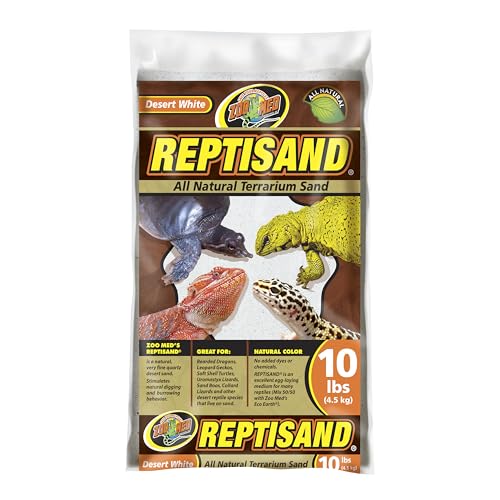
Ten pounds of natural quartz gets you a lot of desert floor, and Zoo Med’s Desert White skips the dyes entirely. Despite the name, expect more tan than snow-white once it’s poured.
Since this substrate provides no UVB on its own, check out this guide to choosing UVB lighting for naturalistic reptile vivariums to round out your setup properly.
Fine grain size means comfortable digging without snagging scales, and the sand stays inert, so it won’t react with enclosure conditions. Heat moves through it efficiently too, helping maintain those warm microhabitats desert species crave when paired with an under-tank heater.
| Best For | Reptile owners with bearded dragons, sand boas, or soft shell turtles who want a natural, dye-free substrate that also holds up for hamster and gerbil sand baths. |
|---|---|
| Material Type | Cypress mulch |
| Weight | 160 oz |
| Color | Black |
| Digging Support | Yes |
| Dye Free | Not specified |
| Dust Concerns | Low |
| Additional Features |
|
- All-natural sand with no added dyes or colors
- Conducts heat efficiently, helping maintain warm microhabitats for desert species
- Clumps when wet, making waste absorption and cleanup easier
- Actual color leans tan rather than the "Desert White" name suggests
- Some bags arrive torn or damaged
- Larger terrariums may require purchasing multiple bags
6. Zoo Med Vita-Sand Sonoran White
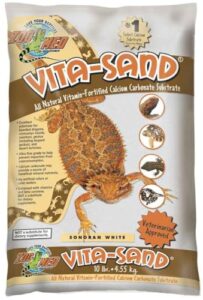
Calcium carbonate is the real story here, not just quartz. Vita-Sand Sonoran White is fortified with vitamins and beta carotene, giving desert reptiles a mineral boost while they dig and bask.
The ultra-fine grade keeps impaction risk low even with incidental ingestion, and there’s no artificial coloring or sealers muddying things up. At 10.2 pounds, it covers a standard desert setup easily, though expect occasional dust and, oddly, a faint odor some keepers notice.
| Best For | desert reptile keepers with bearded dragons, uromastyx, leopard geckos, monitors, or desert tortoises who want a calcium-rich digging substrate. |
|---|---|
| Material Type | Natural sand |
| Weight | 10 lbs |
| Color | Desert White |
| Digging Support | Yes |
| Dye Free | Yes |
| Dust Concerns | Moderate |
| Additional Features |
|
- Fortified with vitamins and beta carotene for added mineral support
- Ultra-fine grade helps reduce impaction risk from incidental ingestion
- All-natural formula with no artificial colors or sealers, made in the USA
- Can produce fine dust that coats surfaces and may clog air filters
- Some keepers report a faint off-odor, possibly linked to the calcium content
- Requires regular sifting to remove waste and prevent buildup
7. Exo Terra Desert Sand Black 10 Pound
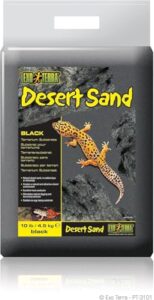
Deep black quartz sand gives this substrate real visual punch, making pale bellies and bright scale patterns pop against the enclosure floor. It’s sifted for uniform grain size and free of dyes or reactive fillers like mica, which cuts down on dust.
As a heat conductor, it performs well under heat mats, helping you build a solid basking gradient. The 10-pound bag works for egg-laying setups too, though this variety is currently sold out at $17.99.
| Best For | Reptile and small pet owners who want a natural-looking desert substrate for enclosures with heat mats or egg-laying setups. |
|---|---|
| Material Type | Calcium carbonate |
| Weight | 10.2 lbs |
| Color | Natural tan |
| Digging Support | Yes |
| Dye Free | Yes |
| Dust Concerns | High |
| Additional Features |
|
- Sifted for uniform grain size and free of dyes or reactive fillers, helping reduce dust
- Conducts heat well, making it easy to build a solid basking gradient
- Versatile enough for egg-laying substrate, hamster sand baths, and general desert-style setups
- Can get dusty when dry and may need mixing with clay or water to cut down on airborne particles
- Texture can shift between hardening when dry and turning powdery when wet
- Compacts less effectively than clay-heavy substrates unless blended with other materials
8. Zoo Med Desert White Reptile Sand
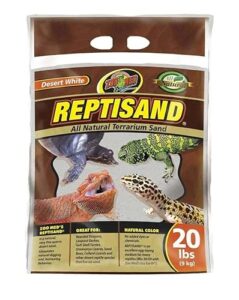
Bright and inert, this pure quartz sand carries a fine 0.5 to 1.0mm grain, small enough to encourage digging without lodging in heat pits. It’s free of dyes and chemicals, and the 20 lb bag (SW-20) covers larger enclosures easily.
Heat conducts evenly across the desert white surface, helping stabilize basking zones. Some keepers report torn shipping bags, and washing before use cuts down on mold risk once it’s poured into your setup.
| Best For | This sand is best for owners of bearded dragons, sand boas, softshell turtles, and other desert reptiles who want a natural, dye-free substrate that encourages digging and burrowing. |
|---|---|
| Material Type | Natural sand |
| Weight | 10 lbs |
| Color | Black |
| Digging Support | Yes |
| Dye Free | Yes |
| Dust Concerns | Moderate |
| Additional Features |
|
- All-natural, dye- and chemical-free composition that’s safe for desert reptiles and small mammals alike
- High heat conductivity helps maintain stable basking zones
- Large 20 lb bag with a bright white color that covers big enclosures while enhancing visual appeal
- Some bags arrive torn or leaking during shipping
- Must be washed and dried before use to prevent mold in the enclosure
- Calcium-free formula isn’t suitable for species that need calcium supplementation
9. Zoo Med Vita Sand Sahara Slate
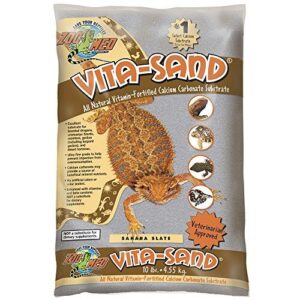
Rounding out the list is a substrate that doubles as a supplement. Vita Sand Sahara Slate is made from calcium carbonate, fortified with vitamins and beta carotene, and ground ultra fine to lower impaction risk.
Its slate-grey color comes from FDA-approved pigments, not dyes. Works well for uromastyx and bearded dragons who lick surfaces while basking.
One catch: it doesn’t absorb moisture well and can smell odd once wet, so keep humid hides separate.
| Best For | desert reptile owners with bearded dragons, uromastyx, monitors, geckos, or desert tortoises who want a substrate that also supports calcium intake. |
|---|---|
| Material Type | Natural sand |
| Weight | 20 lbs |
| Color | Desert White |
| Digging Support | Yes |
| Dye Free | Yes |
| Dust Concerns | Low |
| Additional Features |
|
- Made from all-natural calcium carbonate and fortified with vitamins and beta carotene for added calcium support
- Ultra-fine grade helps reduce the risk of impaction
- Allows for natural burrowing and basking behavior
- Doesn’t absorb moisture well, so it should be kept away from humid hides
- Can develop an unusual odor when wet
- Packaging may leak during shipping, leading to product loss
Comparing Desert Snake Bedding Types
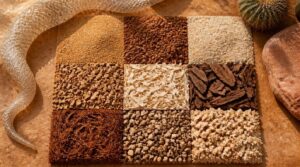
Not all desert bedding works the same way, and knowing the differences helps you pick the right one for your snake. Some options mimic natural terrain, while others focus purely on ease of cleaning or moisture control. Here’s how the main types stack up against each other.
Reptile-safe Natural Sand
Reptile-safe Natural Sand should be quartz-based, dye-free, with proper grain size for safe burrowing. Options like Exo Terra Desert Sand Substrate, Zoo Med ReptiSand Desert White, and Zoo Med ReptiSand Natural Red offer clean, ready-to-pour texture.
To make sure your sand is clean, you should sanitize your sand by baking it in an oven.
- Choose sifted, dust-free sand
- Verify quartz purity
- Remove waste daily
Skip beach sand entirely, salts and shell fragments spell trouble.
Sand and Clay Blends
Pure sand burrows well but crumbles fast. Blending it with clay fixes that, giving you sticking together and stability for tunnel walls.
A 70/30 to 50/50 sand-to-clay ratio balances drainage with dust control, while well-graded particle size grading limits impaction risk. Kaolin clay adds moisture balance control without waterlogging, and baked mixes cut airborne dust noticeably.
Aspen Snake Bedding
Clay stabilizes tunnels, but not every desert snake needs that much rigidity. Aspen bedding offers a softer alternative: low-dust, absorbent, and free of toxic oils. Its loose texture allows comfortable burrowing without snagging scales.
Aspen dries fast after urination, helping regulate humidity during shedding. Spot cleaning is simple, and it’s widely available, making it a beginner-friendly, low-dust reptile substrate with minimal ingestion risk.
Desert Bioactive Mixtures
Some keepers want more than sand, they want a living enclosure.
Desert Bioactive Mixtures mix grit with organic matter, supporting microbial activity that breaks down waste naturally. Plant-derived compounds add natural antimicrobial properties, while moisture balance control keeps things dry enough for arid reptile terrariums.
Pair with Zoo Med Excavator Clay or Exo Terra Stone Desert Substrate for structural stability enhancement and better burrowing substrate performance.
Mats and Solid Flooring
Not every setup needs loose grit. Solid rubber mats and non-slip vinyl mats resist sand abrasion and crushing from burrowing. Interlocking foam tiles create modular basking zones; ceramic stepping stones add stable, heat-transferring perches. Carpet mats and terrarium liners suit low-maintenance bioactive systems, though true digging behavior still needs a few inches of substrate depth for digging.
Choosing Safe Desert Snake Substrate
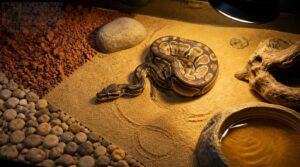
Not every desert-looking sand is actually safe for your snake, and the wrong choice can cause real health problems down the road.
Picking the right substrate means thinking about your snake’s species, how much dust it kicks up, and whether it’s gentle on their digestive system.
Here’s what actually matters when you’re weighing your options.
Species-specific Habitat Needs
No two desert snakes dig alike. Species-specific substrate matching means checking your snake’s natural range: a sand boa needs deep burrow depth, while a rosy boa barely tunnels.
Match thermal gradient requirements, humidity control zones, and shelter access to that species before picking bedding. Desert sand snake bedding works great for burrowers, but arid reptile terrariums still need research first.
Dust and Respiratory Safety
Fine sand kicks up a haze you can’t always see. That haze matters: respirable dust under 10 micrometres reaches deep lung tissue, raising real health stakes over time.
Choose dustfree bedding or low-dust reptile substrate, run local exhaust ventilation, and keep respiratory protection gear on hand. Air quality monitoring catches problems before coughing starts.
Particle Size and Shape
Grain size shapes everything about how a desert sand snake bedding performs. Angular grains pack tight, limiting airflow, while rounded, smooth-textured particles like Exo Terra Desert Sand Substrate or Exo Terra Stone Desert Substrate flow better and resist crusting.
Aim for the particle size safety threshold near 0.5mm–1mm, balancing burrow stability with gentler contact against sensitive heat-pits.
Impaction Risk Prevention
A swallowed sand grain rarely kills a snake, but a bellyful of them can. Grain size safety matters most: particles over 1.5mm resist clumping into prey-like masses.
A single sand grain won’t hurt your snake, but a bellyful of fine particles can turn deadly
- Keep particles above the 1.5mm threshold
- Separate feeding surfaces from loose substrate
- Track weight monthly for hidden trends
- Monitor hydration to avoid brittle sand
- Watch for lethargy or distension
Heat and Humidity Control
Your substrate does double duty as a thermal tool. Light-colored sand reflects heat, keeping surface temps 2-6°C cooler, while basking zones should hit 28-34°C with cooler retreats nearby.
Good thermal gradient setup relies on porous substrate for nighttime cooling. Pair this with humidity microclimates near hides (40-60%) for shedding, and you’ve built proper heat and humidity control into your desert terrarium.
Setting Up Desert Substrate Bedding
Picking the right sand is only half the job, setting it up correctly is what actually makes it work. Depth, texture, and placement all play a role in how well your snake burrows, basks, and regulates its body heat. Here’s what to focus on as you build out your enclosure floor.
Choosing Proper Substrate Depth
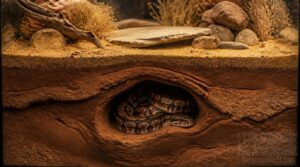
Depth makes or breaks a desert setup. Aim for 2 to 3 inches in resting zones, 4 to 6 inches where digging happens. Zoo Med Excavator Clay Burrowing Substrate hardens when misted, supporting real tunnels.
Quick guide:
- Shallow zones: 1-2 inches
- Resting areas: 2-3 inches
- Burrow zones: 4-6 inches
This layering prevents impaction while keeping arid enclosures balanced.
Creating Stable Burrowing Areas
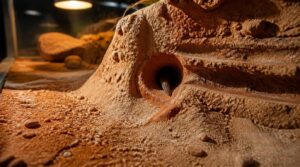
Once depth is right, stability keeps burrows from caving in. Add a compacted collar around each entrance, sized 2 to 4 inches for small species.
Zoo Med Excavator Clay Burrowing Substrate hardens when misted, locking tunnel walls in place. Mix in Zoo Med ReptiSand Desert White or Natural Red for texture, and slope drainage channels away from chambers to stop moisture undermining tunnels.
Supporting Temperature Gradients
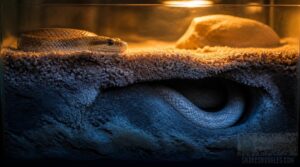
Solid tunnel walls mean nothing if the temperature inside them is wrong. Thermal layering keeps burrow depths cooler than the surface, so snakes retreat downward to escape heat.
- Place heat sources directly over basking zones
- Use medium-conductivity sand for gradual heat transfer
- Monitor mid-substrate and deep zones with probes
Moisture and compaction shift gradient stability, so check sensors often.
Adding Secure Basking Surfaces
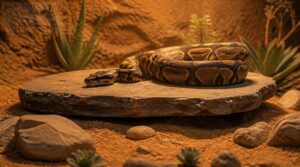
Getting temperature right means nothing if your snake has nowhere stable to soak it up. Platform stability matters as much as heat, so anchor basking surfaces to resist shifting under weight.
Choose safe materials like slate or untreated stone for heat resistance without warping. Rough surface texture prevents slipping. Layer 2-3 inches of Desert Substrate beneath for digging support, and always double-check proper installation before use.
Establishing Humid Retreats
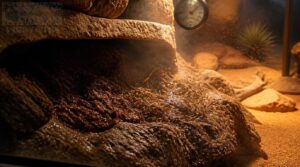
Basking surfaces solve half the puzzle; the other half is a damp corner for shedding.
Build a humid microclimate using coconut fiber or dried sphagnum moss beneath a shelter, trapping moisture at 60-80%. Monitor with a hygrometer, mist lightly rather than soak, and keep ventilation open so this moisture retention zone never turns moldy.
Cleaning Desert Snake Substrates
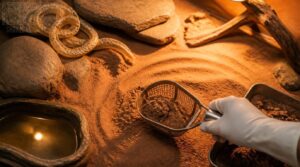
A clean enclosure keeps your snake healthy, but desert sand and clay bring their own cleaning rules. You can’t just scoop and forget, since moisture, odor, and hidden waste all need regular checks. Here’s what a solid cleaning routine looks like, broken down step by step.
Spot-check daily for damp patches or waste, and if you’re weighing which bedding holds up best long-term, this guide on choosing low-maintenance reptile substrates breaks down options that make full changes less of a hassle.
Daily Waste Spot-cleaning
A tidy tank starts with a quick daily habit. Scoop solids with a fine mesh sieve, spot cleaning only soiled patches rather than disturbing the whole substrate. This limits impaction risk and keeps odors down.
Wipe rims and lids weekly for sanitation, and swap liners on schedule. Desert Mix and standard sand both respond well to this routine.
Safe Loose-substrate Feeding
Why risk impaction over a single meal? Feed on a separate surface, never straight on loose Desert Substrate.
- Use a clean dish or mat
- Place prey with forceps, away from burrows
- Choose lowdust reptile substrate for the feeding zone
- Sift particles regularly
- Remove leftovers within two hours
Zoo Med ReptiSand Desert White or Natural Red still need this precaution nearby.
Monitoring Moisture and Odors
Musty smells signal trouble brewing beneath the surface. Place a humidity sensor at substrate level to catch spikes within 24 hours, and log readings every 15 minutes for trend data. Cross-reference odor timing with moisture peaks to pinpoint sources.
Fine desert sand dries faster than clay blends, so improve airflow and turn bedding to curb dampness before it lingers.
Refreshing Contaminated Bedding
Sand gone soiled or damp needs a real reset, not a quick stir. Check for visible waste, odor, or moisture first.
- Bag unwashable bedding for offsite laundering
- Wash reusable liners hot with reptile-safe disinfectant
- Dry fully, then store sealed and labeled
Replace desert sand outright if contamination repeats, since inert substrate prevents impaction and helps with proper thermoregulation.
Scheduling Complete Substrate Changes
Even clean-looking sand hides waste over time. Plan a substrate replacement schedule every 4–6 weeks, stretching to 8 in cooler, drier seasons. Contamination triggers—odor, clumping, dust—demand an earlier swap.
Log each change date, product used (Zoo Med ReptiSand Desert White or Natural Red work well), and substrate depth for digging. Rebuild burrows immediately, supporting desert reptile thermoregulation from day one.
Frequently Asked Questions (FAQs)
What is the best substrate for desert snakes?
A clay-sand mix or ReptiSand Desert White works best, mimicking arid enclosures naturally.
Aspen bedding suits burrowers needing dust control, while bioactive substrates or solid flooring offer easy cleanup for keepers wanting low-maintenance, species-appropriate setups.
What is the best substrate to create tropical environment for snakes?
A coconut fiber and cypress mulch mix works best, holding humidity between 60-80% while airflow prevents stagnant spots. Layer sphagnum moss on top for surface RH above 85%, ideal for green tree pythons and rainbow boas.
If you’re prone to allergies or asthma, it’s worth checking out low-allergen substrate options for reptile enclosures before committing to an organic mix.
What is a desert substrate for reptiles?
Think of it as the foundation your setup stands on. A desert substrate for reptiles mimics dry, mineral-rich terrain, combining natural desert sand, clay, or blends to support burrowing, thermal gradients, and low-humidity conditions in arid reptile enclosures.
What is the best substrate for snake burrowing?
A 70:30 sand-to-clay mix works best, giving tunnels structural integrity while keeping that natural desert feel.
Coconut fiber or cypress mulch also support stable burrows, holding humidity better than plain sand for safer, longer-lasting tunnel formation.
What substrate for desert kingsnake?
Aspen bedding suits desert kingsnakes best, offering low dust and easy burrowing. ReptiSand’s smooth texture minimizes ingestion risk, while a sand-clay mix adds burrow stability.
Avoid fine, dusty sand to protect respiratory health and prevent impaction.
What is an arid snake substrate?
Picture a desert floor after a sandstorm settles, dry, loose, and gritty underfoot.
That’s arid substrate basics simply put: reptile-safe sand or clay blends offering drainage, low moisture retention, and impaction prevention for species built for bone-dry ground.
What substrate is good for high humidity?
For humid microclimates, reach for coconut coir or peat moss blends, both hold water well without turning soggy. Bioactive mixes combining moisture-retentive particles with aeration components sustain humidity while preventing anaerobic pockets in your enclosure.
Can substrate affect a desert snakes feeding response?
Yes, absolutely. Fine grains sharpen strike accuracy and prey tracking, while loose sand encourages burrow ambush behavior.
Sensory cues like scent and texture shape a desert snake’s feeding response, so reptile-safe substrate choice directly affects feeding frequency in any arid environment substrate setup.
How do escape attempts relate to substrate choice?
Your snake isn’t plotting a jailbreak, it just wants somewhere to hide. Refuge seeking behavior drives most escape attempts, since loose, unstable bedding leaves nowhere safe to dig, pushing snakes toward open ground and any gap they can find.
What substrate works best for snake egg incubation?
Vermiculite wins here, offering moisture retention near 85–95% humidity at a 1:2 water-to-substrate ratio. Keep it sterile, maintain 2–5cm depth for gas exchange, and monitor temperature control with a digital probe for consistent hatching.
Conclusion
The devil is in the details, and that’s exactly where good husbandry lives. Choosing the right snake substrate bedding for desert setups isn’t about grabbing whatever bag looks natural on the shelf; it’s about matching grain size, dust levels, and moisture control to your snake’s real needs.
Get depth right, keep burrows stable, and watch humidity closely. Your snake won’t thank you in words, but a clean shed and steady appetite will.
If you’re setting up for a hatchling, this guide to sizing enclosures for young snakes pairs well with those depth and humidity basics.