This site is supported by our readers. We may earn a commission, at no cost to you, if you purchase through links.

Ask any breeder which snake they’d hand to a nervous first-timer, and you’ll hear the same answer: the ball python. These snakes earned their reputation by curling into a tight ball instead of striking when worried, and most stay loose and slow-breathing in your hands within weeks of settling in.
But "docile" isn’t a guarantee. A hungry snake, a cloudy-eyed shed, or a heat gradient that’s off by a few degrees can flip calm into defensive fast.
So if you’re wondering are ball pythons docile, the honest answer is yes, with conditions. Here’s how to read your snake’s mood and handle it right.
Table Of Contents
- Key Takeaways
- Are Ball Pythons Docile?
- What Does Docile Behavior Look Like in Ball Pythons?
- What Can Make a Docile Ball Python Defensive?
- How Can You Tell if a Ball Python is Calm or Stressed?
- How to Handle a Ball Python and Build Trust
- Frequently Asked Questions (FAQs)
- Do ball pythons like being petted?
- What is the friendliest snake ever?
- What are the downsides of owning a ball python?
- Which python is the friendliest?
- Are ball pythons the most docile snake?
- Are ball pythons good pets for beginners?
- Can ball pythons recognize their regular caretaker?
- Are ball pythons safe around small children?
- Can ball pythons live near other pets?
- How long do ball pythons live in captivity?
- Conclusion
Key Takeaways
- Ball pythons are among the calmest pet snakes, typically curling into a ball rather than striking when threatened, but docility isn’t guaranteed—individual temperament, genetics, and wild-caught vs captive-bred background all matter.
- Defensive behavior usually signals stress, not aggression: hunger, cloudy-eyed shedding, seasonal fasting, or incorrect heat and humidity (50–60% humidity, 88–92°F warm side) can flip a calm snake into hissing or striking.
- You can read a snake’s mood by body language: relaxed snakes coil loosely, breathe slowly, and explore with their tongue, while stressed ones ball up tightly, hide their head, hiss, pace, or jerk into a corkscrew bite posture.
- Build trust through short, frequent handling sessions (5–15 minutes, capped at 30 minutes daily) after a 1–2 week acclimation period, and always wait 48–72 hours after feeding and until shedding ends before handling.
Are Ball Pythons Docile?

Why do so many keepers call ball pythons docile? Because they are. These snakes rank among the calmest pythons in the hobby, and their temperament is the main reason they’re the world’s most popular pet snake. When approached, a relaxed ball python usually stays coiled and still rather than bolting or striking.
If you’re comparing calm species before choosing one, this guide to the most docile pet snakes breaks down how ball pythons stack up against other gentle options.
That said, "docile" doesn’t mean "frozen." Individual temperament varies. Some captive-bred ball pythons are naturally mellow; others carry defensive behaviors like hissing or balling up when startled. Wild-caught animals tend to stay more reactive than captive-bred ones.
The good news: most defensive responses are learned stress, not fixed personality. With proper acclimation and gentle handling, even a nervous snake usually settles into a reliable, handleable adult.
What Does Docile Behavior Look Like in Ball Pythons?

So what does a calm temperament actually look like? Picture a docile snake at rest: loosely coiled, breathing slow and even, tongue flicking in smooth, unhurried sweeps. It stays put when you approach the enclosure. No rushing, no hiding.
During handling, a relaxed ball python moves gently and deliberately, exploring your hands with its tongue rather than tensing up. It may rest draped over your arm for minutes without straining to escape.
The contrast is easy to spot. A stressed snake balls up, hisses, breathes fast and shallow, or jerks its neck back in a corkscrew bite attempt. Watch for a low, forward head paired with a tight body; that’s a snake approaching its stress threshold.
A stressed ball python balls up, hisses, or jerks its neck back in a corkscrew bite attempt
Judge by consistency, not one moment. Three calm observations across different days tell you far more than a single good session.
What Can Make a Docile Ball Python Defensive?

Even the calmest ball python can have an off day. A defensive reaction usually isn’t aggression at all; it’s your snake telling you something’s wrong. Let’s walk through the four most common triggers, from genetics to husbandry mistakes, so you can spot them early.
Individual Temperament and Genetics
Consider two hatchlings from the same clutch: one settles instantly on your hand, the other balling tight at every touch. That’s genetics influence at work. Individual personalities vary, and some lineages carry rare calm alleles producing a naturally docile snake.
Our ball python temperament guide breaks down how genetics, early handling, and environment shape these individual differences.
Ball python temperament isn’t fixed, though; captivity adaptation and steady routines soften even wary bloodlines over time.
Age and Captive Breeding
Age shapes temperament more than most keepers expect. Hatchlings start wary, but captive-bred juveniles habituate fast, often settling within their first 6–12 weeks.
Wild-caught adults carry years of field instincts, so they stay defensive far longer. That’s the wild vs captive bred differences in action.
Give young snakes gentle, consistent snake socialization, and you’ll watch a nervous baby become a confident adult.
Feeding, Shedding, and Season
Feeding and shedding cycles change your snake’s mood. A hungry python strikes at anything warm, so use a hook before Handling Time and keep a Postfeeding Wait of 48 hours to avoid regurgitation. Watch for these Stress Signs: Keeping humidity steady matters too, since a proper reptile misting system for ball pythons helps prevent stuck sheds and dehydration.
- Tongue flicking and stalking during Feeding Timing
- Dull eyes and blue skin during the Shedding Cycle
- Fasting through Seasonal Changes, normal in winter
Enclosure Stress and Illness
Environment shapes temperament. A ball python in a secure enclosure with proper humidity levels (50–60%) and a warm side of 88–92°F stays relaxed. Get it wrong, and you’ll see stress signs: pacing, refusing food, or striking.
Watch for respiratory issues too, like wheezing or bubbles at the mouth. Good microclimate management, tight-fitting hides, and clean substrate prevent most problems. If your snake stays defensive despite correct care, see a reptile vet.
How Can You Tell if a Ball Python is Calm or Stressed?
A calm ball python and a stressed one can look almost identical at a glance, but their body language tells two very different stories. Read the signs, and you’ll know exactly when your snake is relaxed.
Watch for these snake stress indicators:
- Tight coiling with the head hidden, instead of a loose, natural curve
- Hissing or quick head retraction when you approach
- Rapid tongue flicks paired with jerky, darting movement
- Refusing food or striking at prey presentation
- Constant pacing or pressing against the glass
A snake with a calm nature moves smoothly, breathes steadily, and tolerates you within a body length or two without posturing. Remember context, too: a defensive streak right after feeding or mid-shed is normal, not a temperament problem.
How to Handle a Ball Python and Build Trust
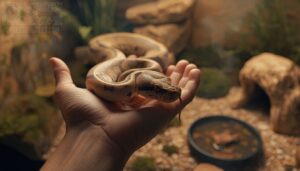
Handling a ball python starts long before you lift it out of the enclosure. Trust is built through patience, timing, and gentle technique, not force. Below, you’ll find the four steps that make every session safer and less stressful for both of you.
Acclimation Before Handling
Ball pythons need snake acclimation before your hands enter the picture. Think of it as a handshake, not a grab.
| Step | What to Do |
|---|---|
| Start | 5–10 minute calm sessions |
| Progress | Add 5 minutes weekly if relaxed |
| Warmth | Pair handling with the basking spot |
| Restraint | Light support only |
| Avoid | Full coil or cheek pinning |
Habituation builds trust; rushing triggers defensive behaviors.
Safe Handling Techniques
Good technique turns a nervous snake into a willing one. Slide your hands under the mid-body, one near the shoulders and one supporting the tail base, then lift with gentle, constant pressure. Keep your palm under the chin to stop head whipping. Support the whole body so it never feels like it’s floating.
- Approach from the side, never from above
- Wear long sleeves for early sessions
- Move slowly; no sudden squeezes
- Return it toward its secure hides, not mid-enclosure
If it tenses into an S-curve or gapes, pause and let it settle. Building trust starts with hands it can predict.
Handling Frequency and Duration
Think of handling like exercise: short sets beat one marathon. During the acclimation period, keep sessions under 5 minutes, once or twice daily. After that, aim for 5–15 minute sessions, adding 2–5 minutes weekly.
Cap total handling at 30 minutes daily, split across brief sessions. Watch for stress signs like tail flicks or rigidity, and stop.
Regular handling on a stable feeding cycle builds tolerance fastest.
When Handling Should Wait
Some moments call for patience. Even with proper handling techniques, timing matters most.
- Postfeeding wait: 48–72 hours minimum.
- New arrivals: rest 1–2 weeks.
- Shedding: wait until eyes clear, roughly 5–10 days.
- Illness: pause 3–7 days after recovery.
- Visible stress signs: skip the session entirely.
Respect these windows and you’ll avoid defensive behaviors while building a genuinely stressfree environment.
Frequently Asked Questions (FAQs)
Do ball pythons like being petted?
Ironically, your python will never pet you back, but it can learn to tolerate your touch. Most ball pythons don’t enjoy petting; they simply accept gentle handling techniques once they’re calm and acclimated.
What is the friendliest snake ever?
Which snake earns the "friendliest" title? Many keepers point to the ball python. Its docile nature, slow movements, and tolerance for proper handling techniques make it a calm, gentle disposition favorite for beginners.
What are the downsides of owning a ball python?
What’s the catch? Ball pythons demand precise humidity and heat, eat infrequently, hide illness well, and can refuse meals or show defensive behavior when stressed, so husbandry mistakes carry real consequences.
Which python is the friendliest?
If you want a friendly python, the ball python wins. Its calm nature and tolerance of handling make it the top pick. Other pythons, like carpet pythons, need more experience before they settle down.
Are ball pythons the most docile snake?
Ball pythons rank near the top, not first. Species temperament comparison shows corn snakes and some colubrids rival them. Their evolutionary defense favors curling over striking, and behavioral conditioning in captivity deepens their calm nature.
Are ball pythons good pets for beginners?
Picture a new keeper lifting a calm ball python that simply rests on her arm. Yes, they’re beginner friendly: docile temperament, easy feeding, huge community support. Just plan for 30-year commitment, setup costs, and legal checks.
Can ball pythons recognize their regular caretaker?
Yes, but through scent and routine, not affection. Your keeper scent signature and consistent schedule build olfactory recognition, so your snake learns your rhythm, stays calmer with you, and shows fewer stress signs.
Are ball pythons safe around small children?
Take eight-year-old Mia: she sits still, an adult holds the snake’s body, and everyone washes hands afterward. That’s the model. Ball pythons can be safe with children, but only under close adult supervision, secure enclosures, and good hygiene.
Can ball pythons live near other pets?
Your snake can share a room with other pets, but scent and sight management matters most. Keep enclosures secure and feeding times separate. Lingering pet odors stress a snake’s solitary nature and invite defensive responses.
How long do ball pythons live in captivity?
Captive-bred ball pythons generally live 20–30 years with consistent, quality pet snake care. Nail your reptile husbandry, from steady feeding to regular vet checks and stable temperatures, and some individuals can reach well past
Conclusion
No snake copes well if its needs aren’t met. But when you dial in the heat, hide placement, and feeding schedule, are ball pythons docile becomes less a question and more a lived reality.
Learn your snake’s individual tells. Respect the bad days. Give it time to adjust before expecting it to drape across your shoulders. Most ball pythons get there, and the trust you build is genuinely worth the patience.