This site is supported by our readers. We may earn a commission, at no cost to you, if you purchase through links.

Pick up a ball python for the first time, and something unexpected happens — it doesn’t panic. It settles across your hands, moves with slow curiosity, and goes about its business like your furniture.
That’s not luck or good training. It’s the species.
Ball pythons earned their reputation for a mellow disposition through genuine biological wiring, not domestication.
Understanding what drives that calm — genetics, environment, handling history — helps you nurture it rather than accidentally undermine it.
The difference between a snake that tolerates you and one that genuinely settles in your presence comes down to a handful of knowable factors.
Table Of Contents
Key Takeaways
- Ball pythons are naturally calm due to their biology, not training — but genetics, environment, and handling history all shape how relaxed your individual snake turns out to be.
- Captive-bred ball pythons settle in faster and carry far fewer health risks than wild-caught ones, making them the smarter choice for new owners.
- A stable enclosure — with proper temperature gradients (88–92°F warm side, 78–80°F cool side), 50–60% humidity, and two hides — removes most of the stress that drives defensive behavior.
- Consistent, short handling sessions starting at the hatchling stage build trust more effectively than any other factor, teaching your snake that you’re safe before defensive habits have a chance to form.
What Makes Ball Pythons So Calm?
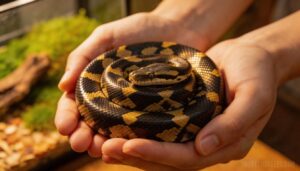
Ball pythons have a reputation for being easygoing, and it’s well-earned. Their calm nature comes down to a few key traits that set them apart from other snakes.
If you’re curious what makes them tick, this breakdown of ball python temperament and pet suitability does a great job explaining why they consistently top the list for beginner-friendly reptiles.
Here’s what actually makes them so relaxed to live with.
Typical Temperament Traits
Ball pythons carry a baseline docility that sets them apart from most other snake species. Their activity rhythm leans nocturnal, with calm, deliberate movement during handling rather than frantic bursts. You’ll notice a steady temperament in how they explore your hands with quiet curiosity—their exploratory drive is gentle, not restless.
Most show feeding enthusiasm and a clear interaction preference for short, predictable contact.
Defensive Vs. Aggressive Behaviors
That calm curiosity doesn’t mean they’re push-overs, though. Defensive behavior — like coiling vs striking — follows clear triggering stimuli: sudden grabs, loud sounds, or unfamiliar scent cues.
Stress-induced aggression is rare and usually telegraphed first through hissing or tight coiling. Bite escalation patterns generally start as warnings, not attacks.
Respect those stress signals, use steady handling techniques, and most defensive behavior never goes further.
Personality Differences Among Individuals
No two ball pythons are quite the same. One might settle into your hands within seconds; another needs a few minutes to stop coiling in protest. Individual Stress Thresholds vary, and so do Activity Level Variation patterns — some stay curious and active, others prefer solitude.
Post-Shed Behavior and Response to Feeding also shift personality temporarily. Gentle handling, consistency, and patience reveal each snake’s true docile temperament.
Factors Shaping Ball Python Disposition
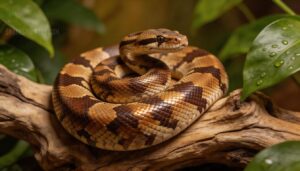
A ball python’s temperament doesn’t come out of nowhere — several key factors work together to shape how calm, curious, or defensive your snake turns out to be. Some of these you can influence directly, while others are simply baked into your snake’s biology from the start.
Here’s a closer look at the three main forces at play.
Genetics and Morph Influence
Your snake’s personality starts in its DNA. Pigment Gene Variants and Allele Interaction Effects don’t just shape color — they influence behavior too. Color Pattern Inheritance, Scale Microstructure Genetics, and Morph-Linked Health all connect in ways that matter for temperament.
Beyond genetics, the environment shapes temperament too — maintaining proper snake habitat humidity and temperature can reduce stress-driven aggression in even the most morph-sensitive snakes.
Key genetics facts for ball python morphs:
- Spider morph shows neurological wobble from single-gene mutation
- Recessive morphs generally carry steadier, more predictable temperaments
- Morph genetics affect melanin pathways, indirectly influencing stress responses
- Genetics and morph-related temperament varies — no morph guarantees docility
- Captive breeding impact on snake behavior improves with each generation of selection
Captive-Bred Vs. Wild-Caught
When choosing your first ball python, where it comes from matters as much as how it looks. Captive-bred individuals show lower Parasite Load Differences, reduced Growth Rate Variability, and adapt faster to your enclosure routines.
Ethical Conservation Concerns and Seasonal Availability Constraints make wild-caught snakes a harder choice — and their longer Quarantine Protocols reflect that stress.
These differences are reflected in the lower parasite loads of captive-bred snakes.
| Factor | Captive-Bred | Wild-Caught |
|---|---|---|
| Parasite Risk | Low | High |
| Temperament | Calmer, handleable | Defensive, unpredictable |
| Availability | Year-round | Seasonally restricted |
Age and Lifecycle Changes
A ball python’s personality isn’t fixed at birth — it shifts as the snake ages. Understanding each stage helps you handle them with confidence:
- Hatchling Growth brings curiosity and quicker strike reflexes
- Juvenile Exploration peaks before calmer adult patterns settle in
- Adult Feeding Patterns grow steady and predictable around year two
- Reproductive Aging can temporarily disrupt temperament during breeding cycles
- Senior Health Concerns call for gentler handling and closer monitoring
Creating a Mellow Environment
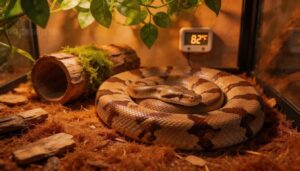
Your ball python’s mood starts with its home. A well-designed enclosure removes the guesswork and gives your snake exactly what it needs to stay calm and settled.
Here’s what to focus on when setting things up.
Proper Enclosure Setup
Think of your ball python’s home as a tiny ecosystem — every detail matters. A rectangular enclosure gives you the best floor space for natural movement, and enclosure design really does influence how calm your snake feels day-to-day.
Setting up a proper ball python enclosure starts with these essentials:
| Element | Recommendation | Why It Matters |
|---|---|---|
| Substrate Choice | Coconut fiber, 2–3 inches deep | Holds humidity, feels natural |
| Two Hides | One warm side, one cool side | Reduces exposure anxiety |
| Water Dish Placement | Accessible, away from hides | Prevents dampness buildup |
Follow a consistent lighting schedule — 12 hours on, 12 hours off. Ventilation management keeps air fresh without drying things out.
Temperature and Humidity Management
Temperature and humidity are the two dials that control your snake’s comfort level.
Keep the basking temperature range between 88–92°F, while the cool zone temperature settles around 78–80°F — that gradient is everything. A thermostat probe placement near the basking spot prevents dangerous spikes.
For humidity control, target 50–60%. Misting frequency of once daily maintains steady humidity levels without waterlogging the substrate.
Enrichment and Hide Placement
Your ball python needs more than just space — it needs a sense of structure. Use snug hide entrances sized to your snake’s current girth, placing hides across both temperature zones.
Keep hiding spaces stable while rotating enrichment objects gradually. Position enrichment near hide places to encourage exploration without full exposure. Run safety surface checks on all items, and never let enrichment block retreat paths.
Handling Practices for Calm Snakes
How you handle your ball python matters more than most people realize.
A calm snake doesn’t happen by accident — it comes from consistent, thoughtful interaction built on a few key practices.
Here’s what actually works.
Safe Handling Techniques
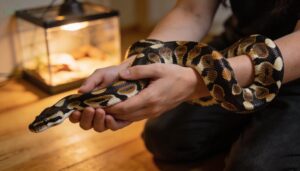
Good safe handling practices for ball pythons start before you even pick one up — wash your hands to remove food smells that could trigger a feeding response.
Use a supportive body hold with a two-handed grip, distributing weight evenly along your forearms.
Handle in a quiet handling area, close to the ground, and watch for tight coiling — your signal to stop.
Socialization From Hatchling Stage
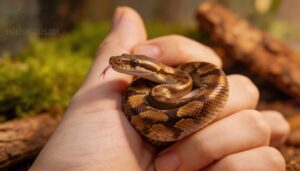
Starting early makes a real difference. Socialization of hatchling ball pythons builds the foundation for a docile ball python later on.
- Keep sessions to 2–5 minutes — consistency beats duration
- Human Voice Familiarization starts with calm, quiet talking near the enclosure
- Visual Recognition Development improves through daily, predictable routines
- Early Social Exposure, including gentle handling, reinforces trust before defensive habits form
Trust building through consistent handling shapes temperament more than genetics alone.
Consistent handling builds trust that shapes a ball python’s temperament more than genetics ever could
Recognizing and Reducing Stress Signals
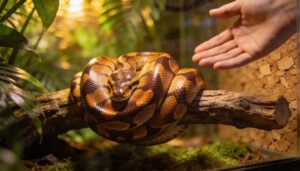
Once your hatchling trusts your hands, the next skill is reading what they’re telling you. Understanding stress signals in ball pythons maintains their calm temperament.
| Stress Signal | What To Do |
|---|---|
| Tight ball, head tucked | Give space; skip handling |
| Hissing or musking | Check odor triggers, lower noise sensitivity |
| Feeding schedule stress | Resume consistent prey day |
| Recovery indicators improving | Gradual handling techniques for docile snakes resume |
Choosing Your Docile Ball Python
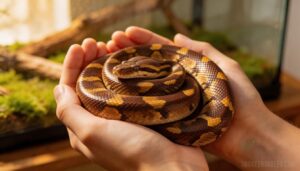
Finding the right ball python starts long before you bring one home. A little research into breeders, bloodlines, and how a snake behaves in person can save you a lot of guesswork later.
Here’s what to look for at each step of the process.
Researching Breeders and Bloodlines
Digging into breeder reputation before you buy makes a real difference. Request pedigree documentation, clutch history, and line breeding records — reputable breeders keep these on file and share them willingly.
Solid records support temperament trend analysis, showing whether calm behavior holds across generations. This matters especially with ball python morph selection and genetics, where bloodlines directly shape genetics and morph-related temperament patterns.
Assessing Temperament Before Purchase
Once you’ve found a reputable bloodline, watch how a snake actually behaves before committing. Request an Observation Session during a quiet moment — not right after feeding. A docile ball python settles calmly into a palm without frantic retreating.
For a reliable ball python temperament guide, check these signs:
- Smooth, relaxed coiling with steady breathing
- No rapid tongue flicking or persistent hissing
- Willingness to resume normal posture quickly after being moved
Litter Comparison Analysis helps too — observe siblings side by side. Pre-Purchase Health Screening rounds it out: clear eyes, clean skin, consistent Feeding Response Observation.
Tips for Beginner Owners
Even if you’re brand new to reptile keeping, a ball python’s calm temperament makes it one of the most forgiving starting points.
Budget planning matters early — factor in enclosure setup, feeding, and pet insurance before day one.
Use this beginner checklist:
| First-Year Checklist | Handling Tips | Community Resources |
|---|---|---|
| Legal requirements checked | 10–15 min sessions | Local herpetological clubs |
| Enclosure fully cycled | Slow, confident approach | Online keeper forums |
| Budget planning complete | Support full body | Vet with reptile experience |
Frequently Asked Questions (FAQs)
Can ball pythons coexist peacefully with other snakes?
Ball pythons are built for solitude. Their solitary nature means co-habitat risks are real — stress, feeding disputes, and disease transmission rise fast.
Solo housing isn’t just safer; it’s what they genuinely thrive in.
Do ball pythons recognize their owners over time?
Yes, they do — through scent memory and routine familiarity. Your owner’s scent association builds over weeks, triggering calmer responses.
Behavioral recognition signs like steady tongue-flicking confirm your snake knows you’re safe.
How does seasonal change affect ball python behavior?
Seasonal Activity Patterns shift your ball python’s routine more than you’d expect.
Warmer months boost crepuscular activity and temperature feeding responses, while cooler periods slow metabolism, extend shedding cycles, and can trigger seasonal breeding behaviors.
What role does diet variety play in temperament?
Like a well-balanced meal calms a restless mood, prey diversity reinforces the gut-brain axis, reduces inflammation, and promotes feeding consistency — all quietly steadying your ball python’s temperament through reliable nutrient balance.
Conclusion
What’s the secret to a lifelong bond with your ball python? It’s not magic, but understanding their unique nature.
With a mellow disposition hardwired into their genetics, ball pythons can thrive in your care. By recognizing their needs, creating a nurturing environment, and handling them with care, you’ll be rewarded with a calm and curious companion.
Trust the process, and your ball python will trust you. A harmonious relationship awaits with patience and knowledge.