This site is supported by our readers. We may earn a commission, at no cost to you, if you purchase through links.

Corn snakes are one of the few pets that reward calm, consistent care over excitement—and that’s exactly why first-time reptile owners tend to thrive with them. They don’t need constant handling; they eat predictably, and a well-set enclosure mostly runs itself.
The challenge isn’t the snake. It’s knowing which gear to trust before you’ve kept one before.
Walk into any pet store and the options multiply fast: separate thermostats, mismatched hides, heat mats with no controller.
Corn snake kits built for beginners cut through that noise by bundling the right pieces from day one.
Here’s how to tell the good ones apart.
Table Of Contents
Key Takeaways
- A bundled corn snake starter kit saves you from mismatched gear and decision fatigue — get one that includes a thermostat, UVB light, hides, and safe substrate right out of the box.
- Temperature control is non-negotiable: pair your heat mat with a digital thermostat, keep the warm side at 84–87°F, and never let the cool side drop below 72°F at night.
- Skip cedar, pine, sand, and live prey — safe bedding (aspen or paper-based) and frozen-thawed mice protect your snake from respiratory issues, impaction, and feeding injuries.
- Corn snakes can live 10–20 years, so invest in a front-opening, escape-proof enclosure built to last — it pays off far more than piecing together cheap gear over time.
Best Corn Snake Starter Kit Features
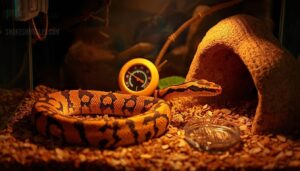
good starter kit takes the guesswork out of setting up your corn snake’s home.
Browse top-rated corn snake starter kits to find everything bundled together, so you’re not hunting down supplies one piece at a time.
The right features make daily care easier and keep your snake comfortable from day one.
what to look for before you buy.
Enclosure Size and Front-opening Access
Size matters more than you’d think when choosing a Corn Snake Starter Kit. The 60 × 45 × 30 cm PVC habitat hits Height Clearance Standards comfortably, giving your snake room to move without feeling exposed.
Front-opening doors swing wide — near 180 degrees — so Door Swing Width and Front Access Ergonomics work in your favor.
It’s a long-lasting enclosure that’s genuinely easy-to-clean.
Heat Mat and Thermostat Pairing
That roomy front‑opening enclosure pairs beautifully with the right heat source. The Heat Mat 16W sits under one-third of the floor — the ideal Mat Size Ratio — and your Digital Temperature Controller locks in precise heating regulation automatically.
Mind your Probe Placement: above the mat, never directly on it. Add a Safety Barrier, then do Gradient Verification with two thermometers.
Thermostat Compatibility with your mat wattage matters too.
For broader temperature options, see the BN‑LINK controller range.
UVB and Day-night Lighting Basics
Once your heat mat is dialed in, lighting pulls its weight too. The Reptile UVB100 13W Square LED Light manages both UVB Intensity Timing and Daylight Cycle Duration in one unit — just set it to 12 hours on, 12 off.
Good UVB Fixture Placement means 12–18 inches above the basking zone. That Light Temperature Synergy keeps your corn snake active, calm, and on schedule.
Hides, Substrate, and Water Dish Essentials
Your snake needs more than heat and light — it needs places to hide, burrow, and drink. Use a Medium PVC Hide on both the warm and cool sides for proper Hide Placement. Nonporous Hides stay clean longer.
Premium Wood Chips Substrate with natural absorbent bedding maintains Substrate Hygiene well. Humidity Substrate helps during shedding too.
A stable Water Dish Medium with Dish Stability prevents spills.
Easy Cleaning and Escape Prevention
Keeping your enclosure fresh doesn’t have to be a chore.
Front-opening doors give you full access without disturbing your snake, while a Removable Waste Tray makes spot-cleaning quick and effortless.
Drip Edge Design keeps moisture away from cords, and Cable Management Channels prevent tangled hazards.
Magnetic Door Seals, paired with an Anti-Chew Gasket, lock things down tight — no escapes, no stress.
Top 3 Kit Products for Beginners
Not every product earns a spot in a beginner’s setup — these three made the cut for good reasons. Each one solves a real problem you’ll run into as a new corn snake owner.
Here’s what’s worth your attention.
1. REPTI ZOO Large Front Opening Terrarium
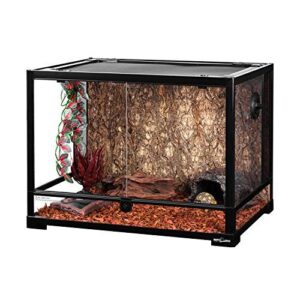
The REPTI ZOO Large Front Opening Terrarium is a solid first home for your corn snake. At 24 × 18 × 18 inches, it gives your snake room to move and explore.
The dual front doors open separately — handy when you’re feeding without letting your snake bolt.
A full screen top keeps airflow steady, and the raised base works with under-tank heaters. Tempered glass means clear viewing and real durability.
It’s escape-resistant, easy to set up, and built to last.
| Best For | New reptile owners looking for a spacious, easy-to-manage home for corn snakes, leopard geckos, or bearded dragons. |
|---|---|
| Primary Use | Reptile enclosure |
| Material | Tempered glass |
| Size | 24x18x18 in |
| Weight | 34.7 lb |
| Reusability | Permanent enclosure |
| Animal Safe | Escape-proof design |
| Additional Features |
|
- Front doors open separately, so feeding and cleaning is simple without giving your snake a chance to escape
- Works for both desert and rainforest setups thanks to the built-in heater bracket and adjustable ventilation
- Tempered glass and easy 5-minute assembly make it durable and stress-free to get started
- Screen top can let humidity escape, which is a problem if you keep species that need a moist environment
- At 35 lbs, you’ll want a second person around when moving or repositioning it
- Some buyers have reported damaged latches or sharp glass edges right out of the box
2. Rescue Veterinary Disinfectant Cleaner
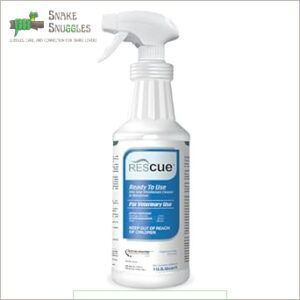
Clean enclosures keep snakes healthy — and this cleaner makes that easy.
Rescue Veterinary Disinfectant is a ready-to-use spray built for animal environments.
It’s hydrogen peroxide-based, so it kills a broad range of bacteria and viruses fast — under one minute on most hard surfaces.
No rinsing needed.
It dries clear and won’t leave sticky residue behind.
Safe around animals when used with ventilation.
The 32 oz bottle gives you plenty for routine wipe-downs between feedings and full cleans.
| Best For | Rescue workers, foster families, and vet clinics that need a fast, no-fuss disinfectant safe to use around animals every day. |
|---|---|
| Primary Use | Enclosure disinfectant |
| Material | Liquid solution |
| Size | 32 oz |
| Weight | 2.09 lb |
| Reusability | Refillable via spray bottle |
| Animal Safe | No harmful residues |
| Additional Features |
|
- Ready to use straight from the bottle — no mixing, no rinsing, just spray and let it dry in about a minute.
- Dries clear without sticky residue, so kennels, crates, and litter boxes stay clean without extra wiping.
- Odor-neutral formula actually eliminates smells instead of just masking them with a heavy scent.
- No spray nozzle included, so you’ll need to grab one separately before you can use it.
- Can leave streaks or film on clear acrylic panels, which means a second pass with glass cleaner.
- Not reliable on soft fabrics — items that can’t be laundered may need a two-step process or just be tossed.
3. JohnBee Adjustable HDPE Spray Bottle
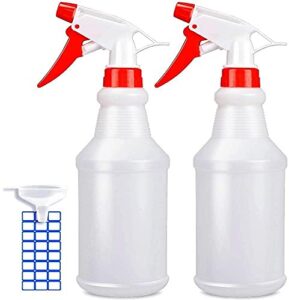
A good spray bottle is one of those things you don’t think about — until yours leaks everywhere.
The JohnBee HDPE Spray Bottle keeps it simple. It’s BPA-free, chemical-resistant, and built to handle cleaning solutions, water, or pet-safe sprays without breaking down.
- Adjustable nozzle: fine mist to solid stream
- Extended suction tube uses every last drop
- Leak-free design — no rubber parts to degrade
- Comes with a spare nozzle and labeling stickers
Reliable, refillable, and no drama.
| Best For | Anyone who wants a reliable, refillable spray bottle for everyday cleaning, plant care, or pet-safe sprays without the mess of a leaky trigger. |
|---|---|
| Primary Use | Spray bottle |
| Material | HDPE plastic |
| Size | 16 oz (x2) |
| Weight | Not specified |
| Reusability | Fully refillable |
| Animal Safe | BPA-free materials |
| Additional Features |
|
- BPA-free HDPE body handles everything from vinegar to diluted bleach without breaking down
- Adjustable nozzle switches between fine mist and solid stream, so it works for plants and heavy-duty cleaning alike
- No rubber parts means less wear over time, and the extended suction tube gets every last drop
- Too small for big jobs — at 16 oz, you’ll be refilling often if you’re covering a lot of ground
- Not great for thick liquids like oils or essential oils, which can clog the nozzle
- Some nozzles arrive defective out of the box, though a spare is included just in case
Setup Essentials for Hatchlings
Getting a hatchling’s setup right from day one makes everything easier down the road.
There are a few key things you’ll want to nail before your new corn snake ever arrives home.
Here’s what actually matters for those first weeks.
Correct Temperature Gradient for Young Corn Snakes
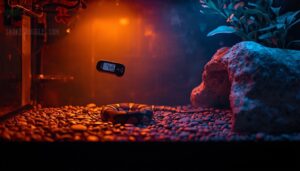
Temperature is everything for young corn snakes — get it wrong, and digestion shuts down. Your warm end should hit 84–87°F using a heat pad paired with a temperature controller for steady thermostat calibration.
Keep the cool side at 75–80°F. Use gradient monitoring tools like a digital infrared thermometer to check both ends daily. Nighttime heat retention matters too — don’t let temps dip below 72°F.
Safe Substrate Depth for Burrowing
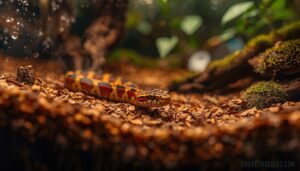
Corn snakes love to burrow — don’t underestimate it. For hatchlings, aim for 2–3 inches of substrate bedding to start, with a growth buffer as they develop.
Premium wood chips substrate benefits include material granularity that resists compaction prevention issues. Depth measurement matters for maintaining a humidity gradient from surface to base.
loose, organic reptile enclosure enrichment materials — safe substrate selection for reptiles makes a real difference for first-time reptile owners.
Secure Hides for Stress Reduction
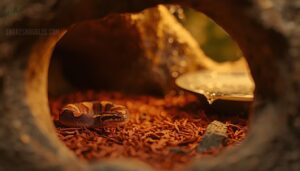
A hide is your snake’s safe room. For first-time reptile owners building a corn snake habitat setup, hides are non‑negotiable for reptile health and welfare.
- Choose secure reptile hide options with rounded edge safety
- Opt for insulated wall design to stabilize microclimates
- Pick multi-chamber layout or tunnel style hides for retreat choice
Always check material toxicity — smooth, non‑toxic finishes protect hatchlings through skin contact.
Water Access and Feeding Space
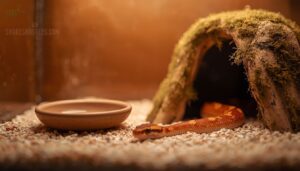
Once your hatchling feels safe in its hide, water and food placement become your next focus — two details that make a real difference in beginner reptile care.
| Setup Element | Best Practice |
|---|---|
| Shallow Drinking Dish | Prevents drowning risk |
| Ceramic Bowl Placement | Away from heat sources |
| Feeding Dish Isolation | Separate from hides |
| Separate Feeding Mat | Catches spills easily |
Spill management and Feeding Dish Isolation keep your corn snake care supplies hygienic — key for any first-time reptile owner’s feeding schedule and humidity control.
Housing Hatchlings Separately
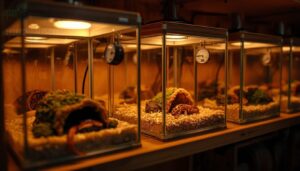
Keep each young corn snake in its own enclosure — sharing space invites stress, accidental bites, and uneven growth. Individual Enclosure Labels help you track feeding days and shed cycles at a glance. Use Individual Cage Positioning to fine-tune Individual Ventilation Adjustments and Individual Humidity Sensors per snake.
Isolation Stress Monitoring tells you quickly if something’s off. Your baby corn snake starter kit manages housing young corn snakes right from day one.
Common First-Time Buyer Mistakes
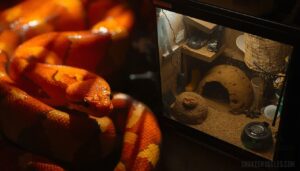
Most first-time corn snake owners don’t fail because they didn’t care — they fail because nobody warned them about the small stuff. A few common missteps can quietly stress your snake or make your setup harder to manage than it needs to be.
Most first-time corn snake owners aren’t undone by neglect — they’re undone by the small things nobody thought to mention
Here’s what to watch out for before you buy.
Choosing an Enclosure That is Too Small
A small tank might seem fine at first — but it’s one of the most common mistakes new owners make. young corn snakes need room to explore proper thermal gradient zones.
Without it, you’ll notice stress behavior signs like corner-coiling and head bobbing. Limited burrowing space and humidity fluctuation risks follow quickly.
A long‑lasting enclosure like the RCB9 grows with your snake and prevents injury prevention challenges down the line.
Skipping Precise Heat Control
Heat control isn’t something you can eyeball. Without a thermostat, your heat mat can cause Heat Mat Overheating, Thermal Spot Hotspots, and Unstable Night Temperatures that stress your snake silently.
Watch out for these Precise Heating Control mistakes:
- Skipping a thermostat entirely
- Sensor Placement Errors near the substrate
- Temperature Drift Risks overnight
- No All-in-one solution for Complete Heating and Lighting Setup
- Assuming an Effortless Setup works without monitoring
Using Unsafe Substrate Materials
Grabbing the wrong bedding is one of the easiest mistakes first-time reptile owners make. Cedar and pine release Toxic Aromatics that cause Respiratory Irritation fast. Your Corn Snake Starter Kit should never include these.
| Unsafe Substrate | Risk |
|---|---|
| Cedar/pine shavings | Respiratory Irritation |
| Sand or gravel | Impaction Risk |
| Damp substrate | Mold Growth |
| Dusty corn cob | Dust Inhalation |
Stick to aspen or paper-based reptile bedding for safe substrate selection for reptiles and solid substrate hygiene.
Relying on Live Prey
Live prey might seem more natural, but it’s one of the riskiest choices for a first-time snake owner. Vigorous rodents can seriously injure your corn snake during feeding. There’s also real disease risk from improper prey handling.
Frozen/thawed mice follow safer feeding protocols, match correct size selection, and fit your rodent feeding schedule without the stress — for you or your snake.
Ignoring Cleaning and Hygiene Needs
A dirty enclosure is a health hazard hiding in plain sight. Waste breaks down fast — ammonia accumulation stresses your snake within days, bacterial proliferation follows closely, and mold spores irritate airways before you notice anything’s wrong.
- Spot-clean feces daily
- Replace substrate weekly for odour control
- Sanitize water dishes every five days
- Wipe hides to prevent mold buildup
Easy-to-clean reptile habitats make this routine painless.
Which Kit Fits Your Budget?
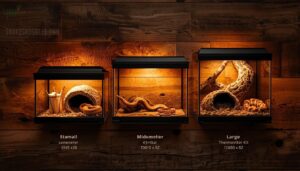
Budget shapes every decision when you’re starting out, and corn snake kits are no different. The good news is that you don’t have to spend a fortune to get everything right the first time.
Here’s a closer look at what your money actually gets you and where it makes sense to spend it.
Starter Kit Value Versus Piecemeal Buying
A corn snake starter kit wins on cost efficiency right away — everything’s bundled, component compatibility is built in, and decision fatigue reduction is real when you’re new. Piecemeal buying gives you upgrade flexibility, but it adds up fast.
For first-time reptile owners, an all-in-one snake kit is often the smarter long-term investment than piecing it together yourself.
What Essentials to Prioritize First
Before anything else, your corn snake starter kit needs three non‑negotiables:
- Complete heating and lighting setup — temperature control for snakes matters from day one; use temperature monitoring tools to verify your gradient
- Secure latching mechanism — ventilation design and humidity management only work if the enclosure stays sealed
- Substrate selection for reptiles — safe bedding protects hatchlings immediately
Get these right first. Everything else can wait.
Long-term Durability for Growing Snakes
Your kit needs to hold up as your snake grows. Look for corrosion-resistant hardware, sealed seams with solid seal integrity maintenance, and HDPE or PVC panels with strong material fatigue resistance.
Premium substrate paired with moisture control strategies prevents mold that weakens enclosure floors.
A long-lasting enclosure with professional design and reliable temperature control for snakes means fewer replacements and more peace of mind.
Upgrade Timing for Juveniles and Adults
Growth milestones tell you when it’s time to upsize. Watch for increased exploration, two consistent shedding cycles, and strong appetite — those are your behavior indicators.
Juveniles usually need a larger space within six to twelve months.
Adults need stability first: one month of steady size before upgrading.
Always maintain temperature consistency throughout the acclimation period to avoid setbacks.
Best Choice for First-time Owners
Once your snake is settled and sized up, the best choice for first-time reptile owners is a complete reptile starter kit that bundles everything cleanly. Look for easy assembly, safety certifications, and eco-friendly packaging — signs of a brand that’s thought things through.
An all-in-one solution beats piecemeal buying for long-term cost efficiency, and compact storage means less clutter while your corn snake grows.
Frequently Asked Questions (FAQs)
What is the biggest trouble with corn snakes as pets?
The biggest trouble is owner commitment.
Daily temperature regulation, humidity management, and shedding cycle management require consistency.
Add Salmonella risk, parasite infestations, feeding reluctance, and strict feeding protocols, and health considerations pile up fast.
How often should corn snakes shed their skin?
Juveniles shed every 2–3 weeks — that’s your Juvenile Shed Cycle in action, driven by fast growth. Adults follow a longer Adult Shed Interval of 4–8 weeks.
Humidity management around 40–60% keeps both on track.
Can corn snakes be handled daily by beginners?
Yes — but take it slow. Once your corn snake settles in after about a week, short 5-minute sessions work well.
Watch for stress signals, respect its feeding schedule, and you’ll build real trust fast.
What signs indicate a corn snake is stressed?
Watch for nose rubbing, appetite decline, defensive hissing, or pacing along edges. Irregular shedding also signals stress.
These cues mean that snake’s habitat heating, temperature monitoring, or pet snake care routine needs adjustment.
How long do corn snakes typically live in captivity?
Properly pampered corn snakes live long, healthy lives — usually 10 to 20 years in captivity. With solid reptile husbandry, some reach
Lifespan Influencers like diet, warmth, and Stress Reduction Strategies make all the difference.
Do corn snakes need a vet checkup after purchase?
Not always. For first-time reptile owners, a vet visit isn’t mandatory right away. Focus on correct setup first, then schedule a health screening if urgent symptoms appear.
Conclusion
The snake you bring home will outgrow your hesitation faster than it outgrows its first hide. That’s why choosing the right corn snake kits for first-time reptile owners matters more than most beginners expect.
The right setup doesn’t just house an animal—it builds your confidence alongside theirs. Get the essentials right from day one, and what feels unfamiliar now becomes second nature before your first successful shed lands on the enclosure floor.