This site is supported by our readers. We may earn a commission, at no cost to you, if you purchase through links.
Grab a hook when you should’ve grabbed tongs, and you’ll know it fast—usually by the defensive strike aimed at your wrist. That split-second choice separates confident handlers from ones nursing a bite.
The difference between snake hook and tong comes down to one word: pressure. A hook guides. A tong restrains.
Reach for the wrong tool and you either spook a calm snake into striking or squeeze a stressed one hard enough to bruise its ribs. Knowing which tool fits which moment isn’t optional gear trivia—it’s the line between a smooth cage cleaning and an emergency room visit.
Table Of Contents
- Key Takeaways
- Snake Hook Vs Snake Tong
- How Snake Hooks Work
- How Snake Tongs Work
- Safety and Snake Welfare
- Choosing The Right Tool
- Frequently Asked Questions (FAQs)
- Do snake tongs hurt snakes?
- What animal are snakes most afraid of?
- Are snake hooks better than sticks?
- Can snakes hear human voice?
- Can a snake hook cause accidental bites?
- How often should hooks and tongs be replaced?
- Are hooks or tongs legal for wild snake removal?
- What size tong fits a juvenile snake best?
- Can hooks and tongs be used together?
- Conclusion
Key Takeaways
- Snake hooks guide and support movement without gripping, making them the go-to tool for daily handling, cage cleaning, and calm species like corn snakes and ball pythons.
- Snake tongs use mechanical jaws to restrain, and should only be used as a backup for defensive strikes, uncooperative snakes, or confined spaces.
- Using tongs with too much pressure can injure a snake through rib damage, spinal compression, or breathing problems, so jaw width and grip force must match the snake’s size.
- Proper body mechanics—like bending your knees, keeping the snake close, and supporting its full body weight—protect both the handler’s spine and the snake’s safety during every lift.
Snake Hook Vs Snake Tong
A hook and a tong look like cousins, but they do very different jobs in your hands. One guides, the other grips, and knowing which is which keeps you and your snake safe. Here’s how the two stack up.
If you’re still not sure which tool fits your situation, this breakdown of snake hook vs snake tongs differences walks through exactly when to reach for each one.
Core Handling Difference

Grab a snake hook and you’re guiding, not gripping. Snake Handling Tongs work the opposite way, using mechanical jaws for direct restraint.
| Feature | Snake Hooks | Snake Handling Tongs |
|---|---|---|
| Contact | Guiding, no pinning | Jaw pressure |
| Feedback | Minimal tactile | Precise tactile |
| Restraint Level | Low | High |
That gap between guiding versus pinning shapes every choice you’ll make with reptile handling equipment.
Guidance Versus Restraint

Every choice with reptile handling equipment mirrors a bigger principle: guidance first, restraint last. Snake Hooks support proactive planning and de-escalation, easing a snake along without force. Snake Handling Tongs step in only when risk demands it.
| Approach | Purpose |
|---|---|
| Guidance | Prevent harm, build calm |
| Restraint | Last resort, immediate risk |
| Hooks | Behavioral support, low stress |
| Tongs | Risk mitigation, controlled grip |
That’s restraint ethics in practice.
Daily Use Versus Backup

Your daily management workflow should lean on hooks for routine tool selection, not tongs. Tongs stay ready as backup device availability for emergency restraint readiness only.
| Tool | Primary vs Secondary | Typical Use |
|---|---|---|
| Hook | Primary | Daily lifting, guiding |
| Hook | Primary | Cage cleaning |
| Tong | Secondary | Bite-lock response |
| Tong | Secondary | Defensive strikes |
| Tong | Secondary | Uncooperative snakes |
Think of it like fire extinguishers: present, rarely used.
Like fire extinguishers, snake tongs should stay ready but rarely get used
Pet Snake Suitability

Corn snakes and ball pythons top most beginner species selection lists for good reason: calm temperament, predictable movement, low strike risk.
Both species also tend to tolerate frequent handling well, a trait detailed in this guide to the friendliest snakes for handling.
| Species | Temperament | Recommended Tool |
|---|---|---|
| Corn Snake | Calm | Hook |
| Ball Python | Docile | Hook |
| Large Boa | Variable | Hook + Tong |
Captive-bred benefits show up fast during handling difficulty assessments — these snakes acclimate quicker, making hooks your go-to herpetology equipment for daily reptile handling tools use.
How Snake Hooks Work
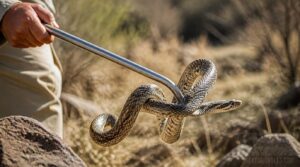
A snake hook looks simple, but there’s real skill behind every lift and guide. You’ll get the most out of one once you understand how its shape and length actually work for you. Here’s what makes this tool click in your hands.
Curved Smooth Head
That gentle arc isn’t decoration—it’s the whole point. The curved smooth head spreads contact pressure evenly, cutting friction as it slides along scales.
Key traits:
- Aircraft-grade aluminum build
- Electro-polished finish
- No sharp edges
- Even weight distribution
- Built for repeated contact
This design protects your snake and your gear, session after session, without snagging or scraping.
Lifting and Guiding
Once the hook’s under the snake, lift stays close to your body—this cuts spinal strain and handler fatigue fast.
| Technique | Purpose |
|---|---|
| Slow lift | Managing snake stress |
| Close-body carry | Ergonomic posture |
| Steady pace | Controlled movement |
| Gentle redirect | Guiding without gripping |
| Pause often | Reassess position |
These snake capture techniques rely on rhythm, not force—smooth animal restraint, every lift.
Proper Body Support
Before you ever lift a snake, plant your feet: stable base, shoulder width apart, weight even on both sides.
Keep spine alignment neutral—straight, not arched—while midsection engagement carries the load, not your lower back.
Hold the snake close, center gravity tucked near your torso. That’s weight distribution done right, and it’s what separates solid snake handling hooks work from a strained back.
Common Hook Lengths
Not every job calls for the same pole. Standard hook lengths run 18 in, 39 in, 48 in, and 64 in — pick based on reach, not preference.
Shorter poles suit tight enclosures; longer ones handle big-bodied snakes at a safer distance.
Brands vary slightly on sizing, so compare specs before buying your snake capture tools. The market’s lack of industry standard can complicate cross‑brand size comparisons.
Best Routine Uses
Your hook earns its keep during the everyday stuff: cage cleaning, feeding safety checks, and moving a snake to a temporary enclosure without a fight.
Guide it along a stable surface, keep the midsection supported, and ease it into transfer containers. No forcing, no gripping — just steady direction. That’s the whole job, whether it’s relocation or a quick vet transport.
How Snake Tongs Work
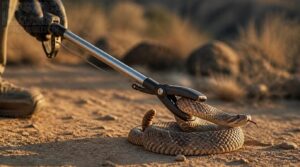
Tongs work different than hooks. They grip instead of guide. Here’s what makes them tick.
Mechanical Jaw Design
Under the hood, a snake tong is a real mechanical capture device, not a stick with a claw. Steel jaws move on a synchronized jaw motion system, guided by a central tie bar. A cable-driven jaw actuation pathway links your grip to the tip.
You’ll find:
- Snake Handling Tongs Narrow Jaws
- Snake Handling Tongs Wide Jaws
- Hardened, surface-treated contact points
Grip Pressure Control
That cable-driven jaw system only works if your hand knows what it’s doing. Grip pressure control separates skilled handlers from beginners fumbling snake handling tongs.
Your fingers feel jaw tension through the cable — tactile feedback tells you when to ease off. Distribute pressure across your last three fingers, not your thumb, to avoid fatigue and hotspots. Adjust gradually. Surface friction and grip size both affect required force.
Narrow Versus Wide Jaws
Jaw width on your herpetological tongs isn’t cosmetic — it changes what the tool does.
Narrow jaws concentrate pressure on smaller-bodied snakes, giving finer control with less surface contact. Wide jaws spread grip force across a broader hold, useful for thicker-bodied species where a narrow bite risks bruising.
Match jaw width to snake size before you reach for your snake safety equipment.
Immobilizing Difficult Snakes
Some snakes won’t cooperate no matter how correct your jaw width choice was. When a snake strikes repeatedly or won’t settle, head restraint behind the occiput stops the bite risk fast.
Apply gentle mandible pressure, never throat pressure.
A secondary handler steadies the body weight, cradling midsection to tail. This teamwork minimizes capture stress during difficult immobilization.
Confined-space Handling
Tight crawl spaces under sheds or wall voids don’t leave room for hooking and tailing. That’s where tongs earn their keep.
Maneuvering in tightness demands a shorter reach than open-field capture.
- Assess gap width
- Choose jaw size
- Angle tong entry
- Secure grip fast
Restricted area safety depends on tool selection logic — tongs beat hooks when space constraint risks outweigh capture method efficiency.
Safety and Snake Welfare
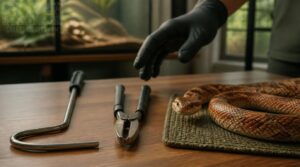
Every tool you pick up carries some risk if you use it wrong. Your snake’s safety depends on knowing where that risk hides. Here’s what to watch for before you reach for a hook or tong.
Stress and Injury Risks
Stress isn’t just in your head—it changes how your hands work. Psychological stress impact shows up fast: elevated cortisol slows reaction time, tightens grip control, and fuels cognitive load errors like misjudging distance.
Chronic muscle tension in your neck and shoulders raises strain risk with any animal handling instruments, tongs included. Poor handler decision making under pressure often means skipped checks—exactly when a snake resists most.
Avoiding Spinal Strain
Lifting a heavy‑bodied python off the ground isn’t so different from lifting a loaded feed bag. Bend your knees, not your back, keep the load close, and never twist your torso mid‑lift.
Good spinal alignment habits and midsection stability protect you long after the snake’s back in its enclosure.
- Squat, don’t stoop
- Hold the snake close to your chest
- Pivot your feet, not your spine
Tong Pressure Dangers
Where tongs go wrong is pressure, not the tool itself. Too much squeeze and you’re risking spinal compression or ribcage injury, especially through the neck and midsection.
Soft tissue bruising builds fast under narrow jaws, while wide jaws spread force better but still demand care.
Watch for respiratory compromise signs like gaping or labored breathing. Juveniles bruise easier—their tissue can’t absorb pressure like adults can.
Heavy-bodied Snake Care
A big-bodied boa isn’t just heavier — it’s harder on the spine, so full body support during lifting matters more than grip strength. Support the midsection, not just behind the head.
Beyond handling, watch thermal gradients, humidity-linked shedding, and prey sizing (1 to 1.5x midsection width); these husbandry basics prevent the weight and stress issues that make Snake Hooks and Handling Tongs risky in the first place.
When Training Matters
A pole and a set of jaws don’t make you competent — training does. Every professional herpetologist builds skill through demonstrations, supervised practice, and honest corrective feedback before touching a defensive snake solo.
Skill assessment checklists confirm readiness. Behavior anticipation drills teach you to read handling stress indicators before a bite happens. Quarterly refresher sessions keep technique sharp, because rusty hands cause the injuries tools alone can’t prevent.
Choosing The Right Tool
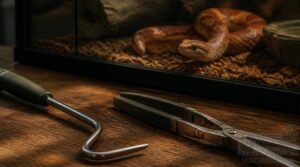
Picking between a hook and tongs comes down to your snake, your skill level, and the situation in front of you. There’s no single right answer for every handler or every enclosure. Here’s how to match the tool to the task at hand.
If you’re weighing gear choices beyond hooks and tongs, our guide to digital thermometers for breeders covers another tool that’s just as critical for safe, confident handling.
Beginner Pet Snake Handling
Your first snake needs calm hands, not force. Start with snake handling hooks — they let you guide movement while reading stress signals like tight coiling or fast tail flicks.
Save snake handling tongs for later, once you’ve built real confidence. This approach follows basic reptile safety protocols and keeps bite risks low while you learn your snake’s shifting temperament.
Ball Pythons and Corn Snakes
Ball pythons and corn snakes rarely need tongs at all. A snake handling hook covers daily care for both — corn snakes stay active and explore, so guide them gently, while shy ball pythons need slow, calm lifts.
Humidity differs: ball pythons want 60-80%, corn snakes 40-60%. Match substrate (aspen versus newspaper) and feeding schedules to species, and keep enrichment simple for enclosure comfort.
Boas and Large Snakes
Green anacondas can top 500 pounds, and that changes everything about restraint mechanics. Two handlers, both working snake handling hooks, split the load along the body — head and mid-section separately.
- Never tong a heavyweight boa alone
- Support weight every third of body length
- Watch for constriction wrap during transport
- Use rescue-grade gear rated for mass
Skip tongs on boas entirely unless defensive.
Cage Cleaning Situations
Cage day changes the math. A snake hook clears the enclosure fast — nudge the snake onto a temporary perch while you handle sanitization protocols and substrate replacement.
Enrichment removal comes first, moisture control after rinsing.
Keep tongs stowed unless the animal turns defensive. Most field herpetology supplies favor hooks here — gentler, quicker, no gripping needed for a calm cage clean.
When to Avoid Tongs
Skip snake handling tongs on small or fragile species — jaw pressure dangers outweigh any control gained.
Tight coils in inaccessible areas? Tongs can’t reach clean. Watch for stress response triggers before grabbing gear.
Avoid tongs when:
- Snake is very small
- Species is fragile or high-strung
- Procedure runs long
- Space is cramped
Your snake hook remains the safer field herpetology supplies choice.
Frequently Asked Questions (FAQs)
Do snake tongs hurt snakes?
Yes, if misused. Mechanical jaw pressure on narrow settings can cause rib damage or spinal injury near the head. Watch for gaping and thrashing—key stress indicator signs.
Wide-jawed snake handling tongs distribute force safely than narrow ones.
What animal are snakes most afraid of?
Honey badgers and mongooses top the list — venom resistance and fearless aggression make them serious threats. Predatory bird silhouettes overhead trigger instant retreat too.
In water, tiger sharks add another layer of danger, snapping up sea snakes with jaws powerful enough to shatter bone, as detailed in this guide to snake predators and their hunting tactics.
That’s why snake handling hooks and tongs matter: they mimic controlled, confident predator-like handling snakes respect.
Are snake hooks better than sticks?
Purpose-built hooks beat improvising with sticks every time. The curved smooth head holds body weight without pinching, while sticks lack precision and often risk surface damage.
Real snake handling hooks give better tactile feedback than any makeshift substitute for lifting safety.
Can snakes hear human voice?
No eardrums, but snakes pick up low frequency vibrations through jaw and skull. Loud voices at close range can trigger a stress response, so calm talk during snake handling hooks or tongs use helps keep things steady.
This guide to how snakes actually hear breaks down the science behind their unique vibration-sensing system in more detail.
Can a snake hook cause accidental bites?
Bad hook placement near the head can trigger defensive strike triggers, especially if the snake shuffles free or hits unstable surfaces.
Improper force, sudden pressure, or agitation from repeated handling all raise bite risk during otherwise routine snake handling with hooks.
How often should hooks and tongs be replaced?
Ever wonder when your trusty tool becomes a liability? Check for rust, bending, or dull grips regularly. Aluminum hooks often need replacing around 5 years; tongs sooner with heavy sterilization or drops. Inspect before every use.
Are hooks or tongs legal for wild snake removal?
Owning tongs or hooks won’t clear you legally — most areas require a catch and release permit for wild removal. Wildlife law compliance and authorized remover duties matter more than gear itself; equipment helps permitted work, it doesn’t replace it.
What size tong fits a juvenile snake best?
Go with 30 to 40 inch snake handling tongs for most juveniles—narrow jaws work best. This ideal tong length keeps hands safe while avoiding rib pressure, minimizing handling stress on smaller species during routine restraint.
Can hooks and tongs be used together?
Think of it like a relay handoff: the hook guides, the tong locks in. That’s coordinated tool collaboration — hooks position the body while tongs stabilize reactive species, minimizing spinal compression through synchronized handling techniques.
Conclusion
A hook is an open palm. A tong is a closed fist. That image holds the whole difference between snake hook and tong—one invites movement, the other stops it cold.
Your snake feels which hand you’re offering before you even touch its skin.
Reach for guidance first, always. Save restraint for real risk, not routine handling. Master both, read each snake’s mood, and your hands become tools it trusts, not fears.