This site is supported by our readers. We may earn a commission, at no cost to you, if you purchase through links.

A corn snake can sit calmly in a child’s hands within a few weeks of consistent, patient handling. That kind of predictability is exactly what makes choosing the right snake so important when kids are involved.
Not every snake is a safe beginner pet. Some species bite defensively, grow too large to handle safely, or carry husbandry needs that overwhelm new owners fast. Getting this decision wrong creates stress for your child and the animal.
The best snake breeds for kids that are safe and easy to care for share a short list of traits: calm temperament, manageable size, and forgiving care requirements you can actually stick to.
Table Of Contents
- Key Takeaways
- How to Choose a Kid-Safe Snake
- Best Snake Breeds for Kids
- Compare Care Needs, Size, and Costs
- Kid-Safe Handling and Health Rules
- Snake Species Families Should Avoid
- Frequently Asked Questions (FAQs)
- What is the most kid friendly snake?
- Which pet snake is easiest for a beginner to care for?
- What is the lowest maintenance snake?
- Which snake is the best for beginners?
- What should I do if my child gets bitten by the pet snake?
- What signs should I look out for if the snake escapes from its enclosure?
- Where can I buy a healthy pet snake?
- What do I do if my snake escapes?
- Can snakes live with other household pets?
- Who cares for my snake during vacations?
- Conclusion
Key Takeaways
- Corn snakes, ball pythons, and rosy boas are the top picks for kids because they stay small, eat reliably, and tolerate handling without becoming defensive.
- Consistent, calm handling sessions of just five to ten minutes build trust quickly and are just as important as choosing the right species in the first place.
- Snake ownership is a decades-long commitment — corn snakes live 15–20 years and ball pythons up to 30 — so families need to plan for care continuity through moves, school, and life changes.
- Venomous families like Elapidae and Viperidae are never appropriate for homes with children, regardless of the handler’s experience level.
How to Choose a Kid-Safe Snake

Not every snake makes a good fit for a family with kids. Before picking one, there are six key factors you’ll want to check off. Each one helps you find a snake that’s safe, manageable, and right for your child’s age and experience level.
Reviewing the best snake species for children alongside these six factors can help you confidently match the right snake to your family’s needs.
Temperament And Handling
Understand snake temperament before your child holds any reptile.
These handling tips matter:
- Your child stays calm when the snake does
- Slow movements protect your bond
- Short sessions build lasting confidence
- No tail thrashing means you’re doing it right
- A coiled, relaxed snake is a happy one
Docile, beginner-friendly snake breeds always pair well with proper handling for young kids.
Adult Size And Strength
Size matters as much as snake temperament does. A nonvenomous gentle breed under 4 feet gives your child a lower bite rate and less force during handling. These docile beginner-friendly snake breeds all stay safe and manageable as adults.
| Breed | Adult Size | Strength Risk |
|---|---|---|
| Corn Snake | 4–5 ft | Low |
| Rosy Boa | 24–36 in | Very Low |
| Ball Python | 3–5 ft | Low-Moderate |
Care Difficulty
Keeping a manageable-sized snake also means simpler overall care. Docile beginner-friendly snake breeds don’t need complex reptile husbandry, so they’re a realistic low-maintenance pet for most families.
Captive-bred options detailed in this affordable snake species guide make it even easier to find a budget-friendly companion that stays small and stress-free to keep.
A few things your child can help with:
- Temperature gradient: warm side 85–90°F, cool side 78°F
- Weekly humidity checks
- Clean, fresh water daily
- Monthly substrate cleaning
Proper handling fits naturally into this routine.
Feeding Reliability
Once your child gets comfortable with the care routine, feeding is the next big win. These three breeds aren’t picky eaters, and they thrive on a simple weekly routine.
| Snake | Feeding Schedule |
|---|---|
| Corn Snake | Weekly, frozen-thawed mouse |
| Ball Python | Every 7–14 days |
| Rosy Boa | Weekly, offer after shed |
Stick to a reliable weekly feeding schedule and always offer pre-killed mice.
Health And Hygiene
Your snake needs consistent pet hygiene to stay healthy. Spot-clean waste daily, replace the substrate monthly, and always wash your hands after handling. A dedicated reptile terrarium cleaning kit keeps all your brushes, safe disinfectants, and tools in one place, making daily spot-cleaning much easier to stick to.
Choosing the right substrate and sticking to a monthly deep-clean schedule are just as important—this snake habitat maintenance guide breaks down both in practical detail.
- Schedule annual veterinary care for reptiles
- Watch for signs of illness like wheezing or lethargy
- Run parasitology screening on new snakes
- Follow strict sanitation protocols after every handling
It’s that simple, and it protects your family too.
Lifespan And Commitment
Before you commit, understand snake longevity. Corn snakes live 15–20 years. Ball pythons and rosy boas can reach 20–30. That’s a serious long term commitment for your whole family.
Choosing a pet snake means committing to a companion that could outlive your child’s entire childhood
Pet longevity like this means budgeting for decades of food, bedding, and vet visits. Plan early. Think ahead for housing moves, school, or caregiver changes so your care never drops off.
Best Snake Breeds for Kids
Not every snake makes a good first pet, but a few species stand out for families with kids. These three picks are known for their calm temperament, manageable size, and forgiving care needs. Each one gives you a solid starting point, so let’s look at what makes them work.
Corn Snake
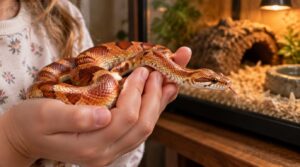
Corn snakes rank among the best snake breeds for kids, and for good reason. They’re slim, gentle, and top out around 4 feet.
These four rules make their care simple:
- Feed young corn snakes pinky mice every 5-7 days
- Maintain temps at 78-82°F with 60-70% humidity
- Choose aspen or cypress substrate, never cedar
- Practice proper handling with slow, calm movements
Rosy Boa
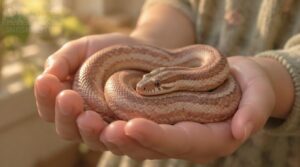
Imagine a small snake resting in a child’s hands, barely stirring. The Rosy Boa is a top choice among kidfriendly snake breeds and one of the most docile beginner-friendly snake breeds around. Setting up a comfortable home for your new pet is simple with a rosy boa starter enclosure kit that includes everything a beginner needs.
It stays 24-30 inches, eats small mice every 7-14 days, and takes to handling beautifully with proper handling. It’s truly one of the best Safe Easy Pets to Care For.
| Feature | Detail | Note |
|---|---|---|
| Size | 24-30 inches | Easy to hold |
| Feeding | Every 7-14 days | Small mice only |
| Lifespan | 15-25 years | Long commitment |
Ball Python
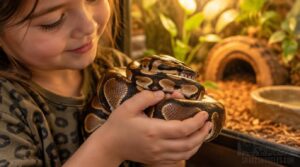
Ball Pythons are among the most docile kid-friendly snake breeds. They top out at just 3–4 feet and rarely bite.
Here’s why kids love them:
- They curl calmly in your hands
- They’re patient, even when startled
- They recognize your scent within weeks
Their care requirements stay simple: maintain your warm enclosure and feed pre-killed rodents every week.
Compare Care Needs, Size, and Costs

Three great options. Only one will fit your family best.
Corn snakes have the lowest care requirements on this list. A 40-gallon adult enclosure, steady humidity around 50%, and feedings every couple of weeks make them the easiest beginner snake to manage. Annual costs usually stay between $300 and $400.
Rosy boas feed less often as adults and fit comfortably in a 20 to 30-gallon tank. The cost to keep one is modest, but know going in that they can live up to 30 years.
Ball pythons need more enclosure size, around 55 to 75 gallons as adults, and annual care can reach $600. They’re a strong pick among snake species for children, a step up in space and budget.
Kid-Safe Handling and Health Rules

Picking the right snake is just the start. How you handle it each day shapes your child’s experience just as much as the enclosure.
Always support the snake’s full body. Let it move through your child’s hands rather than grip. Keep early sessions to five or ten minutes so it stays calm.
Don’t handle right after feeding. Wait at least 48 hours to prevent regurgitation and defensive behavior, even in calm beginner breeds.
Reptile health monitoring is quick. Watch for wheezing, open-mouth breathing, or nasal discharge as signs of respiratory illness. Check for mites or retained shed before kids handle. Weigh your snake monthly. A reptile digital scale makes monthly weigh-ins quick and precise, so you can spot gradual weight loss before it becomes a health concern.
If your snake won’t eat for two or more weeks, or seems lethargic, contact a vet.
Snake Species Families Should Avoid

Knowing what to avoid matters just as much as knowing what to choose.
Family Elapidae includes cobras, mambas, and coral snakes. These are highly venomous and often defensive by nature. Even experienced handlers get bitten. They are not snake breeds for kids, period.
Family Viperidae covers rattlesnakes, copperheads, and pit vipers. Their front-fanged jaws deliver fast, dangerous strikes. No honest risk assessment makes these appropriate for a family home with children.
Sea snakes, family Hydrophiidae, are venomous and need specialized aquatic setups that most households simply can’t support safely.
Follow pet safety guidelines and trust snake behavior signs. Tight coiling, repeated striking, and loud hissing tell you a species isn’t ready for kids. Always stick with proven beginner breeds instead.
Frequently Asked Questions (FAQs)
What is the most kid friendly snake?
Ironically, the pet most parents dread is often the calmest one in your home. Corn snakes top the list of docile beginner-friendly snake breeds, and they’re genuinely one of the easiest for kids to handle.
Which pet snake is easiest for a beginner to care for?
The corn snake wins. It eats reliably, tolerates handling well, and thrives in a straightforward enclosure. Captive-bred juveniles are calmer, more predictable, and genuinely forgiving of small beginner mistakes.
What is the lowest maintenance snake?
The rosy boa is likely the easiest low-maintenance pet snake you’ll own. It eats every 7–14 days, needs only low humidity, and stays under four feet. Those simple snake care needs are hard to beat.
Which snake is the best for beginners?
Ask any reptile expert which snake to start with, and they’ll say the same thing: a corn snake. It’s calm and forgiving, eats well, and fits most budgets. Among docile beginner-friendly snake breeds, it wins.
What should I do if my child gets bitten by the pet snake?
Even docile pet snakes bite occasionally. Stay calm, keep your child still to slow venom spread, remove jewelry, wash the wound with soap and water, and call emergency services. Never cut, suck, or ice it.
What signs should I look out for if the snake escapes from its enclosure?
Think of your snake as a slow detective tracing along the walls. Check the room’s perimeter first, then look for shed skin or drag marks near any enclosure gaps. A stressed snake always hides fast.
Where can I buy a healthy pet snake?
To find a healthy pet snake, buy from reputable breeders or verified reptile shows. Pick captive-bred juveniles with clear species identification and no visible signs of illness, and always ask for an exotic veterinarian referral.
What do I do if my snake escapes?
Stay calm. Close all doors to contain the area, then move kids and other pets to a safe room. Check warm, dark hiding spots first, and call animal control if you can’t find it quickly.
Can snakes live with other household pets?
Picture your dog pressing its nose against your snake’s tank. That curiosity can turn dangerous fast. Snakes aren’t safe cohabitation partners for dogs or cats, so use escape-proof lids and keep them in separate rooms.
Who cares for my snake during vacations?
You’ll need a trusted, trained caregiver lined up before you leave. Give them a written care plan covering feeding, temps, and handling limits. Set up a daily photo check-in so you stay informed from anywhere.
Conclusion
The most intimidating pet in the room is often the gentlest one. Choosing from the best snake breeds for kids that are safe and easy to care for means your child gets a companion that rewards patience with real trust. Start small, stay consistent, and let the relationship build at its own pace.
Your child’s confidence grows right alongside the snake. That’s not just a side effect of good reptile ownership. It’s the whole point.