This site is supported by our readers. We may earn a commission, at no cost to you, if you purchase through links.
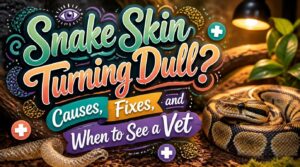
Your ball python’s belly turns pale pink. Its eyes fog over like tiny marbles. You panic and reach for the phone.
Take a breath first. Snake skin turning dull is often just biology doing its job, fluid building between old and new skin layers days before a shed. That milky, bluish cast to the eyes? Normal. The washed-out belly color? Also normal, most of the time.
But not every dull patch means "shed coming soon." Sometimes it signals mites, dehydration, or a vitamin gap that needs fixing. Here’s how to tell the difference and know when to worry.
Table Of Contents
- Key Takeaways
- Why is My Snake’s Skin Turning Dull?
- Check Humidity, Temperature, and Hydration
- Spot Skin Infections, Mites, and Illness
- Help Your Snake Shed Safely
- When Dull Skin Requires Veterinary Care
- Frequently Asked Questions (FAQs)
- Why does my snake look faded?
- What does skin rot look like on a snake?
- What does an unhealthy snake look like?
- Why has my snake gone pale?
- Can stress cause a snakes skin to dull?
- Does age affect how snake skin looks?
- Is dull skin common in newly acquired snakes?
- Can overhandling during shedding damage the skin?
- Do certain snake species shed more often naturally?
- Conclusion
Key Takeaways
- Dull skin, cloudy eyes, and a pinkish belly usually just mean your snake is prepping to shed, not getting sick.
- Before you panic, check your humidity, temperature gradient, and water quality, since off-target enclosure conditions are the most common cause of shedding trouble.
- Mites, scale rot, dehydration, and nutrient gaps all show up as dull or discolored skin too, so look for specks, foul odor, sunken eyes, or dry urates to tell them apart.
- Call your vet if dullness lingers past two weeks, keeps returning, comes with swelling or lethargy, or your snake has three bad sheds in a row.
Why is My Snake’s Skin Turning Dull?
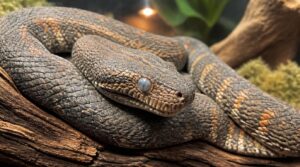
Your snake’s skin looking dull can mean a few different things. Sometimes it’s totally normal, sometimes it’s a red flag worth watching. Let’s break down what’s actually going on under those scales.
If you’re spotting patches of redness or odd discoloration alongside that dullness, this guide to identifying snake skin discoloration causes can help you figure out what your snake’s scales are trying to tell you.
Normal Pre-shedding Changes
About to shed its skin? Expect a skin dulling phase two to four days out. Fluid accumulation between old and new layers causes pattern fading and belly lightening. Your snake turns reclusive, lack of appetite kicks in, and colors go hazy.
This entire process, known scientifically as ecdysis in snakes, occurs because the epidermis can’t expand to accommodate growth. Totally normal, not a red flag, just biology prepping for a fresh coat.
Cloudy Eyes and Pink Belly
Two signs pair up with that dullness: cloudy eyes and a pink belly. A milky fluid layer forms between old and new skin, turning eyes cloudy or bluish. Belly color shifts pink as vessels show through thinning skin.
- Pre-shed eye clouding appears first, days before shedding
- Pink belly follows within 1-2 days
- Both fade as shedding nears
How Long Dullness Lasts
So how long does that dull phase actually stick around?
Typical dull period runs 1-2 days pre-shed, then continues through the 5-7 day shed itself. Juveniles cycle faster, adults slower.
Low humidity causes extended dullness, sometimes past two weeks.
Post shed recovery brings full color back within 24 hours if shedding was complete.
Unusual Fading Between Sheds
Not all fading follows the normal shed cycle, though. Some snakes show random pigment loss, white patches or washed-out color, right after a clean shed.
Pied and banana morphs fade most dramatically thanks to genetics, but low humidity, poor nutrition, mites, or scale rot cause it too.
Unexplained fading? Book a veterinary consultation.
Check Humidity, Temperature, and Hydration
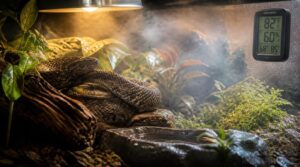
Dull skin often points back to the enclosure, not the snake. Before you worry about illness, run through the basics — humidity, temperature, and water. Here’s exactly what to check first.
Species-specific Humidity Needs
One humidity number doesn’t fit every species, and that’s often the real culprit behind dull skin.
| Species | Humidity Range | Shedding Boost |
|---|---|---|
| Ball python | 60–80% | Humid hide 80%+ |
| Corn snake | 65–75% | Hide 80%+ |
| Green tree python | 80–90% | Stays consistent |
Arid habitat levels sit lower. Mismatched humidity levels stall sheds and invite dehydration fast.
Beyond humidity control, offering climbing branches and hides keeps your snake engaged, and this guide to bumblebee ball python facts covers enrichment ideas suited to their natural habits.
Proper Temperature Gradients
When your snake can’t self-regulate, shedding suffers. A proper temperature gradient needs a 95-104°F basking spot, 88-92°F warm side, and 75-80°F cool side, with cool side insulation preventing heat bleed. Check with a heat gun and probe thermometers, not guesswork. Thermostat placement matters too.
Slight nighttime temperature drop is fine, but sloppy gradients stall ecdysis fast.
Fresh Water and Hydration
Water matters more than owners think. Match bowl size to your snake (6-8 inches for a three-footer, 10-12 for larger ones), dechlorinate with conditioner or 24-48 hour standing, keep pH near 6.5-8.5.
- Change water weekly, sooner if soiled
- Use reptile-safe conditioner
- Check pH regularly
- Place bowl near hides
- Support hydration for shedding
Moist Hide Setup
Think of the moist hide as your snake’s private spa. Hide substrate mix: sphagnum moss, vermiculite, or coir, rehydrated every 2-3 days.
| Hide Element | Purpose |
|---|---|
| Damp cheesecloth entrance | Traps humidity, allows airflow |
| Bottom placement | Moisture settles low |
| Near heat source | Creates gradient |
| Regular mold checks | Protects skin health |
Mist twice daily. Watch for mold, it spreads fast!
Substrate and Ventilation Balance
Substrate and ventilation work as a team, not rivals. Substrate depth impact matters: aim for 4+ inches so moisture spreads evenly, not just dry pockets. Coconut husk beats aspen for stable humidity.
For ventilation mesh coverage, block 80-90% of screen tops with plastic sheeting. This creates humidity gradient control while avoiding stagnant air that breeds bacteria in reptile enclosure setups.
Spot Skin Infections, Mites, and Illness
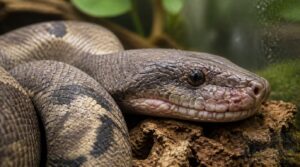
Not every dull-skin case is about humidity or hydration. Sometimes it’s mites, infection, or something going on inside your snake’s body. Here’s what to watch for.
Snake Mite Warning Signs
Tiny black or red specks near the eyes and jaw folds? That’s your first clue. Check water bowls for floating "pepper flecks," those are drowned mites.
Watch for excessive soaking, restlessness, and rubbing against décor. Dust-like droppings on scales, paler color from anemia, irregular sheds.
Quarantine new snakes always, mites spread fast.
What Skin Rot Looks Like
Mites are one thing, but scale rot is a whole different SOS. Look for discolored scales, brown or black patches, often on the belly.
Left untreated, you’ll see blister formation, texture changes (mushy, crumbly scales), and a foul odor. This bacterial issue needs real skin infection treatment, not a wait-and-see approach. Ventral lesions worsen fast.
Dehydration Symptoms
Skin rot is bacterial. Dehydration is different, but just as sneaky.
Try the Skin Tent Test: pinch the skin gently. Slow to bounce back? That’s dehydration. Watch for sunken eyes, wrinkled skin, lethargy, and dry urates instead of soft white waste. Fix humidity levels for shedding, check temperature regulation, and offer fresh water. Left alone, dull skin only worsens.
For a full walkthrough of rehydration steps and recovery timelines, this guide to treating a dehydrated snake covers everything from fluid therapy to follow-up care.
Slow-bouncing skin, sunken eyes, and dry urates are your snake’s quiet cry for water
Nutritional Deficiency Concerns
Water isn’t the only thing your snake needs to keep skin healthy. Inadequate nutrition shows up on the outside fast.
Vitamin A deficiency dries and roughens skin. Vitamin E shortfalls bring odd nodules. Vitamin C loss makes skin fragile and thin. Essential fatty acid gaps cause flakiness. Biotin deficiency adds lesions.
A balanced diet with proper nutritional supplementation fixes most of this.
Signs of Systemic Illness
Diet fixes surface issues, but dull skin paired with other red flags points deeper. Watch for weight loss, appetite loss, or odd behavior changes.
Red flags include:
- Respiratory issues (wheezing, open-mouth breathing)
- Neurological signs (head tremors, disorientation)
- Abnormal bleeding from gums or vents
- Jaundice appearance in skin or eyes
- Lethargy suggesting septicemia, viral pneumonia, or inclusion body disease
These aren’t spa-day problems. They’re SOS.
Help Your Snake Shed Safely
Shedding shouldn’t be a struggle for your snake. A few small tweaks to their setup can turn a rough shed into a smooth one. Here’s what to check.
Correct Enclosure Conditions
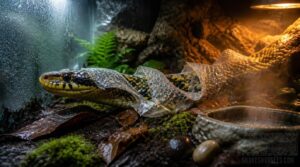
Think of shedding like a home renovation, your snake needs the right conditions to pull it off cleanly.
Match humidity gradients to species needs, keep substrate damp (not soggy), and balance ventilation so air moves without drying things out.
Clean enclosures and proper thermal gradients round out the checklist.
Get these right, and shedding takes care of itself.
Provide Safe Rubbing Surfaces
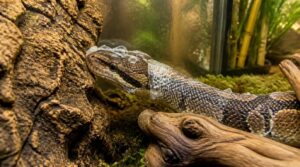
Ever watch a snake rub its face raw on a smooth glass wall? That’s a sign it needs help.
Cork bark works great, it’s naturally antimicrobial and gentle on scales. Add rocks or branches for texture.
- Sterilize surfaces monthly
- Vary placement heights
- Try bamboo as backup
Good enrichment means safe, effective shedding, not painful struggle.
Manage Retained Shed Patches
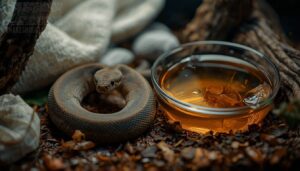
Found pieces of shed stuck near the tail or belly? Don’t yank them off.
Try a moisture bag technique first, damp pillowcase, 20 minutes, let your snake wiggle free naturally.
Still stubborn? A warm water soak (85-90°F) loosens things up fast. Follow with manual removal tools, soft cloth only, gentle pressure. No scissors, ever.
Check for Retained Eye Caps
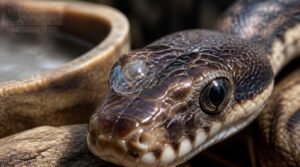
Eyes still cloudy after the rest of the shed came off clean? That’s a retained eye cap, and it needs your attention.
Check both eyes closely, comparing left to right. Asymmetry is your biggest clue.
- Layered or flaky edges around the eye
- One clear eye, one still dull
- Head rubbing against décor
Soak 10-15 minutes, then reassess. Still stuck? Time for shedding assistance from your vet.
Avoid Pulling Loose Skin
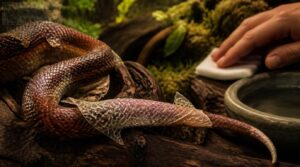
That flake dangling off your snake’s tail? Leave it alone.
Avoid premature pull, even when skin looks ready. Tugging tears new skin before keratin hardens, risking scars.
Give it a natural shed wait. If patches cling, try a gentle soak and damp cotton use on fully detached bits only.
Watch for distress, stop immediately if your snake tenses or pulls away.
When Dull Skin Requires Veterinary Care
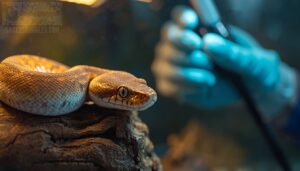
Most dull skin fixes itself once you dial in humidity and heat. But sometimes it’s your snake’s way of waving a red flag. Here’s when that dullness means it’s time to call the vet.
If the dullness comes paired with odd bloating or gas, it’s worth reading about why snakes fart and what their digestive gas really means before assuming the worst.
Persistent Dullness Between Sheds
Dullness that keeps coming back is your snake talking. Listen up.
Persistent dullness signals dysecdysis, parasitic infection, or nutritional deficiency, not a normal cycle.
- Reappears within 2 weeks post-shed
- Lasts beyond 14 days total
- Paired with poor skin health
- No response to humidity fixes
Run your health check routine, correct substrate moisture balance, then schedule vet consultation timing if dullness persists.
Redness, Swelling, or Discharge
Skin talking gets serious when redness or swelling joins the dullness. These are infection indicators, not shedding quirks.
Watch lesion appearance closely: raised, warm patches suggest scale rot or bacterial dermatitis. Pus formation, foul-smelling discharge, or yellow-stained scales mean bacteria won’s wait. Skin inflammation that doubles in size within 24 hours? That’s your SOS. Skip the wait-and-see, book veterinary care now.
Lethargy and Appetite Loss
Not eating alongside dull skin? That combo means more than a rough shed. Lethargy and appetite loss often point to respiratory infection, parasites, or temperature stress, not just dysecdysis. Watch for wheezing, mucus, or mites near the jaw.
A snake refusing food for weeks needs veterinary advice, not just a humidity fix.
Repeated Incomplete Sheds
One bad shed happens. Three in a row? That’s a pattern, and patterns mean something’s off beyond humidity.
Repeated dysecdysis often traces back to:
- Chronic low humidity
- Poor nutrition or vitamin A deficiency
- Irregular feeding frequency
- Unmanaged stress or mites
- Inadequate enclosure enrichment
Fix the environment first. If retained skin keeps showing up anyway, your vet needs to rule out deeper issues.
No Improvement After Corrections
Fixed the humidity, added a soak, still no change after 48 hours? That’s your signal.
Veterinary assessment needed when ongoing dullness outlasts correction efforts, especially with incomplete shedding or scale retention.
| Timeframe | Expected | Vet Visit? |
|---|---|---|
| 0-2 days | Mild dullness | No |
| 3-7 days | Some improvement | Monitor |
| 7-14+ days | Delayed recovery time | Yes |
Fundamental health causes like scale rot or parasite issues need professional care, not more waiting.
Frequently Asked Questions (FAQs)
Why does my snake look faded?
Like looking through frosted glass? That’s fluid buildup causing skin layer separation before a shed. Pigment reduction gives that faded, opaque look, and it’s temporary, normal, and part of getting ready to shed.
What does skin rot look like on a snake?
Watch for discolored belly patches (brown, red, or black), swelling, and blisters. Scale rot brings redness, oozing wet lesions, changed scale texture, and often a foul odor, unlike normal shedding dullness.
What does an unhealthy snake look like?
Trouble brewing shows up fast: skin lesions, discolored scales, or swelling near the mouth (mouth rot!). Add eye swelling, weight loss, and abnormal shedding, and you’ve got a snake waving an SOS flag, not just having a bad day.
Why has my snake gone pale?
Pale skin usually means pre-shed prep, but it can also flag dehydration, mites, or nutrient gaps. Check hydration, look for parasites, and review diet. If pallor lingers past normal shedding issues or dullness, it’s worth a closer look.
Can stress cause a snakes skin to dull?
Stressed out, scaled in? Yes. Rising cortisol levels trigger your snake’s stress response, cutting blood flow and moisture retention.
Chronic stress or rough handling stress causes stress-induced dullness, so keep habitat hygiene consistent to prevent that flat, lifeless look.
Does age affect how snake skin looks?
Age darkening brings melanin buildup, deeper belly tones, and thicker skin. Shedding frequency slows too, dropping from monthly to every 6-12 weeks, while pattern contrast sharpens, making older snakes look bolder, not dull.
Is dull skin common in newly acquired snakes?
Think of it as jet lag with scales. Transport stress and a new tank often trigger dull skin during quarantine, your acclimation humidity check and steady hydration for newcomers usually clear it within days.
Can overhandling during shedding damage the skin?
Overhandling during shedding raises skin tear risk and adds handling stress, both of which can trigger delayed shedding cycles, scale deformation, infection from handling, and abnormal shedding. Give your snake space, its skin’s too fragile for cuddles right now.
Do certain snake species shed more often naturally?
Funny enough, your snake’s shed cycle mirrors its growth spurts. Fast-growing tropical species, plus juveniles of any kind, shed every 4-6 weeks. Slower adults? Every few months. Metabolic shedding speed and habitat moisture both drive the pace of ecdysis.
Conclusion
A thousand tiny worries can melt away with one good look at your snake’s tank. Snake skin turning dull is rarely a crisis, it’s usually just biology hitting pause before renewal. Check humidity, check water, check for mites, and most dullness resolves on its own.
Trust the pattern, but never ignore red flags like swelling or lethargy. Your snake can’t call the vet. That’s your job, and now you know exactly when to make that call.