This site is supported by our readers. We may earn a commission, at no cost to you, if you purchase through links.

Many ball pythons have burned on heat mats plugged into the wall. The mat did what it was designed to do, but without a thermostat, its surface can climb far past a safe 88 to 92°F.
So, do ball pythons need a heat mat? No. They need a stable thermal gradient, with a secure warm hide and a cooler retreat. A mat is only one way to provide it. In a plastic enclosure, it can work well; in a tall glass tank, overhead heat often holds temperatures and humidity reliably. The choice depends on enclosure design, temperature control, and verification.
Table Of Contents
Key Takeaways
- Ball pythons don’t need a heat mat, but they do need a stable thermal gradient with a secure warm hide at 88–92°F and a cooler retreat around 75–82°F.
- Heat mats can cause serious burns if used without a thermostat, so any mat must be installed outside the enclosure, thermostat-controlled, and checked with a surface thermometer.
- Overhead heat often works better for tall glass or humid enclosures, while a regulated heat mat can work well in smaller plastic or PVC setups.
- Check warm-side surfaces, cool-side temperatures, thermostat probes, and equipment daily because air readings alone can miss unsafe hot spots.
No, Ball Pythons Don’t Need Heat Mats
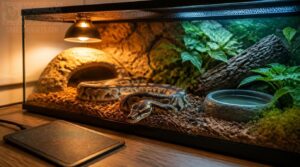
Heat mats can work well, but they’re not the only path to a healthy setup. Your ball python just needs a reliable heat source that creates a proper thermal gradient — the tool you use to get there is up to you. Here’s what you should know before deciding.
For target temperatures and humidity ranges, see this ball python temperature and humidity guide.
A Reliable Heat Source is Essential
Think of consistent, controlled heat as your ball python’s lifeline. Without it, digestion stalls and feeding stops.
Consistent, controlled heat is vital to a ball python’s digestion, feeding, and overall health
Your enclosure setup must deliver:
- A steady thermal gradient from warm to cool zones
- A thermostat-controlled heat source that prevents temperature spikes
- A basking spot surface between 88 and 92°F
Whether you use a heat mat or not, these essential requirements don’t change. Just as researchers have found that structured data interpretation skills improve with focused, consistent practice, so too does your ability to monitor and fine-tune your snake’s thermal environment.
Heat Mats Are Optional
A heat mat can warm your enclosure, but it’s not the only way. Overhead options like radiant heat panels or ceramic heat emitters create a reliable thermal gradient without any contact risk.
As long as your thermostat holds the warm side at 88 to 92°F, your enclosure setup delivers everything your ball python needs.
When Heat Mats Make Sense
That said, there are situations where a heat mat under the enclosure earns its place. If your room drops below 65°F at night, overhead heat alone may struggle to hold the warm side steady.
An undertank heater paired with a thermostat can lock in surface temperatures and keep your thermal gradient consistent, without adding unwanted humidity to a dry substrate.
When Overhead Heat Works Better
Overhead heating works best in taller enclosures and humid setups.
- Delivers radiant warmth evenly across the enclosure without floor contact
- Creates a stable basking spot near the top of the cage
- Keeps the thermal gradient intact without heating the substrate directly
- One thermostat controls temperature control for the whole enclosure
- Won’t strip humidity the way a heat mat sometimes does
Compare Heat Mats and Overhead Heating

Both heat mats and overhead heating can keep your ball python comfortable, but they work in very different ways. The right choice depends on factors like your enclosure size, humidity needs, and whether you’re heating during the day or night. Here’s how they compare across the details that matter most.
For a closer look at setup and safety, see this guide to reptile heat mats for ball python owners.
Heat Distribution and Basking
Where heat comes from changes how your snake uses the space. A heat mat warms the floor through direct contact, while overhead heating radiates warmth from above.
Ball pythons need that full range to move along a proper thermal gradient. Without a warm basking spot at the right surface temperature, confirmed through routine temperature monitoring, they can’t thermoregulate at all.
Daytime and Nighttime Options
During the day, your setup should hold a warm-side target of 88°F with overhead heating or a ceramic heat emitter. At night, temperatures can safely drop 6 to 10 degrees.
That’s why temperature monitoring matters most after dark, when nighttime temperatures shift. A heat mat paired with a thermostat helps keep the thermal gradient stable without any bright light.
Enclosure Size and Material
Your enclosure’s size and material both affect which heat source performs best. Glass tanks shed heat quickly, making it harder to hold a stable thermal gradient and the right temperature on each side.
Plastic or PVC builds trap warmth and humidity better, which is why a heat mat alone often works fine in a smaller plastic enclosure with shallow substrate.
Humidity and Substrate Effects
Heat mats can dry out substrate faster than overhead sources, since they push heat upward from below. That bottom-up warmth accelerates evaporation, pulling humidity down and making your thermal gradient harder to stabilize.
Overhead heat warms the air instead, which keeps substrate moisture more consistent. If humidity is already a struggle in your enclosure, overhead heating is the gentler option.
Using Both Heat Sources
Running both a heat mat and heat lamp gives your ball python more choices and a steadier thermal gradient. Place the mat under the substrate, target 28 to 32°C on the warm side, and connect it to a thermostat.
- Keep the mat away from water dishes
- Verify temperatures with a surface thermometer
- Position hides on both sides of the enclosure
Create a Safe Thermal Gradient
Getting the thermal gradient right is really the backbone of your ball python’s entire setup. It’s not complicated, but each zone — warm side, cool side, night temps, and everything in between — needs to hit a specific target. Here’s exactly what those numbers should look like and how to make them work together.
Warm-Side Temperature Targets
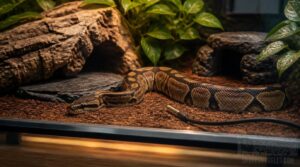
The warm side should stay between 88 and 92°F, measured at the substrate surface. That’s where your snake actually makes contact with the heat, so air readings alone are misleading. A thermostat holds your heat mat steady within that range, keeping the thermal gradient stable with less than 5°F of daily swing.
| Zone | Target Temperature | Purpose |
|---|---|---|
| Warm side | 88-92°F | Digestion and activity |
| Basking spot | ~90°F | Body temperature boost |
| Daily fluctuation | Under 5°F | Gradient stability |
Cool-Side Temperature Targets
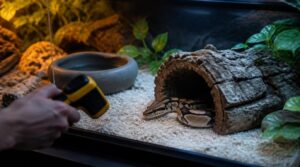
The cool side needs to land between 75 and 82°F. That spread is what makes the temperature gradient actually work. Your snake moves between zones to regulate its own body heat, so the difference has to be real.
Use a temperature gun to check the substrate surface near the cool hide. Ambient air readings alone won’t tell the whole story.
Safe Nighttime Temperature Drops
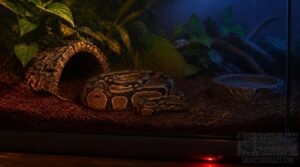
Temperatures don’t need to stay fixed once lights go out. A drop of 6 to 8°F overnight is safe, but it should happen gradually, not all at once.
Even at night, your thermal gradient needs at least a 10°F spread between zones. Substrate depth and a heat mat on a thermostat help buffer against rapid temperature swings.
Hides in Both Zones
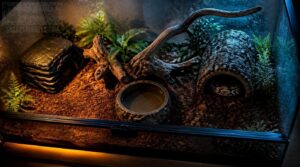
A proper temperature gradient only works if your ball python can actually use it. That means hides in both zones, one on the warm side and one on the cool side.
Each hide should fit snugly so your snake feels secure. Without a cool-side hide, it may linger near the heat mat, disrupting thermal gradient maintenance and affecting its appetite.
Air Versus Surface Temperatures
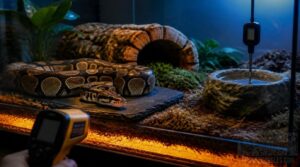
Your thermometer reads 88°F on the warm side, but that’s the air temperature, not what your ball python feels. Surface temperature can run several degrees higher, especially over a heat mat.
That gap matters when you’re building a temperature gradient. A thermostat controls mat output, but an infrared gun tells you what the floor of your enclosure setup truly reaches.
Use a Heat Mat Safely
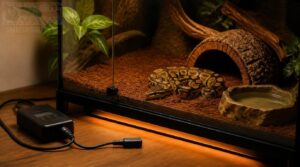
If you’re going to use a heat mat, a few setup details can mean the difference between a safe enclosure and a serious burn risk. Getting these right isn’t complicated, but skipping any one of them can cause real problems. Here’s what to dial in before you plug anything in.
Choose Proper Size and Wattage
Getting the size wrong leaves your snake with nowhere cool to go. Your undertank heater should cover one-third to half the floor and no more.
For standard 20 to 40 gallon tanks, aim for a 4 to 6 watt per square foot rating.
Reptile-specific mats include a safety cutoff around 120 to 140°F, but pair yours with a thermostat regardless.
Install Outside The Enclosure
Your undertank heater belongs outside the enclosure floor, never inside. Placing it under the tank prevents direct contact with your snake, eliminating burn risk and stopping humidity from degrading the element.
Press the mat flat against the tank bottom using heat-resistant adhesive. Route the cord away from water with a drip loop, and keep 2 cm of clearance from flammable surfaces.
Connect a Compatible Thermostat
Running a heat mat without a thermostat is asking for trouble. Surface temperatures can exceed 120°F and seriously burn your snake, even through substrate.
Connect your heat mat to a pulse-proportional or on/off thermostat rated for reptile heating. Set it to hold the warm-side surface between 88°F and 92°F. This keeps your enclosure temperature stable and your ball python safe.
Position The Probe Correctly
Probe placement decides whether your thermostat captures the heat mat’s true surface temperature or just ambient air inside the enclosure.
- Lay it flat on the warm-side surface, under the basking spot
- Keep it away from water dishes and glass
- Secure it so your snake can’t nudge it
- Avoid overhead lights and drafts
- Cross-check with a temperature gun
Account for Substrate Depth
Substrate depth changes what your thermostat actually measures. A thick layer insulates the mat’s heat before it reaches the surface.
| Substrate Depth | Warm-Side Surface Temp | Recommended Action |
|---|---|---|
| 1 inch | Reads high | Lower thermostat |
| 2-3 inches | Reads accurate | Standard setting |
| 4+ inches | Reads low | Increase wattage |
Aim for 2 to 3 inches on the warm side. Recheck temps after substrate changes.
Monitor Temperatures and Prevent Problems
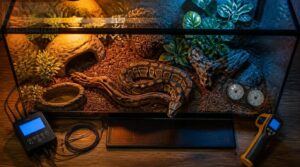
A thermostat controls the heat source, but it doesn’t replace regular temperature checks. Small equipment failures can create unsafe conditions before your ball python shows obvious signs of stress. Use the following tools and habits to confirm the enclosure stays within a safe range.
Use Two Digital Thermometers
Use two digital temperature sensors to track both surface heat and air temperature. Place one probe under the warm-side substrate near the hide, and suspend the other in open air away from drafts and water bowls. This gives you reliable thermal monitoring across both temperature zones.
Check readings morning, afternoon, and night. A sudden change can signal heater failure, poor probe placement, or temperature fluctuation control problems before the temperature gradient becomes unsafe.
Verify With Infrared Thermometers
Digital probes show the pattern; infrared thermometers provide a surface check. Aim straight at the warm hide floor, heat mat area, and basking surface, without shooting through glass.
Keep the same distance and target spot each time. Infrared readings confirm whether enclosure surfaces match thermostat settings, but they don’t measure your ball python’s internal temperature with precision at all.
Check Temperatures Every Day
Check readings each morning and evening. This catches a weak thermostat, shifting heat mat, or enclosure change before it affects your snake’s digestion or immune function. Record temperatures at the same times daily.
- Warm-hide floor: 88–92°F
- Cool side: 74–80°F
- Thermostat display
- Probe placement
- Heating equipment and wires
Watch behavior too. A ball python constantly avoiding one zone may signal a poor temperature gradient.
Prepare for Power Outages
A power outage can chill an enclosure quickly. Keep a lidded travel tub, towels, and activated hand warmers ready. Wrap warmers outside the tub, never against your snake, and monitor temperatures closely.
For longer outages, use hot water bottles wrapped in towels. Aim to keep the snake near 75–80°F. Avoid rapid swings. Stable, moderate warmth is safer than overheating.
Frequently Asked Questions (FAQs)
Can heat mats cause burns in ball pythons?
Yes. A heat mat can cause serious burns when it overheats or creates a hot spot. Run it through a thermostat, place the probe on the enclosure floor, and keep contact surfaces below 95°F.
How often should heat mats be replaced?
Like a thermostat’s ticking clock, replace a heat mat every 3–4 years. Shorten its heat source lifespan if output becomes uneven, edges crack, or temperature regulation falters; reliable enclosure heating helps thermal safety in active setups.
Are heat rocks safe for ball pythons?
No. Heat rocks can heat unevenly and cause serious contact burns, even with a thermostat. For burn prevention, use reptile safe heating equipment such as regulated overhead heat, then monitor surface temperature with an infrared thermometer.
What thermostat type works best with heat mats?
For example, set a heat mat to 88°F with a digital on/off thermostat. Its probe controls surface heat accurately. Choose waterproof models for humid reptile enclosure setup and dependable heat source regulation.
Can a heat mat raise enclosure humidity?
A heat mat can modestly raise humidity by increasing evaporation from a water dish or damp substrate. It won’t create humidity alone. Enclosure sealing and substrate moisture retention have far greater effects.
Conclusion
A heat mat can become a tiny furnace when it runs unchecked.
Do ball pythons need a heat mat? No, but they do need controlled warmth: 88 to 92°F in the warm hide, a cooler zone, and temperatures verified with reliable tools. Match the heat source to your enclosure, secure every probe, and check readings daily. Your goal isn’t a particular product. It’s a habitat where your snake can regulate safely, every hour without risk.
- https://reptifiles.com/ball-python-care-guide/ball-python-humidity-temperatures
- https://beanfarm.com/pages/ball-python-care-guide
- https://www.reptiles.swelluk.com/help-guides/ball-python-care-sheet
- https://www.justanswer.com/pet-reptile/kie81-ball-python-whos-heat-lamp-just-out-its-late.html
- https://www.rspca.org.uk/adviceandwelfare/pets/other/royalpython?utm_source=openai