This site is supported by our readers. We may earn a commission, at no cost to you, if you purchase through links.

I once watched a ball python spend three weeks pressed against the glass, tongue flicking at every shadow that crossed the room. The enclosure was spotless. The temperatures were perfect. It was also completely bare.
Stress in snakes rarely looks dramatic. It looks like refusing meals, restless pacing, and hiding in the open. So what decor reduces stress in pet snakes? Snug hides, covered pathways, and screened walls. I swapped out a handful of pieces in that tank, and the python was eating within days.
Here’s how to place each one so your snake feels safe.
Table Of Contents
- Key Takeaways
- What Decor Reduces Stress in Pet Snakes?
- Provide Snug Hides in Warm and Cool Zones
- Create Covered Pathways With Foliage and Cork
- Match Climbing and Burrowing Features to Species
- Screen Exposed Enclosure Sides With Opaque Backgrounds
- Check Decor Safety and Your Snake’s Response
- Frequently Asked Questions (FAQs)
- How to calm down a stressed snake?
- What are some good decorations for a snake enclosure?
- What do snakes need to be happy?
- How often should snake decor be cleaned?
- Can fake plants harm my pet snake?
- Do snakes need a humid hide for shedding?
- Is a glass tank more stressful than PVC?
- How soon should I handle a snake after feeding?
- Conclusion
Key Takeaways
- Give your snake snug hides on both the warm and cool ends of the enclosure, since a tight fit that touches its body when coiled makes it feel safe far more than darkness alone.
- Connect those hides with covered pathways like cork bark tunnels and dense foliage, so your snake can cross the tank without feeling exposed.
- Cover the back and both sides of the enclosure with an opaque background, because clear walls make your snake feel watched and drive up stress.
- Match features to your species, anchor every perch so it can’t shift, and check each piece for smooth, safe surfaces, then watch your snake’s behavior for 48 to 72 hours to confirm the changes are working.
What Decor Reduces Stress in Pet Snakes?
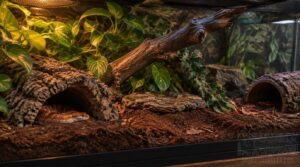
Most stressed snakes aren’t sick. They’re exposed. I’ve seen healthy corn snakes pace a bare glass tank for weeks, then settle within a day once I changed the setup.
Giving your snake a snug place to retreat makes a real difference, and this guide on whether corn snakes need hides to feel secure explains why.
Good enclosure decor does three jobs. It gives your snake hides, cover to move under, and features to climb or dig. That’s stress reduction you can see in how it behaves.
Decor also works as environmental enrichment. Climbing poles, textured bark, and deep substrate let your snake use its body the way it would in the wild. Placing hides at both the warm and cool ends and spreading clutter through the middle, as covered in this guide to snake enrichment and climbing, lets a snake cross the whole enclosure while staying in contact with cover. I once crammed a tank with props, and my ball python froze for several days. More isn’t better. Pick a few secure, sturdy pieces, place them with purpose, and match them to your species.
Provide Snug Hides in Warm and Cool Zones
A hide only works if your snake feels it. Snug means the snake’s body touches the walls and roof when coiled. That pressure says "concealed," and it calms a snake faster than darkness alone.
A snake feels safe not in darkness but in a snug hide, where walls pressing against its coiled body say concealed
I once gave a ball python a roomy cave. It ignored it. A tighter box fixed that in one night.
Put one hide on the warm end and one on the cool end of the temperature gradient. Without both, your snake sits in one safe spot, even when it needs heat. Make the two hides identical in size, shape, and material. If one is a decorative cave and the other a plain box, your snake picks the secure one. Replace snug caves as your snake grows.
If you’re unsure which style works best, this guide to the best hiding caves for pet snakes compares snug, durable options that suit different species and sizes.
Create Covered Pathways With Foliage and Cork
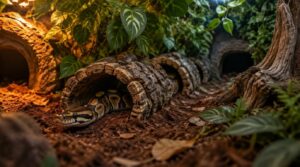
Hides give your snake a place to stop. Pathways give it a safe way to get there.
A bare floor between two hides is an open street. I’ve seen snakes freeze at the edge of that gap, then dash across it stressed. Fix it with cork bark tunnels laid end to end between the warm and cool hides. They mimic burrows and rock crevices, so your snake can travel without feeling exposed.
Then add artificial plants. Dense foliage breaks line of sight and works as overhead cover, like shaded shelters. Tree Stump Decor fits here too, anchoring the clutter.
These habitat enrichment and stress reduction techniques cost little. Fill the open gaps, and your snake explores instead of hiding defensively.
Match Climbing and Burrowing Features to Species
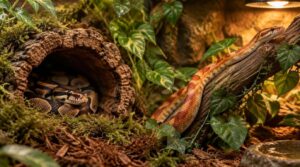
Not every snake wants the same kind of cover and climb. I’ve seen a ball python ignore a tall branch for weeks while a corn snake lived on it. Here are the two features I check first, so you can pick what suits yours.
If you’re building a setup from scratch, these snake terrarium display ideas show how to give a ball python hiding space and humidity while still leaving a corn snake room to climb.
Secure Branches and Stable Ledges
Picture a ball python reaching for a branch that lurches and drops. It won’t trust it again.
I’ve seen it happen. Stability drives reptile stress reduction, so lock every perch down:
- Wedge branches between walls.
- Anchor with aquarium-safe silicone.
- Choose bases that sit flat.
- Push hard before adding your snake.
A steady perch feels like a secure hiding spot too.
Diggable Substrate and Leaf Litter
Substrate is where I see the biggest stress drop in burrowing species. Give corn snakes at least three inches of loose, diggable substrate, and they’ll tunnel into natural hiding spots within a day.
Top it with whole leaf litter. It slows evaporation, steadies humidity, and creates cover. I’ve watched nervous snakes settle once they could slip under leaves.
Screen Exposed Enclosure Sides With Opaque Backgrounds
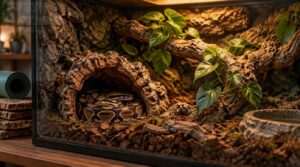
The sides of your enclosure matter more than most keepers think. I learned this the hard way with a ball python that paced the glass every night. Clear walls make a snake feel watched from every angle, and that constant exposure drives up stress.
The fix is simple. Cover the back and both sides with an opaque background. I’ve seen snakes settle within days after I did this.
Your options:
- Printed foam or textured rock panels that look like natural terrain
- Matte black or dark green vinyl, cut to fit
- Cork tiles stuck flush against the exterior
Leave the front clear so you can still watch your snake. Add a solid hideout and hiding spots, and you’ll reduce stress fast.
Check Decor Safety and Your Snake’s Response
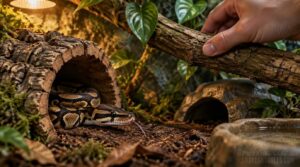
Picture a ball python wedged tight inside a rough reptile hideout, scales scraped raw. I’ve seen it. I missed it for a full week.
Run your hand over every piece of decor before it goes in. Smooth surfaces only. No sharp edges, no loose fibers, no paint or fresh glue still smelling of chemicals. Then shake each item hard. If it shifts, it can crush your snake.
Check two or three times a day for 48 to 72 hours. Relaxed tongue flicks and slow movement mean security. Glass surfing, living in hiding spots, or skipped meals mean stress.
Know your snake’s baseline first. Without it, you’re guessing. If the signs turn bad, pull the new piece and try again later.
Frequently Asked Questions (FAQs)
How to calm down a stressed snake?
Stop handling your snake and cut back the disturbance around its enclosure. Make sure it has snug hiding spots in both warm and cool zones. I’ve seen stressed snakes settle within days once consistent care returned.
What are some good decorations for a snake enclosure?
Start with snug cork bark caves as hiding spots on both the warm and cool sides. I’ve seen nervous snakes settle fast once they had a reptile shelter.
Add sturdy branches and artificial plants too.
What do snakes need to be happy?
A snake’s world is shaped like a shelter: small, dark, and close. Give yours secure hiding spots, warm and cool, plus a reptile cave to stretch out beside. Add reptile enrichment, and you’ll see calm.
How often should snake decor be cleaned?
I once found a ball python’s hide crusted with urates. She’d stopped using it. Spot clean hiding spots daily, then scrub all decor during enclosure cleaning every 4-6 weeks. Overcleaning adds stress and erases scent.
Can fake plants harm my pet snake?
Fake plants look harmless, and that’s the trap. I’ve seen a snake swallow plastic leaf pieces, and it ended with impaction.
Cheap reptile tank decor adds stress, so choose sturdy reptile hideouts for your enclosure.
Do snakes need a humid hide for shedding?
Most snakes do, yes.
Humid hide softens old skin and prevents stuck shed, especially for tropical species like ball pythons.
I’ve seen retained eye caps on snakes without one.
Fill it with damp sphagnum moss, place it on the warm side, and check humidity daily.
Is a glass tank more stressful than PVC?
Yes. I’ve seen glass stress snakes through exposed sides, heat loss, and humidity swings. PVC holds steadier conditions and feels safer.
But enclosure design with Reptile Hideouts and Caves helps glass work for some snakes.
How soon should I handle a snake after feeding?
Handling a freshly fed snake is a truly great way to show affection.
Wait 48 hours after small meals, three to four days after big ones. Predictable feeding and a quiet enclosure keep stress low.
Conclusion
Picture a snake sliding into a snug, shadowed hide, ribs relaxing against cool cork while the room goes quiet outside. That’s the feeling you’re building.
So when you wonder what decor reduces stress in pet snakes, remember the pattern: snug hides, covered paths, sturdy climbs, and screened walls. Start with one change tonight. Then watch your snake’s behavior closely. Calm snakes eat, rest, and explore. You’ll know you got it right when the pacing stops.