This site is supported by our readers. We may earn a commission, at no cost to you, if you purchase through links.

Picture a thick, yellow-brown plaque welded to your snake’s scales, hiding what’s happening underneath. That’s not dirt. Crusty scales on pet snake skin often mean fungus or bacteria is already working into tissue, and it won’t stop at the surface.
Some crusts come from retained shed or bad humidity. Others signal infections that reach muscle, bone, and blood. You can’t tell which by looking. Don’t peel anything.
If your snake is lethargic, bleeding, or wheezing, call an exotic vet today. For everything else, you’ll learn the likely causes, the safe first steps to take tonight, and how treatment works.
Table Of Contents
- Key Takeaways
- When Crusty Snake Scales Need Veterinary Care
- What Causes Crusty Scales on Pet Snakes?
- Safe First Steps for Crusty Snake Scales
- How Vets Diagnose and Treat Crusty Scales
- Preventing Crusty Scales Through Proper Snake Care
- Frequently Asked Questions (FAQs)
- How to get rid of scale rot on snakes?
- Will scale rot heal on its own?
- What does skin rot look like on a snake?
- What are the signs of scale rot in snakes?
- Can crusty scales spread to other snakes?
- Are crusty scales on snakes contagious to humans?
- Can crusty scales heal without any treatment?
- How long do crusty scales take to heal?
- Can crusty scales leave permanent scarring on snakes?
- Conclusion
Key Takeaways
- Don’t peel or scrub crusty scales, because they can come from retained shed or humidity problems but also from fungal or bacterial infections that reach muscle, bone, and blood, and you can’t tell which by looking.
- Call an exotic vet the same day if your snake is lethargic, bleeding, wheezing, or has swelling, discharge, or a foul smell, and don’t wait past three weeks if crusts persist, return, or don’t improve after fixing the enclosure.
- Your first steps tonight are a diluted Betadine soak, a thorough enclosure cleaning with paper towel bedding, and keeping temperatures at 80 to 85°F and humidity at 50 to 60 percent, while isolating any other snakes.
- Your vet will test to find the real cause and prescribe targeted antifungal or antibiotic treatment that must continue for weeks after the scales look clean, and you can prevent a repeat with steady humidity, daily spot-cleaning, and a 60-day quarantine for new snakes.
When Crusty Snake Scales Need Veterinary Care
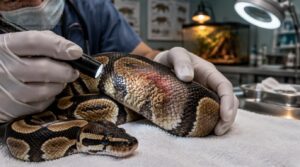
When do crusts on your snake stop being a minor nuisance? The moment they come with lethargy, bleeding, discharge, or a foul smell. Those signs point to serious infection. Don’t wait. Book urgent veterinary care the same day.
If your snake is also sluggish and refusing meals, this guide to snake diseases that cause lethargy and loss of appetite can help you recognize what your vet may be checking for.
Picture a wound hiding under a scab. Swelling beneath crusty areas often means an abscess, and abscesses need drainage, not creams.
Wheezing, nostril bubbles, open-mouth breathing, head tremors, or star-gazing? That’s an emergency. Go now.
Even milder cases have limits. Crusts that persist after a full shed, last three weeks, or return after recovery need professional diagnosis. So do hatchlings under six months. If a week of corrected enclosure hygiene brings no improvement, your snake needs prescription treatment. Preventive care comes later.
What Causes Crusty Scales on Pet Snakes?
Picture your snake’s skin as armor, and crusty scales as the first crack in it. Crusty scales never show up without a reason, so you need to find that reason before it spreads. Read the six causes below, match them to what you’re seeing, and act fast.
Crusty scales are the first crack in your snake’s armor, and they never appear without a reason, so find it before it spreads
Fungal Infections
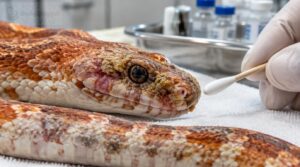
A fungal skin disease like ophidiomycosis hides behind thick, crusty scales. Watch for these:
- Crusts on your snake’s head or eyes.
- Lifting scales exposing raw skin.
- Spread across belly scales.
Don’t wait. Fungus burrows into muscle and bone. Picture a slow rot creeping deeper, completely unseen. Book veterinary reptile care now. Your snake needs antifungal treatment, fast.
Early warning signs like crusty scales, swollen patches, and stuck shed are easier to spot when you know what to look for, so review this guide to snake skin infections and abnormal molting.
Bacterial Skin Infections
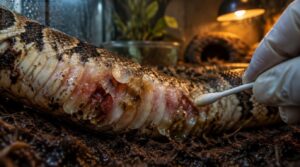
Fungus isn’t your only suspect. Bacterial infections can crust your snake’s scales too, and they move fast.
Picture a wet, rotting belly. Look for yellow-brown crusts under loosened scales, red patches, or foul-smelling discharge. That’s bacterial dermatitis. Left alone, a scale infection can reach the blood and organs. Don’t wait. Your snake needs veterinary reptile care and antimicrobial therapy now.
Injuries And Retained Shed
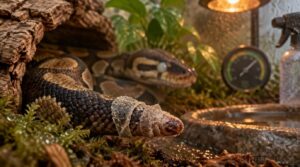
Not every crust means infection. Sometimes it’s damage and retained shed.
Picture old skin gripping your snake like a tight sock. Rough decor, burns, or abrasions create skin lesions that don’t shed normally. Check the tail tip and retained eye caps. Constricted tails can die. Low humidity makes it worse. Don’t peel anything. Raise humidity and call your vet.
Mites And Other Parasites
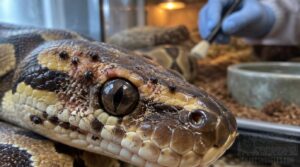
A tiny black speck moving near your snake’s eye is a warning. Check it now.
Mites feed on blood, and their bites leave raised bumps and crusty scabs. Picture a bloodsucker anchored under each scale. Watch for excess soaking. Ticks and other parasites cause trouble too. Don’t guess.
Treat mites with reptile-safe products, and see your vet for parasite management.
Poor Enclosure Conditions
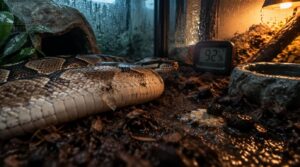
Most crusts on a snake’s belly start with the enclosure itself. Check your humidity management first. Above 70%, damp substrate becomes a bacterial breeding ground. Below 50%, shed sticks and skin cracks.
Dirty or soaked bedding is just as dangerous. Picture feces pressed against belly scales for weeks. Spot-clean daily, replace substrate often, and fix cold or poorly ventilated zones.
Underlying Illness And Stress
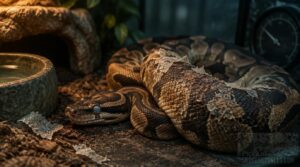
Picture a snake fighting a war inside its body while its skin quietly falls apart. That’s what illness does.
- Respiratory disease, metabolic bone disease, or egg binding drains your snake’s resources.
- A stressed immune system lets ophidiomycosis and other fungal infections take hold.
- Environmental factors and poor humidity management make crusts worse.
Don’t guess at the cause. Call your vet.
Safe First Steps for Crusty Snake Scales
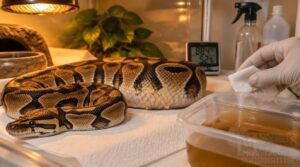
Picture a ball python with three yellow, crusty scales near her belly. Her owner scrubs them with a toothbrush. The scales tear, and the lesion spreads within days.
Start with a diluted Betadine soak. Mix one part Betadine to ten parts lukewarm water, the color of weak tea. Soak your snake for 30 minutes, then rinse well. Wearing gloves, lift loose crust gently with a paper towel. Avoid the eyes, nostrils, and vent.
Now fix the enclosure. Wash everything in hot soapy water, then disinfect, which is basic enclosure hygiene. Use paper towels, changed daily. Chronic contact with damp, soiled bedding is the primary scale rot cause, so keeping the substrate clean and dry matters most. Keep temperature at 80 to 85°F and humidity at 50 to 60 percent. Isolate other snakes under quarantine protocols. Call a vet if crusts persist.
How Vets Diagnose and Treat Crusty Scales
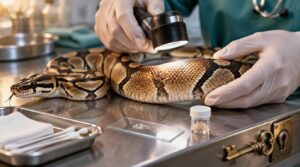
Don’t wait on crusty scales once you’re at the vet’s office, because the right answer starts with finding the cause. Picture a lock and a key: your vet has to identify the problem before choosing the treatment that fits it. Here’s what to expect, from the first skin tests to follow-up care and what it all costs.
Skin Tests and Diagnosis
Picture a detective with no clues. That’s your vet without diagnostic testing. Expect these steps:
- Visual exam of scales and ventrum
- Skin scraping for mites
- Cytology from lesions
- Fungal culture or PCR
- Biopsy if crusts run deep
Don’t guess. Culture takes weeks, so stay patient. Each result narrows the cause, and that’s how you protect your snake from costly mistreatment.
Targeted Treatments and Follow-Up Care
Treatment starts with what the lab finds. Antifungal medication like topical itraconazole goes on daily, and deep infections need oral terbinafine. Bacterial cases get antibiotic treatment guided by culture results. Soak crusts, then debride gently. A shallow, secure reptile soaking tub for snakes keeps water at a gentle temperature while softening stubborn crusts before debridement.
Don’t stop when scales look clean. Treat 2 to 4 weeks longer. Recheck every 2 to 4 weeks.
Veterinary Costs and Treatment Factors
Treatment gets expensive fast, so know the numbers. Expect $50 to $200 for the exam, plus $20 to $60 for cytology. Fungal culture adds $50 to $150. Antifungal medication runs $15 to $40, and antibiotic treatment costs $25 to $80.
Severe crusting changes everything. Debridement under sedation adds $100 to $250, and hospitalization hits $150 to $400 daily. Don’t wait.
Preventing Crusty Scales Through Proper Snake Care
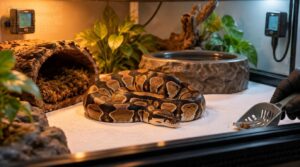
Once your snake heals, your job changes. Now you stop the crusts from coming back.
Picture a wet sock you never take off. That’s what constantly damp bedding does to scales. Reptile dermatology comes down to moisture, cleanliness, and heat, and you control all three.
- Humidity control: Keep ball pythons at 50–60%, higher during shedding. Check with a digital hygrometer, and use a damp moss hide instead of soaking the whole enclosure.
- Enclosure hygiene: Spot clean daily. Replace soiled or moldy substrate immediately, especially under the water bowl.
- Quarantine: Isolate new snakes for at least 60 days on paper towels.
- Temperature gradient: Use digital probes on both sides.
These preventive measures work together. Skip one, and the others fail.
Frequently Asked Questions (FAQs)
How to get rid of scale rot on snakes?
You can’t cure scale rot at home if it’s severe. Mild cases need humidity control, dry paper towel substrate, and a vet visit within 72 hours. Open sores or black patches? Call a vet now.
Will scale rot heal on its own?
Picture a small cut on a wet, soggy foot that never dries. That’s scale rot. It won’t heal on its own. Get a vet for diagnosis and treatment now, and keep humidity at 40-60%.
What does skin rot look like on a snake?
Funny how the belly you never check hides the worst damage. Scale rot starts as dark, glossy scales with tiny blisters.
Don’t wait. Reddish-brown skin lesions, crusts, and abnormal snake skin texture mean infection’s spreading.
What are the signs of scale rot in snakes?
Picture a blister bubbling under your snake’s belly. That’s scale rot. Look for brown or black discoloration, swelling, crusts, and skin lesions on the ventral scales. Spot them? Call your vet now.
Can crusty scales spread to other snakes?
Yes, they can spread. Ophidiomyces ophidiicola causes a fungal skin disease that passes through contact and shared substrate. Mites hop between snakes too. Quarantine sick snakes now, use separate tools, and disinfect everything.
Are crusty scales on snakes contagious to humans?
Up to 90% of reptiles carry Salmonella, so don’t gamble. Most crusty scales aren’t contagious, but fungal infections can spread to you.
Wash up every time, wear gloves, quarantine the snake, and practice strict sanitation.
Can crusty scales heal without any treatment?
Sometimes, but only barely. Mild crusting from dysecdysis can clear after your next clean shed, once humidity is fixed. Crusty scales with spreading skin lesions, lethargy, or dehydration won’t heal alone. Call your vet.
How long do crusty scales take to heal?
Picture a cracked clay pot. Crusty scales shed away, never simply heal.
Mild scale rot clears in three to six weeks; severe bacterial dermatitis takes months.
Fungal skin disease needs antifungal treatment and wound care.
Can crusty scales leave permanent scarring on snakes?
Think crusty scales always heal clean? That’s a myth. Deep skin lesions from scale rot can scar for good, leaving abnormal snake skin texture. Start treatment early. Prevention matters, because scars never regrow normal scales.
Conclusion
Last spring, a ball python owner scraped a "harmless" crust off her snake’s belly. Two weeks later, the infection had reached the muscle.
Don’t repeat her mistake. Crusty scales on pet snake skin demand respect, not guesswork. Keep the enclosure clean, check humidity daily, and book an exotic vet the moment something looks wrong. Your snake can’t tell you it hurts. You’re the only one watching, so watch closely and act early. Start looking tonight.