This site is supported by our readers. We may earn a commission, at no cost to you, if you purchase through links.

Pick up a handful of damp coco coir and squeeze. It drinks like a sponge, then lets go of that water slowly. Boas love it.
That slow release is why coconut husk substrate for boas keeps winning fans. It holds humidity in the 55 to 80 percent range, and its springy texture invites your snake to tunnel like it would on a forest floor. But it has a dark side. Dry husk throws dust, and damp prey can pick up fine particles that swell inside a gut.
Here’s how to get the benefits, dodge the risks, and set up bedding your boa will thrive on.
Table Of Contents
- Key Takeaways
- What is Coconut Husk Substrate for Boas?
- Benefits and Drawbacks of Coconut Husk Bedding
- Coconut Husk Versus Other Boa Substrates
- Setting Up Coconut Husk for Boas
- Keeping Coconut Husk Safe for Boas
- When to Clean and Replace Coconut Husk
- Frequently Asked Questions (FAQs)
- What substrate is best for boas?
- Is coconut fiber substrate ok for snakes?
- What are the downsides of using coconut coir?
- Is coconut fiber substrate good for hermit crabs?
- Is coconut husk substrate suitable for baby boas?
- Can coconut husk be used in bioactive enclosures?
- Does coconut husk substrate attract mites or pests?
- Is coconut husk safe with under-tank heat mats?
- How much does coconut husk bedding typically cost?
- Conclusion
Key Takeaways
- Coconut husk soaks up water and releases it slowly, so it keeps your boa’s enclosure steady at roughly 55 to 80 percent humidity while letting it tunnel and hide like it would on a forest floor.
- Keep the bedding damp but never soggy, at least 2 to 4 inches deep, and check weekly for mold, since too much moisture and poor airflow let fuzz take hold fast.
- Dust and swallowed fibers are the main safety risks, so choose a low-dust medium chip and feed your boa on a bare surface to avoid breathing problems and impaction.
- Spot clean daily, replace the whole bed every 4 to 6 weeks (or right away if you see mold or smell mustiness), and expect to pay a bit more than aspen for a far better fit for a tropical snake.
What is Coconut Husk Substrate for Boas?
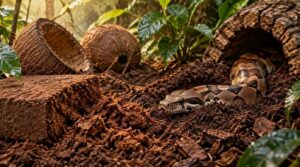
is shredded fiber from the tough outer shell of coconuts. You’ll find it sold as compressed bricks, chips, or loose fluff. Same stuff, different packaging.
It goes by a few names: coco coir, coconut fiber, plantation soil. Whatever the label, it’s a by-product of the coconut industry, so it’s a sustainable pick too.
If you’re weighing it against other bedding, this corn snake substrate comparison shows how coconut fiber holds humidity and digging-friendliness next to popular alternatives.
Why do keepers love it? Moisture retention is the big one. It soaks up several times its weight in water and releases it slowly, which makes humidity control far easier. Because it holds much more moisture than drier options like aspen, it suits high-humidity species like boas. The loose, springy texture also invites natural burrowing behavior, so your boa can tunnel and hide like it would on a forest floor.
Grades vary, though. Fine coir feels like damp soil. Chunky chips feel like bark. Pick the grade that fits your snake.
Benefits and Drawbacks of Coconut Husk Bedding
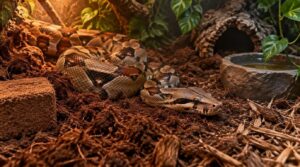
Coconut husk isn’t perfect, and you deserve the full picture before you buy a single brick. Below, we’ll walk through five things that decide whether it earns a spot in your boa’s enclosure. Ready to see how it stacks up?
Humidity Retention
Moisture is where coconut husk bedding shines. It soaks up water fast, then releases it slowly, so your enclosure stays steady between mistings. That moisture retention makes humidity control in terrariums far easier, especially in dry homes.
Aim for 60 to 80 humidity. Keep the substrate damp, never soggy. Your boa’s natural burrowing behavior will thank you for it, too.
Burrowing Support
Damp bedding sets up your boa’s next move: digging in. Coconut husk bedding rewards natural burrowing behavior, and the burrowing substrate benefits are real. Hiding, cooling off, feeling secure.
Pairing that burrowing-friendly substrate with a thoughtful enclosure layout, like these python terrarium design ideas, gives your boa even more places to tunnel, hide, and unwind.
Get substrate depth for burrowing right:
- Offer at least 2 inches.
- Go 3 to 4 inches for deeper tunnels.
- Loosen compacted spots.
A bioactive cleanup crew helps, too.
Mold And Moisture Risks
Digging means damp, and damp means risk. Coconut husk bedding resists mold better than fine fiber, thanks to its chunky, airy structure. But it isn’t mold-proof.
Mold if stays wet. Too much moisture retention plus poor airflow and warmth? Fuzz shows up fast.
Check weekly. Spot mold immediately, scoop it out, and boost ventilation.
Dust And Ingestion Risks
Dust floats up the second you scoop dry coconut husk. Your boa breathes it in, and that’s a problem for respiratory health.
Choosing a low-dust bedding and keeping humidity steady, as covered in this snake vivarium setup guide, helps prevent both mold and irritating airborne particles.
Ingestion risks are sneakier. Damp prey picks up fine particles during a strike, and swallowed husk swells when wet. Here’s what to watch:
- Dust clouds when you pour
- Husk stuck to mice
- Juveniles gulping bedding
- Wheezing after feeding
Feed on a bare tray. Smart substrate safety starts there.
Cleaning And Replacement
You’ll love how easy coconut husk is to maintain. Spot clean daily, scooping out feces, urates, and any damp patches before they turn funky. Great waste absorption keeps things fresh, but only if you stay on top of it.
Replace fully every 4 to 6 weeks, keeping a substrate layer of 2 to 3 inches. Disinfect the enclosure every 4 to 6 months.
Coconut Husk Versus Other Boa Substrates
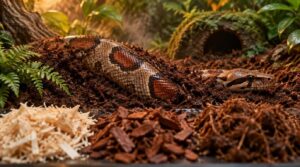
Aspen shavings are cheap and everywhere. Coconut husk costs more and takes some effort. Guess which one your boa actually needs?
Humidity is the dealbreaker. Aspen shavings hold almost no moisture, grow mold when damp, and shed dust that irritates boa lungs. Poor respiratory safety, poor everything for a tropical snake.
Cypress mulch is the closest rival. It’s cheaper per bag and controls humidity well at 60 to 70 percent, but it flattens over time and gets dusty in cheap blends. Skip it if you won’t monitor for fuzzy patches.
Coconut husk wins on moisture retention, burrowing, and mold prevention. It holds 150 to 200 percent of its weight in water and barely makes dust. Bottom line? Just pay more.
Setting Up Coconut Husk for Boas
Ready to give your boa a setup it’ll love? Two steps matter most here: prepping your husk blocks and dialing in depth and humidity. Nail both, and the rest gets easy.
Preparing Compressed Coconut Husk Blocks
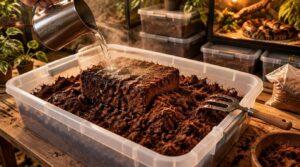
Ever watched a tiny brick turn into a mountain? Drop your 5kg coconut husk block into a 75-liter tote. Pour 20 to 25 liters of warm water slowly over the top and sides.
Substrate expansion takes 10 to 20 minutes. Rehydrate evenly, fluff with a hand fork. Store extras airtight for spot clean swaps, and replace fully every 4-6 weeks.
Managing Substrate Depth and Humidity
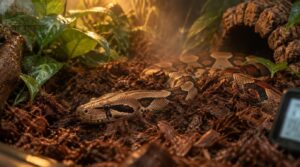
Think of your boa’s enclosure as a rainforest floor. Soft, springy, a little damp.
Picture your boa’s enclosure as a rainforest floor: soft, springy underfoot, and always a little damp
Pile coconut husk chips at least three inches deep. That depth gives your boa room to burrow and boosts humidity retention.
Aim for 55 to 75 percent. Mist and mix until it’s moist, never soggy substrate. Above 80 percent invites mold. Check a digital hygrometer daily, and keep temperature and humidity balance in mind.
Keeping Coconut Husk Safe for Boas
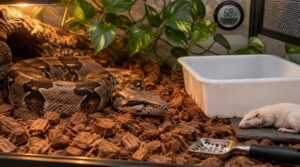
Safe doesn’t happen by accident. It happens by setup.
Start with feeding. Move your boa to a bare tote for meals. One stray chip swallowed with a rat can mean an obstruction, and that’s a vet bill nobody wants. Juveniles need extra watching, since loose bedding is riskier for small snakes.
Next, pick well. Go for dust-proof coconut husk, medium chips, labeled 100% reptile safe. Less dust means better respiratory health in boas, plus fewer sneezy handling sessions for you.
Then guard against mold growth. Dry your substrate until it’s only slightly damp, never soggy. Good airflow and smart moisture control in vivariums keep humidity steady without turning bedding into a science project.
Spot-clean daily. Sniff for odor. Spot fuzz? Swap everything, right away.
When to Clean and Replace Coconut Husk
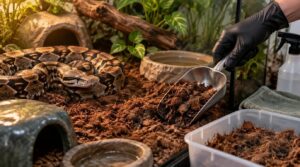
Fuzz means swap everything. But what about the rest of the time?
Build a simple substrate replacement schedule and stick to it. Spot clean daily, lifting feces and urates the moment you see them. Replace one third of the husk every month or two, especially in soiled corners.
Plan to replace every 24 weeks at the latest, even if the bedding looks fine. Pair that with deep cleaning every 4 to 6 months: scrub the enclosure, disinfect hides, and refill fresh. Change sooner if the husk turns compacted, soggy, or smelly.
New boa or sick one? Use quarantine hygiene practices. Wash hands between enclosures, and keep tools separate. Never share a scoop between snakes. Mold and parasites travel very fast.
Frequently Asked Questions (FAQs)
What substrate is best for boas?
Wondering which bedding wins? Coconut husk chips do. They hold humidity, support burrowing, and give your boa a naturalistic habitat. Pack in 2 to 4 inches, watch humidity control in terrariums, and prioritize substrate safety for snakes.
Is coconut fiber substrate ok for snakes?
Worried it’s too dusty or risky? Not if you prep it right. Coconut husk is non-toxic, and its moisture retention helps shed support and mold prevention in bedding when ventilated. Soak blocks, skip oversaturation, and you’ve got solid substrate safety for snakes.
What are the downsides of using coconut coir?
Coconut coir fights you in both directions. Too wet, it turns soggy, breeds mold growth, and compacts. Too dry, it kicks up dust that hurts respiratory health. Swallow enough, and ingestion risks like impaction follow.
Is coconut fiber substrate good for hermit crabs?
Funny how a boa’s favorite bedding suits hermit crabs too. Yes, coconut fiber works. It digs well and its moisture retention helps molting.
Mix coconut husk with sand, skip additives, and keep substrate safety tight.
Is coconut husk substrate suitable for baby boas?
Yes, coconut husk is a boa constrictor substrate babies thrive on. Its humidity retention helps shedding, and low dust protects lungs. Feed in a separate enclosure to dodge substrate ingestion risks. That’s substrate safety for reptiles.
Can coconut husk be used in bioactive enclosures?
Wondering if coconut husk can go bioactive?
Coconut husk chips alone lack the soil-like mix a true bioactive substrate needs.
Mix topsoil, try substrate layering and humidity regulation techniques, or face mold if stays wet.
Does coconut husk substrate attract mites or pests?
Not by itself. Mite reports usually trace back to dirty enclosures, not clean coconut husk chips. Feces, dead feeders, and mold if stays wet feed mites. Balance ventilation and humidity, spot clean, and this organic reptile bedding stays safe.
Is coconut husk safe with under-tank heat mats?
Want a warm, cozy boa without a fire risk? Yes, coconut husk works with under-tank heat mats if you run a thermostat, keep the layer thin, and never let it compact.
How much does coconut husk bedding typically cost?
Wondering what coconut husk costs? Most bricks run $9 to $19, with budget options near $ Spot clean and replace fully every 46 weeks, so the longterm cost of substrates stays low. It’s biodegradable too.
Conclusion
Soft on the paws, tough on the details. That’s coconut husk substrate for boas: a springy, humid bed that rewards careful keepers and punishes lazy ones.
Keep it damp, never soggy. Feed on a separate surface or use tongs so no loose bits get swallowed. Spot clean often, and swap the whole bed when it turns musty.
Do that, and your boa gets a forest floor to tunnel through. You sleep easy.