This site is supported by our readers. We may earn a commission, at no cost to you, if you purchase through links.

A snake can look calm while its enclosure works against it. A tank with a warm corner, dry bedding, and nowhere to hide may keep an animal alive, but it won’t support behavior.
A snake vivarium gives your pet choices: a place to digest, a cooler retreat, hides, water, and room to climb or burrow. Those details shape shedding, feeding, activity, and stress levels. Plants and soil can help, but they are not the starting point.
Start with the enclosure, then build the heat gradient, humidity, substrate, and furnishings around your snake’s species. Get foundations right, and care becomes much easier.
Table Of Contents
Key Takeaways
- Build the vivarium around your snake’s species, with enough secure space, a warm-to-cool temperature gradient, proper humidity, fresh water, and hides at both ends.
- Choose enclosure size for the snake’s adult body, since most small to medium ground-dwelling species need about a 4-by-2-by-2-foot home and growing snakes quickly outgrow small tanks.
- Use thermostat-controlled heat, digital thermometers and hygrometers, safe ventilation, and regular checks to prevent burns, poor sheds, mold, and escapes.
- Add stable substrate, secure decor, climbing or burrowing options, and snake-safe plants only after the basic heat, humidity, hiding, and security needs are met.
What is a Snake Vivarium?
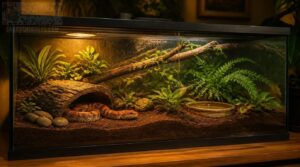
A snake vivarium is more than just a box — it’s a carefully built environment that mimics your snake’s natural habitat. Getting it right starts with understanding what goes inside and why each element matters. Here are the key components that make a vivarium work for your snake.
For practical inspiration, explore these snake vivarium design ideas that balance natural beauty with species-specific safety.
Definition and Core Purpose
A snake vivarium is more than just a box with a lid. It’s a controlled living space built to keep your snake healthy, comfortable, and stress-free.
The main job is simple: maintain a temperature gradient and humidity level that match your snake’s natural habitat. Without those two things dialed in, even the nicest setup falls short.
Vivarium Versus Terrarium
People often mix these two up. A terrarium is built for plants. A vivarium is built for animals, and sometimes plants too.
Here’s where they differ:
- Substrate layering feeds both roots and burrowing behavior
- Temperature gradients support animal thermoregulation
- Humidity control targets the snake, not just foliage
- Lighting drives circadian rhythms, not just plant growth
Understanding the terrarium vs vivarium distinction is essential, as terrariums prioritize plant cultivation while vivariums are designed around the needs of living animals.
Your setup must reflect that.
Standard Versus Bioactive Vivariums
Now you face a real choice: standard or bioactive?
| Feature | Standard Vivarium | Bioactive Vivarium |
|---|---|---|
| Substrate | Inert liner | Living soil mix |
| Waste Management | Manual cleaning | Cleanup crew takes care of it |
| Humidity Control | Misting schedule | Plants help regulate |
| Plant Connection | Optional | Central component |
| Cost Effectiveness | Low upfront | Higher start, less labor |
A bioactive vivarium takes weeks to establish, but it practically runs itself.
Benefits for Pet Snake Wellbeing
That lower-maintenance setup can still give your snake a better daily life. A properly sized, escapeproof enclosure gives it room to explore, rest, and choose where it feels safe.
A steady temperature gradient lets your snake warm up for digestion or cool down when needed. Good humidity control helps clean sheds and healthy skin.
When something seems off—like a missed shed or unusual lethargy—checking common reasons snakes refuse food can help you spot whether husbandry or health is the culprit.
Use suitable substrate selection, secure hiding spots, and simple decor. These reduce stress and encourage calm exploration.
Supporting Natural Snake Behaviors
A well-planned Snake vivarium lets your animal make choices, much like it would in its Natural habitat. Build Snake enrichment around:
A well-planned snake vivarium gives your animal choices that mirror life in its natural habitat
- Vertical space utilization
- Hiding spot placement
- Substrate digging opportunities
- Climbing structure access
- Thermal gradient exploration
Provide snug Hiding spots at each end of the Temperature gradient. These simple options support resting, burrowing, climbing, and safe movement. Daily choice.
For balanced humidity and drainage, follow this bioactive ball python terrarium setup guide.
How to Set Up a Snake Vivarium
A good vivarium starts with an enclosure that fits your snake and your care routine. Size, security, and airflow all matter from day one. Here are several enclosure options to look at before you build the rest of the setup.
Choose The Correct Enclosure Size
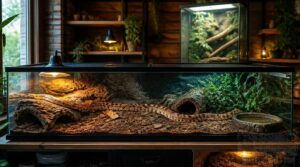
Enclosure size sets the whole vivarium plan. Give your snake room to fully stretch, usually about two body lengths. A 3 to 4 foot corn snake often needs a 24 to 36 inch horizontal enclosure.
Use width for movement and shedding. Arboreal species need a vertical enclosure with branches. Create warm, cool, hide, and water zones. Plan upgrades early, since young snakes grow fast.
Secure Doors and Provide Ventilation
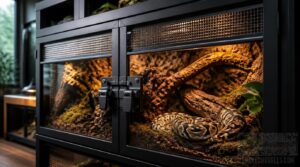
Choose front-opening doors with secure latches. Add door latch reinforcement and secondary locking mechanisms for an escapeproof enclosure. Snakes test weak seams like tiny locksmiths.
Use frame metal reinforcement around the latch area. Check that doors close squarely.
Set vivarium ventilation with high vents and adjustable gaps. Cover every opening with vent mesh screening. This helps airflow while protecting reptile enclosure safety.
Prepare and Layer Substrate
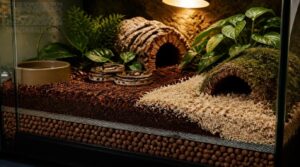
Build the floor from the ground up. Use inert substrate that will not react with water or decor.
Set substrate depth for your snake. Burrowing species need deeper layers. Surface-dwelling snakes need less.
For moisture control, add a loose drainage layer beneath the top mix. This improves aeration and limits soggy pockets.
Use species-specific substrate mixing. Coconut fiber holds moisture, while aspen stays drier. Keep it clean, stable, and never swampy.
Position Hides, Water, and Decor
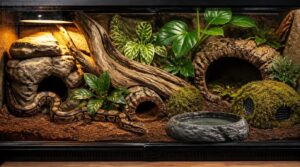
Create a usable layout with four essentials:
- Put one snake hide on each end, warm and cool.
- Recess one hide into the substrate for a burrow feel.
- Add a humid hide with small mesh entries for shedding.
- Set the water dish at chest height when resting.
Use heavy, escape-proof decor with stable footed bases. Keep enclosure decoration smooth, secure, and easy to clean.
Add Snake-Safe Plants and Branches
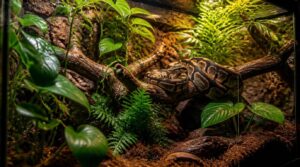
Plants and branches turn space into habitat. Use Pothos, spider plants, ferns, and bamboo palm in your Snake vivarium. Use coconut coir and reptile-safe mulch, never treated soil.
Add 2- to 4-inch branches at several heights. Cork bark and Spider wood give secure grip. Keep routes clear.
Quarantine plants two weeks. Check weekly for rot, pests, loose branches, and blocked access.
Snake Vivarium Heating, Humidity, and Maintenance
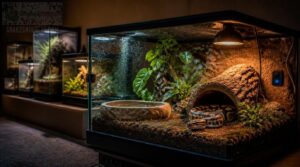
Once the enclosure is built, steady heat, humidity, and cleaning keep your snake healthy. Your setup should make these daily tasks simple and safe. Here are five enclosure options that can support a well-managed snake vivarium.
Control Heating and Lighting Safely
Safe heating systems need thermostat regulation. Thermostat Safety Tips:
- Connect each heat pad and thermostat; secure probe.
- Heater Placement Rules: outside, guarded, raised above substrate.
- Cord Management Guide, Electrical Safety Checklist: drip loops, dry elevated surge strip.
Check lighting hood weekly. Lighting Fixture Care avoids burns. Keep electrical gear dry. A temperature gradient requires controlled, dependable heating for your snake.
Match Gradients to Snake Species
With thermostat-controlled equipment, map the enclosure. Thermal Zone Mapping drives reptile thermoregulation; Species Light Gradients shape behavior.
| Species | Temperature gradient | Light |
|---|---|---|
| Corn | 28–22C | 90–75 lux |
| Ball python | 31–26C | 500–50 lux |
| Garter | warm-to-cool | 150–10 lux |
| Rat snake | 28–22C | 400–60 lux |
Gradient Setup Tips support species-specific heating and Behavioral Light Response. Your Snake vivarium should align humidity control with Humidity Gradient Needs.
Maintain Species-Specific Humidity
Heat gradients work best with matching humidity levels. Arid snakes need 30 to 40 percent. Corn snakes often do well at 50 to 60 percent during shedding.
Use two digital hygrometers at mid-height, one in each zone. Adjust seasonally.
Choose substrate carefully. Coconut fiber holds moisture; shallow layers dry faster. Provide a humid hide before shed, then let conditions return to normal after the skin comes off.
Monitor Conditions and Prevent Mold
Use Humidity Monitoring tools daily. Check both ends of the enclosure, because humidity gradients can hide wet corners. Log readings and watch for sudden changes.
- Do a weekly Ventilation Check.
- Remove wet debris at once.
- Rake damp substrate.
- Inspect decor for musty spots.
Good substrate selection helps with Mold Prevention. Mold prevention in vivarium starts with humidity control, Substrate Care, and steady vivarium maintenance.
Clean Water and Replace Substrate
Change the water bowl every 1 to 3 days for hatchlings and every 3 to 7 days for adults. Replace it after feeding. Wash the bowl with mild soap, then rinse well.
Spot-clean waste daily. Replace substrate if it smells, molds, or stays wet. Refresh coconut fiber or reptile carpet every 3 to 6 months. Clean filter parts weekly.
Top 5 Snake Vivarium Products and Accessories
The right equipment makes daily snake care safer and easier. Focus on secure housing first, then add sturdy decor that helps with normal movement and hiding. Here are five useful vivarium products and accessories to look into.
1. Repti Zoo Glass Terrarium Tank
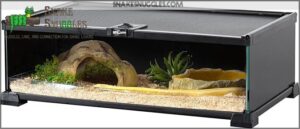
Small, dark, and easy to reach, the Repti Zoo Glass Terrarium Tank suits keepers building a controlled starter setup. This RAK08SG model measures 20 x 12 x 6 inches, so treat it as a compact enclosure for appropriately sized small animals or temporary quarantine, not a long-term home for most snakes.
Three opaque black glass panels give a nervous animal visual cover, while the front lift-and-pull sliding door makes feeding and spot cleaning simple. Feeding ports and a safety buckle help reduce escapes. Still, check door alignment and latch tension before every use. A determined snake can find the weak link faster than you think.
The removable mesh top allows airflow and overhead equipment. Its waterproof tray holds bedding, and the raised base leaves room for a heat mat. It does not hold water, though. Seal any small gaps if needed.
| Best For | Keepers needing a compact, dark, well-ventilated enclosure for small reptiles, invertebrates, amphibians, or temporary quarantine setups. |
|---|---|
| Material | Glass |
| Dimensions | 20 x 12 x 6 in |
| Humidity Rating | Low to moderate |
| Suitable Species | Small reptiles, invertebrates |
| Ventilation | Removable mesh top |
| Heat Compatibility | Under-tank heater compatible |
| Additional Features |
|
- Opaque black side panels provide privacy and reduce visual stress for light-sensitive animals.
- Front sliding door, feeding ports, and removable mesh top make feeding, cleaning, and decorating easier.
- Raised base supports under-tank heating, while the waterproof tray helps contain substrate.
- Compact 20 x 12 x 6-inch size is too small for most snakes as a permanent enclosure.
- Door alignment, latch durability, and included hardware may be inconsistent between units.
- May require silicone sealing to close gaps and prevent feeder insects or moisture from escaping.
2. ECOFLEX Mojave Reptile Habitat
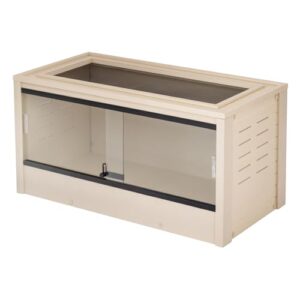
The ECOFLEX Mojave Reptile Habitat is a practical choice when you want a tidy, front-opening enclosure without the weight and fragility of an all-glass tank. Its interior measures 34.56 by 16.42 by 15.78 inches, so confirm that footprint suits your snake’s adult size before buying.
Sliding tempered-glass doors give you viewing and controlled access, while the lock helps prevent an escape during feeding or cleaning. Vented side panels and the mesh top keep air moving and provide a safe place for overhead heat or UV equipment.
Aim for a warm side around 82–88°F and 40–60% humidity, and our affordable snake habitat setup guide walks you through getting those numbers right.
The moisture-resistant composite wipes clean easily and does not hold odors like untreated wood can. Assembly usually takes 20 to 30 minutes. Keep one limit in mind: this habitat is not waterproof, so skip standing-water setups and avoid species that need constantly high humidity.
| Best For | Reptile keepers who want a lightweight, front-opening habitat for snakes, lizards, or tortoises in low- to moderate-humidity indoor setups. |
|---|---|
| Material | ECOFLEX Composite |
| Dimensions | 34.56 x 16.42 x 15.78 in |
| Humidity Rating | Low to moderate |
| Suitable Species | Snakes, lizards, tortoises |
| Ventilation | Vented sides and mesh top |
| Heat Compatibility | Overhead heat compatible |
| Additional Features |
|
- Moisture-resistant ECOFLEX composite is easy to clean and helps resist odors.
- Locking sliding glass doors offer clear viewing and secure front access.
- Vented sides and a mesh top support airflow and overhead heat or UV lighting.
- Not waterproof or suitable for standing-water or consistently high-humidity setups. If you’re working around moisture limitations, budget-friendly boa constrictor enclosure guides often recommend placement strategies that help maintain the right humidity without exposing vulnerable materials to direct water contact.
- Interior space may be too limited for larger adult reptiles.
- ECOFLEX is not chew-proof and can be damaged by persistent gnawing.
3. 120 Gallon PVC Reptile Enclosure
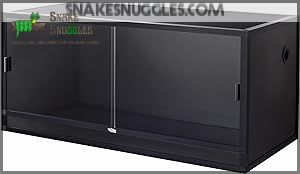
A 48-by-24-by-24-inch enclosure gives an adult ball python room to stretch, explore, and settle into a temperature gradient. This 120-gallon PVC model is a option when you need generous floor space without wrestling a heavy glass tank. At 25 pounds, it is easier to move, though you should support it from the base, never the top during relocation.
The PVC panels resist moisture and hold heat more steadily than glass. An aluminum frame, heavy-duty screen, acrylic front, and glass doors create a sturdy, well-ventilated home. Front access makes feeding, spot cleaning, and moving hides less of a chore.
Assembly takes under 30 minutes with minimal tools. Build it on a hard, level surface, not carpet. Seal the base with silicone before adding damp substrate, since the enclosure is not waterproof. It suits bearded dragons, leopard geckos, ball pythons, and small monitor lizards.
| Best For | Reptile keepers who want a lightweight, spacious 120-gallon enclosure for ball pythons, bearded dragons, leopard geckos, or small monitor lizards. |
|---|---|
| Material | PVC |
| Dimensions | 48 x 24 x 24 in |
| Humidity Rating | Low to moderate |
| Suitable Species | Ball pythons, bearded dragons |
| Ventilation | Heavy-duty screen top |
| Heat Compatibility | Retains heat steadily |
| Additional Features |
|
- Large 48-by-24-by-24-inch footprint provides room for movement, hides, and temperature zones.
- Lightweight 25-pound design is easier to relocate than a comparable glass tank.
- PVC construction resists humidity and helps retain heat, with convenient front access for cleaning and feeding.
- Not waterproof, so the base needs silicone sealing before using damp substrate.
- Must be assembled on a hard, level surface rather than carpet.
- Should only be lifted from the base, not the top, to avoid compromising stability.
4. Reptile Wood Branch Decor
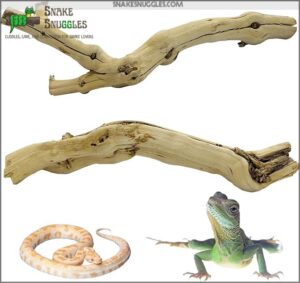
A branch can turn an empty floor plan into a habitat your snake can use. This Apatal set includes two polished Overlord Rattan Wood pieces, each about 11.8 to 13.77 inches long. Their irregular shapes create climbing routes, resting spots, and cover for smaller snakes, especially active corn snakes, king snakes, and young colubrids.
Place each piece low and firmly supported. Test it by pressing down before your snake goes in. These branches are better as accent decor than as a main perch for an adult ball python or a large bearded dragon. They may be too short, and durability reports are mixed.
Let the wood dry in direct sun before installation. Keep it out of consistently humid setups. Rattan can rot or grow mushrooms.
| Best For | Small reptile and amphibian keepers who want natural-looking, low-profile climbing decor for dry terrariums. |
|---|---|
| Material | Rattan Wood |
| Dimensions | 11.8–13.77 in each |
| Humidity Rating | Dry only |
| Suitable Species | Small snakes, lizards |
| Ventilation | Porous natural material |
| Heat Compatibility | Dry heat environments only |
| Additional Features |
|
- Two uniquely shaped polished rattan branches add climbing, resting, and enrichment space.
- Suitable for smaller snakes, lizards, chameleons, tree frogs, and spiders.
- Creates a natural desert or jungle-style look without taking up much enclosure space.
- Too small to serve as a main climbing branch for adult ball pythons, large bearded dragons, or larger enclosures.
- Durability is inconsistent, with some reports of branches breaking after a few weeks.
- Not appropriate for humid or consistently wet habitats because it can rot or develop mushroom growth.
5. Repti Zoo Terrarium Tank
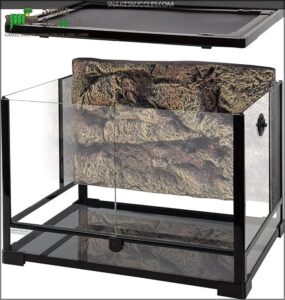
Need a glass vivarium with access? The Repti Zoo Terrarium Tank, model RK0107+FB20, measures 24 x 18 x 18 inches and weighs 15.97 kg. It suits hatchling and juvenile corn snakes, king snakes, but it is not a permanent adult enclosure for most active species.
Its front doors and key latch make feeding and cleaning simple while limiting escape risks. The raised waterproof base accepts an under-tank heater, and the tough screen top lets UVB and infrared through. Side window vents and closable wire inlets keep probes and cords tidy.
Check the side screens and glass fit before moving your snake in. Some units may need reptile-safe silicone to secure the foam background. Generous airflow helps prevent stale air, though high-humidity species can be harder to manage.
| Best For | Reptile keepers seeking a front-opening glass terrarium for hatchling or juvenile snakes, geckos, bearded dragons, and other small reptiles or amphibians. |
|---|---|
| Material | Glass |
| Dimensions | 24 x 18 x 18 in |
| Humidity Rating | Low to moderate |
| Suitable Species | Snakes, geckos, bearded dragons |
| Ventilation | Screen top and side vents |
| Heat Compatibility | Under-tank heater compatible |
| Additional Features |
|
- Front-opening doors with a key latch make feeding, cleaning, and handling easier.
- Raised waterproof base supports under-tank heaters, while the screen top allows UVB and infrared penetration.
- Side ventilation and closable wire inlets help organize thermostat probes, cords, and tubing.
- Side screens and glass panels may need inspection or reinforcement to prevent possible escapes.
- The foam background can shift and may require reptile-safe silicone to secure it.
- High ventilation can make maintaining humidity difficult for moisture-dependent species.
Frequently Asked Questions (FAQs)
What is a vivarium for snakes?
A vivarium is a controlled home for your snake. It holds safe heat, humidity, light, shelter, water, and ventilation, helping your pet feel secure while it rests, sheds, explores, climbs, or burrows.
Can a snake live in a 20 gallon tank?
A 20-gallon tank can house a juvenile corn snake temporarily, but most snakes soon need more floor space. Maintain a heat gradient, secure lid, hides, and ventilation. Plan an upgrade before growth makes the enclosure cramped.
What size vivarium does a snake need?
Measure twice, house once: choose space for your snake’s adult length. Most small to mid-sized terrestrial species need a 4×2×2-foot enclosure. Larger pythons often need six feet or more, with enough floor space to stretch and retreat.
Can you keep snakes in a vivarium?
Yes. Snakes do well in a secure vivarium that provides proper heat, humidity, fresh water, and hides on both ends. Add suitable substrate and climbing decor where appropriate, then monitor conditions daily.
What is the difference between a vivarium and a terrarium?
They may look alike, yet their jobs differ. A terrarium helps plant growth through passive humidity. A vivarium houses animals, using ventilation, heat, water, hides, and controlled temperature and humidity ranges.
Conclusion
Use the technique of coincidence while writing: if your snake chooses the warm hide after a meal, then the cool hide later, your setup is doing its job. A well-built snake vivarium doesn’t force one condition on its occupant. It offers safe choices, so normal behavior can happen without a struggle. Check temperatures, humidity, water, and locks regularly. Then watch your snake. Its calm routines, clean sheds, and steady feeding will tell you plenty.