This site is supported by our readers. We may earn a commission, at no cost to you, if you purchase through links.

A green anaconda can swallow a caiman whole, then go months without eating again. That single fact tells you constriction isn’t brute force—it’s engineering. Muscle, patience, and heat-sensing precision built over millions of years of evolution.
You’ll find this strategy across a surprising range of body types and habitats, from desert-dwelling rosy boas no longer than your arm to reticulated pythons stretching 26 feet through Southeast Asian jungle. Some hunt from tree canopies. Others burrow through sand.
Understanding the types of constricting snakes means learning how each species turned the same basic trick—squeeze, don’t poison—into a wildly different survival blueprint.
Table Of Contents
- Key Takeaways
- Most Common Constricting Snake Types
- Boas: Powerful New World Constrictors
- Pythons: Iconic Old World Constrictors
- Giant Constrictors Worth Knowing
- Pet-Friendly Constricting Snakes
- Frequently Asked Questions (FAQs)
- What state has zero snakes?
- What is the most powerful constricting snake?
- How many constricting snakes are there?
- What is a squeezing snake called?
- What types of snakes constrict?
- Which snake can squeeze the hardest?
- What snake kills by constriction?
- What is a type of constricting snake?
- What venomous snakes use constriction?
- What is a large constricting snake?
- Conclusion
Key Takeaways
- Constricting snakes span five main groups—boas, pythons, anacondas, sand boas, and rat snakes—each adapting the same squeeze-based hunting method to different habitats, from deserts to rainforests to swamps.
- Boas and anacondas give birth to live young (viviparous/ovoviviparous), while pythons lay eggs and coil around them for protection until hatching.
- Size varies enormously across constrictors, from rosy boas at 2-3 feet to green anacondas reaching 26 feet and 550 pounds, yet all rely on muscular coiling rather than venom to kill through circulatory arrest.
- Popular pet species like ball pythons, corn snakes, and rosy boas thrive in captivity for 15-30 years when given proper temperature, humidity, and feeding schedules.
If you’re drawn to boas specifically, finding a reputable boa constrictor breeder who understands their live-birth needs makes all the difference in getting a healthy animal.
Most Common Constricting Snake Types
Constricting snakes come in a surprising range of shapes, sizes, and hunting styles. You’ll find them coiled in rainforests, buried in desert sand, and thriving in captivity as household pets. Here’s a closer look at the five types you’re most likely to encounter.
Each species relies on unique patterns and colors to blend into its surroundings, and exploring how snakes master camouflage across habitats reveals just how specialized these adaptations really are.
Boas
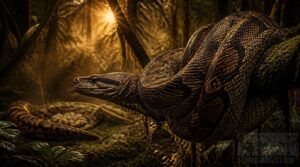
The boa family brings roughly 3 to 13 feet of muscle to the table, using heat-sensing facial pits and raw constriction power rather than venom. Species like the Boa constrictor (often called Boa imperator) inhabit everything from rainforests to savannas across the Americas.
Unlike egg-layers, boas give live birth—viviparous reproduction that produces 5 to 40 young per litter. These non-venomous Boidae species are highly efficient carnivorous hunters.
Pythons
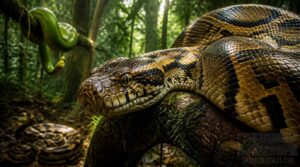
Cross the Atlantic and you’re in Old World territory, where pythons rule with facial pits detecting infrared prey heat. These nonvenomous constrictors lay eggs (oviparous), coiling protectively until hatching.
- Ball Python
- Reticulated Python
- Burmese Python
- African Rock Python
- Green Tree Python
Sizes range from 3 to over 20 feet—proof this reptile family thrives across wildly different ecological niches.
Anacondas
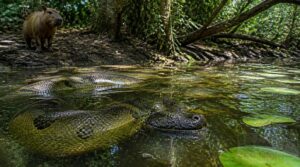
Water is home turf for South America’s green anaconda, a nonvenomous constrictor topping 550 pounds. Unlike egg-laying pythons, anacondas are viviparous, birthing 20-40 live young.
Eyes and nostrils sit atop the head, letting them breathe while ambushing prey in Amazonian swamps. They constrict underwater, drowning capybaras and caimans—raw predatory power few reptiles rival.
Breathing through eyes and nostrils held above the water, anacondas drown capybaras and caimans in silent, unstoppable coils
Sand Boas
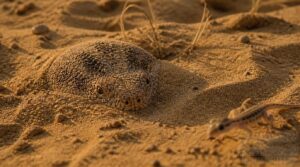
Grit and camouflage define these burrowers. Genus Eryx members stay mostly buried, eyes and nostrils poking above the sand while they ambush passing prey.
- Stout, cylindrical bodies built for pushing through loose substrate
- Keeled scales resisting abrasion
- Tail fat reserves fueling long stretches between meals
Found across Africa, Asia, and southeastern Europe, they’re small, patient predators built for life underground.
Sand boas are a favorite among enthusiasts drawn to unique-looking pet snake species, thanks to their stocky build and striking striped patterns.
Rat Snakes
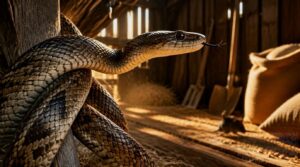
Farmers have quietly relied on these snakes for generations, and for good reason. Nonvenomous and methodical, rat snakes track rodents using their Jacobson organ before coiling into constriction.
They thrive in barns, farmlands, and increasingly cities, showing real urban habitat adaptation. Expect 3 to 6 feet of body length, strong rodent control benefits, and seasonal brumation each winter as this widespread reptile species settles in wherever mice gather.
Boas: Powerful New World Constrictors

Boas trade heat-sensing pits for lip and facial receptors, but they’re no less effective at finding a meal. Found across the Americas and Madagascar, these snakes range from stocky ambush hunters to slender rainforest specialists. Here are five boas that show just how varied this family really is.
Boa Constrictor
Sensory pits near the mouth detect body heat in darkness. Birth is ovoviviparous—live young, no eggs. Captive boas often live 20 to 30 years, thriving with proper thermal gradients.
Red-Tailed Boa
Six to ten feet of tan-brown muscle, saddled in rust-red blotches that deepen toward the tail—this boa earns its name. Native to Central and South America, it ambushes rodents and opossums in humid forests.
Enclosures need 84–88°F basking zones, 60–70% humidity, and feedings every 7–14 days. Shedding cycles bring brief appetite dips—totally normal for this calm, hardy constrictor.
Rainbow Boa
Light bends differently on this snake. Iridescent scale refraction gives freshly shed skin an oil-slick shimmer over reddish-brown bands and crescent markings.
Native to Brazilian and Guyanese tropical forests, this member of the boa family stays mostly terrestrial, climbing occasionally. Nocturnal and shy, it favors:
- Leaf litter cover
- Fallen logs
- 75–85°F enclosures
- 60–80% humidity
Temperament: reclusive, defensive only when cornered.
Rosy Boa
Small, sturdy, and built for the dirt, this species tops out around 2–3 feet, with females outsizing males. Rose-brown stripes camouflage it across semi-desert habitats in Mexico and the southwest US.
Its blunt tail aids burrowing behavior, letting it vanish into loose soil. Viviparous birth yields 1–9 live young. Rosy Boa lifespan: 15–20 years captive, feeding every 7–14 days.
Emerald Tree Boa
Picture a vivid green coil draped over a rainforest branch, invisible until it strikes. Born reddish-orange, juveniles shift to emerald green within months—true canopy camouflage.
Its prehensile tail anchors ambush hunts on bats and rodents, while unusually long fangs grip prey mid-air. Viviparous females birth 6–14 live young, and adults can thrive 15+ years in captivity.
Pythons: Iconic Old World Constrictors

Pythons hold their own as Old World constrictors, built with heat-sensing pits and a hunting style that’s earned them a fierce reputation. From the tropics of Africa to the forests of Asia, these snakes come in a range of sizes and temperaments you’ll want to understand. Here are five python species that show just how varied this family really is.
Ball Python
Ball pythons anchor the python family for most keepers, and it’s easy to see why. Docile nature and manageable size make them ideal pets, active mostly at night. Morph selection offers endless color patterns, from albino to piebald. Success requires:
- Stable captive diet
- Proper habitat humidity
- Managing shedding issues
- Consistent nocturnal enrichment
Reticulated Python
Reticulated pythons hold the record as the world’s longest snakes, with verified lengths up to 8 meters. Native to Southeast Asia, they sport a net-like diamond pattern for camouflage in dappled forest light.
Ambush predators by nature, they strike, constrict, and swallow prey whole. Females incubate 20-70 eggs, and hatchlings grow rapidly within their first years.
Burmese Python
Bulkier than its reticulated cousin, this python packs serious mass, sometimes topping 200 pounds. Native to Southeast Asian wetlands, it relies on lip pits for infrared hunting, ambushing mammals with lethal precision.
Florida’s invasive population tells a cautionary tale: rapid python growth rates and no natural predators have devastated native wildlife across the Everglades.
Carpet Python
Carpet pythons trade bulk for versatility, thriving across Australia’s rainforests, woodlands, and rocky outcrops. Growing 2 to 4 meters, they use lip pits to detect warm prey and climb skillfully as juveniles shift to ground hunting with age.
Their blotched, carpet-like patterns vary by subspecies—jungle, coastal, diamond—showcasing astonishing adaptability within a single species’ range.
Green Tree Python
High in New Guinea’s canopy, the Green Tree Python waits coiled around a branch, head tucked center, in classic ambush posture. Juveniles hatch yellow or orange, shifting to emerald green with age—nature’s own camouflage upgrade.
Nocturnal and arboreal, they strike birds and small mammals using heat-sensing lip pits. Captive keepers must replicate humid, 75–85°F conditions for healthy morphs to thrive.
Giant Constrictors Worth Knowing
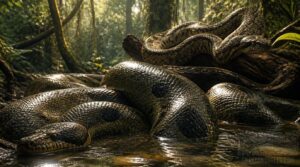
Some constrictors grow large enough to command respect at a glance. You’ll find size records, raw power, and serious muscle behind these two species. Here’s what makes each one a true giant among snakes.
Green Anaconda
Water is home turf for this giant. Weighing up to 550 pounds and reaching 26 feet, the green anaconda relies on stocky, muscular bulk rather than speed. Eyes and nostrils sit high on its head, letting it breathe while submerged. Olive-green skin with dark blotches provides camouflage in flooded forests. Females, far larger than males, give birth to live young—ovoviviparous reproduction in action.
African Rock Python
Africa’s largest snake earns its reputation through sheer bulk—4.5 to 5.5 meters long, sometimes topping 6 meters. This nonvenomous predator hunts nocturnally, using heat sensing pits to ambush antelope and pigs near riverbanks.
Constriction cuts off circulation fast. Females then coil around 20 to 100 eggs for months, regulating temperature until hatching—dedication that mirrors the whole python family’s patient reproductive strategy.
Pet-Friendly Constricting Snakes
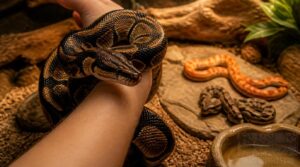
Not every constrictor demands a giant enclosure or years of experience to keep safely. Some species handle calmly, tolerate regular handling, and fit well into a beginner’s home. Here’s what you need to know before choosing your first constricting snake.
Ball Python Temperament
Ball pythons rank among the calmest snakes in the exotic pet trade, and their reputation is well earned. When stressed, they curl into a tight defensive coil rather than strike—a passive strategy that suits their low-energy profile.
| Behavior | What It Means |
|---|---|
| Defensive coiling | Stress response |
| Nighttime activity | Crepuscular pattern |
| Calm handling tolerance | Successful socialization |
Regular handling builds trust over time, reinforcing gentle temperaments.
Corn Snake Handling
Corn snakes reward patience: their calm, curious nature makes them ideal for learning proper technique.
- Handle in late afternoon, never right after feeding
- Support the body fully; avoid pinching or restraining the neck
- Watch for stress signals like hissing or musky scent
Keep sessions short, use unscented soap, and end calmly if the snake seems uneasy.
Rosy Boa Care
Rosy boas thrive in a 20–40 gallon enclosure with thermoregulation setup ranging 80–90°F warm side, 70–75°F cool zone.
Use aspen shavings for substrate impaction prevention, keep humidity 40–60%, and follow strict dietary feeding schedules—juveniles every 5–7 days, adults every 7–14.
For health monitoring tips, watch for shedding issues or appetite loss. With proper care, these calm pet snakes live 20–30 years.
Kenyan Sand Boa
Kenyan sand boas bring something completely different to the table: instead of climbing or basking, they burrow. That blunt, wedge-shaped head and stout, cylindrical body let them push headfirst through loose sand, while high-set eyes and top-mounted nostrils keep them ambush-ready while buried. They strike upward at rodents from beneath the substrate—patient hunters wearing yellow-orange, saddle-blotched camouflage that mimics desert floors.
Beginner Safety Tips
Sand-burrowing specialists aside, every nonvenomous constrictor—whether boa constrictor or python—deserves the same basic respect.
- Wear protective gear: gloves and goggles guard against bites and eye injury.
- Keep enclosures locked and secure.
- Watch for handling stress signs like glassy eyes or curling.
- Have an emergency response plan ready.
- Schedule veterinary care checkups annually.
Frequently Asked Questions (FAQs)
What state has zero snakes?
Two U.S. states hold zero native snakes: Alaska and Hawaii. Alaska’s climate barriers—subzero winters, permafrost—block survival, while Hawaii’s isolation effect and strict biosecurity measures keep these snake-free ecosystems intact through natural geographic dispersal limits.
What is the most powerful constricting snake?
Green anacondas hold the title, using massive muscle density and multi-loop coils to trigger circulatory arrest within seconds.
King snakes generate higher pressure per pound, but anacondas’ sheer size delivers astonishing raw constricting force overall.
How many constricting snakes are there?
No fixed tally exists—taxonomic splits shift constantly. Boas count roughly 61 species, pythons about 40, with kingsnakes adding 43 more. Together these lineages form the bulk of the world’s constrictors, spanning evolutionary diversity from rosy boas to giant anacondas.
What is a squeezing snake called?
Constrictor is the term you’ll hear most. These nonvenomous constrictors kill through coiling and squeezing, cutting off circulation until the heart stops. Boas and pythons dominate the category, showcasing distinct constriction methods shaped by millions of years of predatory refinement.
What types of snakes constrict?
Nonvenomous constrictors span several families: boas, pythons, and anacondas dominate the Boidae lineage, while sand boas and rat snakes round out the group. Each relies on muscular coiling rather than venom, reflecting shared evolutionary traits across wildly different habitats.
Which snake can squeeze the hardest?
Pound for pound, kingsnakes edge out rat snakes, but the anaconda’s sheer muscular density wins overall—pressure vs length matters less than mass. Circulatory arrest hits fast: roughly 90 PSI, tuned by heartbeat monitoring, not brute size alone.
What snake kills by constriction?
Boas and pythons—both from the Boidae family—kill through constriction, using circulatory arrest rather than suffocation. Rapid muscle contraction and pressure escalation stop blood flow to the heart, exploiting keen sensory prey detection to time each tightening coil precisely.
What is a type of constricting snake?
Think of it as nature’s silent wrestler: the Boa Constrictor ambushes prey in forests and grasslands, using muscular compression rather than venom to subdue mammals and birds before swallowing them whole, head first.
What venomous snakes use constriction?
Rear-fanged colubrids like Clelia and some elapids use dual hunting methods, wrapping coils around prey while envenomating. This combo speeds prey immobilization, cutting off blood flow mechanically as venom disables the nervous system—proving constriction isn’t exclusive to nonvenomous species.
What is a large constricting snake?
A living vise wrapped in scales—that’s a large constrictor. These are heavy-bodied top predators, often 10+ feet, that kill through circulatory arrest, using muscular coils rather than venom to subdue prey like capybaras or deer.
Conclusion
Funny coincidence: the rosy boa in your backyard and the anaconda in the Amazon rely on the exact same trick, just scaled differently. That’s the quiet genius behind every one of the types of constricting snakes covered here.
Size changes, habitat changes, but the method stays constant—coil, sense, squeeze. Master that pattern, and you’ll recognize it instantly, whether you’re handling a ball python or reading about a jungle giant. Nature rarely improves on something that already works this well.