This site is supported by our readers. We may earn a commission, at no cost to you, if you purchase through links.
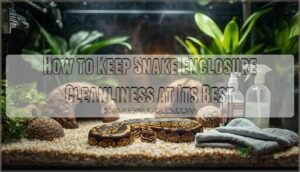
dirty enclosure doesn’t just look bad—it’s one of the fastest ways to make a healthy snake sick.
Bacteria from feces, old substrate, and stagnant water build up quietly, long before you notice any smell.
Scale rot, respiratory infections, and mouth rot often trace back to a single source: a setup that didn’t get cleaned often enough, or didn’t get cleaned right.
Snake enclosure cleanliness isn’t about being obsessive—it’s about understanding what actually harms your animal and staying ahead of it.
The steps that follow give you a reliable system, from daily spot checks to full disinfection.
Table Of Contents
- Key Takeaways
- Preparing The Enclosure for Cleaning
- Cleaning The Enclosure
- Disinfecting The Enclosure
- Cleaning and Disinfecting Accessories
- Maintaining a Clean Enclosure
- Essential Tools for Enclosure Cleaning
- Dealing With Contaminants and Health Issues
- Bioactive Enclosure Cleaning
- Importance of Regular Cleaning
- Best Practices for Enclosure Cleaning
- Frequently Asked Questions (FAQs)
- Is Dawn dish soap safe for snake enclosure?
- How to keep a snake enclosure clean?
- Do snake enclosures smell bad?
- How often do you need to clean a snake enclosure?
- What happens if you don’t clean your snake cage?
- How do I keep mites out of my snake enclosure?
- What cleaning solution to use for snake enclosure?
- How do I reduce odors in snake enclosures?
- Can plants in enclosures cause hygiene issues?
- How often should I clean humidity gauges?
- Conclusion
Key Takeaways
- A dirty enclosure doesn’t just look bad — bacteria from waste and stagnant water build up silently and are the root cause of scale rot, respiratory infections, and mouth rot.
- Daily spot cleaning paired with a deep clean every 3–6 weeks (depending on snake size) is the minimum routine that keeps bacterial and mold growth from getting ahead of you.
- Only use reptile-safe disinfectants like F10SC or chlorhexidine at the correct dilution — harsh chemicals like ammonia and pine-based cleaners damage your snake’s skin and respiratory system.
- Everything in the enclosure — hides, dishes, rocks, and décor — needs the same cleaning attention as the tank itself, since accessories harbor bacteria just as fast as the floor of the enclosure.
Preparing The Enclosure for Cleaning
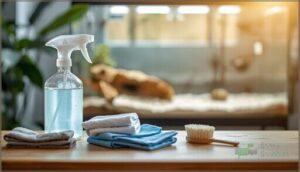
Before you touch anything inside the tank, a little prep work goes a long way. Getting this part right keeps your snake safe and makes the whole cleaning process faster and less messy.
Having the right supplies for cleaning a snake tank on hand before you start means fewer interruptions and a safer environment for your snake throughout the process.
Here’s what to do first.
Removing The Reptile and Accessories
Start by moving your snake to a temporary holding bin before touching anything else. Use a secure transfer lid — escapes happen fast. Pick up your snake calmly, support its full body, and settle it into a quiet holding area away from noise and activity. Then remove everything: hides, water dishes, branches, and decor.
- Use a ventilated temporary holding container sized for your snake
- Follow hand sanitization steps immediately after the transfer
- Begin accessory pre-cleaning by sorting items before washing
For ideal hygiene, follow a monthly deep cleaning schedule.
Turning Off Heat Sources
Once your snake is secured, unplug everything — heat mats, lamps, thermostat controllers. Don’t skip the power cord inspection either; frayed wires or loose fittings are worth catching now.
Heat Mat Unplugging removes live current before water and disinfectant enter the picture. Lamp Cool-Down matters too — bulbs stay dangerously hot well after shutdown, so give them time.
Thermostat Bypass happens automatically when you pull the plug, eliminating any risk of the heater cycling on mid-clean. Wait until surfaces air dry completely before Restart Timing begins.
Remember to follow a regular deep cleaning routine to prevent bacterial buildup.
Protecting Yourself With Gloves
With heat sources off, it’s time to protect your hands.
Nitrile gloves are your best choice for Glove Material Choice — they resist chemicals and reptile waste far better than vinyl or latex. Proper Glove Fit matters: snug but not tight.
After cleaning, Glove Disposal Practices mean peeling them off inside out, sealing them, then washing your hands thoroughly.
That’s your crosscontamination prevention locked in.
Cleaning The Enclosure
Once the prep work is done, it’s time to get into the actual cleaning.
This part covers the three core steps that make the biggest difference in keeping your snake’s space safe and livable.
Here’s what to work through.
Removing Waste and Debris
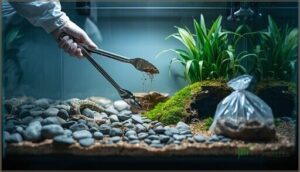
Waste doesn’t wait — and neither should you. Remove waste as soon as possible to stop bacterial buildup before it starts.
- Use tongs or a scoop for corner waste inspection and hidden waste detection under hides.
- Urates management means removing those chalky white deposits alongside feces, urine, and urates.
- Follow a strict waste disposal protocol — seal everything in a bag before binning.
- Uneaten prey removal is non‑negotiable; physical removal of unwanted matter within four hours prevents ammonia buildup.
Cleaning The Substrate
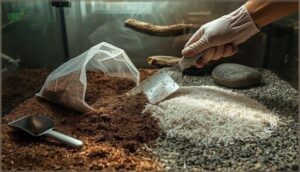
Not all substrates clean the same way. Loose materials like coconut fiber or cypress mulch need full replacement every four to eight weeks — sooner if they’re damp or smell off.
Paper-based options turn over weekly.
Always scoop out soiled sections completely and bag them before disposal. Never reuse substrate that’s absorbed waste. Fresh, dry bedding at the right depth keeps bacterial buildup in check.
Wipe Down Interior Surfaces

Once the substrate is out, wipe every interior surface from top to bottom — walls, floor, corners last.
Use microfiber cloths for smooth panels and separate cloths for inside versus outside walls. Circular wiping lifts dried residue without scratching.
Here’s what to grab:
- A spray bottle with snake-safe disinfectant
- Paper towels for moisture absorption in tight spots
- Rubber gloves to protect your hands throughout
Finish dry. No damp surfaces.
Disinfecting The Enclosure
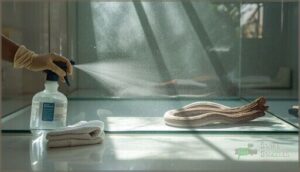
Cleaning gets the bulk of the mess out, but disinfecting is what actually stops bacteria from taking hold. You’ll want to do this step right — skipping it or rushing through it can undo everything you just did.
A consistent disinfecting routine pairs especially well with the broader habitat habits covered in this corn snake breeding and enclosure care guide.
Here’s what to focus on.
Using Reptile-Safe Disinfectant
Not every cleaner on your shelf is safe in a snake enclosure. Stick to reptile disinfectants like F10SC or chlorhexidine — both are proven, nontoxic disinfectants when used correctly.
Always do label verification before buying: confirm dilution ratios (F10SC runs 1:250 for routine use), check toxicity testing data, and look for reptile-safe disinfectant labeling.
After applying, ventilation and drying matter just as much — no chemical residue management means no snake goes back in until the smell is completely gone.
Scrubbing With a Soft Brush
Bristle material selection matters more than most keepers think. Use a soft-bristled brush on glass and PVC panels — scratch-free surfaces stay cleaner long-term because grime has nowhere to grip.
An old toothbrush manages corner reachability perfectly, fitting into seams and tracks that cloths miss.
Apply gentle scrubbing pressure with short strokes, loosening dried urates and residue before your disinfectant does its job.
Store brushes dry between sessions.
Allowing Sufficient Contact Time
The surface has to stay visibly wet the entire time — that’s not optional. Check the Label Directions for your specific product; contact time is often 10 minutes or more. Safe disinfectants for reptile habitats lose their potency if they dry too soon. Don’t rush it.
Preventing Dry Patches means Reapplication During Wait periods if needed. Coverage Uniformity matters too — missed spots stay contaminated.
Cleaning and Disinfecting Accessories

The enclosure itself isn’t the only thing that needs attention — everything inside it does too. Dishes, hides, and decorations collect bacteria just as fast as the floor of the tank.
Here’s how to handle each one properly.
Separate Cleaning for Food and Water Dishes
Keep your food and water dishes on a Dish Rotation Schedule — wash them separately, every single time. Mixing them during cleaning is one of the easiest ways to spread bacteria between bowls.
Use Dedicated Cleaning Buckets set aside only for reptile supplies, never your kitchen sponges.
Scrub food dishes first with warm water and safe cleaning agents, then disinfect food dishes with a snake-safe disinfectant.
Follow the Air Drying Procedure completely before returning bowls to the enclosure — no shortcuts.
Run Cross-Contamination Checks regularly, and follow Material Safety Guidelines to keep water bowl sanitation consistent and your snake protected.
Cleaning Decorative Items and Hides
Dishes are done — now it’s time to tackle hides and décor.
Hide Material Selection matters here. Non-porous hides are easiest to clean and don’t trap bacteria the way wood or cork can.
Follow these steps:
- Gently lift one side of the hide to coax your snake out, then transfer it to a secure container.
- Soak hides in hot water for 10 minutes to loosen debris.
- Scrub interior crevices with a soft toothbrush and safe cleaning agents.
- Apply reptile safe disinfectant at proper dilution — allow a full 10-minute contact time for Decorative Item Sanitization.
- Use Natural Disinfection Techniques for wood pieces: bake at 225°F for 30 minutes or freeze cork bark overnight.
Hide Drying Methods seal the job. Air dry completely — upside down — for 24 hours before returning anything to the enclosure. Finish with hand sanitization protocols after cleaning and proper protective equipment usage throughout.
Washing Rocks and Accessories
Rocks need the same care. Scrub them with hot water and a safe terrarium cleaning detergent, focusing on crevices where bacteria hide.
Rock Soaking Techniques help here — a 10-minute soak loosens stubborn debris before brushing. For Nonporous Decor Sanitization, a diluted reptile-safe disinfectant works well.
Rinse thoroughly, then air-dry completely. Temperature Safe Drying matters — damp rocks returned to a warm enclosure shift humidity fast.
Maintaining a Clean Enclosure

Keeping your snake’s enclosure clean isn’t a one-time event — it’s an ongoing habit. A few consistent routines make all the difference between a thriving snake and a sick one.
Here’s what that looks like in practice.
Regular Spot Cleaning
Even a single missed cleanup can throw off enclosure hygiene. Use Waste Removal Tools daily for spot cleaning—paper towels, gloves, and a scoop.
Remove feces, shed skin, and soiled substrate right away. Practice Glove Hygiene and dry surfaces after cleaning to prevent mold.
Routine cleaning keeps odors down and makes substrate hygiene easier. That’s how you avoid common cleaning mistakes.
Scheduling Deep Cleaning
Spot cleaning buys you time — deep cleaning resets everything. Your cleaning schedule frequency depends on a few key factors:
- Feeding Cycle Sync: Clean 48–72 hours after feeding, when waste appears.
- Size-Based Timing: Larger snakes need deep cleaning every 4–6 weeks; smaller setups can stretch to 8 weeks.
- Health Trigger Alerts: Odor, visible buildup, or shedding issues mean clean now, not later.
Seasonal Adjustments and Cleaning Frequency matter too — humidity shifts in winter can accelerate bacterial growth, tightening your deep cleaning procedures timeline.
Preventing Mold and Mildew
Mold doesn’t announce itself — it just spreads. Keep humidity between 50–60%, because anything above 70% for more than a few days invites trouble.
mold-resistant materials and moisture-absorbing substrate that dries fast. Check sealant and seams for hidden damp spots — classic mold detection indicators.
Good ventilation and humidity control, paired with antifungal cleaning agents, keep mold growth stopped before it starts.
Essential Tools for Enclosure Cleaning
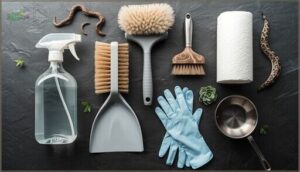
Having the right tools makes enclosure cleaning faster and less frustrating. You don’t need a cabinet full of products — just the right ones.
Here’s what actually belongs in your cleaning kit.
Reptile-Safe Cleaning Solutions
Not every cleaner on the shelf is safe for your snake. Stick to reptile-safe disinfectants you can trust:
Options like chlorhexidine, hypochlorous acid, and diluted bleach top the list — but how you use them matters just as much, as this guide to snake hide cleaning schedules and safe disinfecting practices explains.
- Chlorhexidine solutions for reliable, low-fume surface disinfection.
- F10 at a 1:250 concentration ratio for routine cleaning, or 1:100 for heavier contamination.
- Diluted bleach — effective, but only with a strict bleach rinse protocol after.
- pH balanced, enzyme cleaner options that break down organic waste safely.
Natural Cleaning Agents
Natural agents work surprisingly well here. A Vinegar Solution — equal parts vinegar and water — cuts through mineral buildup and bacteria without risk to your snake. Hydrogen Peroxide performs disinfection cleanly, breaking down into water and oxygen. Baking Soda Paste buffs away stubborn residue. Lemon Juice Descaling addresses water dish deposits. Enzyme Cleaner dissolves waste proteins at the source.
| Agent | Primary Use |
|---|---|
| Vinegar Solution | Mineral buildup, bacteria |
| Hydrogen Peroxide | Surface disinfection |
| Enzyme Cleaner | Waste protein breakdown |
Protective Equipment
Cleaning gear protects you as much as it protects your snake.
Wear nitrile gloves — they resist chemicals better than latex and prevent direct contact with waste. Add safety goggles when spraying disinfectant. A protective apron keeps contaminated water off your clothes. Use respirator masks when removing dusty substrate. Slip-resistant footwear prevents falls on wet floors.
Follow strict hand sanitization protocols after cleaning, even with disposable gloves on.
Dealing With Contaminants and Health Issues
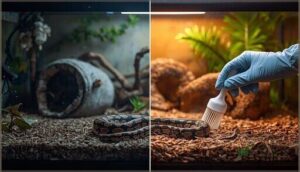
A dirty enclosure doesn’t just look bad — it can make your snake seriously sick. Shed skin, waste, and bacteria build up fast, and each one brings its own set of problems.
Here’s what you need to watch for and handle right away.
Removing Shedded Skin
Shed skin collection is a simple task if you stay consistent. After each shed, use tongs and tweezers to pull loose pieces from corners, crevices, and hides.
Vacuum fine particles from aspen bedding with a shop vac on low. Wipe glass walls with a damp microfiber cloth.
Humidity control matters too — stuck shed almost always signals a humidity balance problem. Keep levels between 50 and 70 percent, and difficult sheds become rare.
Dealing With Fecal Matter
Snake feces are dark brown or black with white urates on the side — that’s your color-coded spotting signal to act fast. For proper waste removal, scoop the droppings and remove substrate within a 8–10 inch radius around the mess.
- Identify faeces, urine, and urates by color and texture
- Follow waste frequency guidelines — adults go every 7–21 days
- Use disposal bag protocol: seal waste immediately
- Apply chlorhexidine for spot cleaning the soiled area
- Manage urates with a plastic fork or spoon
Preventing Mouth Rot and Respiratory Infections
Fecal matter handled — now think about what lingers in the air and tissue. Stale, damp air breeds the bacteria behind respiratory infections and mouth rot.
Keep ventilation steady, humidity species-appropriate, and water bowls clean — that’s your Water Quality Management and Mouth Moisture Management working together.
Stress Reduction Strategies matter too: a calm, properly set-up enclosure helps Immune Support Nutrition uptake and resilience.
Do Regular Health Checks. Spot swelling around the mouth or wheezing? Call your vet.
Bioactive Enclosure Cleaning
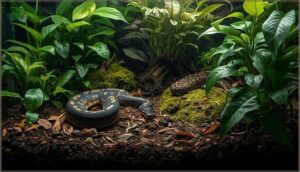
Bioactive enclosures work differently from standard setups — they rely on live plants, beneficial microbes, and cleanup crew organisms to break down waste naturally. That means your cleaning routine needs to shift too.
Here’s what you need to know to keep things balanced and healthy.
Spot Cleaning and Deep Cleaning
Bioactive setups don’t clean themselves — your cleanup crew manages waste, but spot clean efficiency still depends on you. Pull feces daily to keep the balance intact. Deep clean validation matters too; a full yearly reset ensures no hidden buildup threatens the ecosystem. Track your sanitation records, practice proper tool sterilization, and prioritize residue removal throughout.
- Spot cleaning vs deep cleaning: daily removal vs annual resets
- Biodegradable options: break down safely
- Enclosure hygiene: consistent cleaning frequency prevents bacterial spikes
Maintaining Proper Ventilation
Spot cleaning keeps bioactive waste in check — but airflow design determines whether your cleanup efforts actually hold.
Vent placement matters: position openings on opposite sides so air moves through, not around, your snake’s space. Cross-ventilation manages ammonia control naturally, diluting waste gases before they build up.
For humidity balance, cover part of the mesh lid. Fan integration helps larger enclosures without crashing moisture levels.
Monitoring Humidity and Temperature
Good ventilation keeps the air moving — but it won’t tell you what the numbers are doing. That’s where monitoring steps in.
Place a digital hygrometer on each side of the enclosure. Digital hygrometer calibration, monthly, keeps readings trustworthy.
For temperature gradient mapping, use probe thermometers on both the warm and cool ends.
Wireless sensor integration lets you track humidity fluctuation alerts and data logging trends right from your phone.
Most snakes need 50–70% humidity and a warm side around 30–33°C. Watch the numbers. Adjust before problems start.
Importance of Regular Cleaning
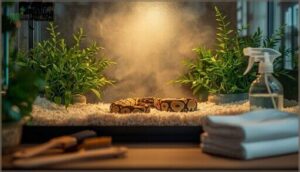
Regular cleaning isn’t just about appearances — it directly protects your snake from scale rot, respiratory infections, and chronic stress. A dirty enclosure is one of the fastest ways to shorten a healthy snake’s life.
A dirty enclosure doesn’t just look bad — it can cut your snake’s life short
Here’s what consistent cleaning actually does for your snake’s long-term wellbeing.
Preventing Scale Rot and Respiratory Infections
Scale rot and respiratory infections don’t appear overnight — they build quietly in damp, neglected corners. Enclosure hygiene is your first defense.
- Ventilation optimization keeps bacterial growth and mold prevention in check
- Humidity control and substrate selection stop wet bedding from staying soaked
- Temperature stability reduces immune stress
- Regular health checks catch early warning signs quickly
Fix the environment, and you fix the risk.
Maintaining a Healthy Environment
balanced enclosure does more than look clean — it actively protects your snake.
Air Filtration, Temperature Stability between 24°C–32°C, and Humidity Regulation around 50–70% work together to support immune function.
Consistent substrate hygiene and Water Quality prevent bacterial growth.
Substrate Rotation and cleaning frequency keep pathogen control tight.
| Factor | Target Range | Risk If Neglected |
|---|---|---|
| Temperature | 24°C–32°C gradient | Immune suppression |
| Humidity | 50–70% | Incomplete sheds |
| Water Quality | Fresh daily | Bacterial buildup |
| Substrate Rotation | Monthly minimum | Parasite infestation |
| enclosure hygiene | Spot-clean daily | Respiratory infection |
Promoting Snake Health and Longevity
Clean living quarters are just the foundation. Long-term snake health depends on combining proper snake enclosure cleaning methods with Balanced Nutrition, Ideal Temperature gradients, and Stress Reduction practices.
- Parasite Prevention starts with substrate hygiene and pathogen control.
- Enrichment Activities like textured hides support natural behavior.
- Preventing health issues in captive snakes requires consistent, not occasional, effort.
That consistency is what keeps your snake thriving for years.
Best Practices for Enclosure Cleaning
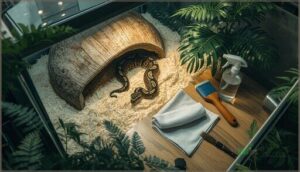
Cleaning a snake enclosure the right way comes down to three things: using the right products, skipping the harmful ones, and following a solid routine.
Get any of these wrong, and you’re either stressing out your snake or leaving behind residue that causes real problems.
Here’s what you need to know.
Researching Pet-Safe Cleaning Products
Not all cleaners are created equal — and the wrong one can seriously harm your snake. Focus on ingredient safety first. Look for reptile-safe disinfectants like F10SC or chlorhexidine, both of which have clear dilution guidelines and solid safety records.
| Product | Dilution Ratio | Notes |
|---|---|---|
| F10SC | 1:250 | Vet-approved, non-toxic |
| Chlorhexidine 0.05% | 1:80 | Kills bacteria and fungi |
| Diluted bleach | 1:32 | Rinse thoroughly after use |
Compare brands for cost analysis and environmental sustainability — safe cleaning products don’t have to break the bank.
Avoiding Harsh Chemicals
Some chemicals don’t just clean — they hurt. Ammonia, bleach residue, and pine-based cleaners can damage your snake’s respiratory system and skin.
Stick to non-toxic disinfectants and avoid harsh chemicals entirely. Safe options to keep on hand:
- Vinegar alternatives like diluted hydrogen peroxide for light disinfection
- Chlorhexidine benefits include broad-spectrum coverage without harsh fumes
- Fragrance-free cleaning products to avoid skin and airway irritation
- Reptile-safe soaps for dishes and décor
- Reptile-safe disinfectants approved for regular enclosure use
Following Proper Cleaning Procedures
Follow your cleaning protocols the same way every time — no shortcuts. Remove waste immediately, swap out soiled substrate, and complete each disinfection procedure fully before moving on.
Log every session in your Cleaning Log Documentation. Run an Equipment Sterilization Cycle on brushes and tools after use.
Apply Ventilation Drying Techniques, then do a Post-Clean Temperature Check before returning your snake. Consistency, from spot cleaning to deep cleaning, is what keeps your reptile thriving.
Frequently Asked Questions (FAQs)
Is Dawn dish soap safe for snake enclosure?
Dawn dish soap is safe for snake enclosures when fully rinsed away. It lifts grime well but isn’t a disinfectant. Always follow with a reptile-safe cleaner to finish the job.
How to keep a snake enclosure clean?
Start with daily spot cleaning, then deep clean every 3–4 weeks. Remove waste fast, disinfect surfaces, replace substrate regularly, and dry everything completely before putting your snake back.
Do snake enclosures smell bad?
They can — but they don’t have to. Poor waste odor prevention, wrong substrate selection, and skipped cleaning frequency impact how bad things get. Stay consistent, and your enclosure stays fresh.
How often do you need to clean a snake enclosure?
Spot clean daily. Deep clean weekly.
Replace substrate monthly or sooner if needed.
Adjust based on snake size, feeding frequency, and humidity levels.
Consistency matters more than ideal — a clean enclosure keeps your snake healthy.
A balanced routine — not too lax, not overzealous — is at the heart of every effective reptile enclosure maintenance plan that keeps your snake genuinely thriving.
What happens if you don’t clean your snake cage?
Skip cleaning, and you’re setting your snake up for bacterial growth, scale damage, and respiratory issues. Parasites move in fast. So does mould. Your snake suffers. So might you.
How do I keep mites out of my snake enclosure?
Quarantine new snakes for 60 to 90 days before introducing them to your main collection. Use paper towel substrate, inspect regularly, and keep all gear separate to stop mites before they start.
What cleaning solution to use for snake enclosure?
Think of your cleaning solution like medicine — the wrong dose helps nothing. Use chlorhexidine dilution, F10 concentration, bleach ratio, or a vinegar alternative matched to the job.
How do I reduce odors in snake enclosures?
Odors don’t just happen — they build. Waste, damp bedding, and leftover food are the main culprits. Stay ahead of it with daily removal and fresh substrate, and the smell stays manageable.
Remove feces and urates the moment you see them. Don’t wait. Leftover prey breaks down fast, so take out uneaten food right away too. Replace any wet or soiled substrate immediately — damp bedding is where odor and bacteria dig in.
For routine wipe-downs, a 1:1 vinegar-and-water mix takes care of hard water stains and light residue on glass. It won’t disinfect, but it deodorizes well. For actual odor mitigation, 3% hydrogen peroxide breaks down organic residue without leaving harmful fumes. A snake-safe disinfectant like chlorhexidine or F10 takes care of deep cleaning after you’ve already scrubbed off visible waste.
Baking soda sprinkling around the enclosure’s base — not directly on the substrate — helps neutralize smells between cleanings. Activated charcoal filters placed near ventilation openings act as odor absorbing media, pulling stale air through before it lingers. An air purifier used near the enclosure adds another layer, especially in smaller rooms.
Rotate the water dish every few days. Stagnant water picks up odor fast. Soaking it in diluted disinfectant weekly keeps it clean. Never reach for scented cleaners — they irritate a snake’s respiratory system and just mask the problem.
Ventilation does the rest. Good airflow clears moisture and stale odor before it settles. After deep cleaning, let the enclosure air out fully. No chemical smell should remain before your snake goes back in.
Can plants in enclosures cause hygiene issues?
Yes, plants can cause hygiene issues. Moisture buildup, plant debris, and poor airflow create mold risk and bacterial contamination. Good soil hygiene and humidity control keep a bioactive terrarium safe.
How often should I clean humidity gauges?
Clean your humidity gauge weekly with a soft, damp cloth. Inspect it monthly for damage or drift. Recalibrate every 6 to 12 months.
Consistent care keeps your environmental humidity control accurate and your snake safe.
Conclusion
Ever wonder why consistent care matters so much? Because snake enclosure cleanliness isn’t just maintenance—it’s your pet’s lifeline.
Every spot check, scrub, and disinfectant step you take dismantles hidden dangers before they strike. You’re not just wiping surfaces; you’re safeguarding scales, lungs, and longevity.
This system transforms guesswork into confidence, turning your habitat into a fortress of health.
Stick to the routine, and you’ll see: a thriving snake doesn’t happen by chance. It happens by your hands. Now go protect what slithers.