This site is supported by our readers. We may earn a commission, at no cost to you, if you purchase through links.

The first time I placed a corn snake hatchling in a nervous beginner’s hands, they froze. Not the snake. The person. That small animal began exploring, tongue flickering, completely unbothered. Most people expect handling a baby snake to feel precarious, but hatchlings tend to be far calmer than the person holding them.
Hatchlings read your grip and movement more than your words. A tense, jerky hand signals danger. A slow, steady one starts building familiarity, and with time, trust.
The difference between a bite and a advancement often comes down to what you do in the first thirty seconds.
Table Of Contents
- Key Takeaways
- Prepare Your Baby Snake for Handling
- Read Your Baby Snake’s Body Language
- Pick Up and Support a Baby Snake
- Build Trust Through Short Handling Sessions
- Prevent Bites and Handle Problems Safely
- Frequently Asked Questions (FAQs)
- Can a baby snake survive without its mother?
- Do snakes enjoy being handled?
- What to do when you find a baby snake in your yard?
- When you see a baby snake, is the mother nearby?
- How do you handle a baby snake?
- How long should a baby snake handle?
- How to keep a baby snake from shedding?
- How do you handle a snake?
- How do you feed a baby snake?
- Could you handle ALL snakes even if you follow these rules?
- Conclusion
Key Takeaways
- Preparation prevents most problems: give new hatchlings 1–2 weeks to settle, wait 48–72 hours after feeding, skip handling during sheds, and always wash your hands to remove food scents.
- Learn to read body language—relaxed tongue flicking signals calm, while coiling, hissing, freezing, or tail vibration means back off and give the snake 30–60 seconds to settle.
- Always lift from the side with a gentle midbody scoop, support the entire body with both hands, use a loose cradling hold, and never grab the head or tail.
- Build trust through short, consistent sessions: start with 5-minute interactions once or twice weekly, increase gradually only after calm responses, and return the snake home immediately if it shows stress.
Prepare Your Baby Snake for Handling

Preparation is where safe handling truly begins, and it’s the step most beginners rush. In my years of fieldwork, I’ve learned that a calm, well-timed approach prevents 90 percent of handling problems before they start. Before you reach into that enclosure, run through these five simple checks.
A clean, odor-free enclosure also plays a surprisingly big role—snakes are far calmer at handling time when their space feels safe, so staying on top of routine terrarium cleaning is one of the simplest ways to set the stage for stress-free interactions.
Allow New Snakes to Settle
Although your new hatchling looks calm in its travel container, that tiny body is running on adrenaline. Give it an acclimation period of 1 to 2 weeks before any handling. Keep the enclosure in a quiet, dim spot, hold temperatures steady at 78 to 86°F, and check enclosure security daily. Watch for stress signals like hiding or refusal to explore. Patience now is real trust building.
Since young ball pythons often look dramatically different from adults, our enchi ball python guide shows how that reticulated pattern softens into cleaner colors as your snake matures.
Remember that snakes provide natural pest control by preying on rodents, making them valuable neighbors in any habitat.
Check Feeding and Shedding Timing
Once your hatchling settles, check its feeding schedule and shedding status before handling. Hatchlings eat every 7 to 14 days. Wait at least 48 hours after a meal; digestion needs a steady temperature gradient of 85 to 90°F.
Milky eye caps mean shedding within 1 to 5 days, so skip handling sessions then. Handling during either period risks stress, regurgitation, or food refusal.
Wash Away Food Scents
Your snake hunts by smell. If your hands smell like the mouse you just fed it, your fingers look like lunch. Wash your hands for 20 seconds with mild soap before every session. A fragrance-free option like gentle unscented antibacterial soap is ideal, since strong perfumes can stress your snake or confuse its scent recognition.
This simple hand washing protocol prevents mistaken bites and food refusal. It also builds scent familiarization, so your hatchling learns your clean scent means safety, not dinner.
Verify Species-Specific Habitat Conditions
A clean scent sets the stage, but a healthy snake makes the performance.
Before you handle, check the enclosure setup matches your species’ needs. Proper thermal regulation and humidity levels keep hatchlings calm and responsive. During fieldwork in Arizona, I noticed stressed snakes came from poorly heated enclosures, not bad temperament. Verify substrate selection, temperature gradients, and water access first. Your hatchling’s species temperament shines when conditions feel right.
Secure The Handling Area
Lock the room down before you lift the lid. Babies are escape artists; a 6-inch hatchling slips through gaps you’d never notice.
Set up a secondary containment enclosure nearby. Close doors and windows. Keep pets out entirely. Place your tools at adult eye level so you’re not bending.
Wear handling gloves if you prefer, but keep touch gentle. One escaped hatchling in my field van taught me: escape prevention beats recovery every time.
Read Your Baby Snake’s Body Language
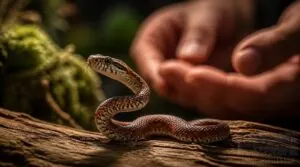
Snakes can’t bark or purr, but they speak volumes through their bodies. In my years of fieldwork, I’ve learned that reading these silent signals is the single most important skill a new keeper can develop. Here are the five behaviors you’ll want to recognize before and during every handling session.
Relaxed Movement and Tongue Flicking
A calm baby snake tells you it’s ready. Watch for relaxed movement and steady tongue flicking. The tongue samples the air, checking scents around it. Look for smooth gliding, a loose jaw, and round pupils. If the body curves gently without kinks, you have a green light. Slow and deliberate movements from you keep things calm. Scent familiarization happens naturally with each visit.
For a deeper look at building trust through timing and technique, safe snake handling duration guidelines can help you avoid the common mistake of overdoing early sessions.
Defensive Coiling and Head Raising
When a baby snake feels threatened, it coils into a tight spiral and raises its head. This is a clear stress signal, not aggression. Watch for a compact body, tucked tail, and a head angled toward you. The snake is protecting its organs and warning you away. Respect this. Stop moving, back off slowly, and give it space. Safe interaction starts with reading this posture correctly.
Hissing, Freezing, and Tail Vibrations
Sound is your snake’s megaphone. A hiss means "back off," plain and simple. In my fieldwork, I’ve learned hisses vary from soft, breathy warnings to loud, jet-like bursts, often paired with a raised head or inflated neck. Some snakes hiss before striking, though not every hiss ends in a bite.
Watch for two more stress signals: freezing in place and tail vibrations. A snake that suddenly goes still, or wriggles its tail rapidly, is escalating its warning. This is defensive behavior, not playfulness.
Your response matters. Stop. Stay still. Give it 30 to 60 seconds to calm down before attempting any safe interaction.
Rapid Movement and Escape Attempts
A baby snake in escape mode is a rocket with scales. Expect zigzag bursts, head lifting, and tail flicking as it hunts for exits. Most attempts happen in the first minute.
Here’s what triggers the dash:
- Sudden temperature changes
- Bright light
- Threats near the head
- Recent feeding
- Ground vibrations
During handling sessions, support its entire body. Gentle contact slows those rapid escape attempts. Read these stress signals early, and safe handling stays easy.
Signs to End Handling
Your snake decides when handling ends. Watch for tail twitches, head retreat, body tensing, or gaping. Glancing toward an exit means it’s done. Respect these defensive behaviors within seconds, and return it home calmly. Ending sessions early builds trust and prevents bites. Never push past stress signals.
Pick Up and Support a Baby Snake
Now comes the moment you’ve been preparing for: actually picking up your baby snake. In twenty years of fieldwork, I’ve learned that how you lift matters far more than how long you hold. Follow these five steps in order, and you’ll both stay calm and safe.
Approach Slowly From The Side

Move like slow honey. When you approach slowly from the side, your hands stay clear of the head and tail, the two strike zones. Keep your posture low and sideways. Take smooth, deliberate steps, because sudden movements read as danger. Pause when you’re within 6 inches and let the snake tongue-flick your scent. If it coils or hisses, stop and wait.
Lift Gently From The Midbody
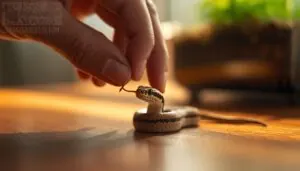
Once your snake tongue-flicks and stays calm, slide one hand under the middle third of its body. Use a gentle scoop motion, like lifting a ribbon off a table. Never grab from above—that reads as a hawk attack. Support the midbody grip lightly, then let the snake settle onto your palm. Smooth, unhurried, steady.
That’s safe handling.
Support The Entire Body
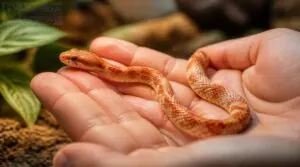
After that gentle scoop motion, slide your second hand under the rear section. Supporting the snake’s body fully is safe handling.
- A dangling tail risks fracturing tiny vertebrae
- The neck holds important nerves. Support it first
- Steady hands signal it’s safe
- One gap can undo weeks of trust
Use a midbody grip: 40% front, 60% rear for even body support.
Use a Loose, Cradling Hold
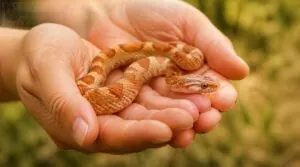
With both hands supporting the snake’s body, relax your grip. Think of it like cupping water in your palms. Squeezing triggers panic.
| Hold Style | Effect |
|---|---|
| Tight squeeze | Causes stress and wriggling |
| Loose cradle | Builds handling confidence |
| Flat palm | Spreads body support evenly |
| Finger pinch | Creates discomfort |
| Forearm rest | Encourages calm posture |
Gentle lifting techniques keep the snake settled inside a secure enclosure of your arms, not trapped.
Never Grab Head or Tail

Think of the head and tail as live wires. Any contact there triggers instant defensive behavior that careful body support through the midbody prevents.
During handling sessions, slide both hands under the midbody. Gentle lifting techniques centered there avoid the pressure points that cause bites. Recognizing stress signals early, like sudden stiffening, is your best safety precaution.
Build Trust Through Short Handling Sessions

Trust isn’t given — it’s built one short session at a time. Baby snakes are wired to treat anything unfamiliar as a potential threat, so your job is to prove, repeatedly, that you’re not one. The steps below walk you through a gradual handling routine that works with your snake’s instincts instead of against them.
Trust with a baby snake is earned one short session at a time, by proving you are not a threat
Start With Five-Minute Sessions
Baby snake handling starts small. Keep your first sessions to five minutes per interaction. That brief window gives a young snake enough time to explore without tipping into stress.
Watch for smooth movement and calm tongue flicking. If you spot tight coiling or rapid breathing, end the session early. After 2-3 weeks of consistent handling sessions, increase by two-minute increments.
Maintain a Consistent Handling Routine
Snakes thrive on predictable routines. Aim for every-other-day handling sessions at the same time each evening, during your snake’s active window.
- Skip sessions within 48 hours of feeding to prevent regurgitation
- Keep handling frequency to once or twice weekly early on
- Use the same room and handler scent every time
Consistency drives stress reduction and trust establishment better than frequency.
Allow Calm, Supervised Exploration
Once your snake moves calmly through your hands, let it explore. Set it on a soft, snake-proofed surface and allow it to move freely between your hands and arms. Watch for tongue-flicking. That’s curiosity at work, not aggression. A soft reptile handling mat gives your snake a secure, non-slip surface that encourages confident, relaxed exploration during these early sessions.
Keep sessions to 5-10 minutes, two or three times weekly. If rapid breathing or defensive coiling appears, return it to the enclosure immediately.
For stress-free handling sessions, pairing good timing habits with a well-secured setup — like the setups featured in these corn snake habitat ideas — helps your snake feel safe returning home each time.
Increase Session Length Gradually
Progress is earned, not rushed. Once two calm sessions pass, add one to two minutes.
- Watch for consistent tongue flicking before increasing time
- Add time only after two relaxed sessions
- Never exceed 25% weekly increases
- Skip increases during shedding
- Log each session’s duration and behavior
Building trust in baby snake handling takes patience, not pressure.
Adapt Handling for Corn Snakes
Corn snakes adapt faster than most beginners expect. Keep your baby snake sessions in a calm, quiet room and use slow, deliberate movements when approaching from the side.
Recognizing stress signals early is key. Tongue flicking means curiosity; tight coiling means stop. Supporting the snake’s body during safe handling helps it feel secure, not confined.
Always start short. Trust follows.
Prevent Bites and Handle Problems Safely
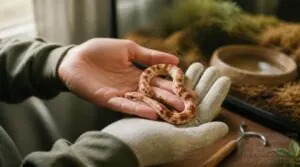
Even well-handled baby snakes can bite or show stress — that’s just part of working with animals. Knowing how to respond in the moment keeps both you and your snake safe. These steps walk you through the most common problems beginners face and exactly what to do.
Avoid Feeding and Shedding Periods
Timing matters more than technique. When handling a baby snake, avoid feeding and shedding periods to prevent regurgitation or defensive strikes.
- Wait 48–72 hours post-feeding before handling
- Watch for cloudy, blue-tinted eyes: shedding has begun
- Skip handling until the food bulge is gone
- Resume only after the full shed skin is removed
- Log your feeding dates to track shedding cycles
Respond Calmly to Defensive Behavior
Even with perfect timing, a defensive baby snake can still surprise you. Hissing or a tight S-curve posture signals it feels threatened.
Lower your voice and slow down. Avoid sudden movements. Keep your hands steady, breathe normally, and give it a moment to settle before continuing. Matching your calm energy to its stress level usually brings the tension down fast.
Return Stressed Snakes Immediately
Sometimes calm energy isn’t enough. If your snake shows rapid breathing, goes rigid, or thrashes, stop the session right there.
Return it to its enclosure and leave it undisturbed for 24 to 48 hours. Don’t rush the next session. Wait until it’s feeding and exploring normally. Persistent stress responses mean it needs a longer recovery period before you try again.
Treat Minor Bites Properly
Baby snake bites rarely break skin, but managing snake bites correctly still matters. Wash the site with mild soap and warm water for 30 seconds, then dab on povidone-iodine antiseptic. Pat the area dry, and check daily for redness, swelling, or warmth. A bite that doesn’t improve within three to five days deserves a visit to your doctor.
Seek Help for Health Concerns
When safe handling isn’t enough, call a professional. Watch for wheezing, mouth bubbles, or refusal to eat twice in a row. Recognizing stress signals like lethargy and sunken eyes matters too.
Find a wildlife veterinary clinic or exotic vet before emergencies happen. Annual checkups and fecal tests keep health monitoring simple.
Handling a baby snake starts with keeping it healthy.
Frequently Asked Questions (FAQs)
Can a baby snake survive without its mother?
Can a baby snake survive without its mother? Absolutely — from the very first moment. Unlike mammals, neonates arrive fully equipped with innate hunting instincts, requiring zero maternal care. Independence isn’t a flaw; it’s evolution’s design.
Do snakes enjoy being handled?
Do snakes enjoy being handled? Not exactly. They tolerate it. Regular tongue flicking means curiosity, not affection. With calm handling and short sessions, your snake learns trust, tolerates contact, and stays relaxed.
Corn snakes, known for their calm temperament and beginner-friendly handling traits, are a great example of how consistency builds a relaxed, tolerant reptile.
What to do when you find a baby snake in your yard?
Finding a baby snake in your yard is like discovering a tiny stranger on your doorstep—startling, but rarely dangerous. Give it space, observe carefully, then call wildlife rescue or animal control if needed.
When you see a baby snake, is the mother nearby?
Is the mother nearby? Usually not. Most mother snakes leave right after eggs hatch or birth. I’ve found hundreds of lone hatchlings in the field. So don’t panic—but still practice safe handling and contact a wildlife rescue if unsure.
How do you handle a baby snake?
How do you handle a baby snake? Move slowly, cradle its midbody with both hands, and support the entire body. Keep sessions under 5 minutes, avoid sudden movements, and never grab the head or tail.
How long should a baby snake handle?
How long should you handle a baby snake? Start with just 5 to 10 minutes, once or twice weekly. Short sessions build trust, prevent bites, and keep stress low. Increase duration gradually as your snake grows calmer.
How to keep a baby snake from shedding?
Shedding is natural, so don’t stop it. Support the shedding cycle instead: keep humidity levels near 70-80%, provide rough bark, and maintain hydration with a large water bowl.
How do you handle a snake?
A snake is a rope of muscle with no arms, no legs, and no eyelids. It trusts your hands completely. Learn safe handling basics, and both of you stay calm.
How do you feed a baby snake?
Feeding a baby snake means offering thawed pinky mice no wider than its body, warmed to room temperature. Feed every 5-7 days, use tongs, and watch the feeding response closely for 20-30 minutes.
Could you handle ALL snakes even if you follow these rules?
Could you handle ALL snakes even if you follow these rules? No. As the saying goes, "Better safe than sorry." Some species are venomous vs nonvenomous, so always research first and consult experts.
Conclusion
Last month, a nervous student of mine followed these exact steps with her hatchling. Two weeks later, she sent a photo of the tiny snake draped calmly across her palm.
That’s the reward for patience. Handling a baby snake isn’t about control. It’s about reading, respecting, and responding to a small creature that wants the same thing you do: a calm, predictable world.
Start slow. Stay consistent. Trust will come, one gentle session at a time.