This site is supported by our readers. We may earn a commission, at no cost to you, if you purchase through links.

A hatchling corn snake weighs about as much as a paperclip, yet it can swallow a mouse whole. That tiny body comes with a big appetite and an even smaller margin for error. Feed the wrong prey, and you risk regurgitation. Feed the wrong size, and you risk injury. Wait too long, and a stubborn hatchling can spiral into a dangerous hunger strike.
The good news? Getting it right isn’t complicated once you know the rules. The best food for baby snakes comes down to five options, one simple sizing rule, and a feeding rhythm that matches your snake’s species and growth. Let’s sort out exactly what belongs on your hatchling’s menu.
Table Of Contents
- Key Takeaways
- Best Food Options for Baby Snakes
- When Do Baby Snakes Start Eating?
- How to Choose Safe Prey
- How Often to Feed Baby Snakes
- How to Feed Hatchlings Safely
- Frequently Asked Questions (FAQs)
- How Can You Tell the Age of a Baby Snake?
- What Temperatures Do Baby Snakes Need to Thrive?
- How Do Wild Baby Snakes Find Food and Water on Their Own?
- What Health Problems Are Common in Baby Pet Snakes?
- How Big is a Newborn Snake Compared to Its Parents?
- What should I feed a baby snake?
- What is the best food for small snakes?
- What to feed garter snake babies?
- What do baby smooth snakes eat?
- Can baby snakes eat fish or reptiles?
- Conclusion
Key Takeaways
- Prey size matters more than prey type: choose food 25–60% of your hatchling’s body width, never exceeding 50% of body girth, to prevent choking and regurgitation.
- Different species need different diets—pinkie mice for rodent eaters, earthworms for garter snakes, insects for green snakes, and fish for aquatic species—so identify your snake before feeding.
- Always use frozen-thawed prey thawed to about 38°C and fed with rubber-tipped tongs, since live rodents can injure hatchlings and carry more parasites.
- Feed hatchlings every 5–7 days (adjusting by species and growth), track weekly weight with a gram scale, and contact a vet if your snake refuses food for 3–4 weeks.
Best Food Options for Baby Snakes
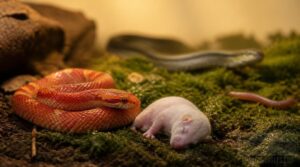
Not every baby snake eats the same food, and that surprises many new keepers. A corn snake hatchling and a garter snake hatchling have very different menus, so you need to know your species first. Here are the best food options for baby snakes, broken down by prey type.
For example, garter hatchlings do best with small prey offered more often, and this baby snake feeding schedule guide breaks down exactly how often each species should eat.
Pinky Mice for Rodent Eaters
When your hatchling is a rodent eater, pinky mice are the top choice. Most hatchling snakes, like Pantherophis guttatus (corn snakes), start here.
- Pinky mice are newborn rodents, 0 to 4 days old
- They weigh 0.5 to 3 grams
- They measure 1.2 to 1.5 inches
- Match prey size to your snake’s widest body point
Always choose frozen-thawed prey for safety. Reputable suppliers like RodentPro humanely euthanize feeders with CO2 per AVMA guidelines and irradiate them for added safety.
Earthworms for Worm-Eating Species
Not every baby snake wants a mouse. Species like Thamnophis sirtalis (garter snakes) and Carphophis amoenus (worm snakes) thrive on earthworms.
Earthworms for worm-eating species offer protein plus moisture, which helps with hydration in hatchling care. Choose small Eisenia fetida feeder worms. Match prey size to your snake’s mouth width, rinse worms first, and offer one worm every 2 to 3 days.
Insects for Insect-Eating Species
Some hatchlings prefer crawling prey over worms. Insect-eating species like young Pantherophis ratsnakes and rough green snakes (Opheodrys aestivus) accept insect prey readily.
Good prey selection includes:
- Crickets at 65 percent protein
- Pinhead crickets, 3 to 5 mm
- Fruit fly maggots, 2 to 4 mm
Always gut load insects first. Use clean, pesticide-free suppliers. Match prey to body width, and remove uneaten insects quickly.
Small Fish for Aquatic Species
Water snakes (Nerodia species) and garter snakes (Thamnophis species) often prefer fish. Offer small fish no wider than your snake’s body.
Good choices include feeder guppies, minnows, and rosy reds. Use frozen-thawed fish when possible. Whole prey items provide calcium and protein.
Avoid goldfish long-term, since they carry thiaminase, which blocks vitamin B1.
Prey Needs of Specialist Feeders
A few species take extra patience. Egg-eating snakes (Dasypeltis) need tiny quail or finch eggs. Some Lampropeltis and rough green snakes (Opheodrys aestivus) prefer lizards or frogs at first.
These specialist feeders need diverse nutrient profiles, including fat, protein, and micronutrients. Whole prey helps with growth and shedding. Source prey items from reputable suppliers to limit disease risk.
Pairing proper nutrition with an understanding of snake body language helps you recognize hunger cues, so check out this guide to reading your snake’s signals before feeding time arrives.
When Do Baby Snakes Start Eating?
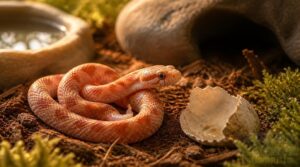
You brought your hatchling home, and now you’re wondering when the first meal happens. The good news is that baby snakes don’t need to eat right away, thanks to yolk sac nutrition they carry from the egg. Let’s look at what tells you your little one is ready to feed.
Yolk Sac Nutrition After Hatching
Think of a hatchling snake as arriving with a packed lunch. Before it ever eats a meal, a baby snake runs on its yolk sac. That leftover yolk supplies energy and antibodies for the first days or weeks after hatching. It fuels early organ function and protects against infection while the hatchling’s own immune system matures. This is why hatchling snakes don’t need to eat immediately.
First Shed and Feeding Readiness
Before a hatchling eats, it usually sheds. Watch for dull, cloudy skin and milky eye caps. This means a shed is coming within 1 to 7 days.
Once that first shed completes, appetite usually follows within days. Keep humidity between 60 and 70 percent so the skin comes off in one translucent sheet.
Afterward, minimize handling for 24 hours to encourage feeding.
Species-Specific First Meal Timing
Every species marches to its own drum. Species-specific first meal timing matters because hatchling nutrition depends on matching prey and schedule to your snake’s instincts.
Insect eaters often feed within 24 to 48 hours of hatching. Rodent eaters may take pinky mice at 2 to 5 days. Specialist feeders sometimes wait 1 to 2 weeks. Adjust your feeding frequency and prey size accordingly.
Signs a Hatchling is Hungry
Your baby snake can’t say "I’m hungry." It shows you instead. Watch for hunger cues like alert posture, head scanning, and quick tracking of movement.
Feeding cues include mouth opening and tongue flicking within 1 to 3 seconds of prey appearing. Increased activity and tail flicks signal readiness.
Strong prey movement cues can trigger an instant strike. Recognizing this feeding behavior prevents missed meals and stress.
How to Choose Safe Prey
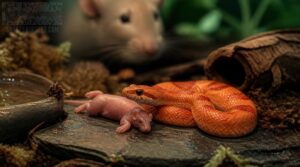
Choosing the right prey is where safety meets common sense. A prey item that’s too big can choke your hatchling, and live rodents can bite back. Here’s how to pick prey that keeps your baby snake healthy and stress-free.
Match Prey to Body Width
Prey size matters more than prey type. Measure your hatchling’s body width behind the head weekly with a caliper. Choose prey 25 to 60 percent of that width. A snake measuring 1 centimeter wide needs prey 0.25 to 0.6 centimeters across.
Prey size matters more than prey type: measure your hatchling weekly and choose prey 25 to 60 percent of its body width
Narrow prey prevents jaw strain and choking. If prey exceeds the mouth opening by more than 1.5 times, regurgitation risk rises. Track growth monitoring records, then adjust your feeding schedule accordingly.
Frozen-Thawed Versus Live Prey
Once you know the right prey size, choose how to serve it. Frozen-thawed rodents are safer than live prey. A live mouse can bite a hatchling, causing scars or infection. Frozen-thawed prey also carries fewer parasites.
- Thaw in a refrigerator overnight, then warm to room temperature
- Wiggle prey gently with tongs to trigger a strike
- Never microwave; it cooks edges unevenly
Start frozen early. Young snakes adapt quickly.
Benefits of Whole Prey
Whole prey means the entire animal, fur, bones, organs, and all. It’s a complete package.
The wholeprey principle works because muscle supplies protein and fat, while organs deliver vitamins A and B complex. Bones provide calcium for growing skeletons.
This nutritional balance means you rarely need supplements when prey items stay varied. Think of it as nature’s multivitamin.
Avoid Oversized or Unsafe Prey
Size matters more than nutrition if the prey won’t go down safely. An oversized mouse can cause regurgitation or choking, even when it’s perfectly healthy food.
Follow these five rules for safe prey size:
- Keep prey width under the snake’s jaw width.
- Never exceed 50 percent of body girth.
- Feed head-first for easy swallowing.
- Skip prey with sharp spines or hard shells.
- Avoid items needing tearing or multiple attempts.
Good prey preparation prevents most feeding challenges. When in doubt, choose smaller prey. Your hatchling’s feeding success depends on it.
Supplements and Veterinary Guidance
Whole prey covers most nutritional needs for healthy hatchlings, so supplements are rarely necessary. Don’t add calcium or vitamins without asking your vet first. Overlapping products can cause nutrient excesses, and dosing errors hit small snakes hard.
Instead, schedule regular vet checkups. A reptile veterinarian can review your snake’s diet, confirm feeding safety, and catch problems early. That beats any supplement bottle.
How Often to Feed Baby Snakes

Feeding frequency changes fast when your snake is young, and getting it right matters more than most keepers realize. A hatchling’s schedule looks nothing like an adult’s, and species like corn snakes and ball pythons don’t follow identical timelines.
Here’s how to build a feeding routine that keeps your baby snake growing strong without overdoing it.
Feeding Schedules by Species
Not all baby snakes eat on the same clock. Species variation matters more than most new keepers expect.
A corn snake hatchling (Pantherophis guttatus) thrives on meals every 5 to 7 days, while young boa constrictors (Boa constrictor) and pythons do best at 7 to 14 day intervals. Arboreal species eat every 6 to 10 days, aquatic water snakes every 7 to 10.
Match your feeding routine to your snake’s species, and always pair the schedule with proper prey size.
Overfeeding is easy to miss early on, so it helps to know the signs of overfeeding in a snake, from soft fat folds to symptoms that warrant a vet visit.
Adjusting Frequency With Growth
As your hatchling grows, its feeding frequency should stretch too. Start at every 5 to 7 days, then shift to every 7 to 10 days as metabolism slows.
Watch the growth rate: during spurts, shorten intervals by 1 day for 1 to 2 weeks. When prey width nears half the body’s widest point, extend intervals by a day.
This feeding frequency adjustment keeps digestion smooth.
Tracking Weight and Body Condition
Because numbers tell the truth, tracking weight beats guessing. Buy a digital kitchen scale that reads to the gram. Weigh your hatchling weekly, same time, in a ventilated container. Log every reading in a spreadsheet.
Also check body condition: a 1 to 5 score where 3 is ideal. No visible spine or ribs means healthy. Combine weight gain, shed timing, and feeding response monitoring to catch problems early.
Preventing Overfeeding and Underfeeding
Feeding consistency matters more than enthusiasm. A hungry-looking snake isn’t always hungry—snakes are opportunistic feeders and will strike regardless of need. Prevent problems by:
- Following your feeding schedule, not begging behavior
- Keeping prey within the 1–1.5x body-width rule
- Watching for a round shape or fat along the spine
- Never exceeding 10% of body weight per meal
- Consulting a vet for weight loss
Overfeeding causes obesity; underfeeding stunts growth. Balance both.
Water and Hydration Needs
Water is just as important as food. Hydration importance can’t be overstated—a dehydrated hatchling refuses meals and sheds poorly.
Provide a shallow water dish with fresh water. Change it at least weekly, or sooner if soiled. Keep it shallow to prevent drowning.
Enclosure humidity between 30–80% (species-dependent) lets snakes absorb moisture through their skin. Misting helps tropical species drink droplets from walls.
Watch for wrinkled skin, sunken eyes, or retained sheds. These signal dehydration. Act fast—rehydrate and call your vet.
How to Feed Hatchlings Safely
Knowing what to feed your hatchling is only half the battle—how you present that meal matters just as much. A few simple techniques can make the difference between an willing feeder and a stressed hatchling that refuses to eat.
Let’s walk through the steps for safe, stress-free feeding, from thawing prey correctly to knowing when a vet visit is needed.
Thawing and Warming Prey
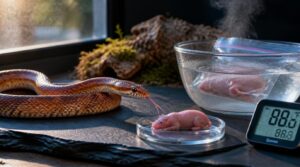
Frozen prey needs proper thawing before your baby snake will strike. Cold prey feels dead, and hatchlings hunt warmth. Warm it to about 38 C using a water bath, and confirm with a digital thermometer. Never exceed 43 C or you risk burns.
Follow these five steps:
- Thaw in cold water, 45 minutes to 2 hours
- Use a dedicated thawing container
- Check for icy slivers
- Warm to 38 C
- Discard any foul-smelling prey
Never refreeze thawed rodents.
Using Feeding Tongs Safely
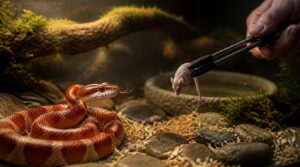
Once prey is warm, reach for feeding tongs, never fingers. Tongs extend your hand away from a hatchling’s strike zone, so a fast grab won’t find your knuckles. They also keep your hand from being linked with food, which protects your feeding habits long-term.
Choose 12–14 inch tongs for small hatchlings. Use rounded, rubber-coated tips. Hold prey gently but firmly. Wobbly prey means poor feeding techniques.
A solid pair of rubber-tipped reptile feeding tongs gives you the grip and reach you need without risking a bite or spooking a nervous hatchling.
Creating a Low-Stress Environment
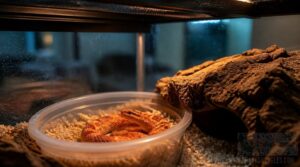
Even perfect tong technique fails if your hatchling feels threatened. Stress shuts down appetite faster than anything else.
Feed in a quiet, low-traffic spot. Use an opaque feeding container with a hide inside, so your hatchling feels secure. Match the temperature and humidity of the main enclosure. Cover the container with a secure lid to prevent escape.
Wait for the household’s calmest hour.
Troubleshooting Refused Meals
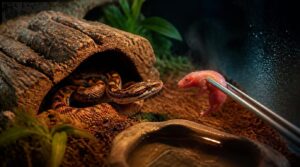
A feeding refusal usually means something in your setup needs fixing. Check these first:
- Reheat prey to body-like warmth; lukewarm prey gets refused
- Wait 10–15 minutes after offering; don’t re-offer constantly
- Try during evening hours, when hatchlings are active
Move prey gently with feeding tongs near the enclosure front. Skip handling before meals. Adjust your feeding schedule, then try again tomorrow.
When to Contact a Veterinarian
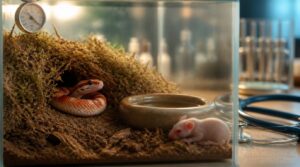
Most refusals resolve on their own. But sometimes feeding problems signal real snake health trouble.
Contact a veterinarian right away if your hatchling refuses food for 3–4 weeks, shows trouble breathing, seizures, or pale or blue gums. Sudden behavior changes and severe injuries need urgent care too.
Feeding safety means knowing when to ask for help. Don’t wait things out alone.
Frequently Asked Questions (FAQs)
How Can You Tell the Age of a Baby Snake?
How can you tell a baby snake’s age? Look for a visible yolk dot under the chin, bright fresh coloration, and clear eyes. Hatchlings show compact proportions; growth monitoring reveals steady length increases with age.
What Temperatures Do Baby Snakes Need to Thrive?
What temperatures do baby snakes need to thrive? Hatchlings need a warm basking zone of 85-95°F and a cool side of 75-85°F, never below 70°F overnight. Proper temperature regulation helps digestion, metabolism, and healthy shedding.
How Do Wild Baby Snakes Find Food and Water on Their Own?
Baby snakes find food using chemical sensing with forked tongues, heat-detecting pits, and sharp vision. They hunt insects, worms, and tiny rodents in leaf litter. Water comes from dew, rain puddles, and prey.
What Health Problems Are Common in Baby Pet Snakes?
Common health problems in hatchling snakes include respiratory infections, parasites, blister disease, and mouth rot. Watch for wheezing, mites, or poor appetite. Fix husbandry fast, quarantine new reptiles, and call your exotic vet when anything seems off.
How Big is a Newborn Snake Compared to Its Parents?
How big is a newborn snake? Like a shoelace beside a garden hose, a hatchling often measures just 5 to 15 percent of adult length.
Corn snakes (Pantherophis guttatus) hatch around 10 to 12 inches, while ball pythons (Python regius) emerge at 10 to 16 inches. Tiny threadsnakes may be under 4 inches, yet boas start near 14 to 22 inches.
With steady feeding and warmth, most juveniles reach half to three-quarters of adult size within two years.
What should I feed a baby snake?
What should you feed a baby snake? Offer pinkie mice matching your hatchling’s body width, using frozen-thawed rodents rather than live prey. Follow a feeding schedule of every 5–7 days, and consult a reptile vet for species-specific guidance.
What is the best food for small snakes?
Think of a hatchling as a tiny engine needing the right fuel. For most species, pinkie mice are nature’s perfect starter meal, offering high protein and fat for rapid growth.
Always match prey size to your snake’s body width, never exceeding two jaw widths. Use frozen-thawed rodents to reduce parasite risk. For worm or fish eaters, offer appropriately sized, gut-loaded alternatives.
What to feed garter snake babies?
What to feed garter snake babies? Offer earthworms, small fish, and tiny insects sized to their body width. Feed every 2-3 days, keep fresh water available, and maintain a warm, calm habitat.
What do baby smooth snakes eat?
What do baby smooth snakes eat? Forget the tiny fork and knife jokes.
Hatchling smooth snakes (Coronella austriaca) chase small lizards and skinks, plus geckos, tiny frogs, and large insects or earthworms when lizards are scarce. Prey must match their narrow gape.
Can baby snakes eat fish or reptiles?
Yes, some can! Aquatic species like Nerodia eat small fish, while specialist feeders take lizards. Thiaminase-rich fish risk vitamin B1 deficiency, so choose safe species and match prey size carefully.
Conclusion
Good things come in small packages, and your hatchling proves it. The best food for baby snakes is really about three things: right prey, right size, right rhythm. Weigh your snake monthly. Match prey to body width. Feed on a steady schedule, and keep fresh water available at all times. Do these consistently, and that paperclip-sized hatchling will grow into a thriving, confident adult. Your careful habits today become its healthy future.
A clean, easy-to-maintain setup matters just as much as feeding, so see this guide on preventing mites in ball python enclosures to keep your hatchling’s home spotless.