This site is supported by our readers. We may earn a commission, at no cost to you, if you purchase through links.

Corn snakes don’t announce a breeding season. There’s no dramatic display, no obvious signal—just a series of subtle behavioral and physical shifts that, if you miss them, can set your whole breeding timeline back months.
Recognizing corn snake breeding signs and care requirements go hand in hand. A male pacing his enclosure more than usual isn’t restless for no reason. A female’s mid-body swelling two weeks after mating isn’t random. These are precise biological cues, and learning to read them separates a successful clutch from a frustrating one.
Get the sequence right—candidate selection, brumation, pairing, incubation—and the process becomes predictable. That’s exactly what this guide walks you through.
Table Of Contents
- Key Takeaways
- Choose Healthy Breeding Corn Snakes
- Recognize Corn Snake Breeding Signs
- Prepare Corn Snakes for Brumation
- Pair and Care for Breeders
- Incubate Eggs and Raise Hatchlings
- Frequently Asked Questions (FAQs)
- What month do corn snakes breed?
- What are the behaviors of corn snakes breeding?
- How long does it take corn snakes to mate?
- Is breeding corn snakes easy?
- Do corn snakes like sphagnum moss?
- What is the breeding behavior of a corn snake?
- How long can corn snakes go without water?
- How long after breeding do corn snakes lay eggs?
- What is the behavior of a snake breeding?
- What month do snakes start breeding?
- Conclusion
Key Takeaways
- Female corn snakes shouldn’t be bred until they’re at least two to three years old and 300 grams, as breeding too early risks deadly egg binding.
- Brumation done right — slow cooling, fasting, and fresh water throughout — is what actually triggers a reliable reproductive cycle when spring arrives.
- During incubation, keeping temperatures between 78–82°F with no more than 1–2°F daily swing determines how many eggs successfully hatch.
- Every stage from candidate selection to first hatchling feeding forms one continuous chain — miss a single cue, and you’re waiting another full season.
Choose Healthy Breeding Corn Snakes
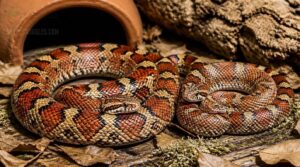
Before a single egg is laid, the outcome is already being shaped by the animals you choose. Not every corn snake is ready to breed, and pairing the wrong individuals sets the whole season back. Here’s what to look for before you commit to any pairing.
Factors like female weight minimums and follicle development timing are covered in detail in this guide to breeding ball pythons successfully, and many of the same principles apply when evaluating corn snake readiness.
If you’re picking pairs with specific colors or patterns in mind, it helps to understand how morph combination odds actually work before you commit to a clutch.
Reviewing age, weight, and shed-cycle benchmarks for corn snake breeding readiness helps you confirm both snakes are genuinely prepared before they ever meet.
Female Age and Weight
Most females aren’t ready until they’re two to three years old and weigh at least 300 grams.
Breeding too early risks egg binding — a serious, often fatal complication.
Watch for:
- Firm mid-body muscle tone
- Visible fat reserves without excess bulk
- Steady weight gain over months
- No recent weight loss before the breeding season
Body condition scoring tells you more than the scale alone.
Male Breeding Maturity
Males generally hit reproductive maturity between 1.5 and 2.5 years, depending on genetics and how well you’ve managed their growth. Size matters here — a well-conditioned male with good muscle tone is more likely to breed successfully than one that’s underweight.
Various environmental stimuli can also influence the timing of maturation.
Watch for increased roaming and restlessness as testosterone rises. That’s your clearest signal he’s ready.
Clear Health Checks
Once your male is ready, both snakes need to pass a honest health check before pairing begins.
Run your eyes over the whole body. Look for smooth, intact scales, clear eyes with no cloudiness, and breathing that’s quiet and rhythmic. Any wheezing, mucus, or open-mouth gaping signals respiratory distress — don’t pair that animal. Check the vent for redness and the skin for mites.
Accurate Sexing
Getting the sex wrong wastes an entire breeding season. That’s a hard lesson most keepers only learn once.
- Check tail base thickness — males are noticeably wider post-cloaca
- Look for a hemipenal bulge just behind the vent on mature males
- Use gentle probe insertion to confirm depth; males probe deeper
- Try soft palpation along the tail for tissue differences
- Request ultrasound confirmation for juveniles or uncertain cases
Color tells you nothing reliable here — anatomy does.
Ethical Genetic Planning
Lineage is where breeding integrity begins. Every pairing carries a genetic risk — when both parents carry a recessive trait, roughly half their offspring may inherit it.
Document lineage carefully, track known carrier status, and calculate inbreeding coefficients before pairing. Repeated close pairings quietly erode genetic diversity. Ethical stewardship means thinking past this clutch toward the long-term viability of your lines.
Document lineage, calculate inbreeding coefficients, and breed for the long-term health of your line, not just this clutch
Recognize Corn Snake Breeding Signs
Corn snakes don’t announce breeding season with fanfare — they show it through behavior. Once brumation ends and temperatures rise, your snakes will start signaling readiness in ways that are easy to spot once you know what to look for. Here are the key signs to watch for.
Knowing your snake’s normal temperament and handling responses helps you distinguish courtship behavior from genuine stress signals like hissing or musking.
Seasonal Activity Increase

As winter fades, your corn snake won’t stay still for long. Longer daylight hours trigger hormonal shifts that push metabolism into a higher gear — your snake moves more, explores more, and eats with renewed drive.
This isn’t random restlessness. Seasonal breeding behavior is hardwired. Rising temperatures push activity past their thermal comfort zone, signaling the body that the reproductive cycle is opening.
Roaming and Restlessness

Once breeding season arrives, roaming and restlessness become your clearest early signals. Your corn snake paces enclosure boundaries, shifts between hides constantly, and may strike at the glass unprompted — not aggression, just unresolved energy.
Males are the most obvious offenders. Scent accumulation drives them to cover 10 to 30 meters across peak roaming days, particularly during moderate ambient temperatures and lighting changes.
Scent-trailing Behavior
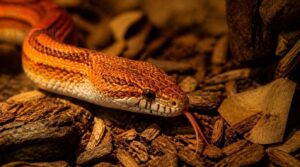
Roaming is only half the story. Once a male detects a female’s scent plume, his behavior shifts — deliberate, focused, methodical.
Four things drive this shift:
- Sniffing frequency increases along the trail
- Substrate texture slows or speeds odor diffusion
- Sharp turns trigger brief pauses to reacquire the scent
- Breeding motivation intensifies the response
Rougher substrates hold odor longer, giving him more time to localize her precisely.
Tail-locking During Mating

When the male finally catches up, tail-locking tells you mating has begun. He’ll align his tail beneath hers, insert a hemipenis, and the pair will remain connected for 30 minutes to several hours.
Don’t disturb them. Separation attempts cause stress and can injure both animals. Once they part naturally, mating duration monitoring confirms whether the pairing was long enough to count.
Ovulation and Swelling
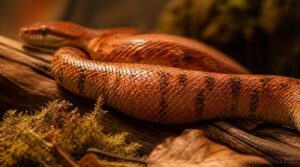
Two to four weeks after mating, watch for mid-body swelling — the visible sign that follicle rupture has occurred and ovulation is underway. Hormonal shifts drive this change, with rising estrogen triggering fluid accumulation around the reproductive tract.
The swelling is transient. It peaks briefly, then fades as the gravid state begins. Persistent distension beyond that window warrants a vet check.
Prepare Corn Snakes for Brumation
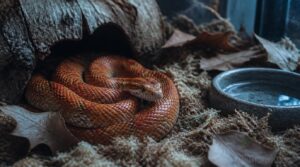
Brumation is the closest thing corn snakes have to a reset button — and getting it right makes all the difference when breeding season arrives. The process isn’t complicated, but it does follow a specific sequence that you’ll want to stick to. Here’s what each stage of preparation actually looks like.
Pre-brumation Fasting
Routinely, breeders fast corn snakes before cooling begins. Stop feeding two weeks out so the gut empties before metabolic rate drops. Water stays available daily. Watch closely for:
- Weight loss
- Lethargy
- Skin tenting
- Appetite refusal
Any sign means pause fasting, recheck body reserves, and delay brumation until health stabilizes.
Gradual Temperature Reduction
Once fasting ends, cooling begins—slow, not sudden. Drop temps 1–2°C daily to prevent thermal stress. Place sensors in multiple zones for steady gradient monitoring and humidity stabilization.
| Day | Action |
|---|---|
| 1–3 | Lower 2°C, log readings |
| 4–7 | Check sensor placement |
| 8–10 | Stabilize humidity levels |
| 11–14 | Confirm steady decline |
Safe Cooling Range
Once the daily drops add up, you need a clear target: 60.8–53.6°F (16–12°C) below ambient, not a random cold spot. Stay inside this safe cooling range and your corn snake settles into steady brumation instead of stress.
Use a dual-zone gradient with reliable thermometers, and watch for refusal or restlessness signaling the range slipped too far.
Fresh Water Access
Cooling the room is only half the job — your snake still needs water it can trust. Keep a shallow dish filled with dechlorinated water at ambient temperature, never cold.
Clean the bowl daily; biofilm and algae build up fast even in slow brumation months. Check it morning and night. A dehydrated snake during dormancy is a stressed one, so don’t skip this step just because feeding has stopped.
Slow Warming Period
Slowly increase temperatures by two to three degrees every few days — never spike heat overnight. Like ocean heat uptake delaying Earth’s surface response, your snake’s hormones need time to catch the seasonal trigger.
- Raise heat gradually, not abruptly
- Resume feeding once fully active
- Watch for early breeding behaviors
This temperature regulation restarts the reproductive cycle — patience beats any thermostat.
Pair and Care for Breeders
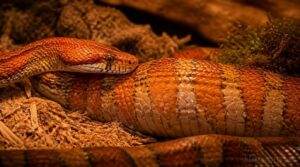
Brumation is over, so the real work starts now. Getting two corn snakes to breed safely takes more than putting them in the same tub. Below you’ll find what to watch for, from that first introduction to caring for a gravid female.
Safe Introduction Timing
Timing the introduction wrong can undo months of work. Confirm weight stability across several weeks — not just a recent gain. Both snakes should have completed a clean shed and be eating normally.
Verified sexing matters. Two females won’t mate, and two males raise aggression risk.
| Timing Factor | Green Light | Red Flag |
|---|---|---|
| Weight | Stable for weeks | Recent gain only |
| Shed | Clean, complete | Retained shed present |
| Feeding | Eating normally | Skipping meals |
| Health | No lesions or mucus | Skin or respiratory signs |
| Lineage | Records confirmed | Background unknown |
Check lineage record accuracy before the breeding season starts. Your reproductive cycle depends on it.
Supervised Pairing Sessions
Place both snakes in a neutral arena — not either snake’s home enclosure. Sessions run 20 to 40 minutes during their active period to improve natural mating cues.
Watch for these mating behavior indicators:
- Tail twitching near the female
- Rapid tongue flicking
- Body coiling and alignment
- Scent-trailing along the enclosure
- Tail-locking during copulation
Log sessions. Post-pairing recovery enforces a 48-hour cooldown.
Aggression Warning Signs
Not every pairing goes smoothly. When a corn snake raises its head and tenses its body, that’s not curiosity — it’s a warning. Hissing paired with a forward-facing lunge means stress is escalating fast. Tail wagging and rapid mouth-opening signal the same thing.
Separate the snakes immediately. Pushing through aggression during breeding season guarantees a failed pairing, not a successful one.
Feeding After Mating
After mating, her appetite won’t always snap back immediately.
- Offer frozen/thawed prey at her normal size
- Wait 2–3 days before the first feeding attempt
- Skip daily retries — wait several days if she refuses
- Keep fresh water available to aid digestion
- Resume her usual schedule once she’s settled
Forcing food too soon risks regurgitation. Let her pace set it.
Gravid Female Care
A gravid female is carrying more than eggs — she’s under real physiological strain.
Reduce handling completely. Keep her enclosure undisturbed with stable temperature gradients and consistent lighting. Place a lay box with moist substrate where she can access it freely. Watch for straining without output — that signals dystocia, a veterinary emergency.
| Care Area | What to Do | Warning Sign |
|---|---|---|
| Humidity | Keep steady, avoid swings | Dry eggs, difficult laying |
| Stress reduction | Minimize handling, quiet routine | Repeated defensive behavior |
| Nesting substrate | Moist, firm-packed lay box | Female ignoring lay box |
| Egg binding | Monitor vent, watch for straining | Swollen vent, lethargy |
| Postlay recovery | Fresh water, gradual feeding | Lingering distress, vent discharge |
After egg laying, resist the urge to intervene immediately. She needs water, warmth, and time.
Incubate Eggs and Raise Hatchlings

Once the eggs are laid, your job shifts from breeder to incubator manager — and the margin for error gets smaller. Everything from substrate moisture to how you handle the eggs will influence how many hatchlings make it to their first shed. Here’s what you need to get right at each stage.
Lay Box Setup
A well-built egg-laying box sets the foundation for a successful clutch. Use a secure plastic container with walls at least 1 inch thick to hold stable temperatures. Line the base with 2–4 inches of coconut coir or peat moss, kept lightly misted to prevent crusting.
Place it in a quiet, dim corner — gravid females need calm to lay without stress.
Safe Egg Handling
Once the eggs are laid, how you touch them matters more than most keepers expect.
Keep shell integrity intact by handling eggs gently with clean, dry hands. Even slight pressure can crack the surface, opening a direct path for bacteria.
- Mark the top of each egg with a soft pencil before moving them
- Never rotate eggs after marking — embryos drown if repositioned
- Isolate any leaking egg immediately to prevent cross-contamination
Work quickly to preserve humidity stability.
Incubation Temperature Control
Temperature is where incubation succeeds or fails quietly.
Keep your incubator between 78–82°F, with daily fluctuations no greater than 1–2°F. A thermostat with differential control prevents overshoot when the unit cycles.
| Factor | Target |
|---|---|
| Temperature range | 78–82°F |
| Max daily fluctuation | 1–2°F |
| Sensor placement | Egg zone, not walls |
| Data logger interval | Every 5–15 minutes |
Digital data loggers catch drift you’d otherwise miss.
Candling Fertile Eggs
Once your temperature is stable, candling tells you what’s actually developing inside.
Around day 14, hold a bright light flush against the shell in a dim room. Fertile eggs show a spider-like vein network spreading from a dark central mass. Infertile eggs look clear. Remove non-viable eggs promptly — they’ll mold and risk contaminating the rest of your clutch.
First Shed and Feeding
Hatchlings usually shed within 7–14 days of emerging. Watch for clouded eyes and dull coloration — that’s your signal. Don’t feed during this phase.
Once the shed completes cleanly, wait another 1–7 days before offering a pinky mouse sized to their mid-body width. Refuse the first meal? Wait 5–7 days, then try scenting prey with shed skin.
Frequently Asked Questions (FAQs)
What month do corn snakes breed?
Wild corn snakes breed in spring. In captivity, most breeders target February to April after a 60–90 day cooling period, with females resuming feeding before introductions to improve mating success.
What are the behaviors of corn snakes breeding?
Corn snakes follow pheromone tracking cues to locate mates. Males perform courtship rituals through head rubbing and body twitching. Females signal receptivity through calmer behavior. Tail-locking confirms successful mating.
How long does it take corn snakes to mate?
Mating sessions usually run 10 minutes to several hours. Most observed copulations fall between 10 and 60 minutes, though some pairs stay locked for up to four hours once sperm transfer begins.
Is breeding corn snakes easy?
Breeding corn snakes is manageable for beginners, but it demands consistent time, careful observation, and the right setup. With proper preparation, success rates are high — most healthy pairs breed reliably each season.
Do corn snakes like sphagnum moss?
Not exactly love—more tolerance. Sphagnum creates useful humid microclimates in hides, easing shedding.
But corn snakes need moisture gradients, not soggy substrate throughout. Damp moss everywhere raises mold risk and skin irritation, so dry zones still matter for healthy habitat maintenance.
What is the breeding behavior of a corn snake?
Like a silent signal drifting through the air, pheromone trail detection pulls males into pursuit. Chin rubbing and rhythmic tongue flicking follow. Successful tail-locking confirms mating, leaving the gravid female to carry fertile eggs.
How long can corn snakes go without water?
A healthy adult corn snake can go several days to a week without water. Beyond that, sunken eyes and shed difficulties signal dehydration. Don’t let water access lapse — even briefly.
How long after breeding do corn snakes lay eggs?
Thirty days can feel like forever when you’re watching a gravid female pace her enclosure. Most clutches arrive 30 to 45 days after mating — though cooler conditions can stretch that oviposition window closer to
What is the behavior of a snake breeding?
During breeding season, males follow pheromone trails left by females, then court through chin rubbing and body alignment. Tail-locking confirms successful copulation, which can last several hours.
What month do snakes start breeding?
As the days grow long, nature stirs." In temperate regions, snakes usually begin breeding in March, though some start as early as February. Photoperiod and rising temperatures are the real triggers — not the calendar.
Conclusion
Miss one cue now, and you’ll be waiting another full season to try again. That’s the quiet pressure corn snake breeding carries. Corn snake breeding signs and care aren’t separate concerns—they’re a single, continuous process where each stage informs the next.
Get your animals healthy. Read the signals accurately. Control your incubation environment. The snakes will handle the rest. When your first clutch of eggs finally hatches, you’ll know exactly why the sequence mattered.