This site is supported by our readers. We may earn a commission, at no cost to you, if you purchase through links.

Most new snake owners get the feeding schedule wrong, and it’s rarely from neglect. It’s from overthinking hunger cues and underestimating how different a snake’s metabolism is from a dog or cat.
Snakes don’t eat daily. A healthy adult ball python might go two weeks between meals and be perfectly fine. A hatchling corn snake, though, needs food every five to seven days to fuel the rapid growth happening inside that tiny body.
Feeding frequency depends on age, species, size, and even the season. Getting it right protects your snake from two equally serious problems: the slow damage of chronic underfeeding and the organ stress that comes from overfeeding. The schedule that keeps your snake thriving is more precise than most owners realize.
Table Of Contents
- Key Takeaways
- Most Pet Snakes Eat Every 5–21 Days
- How Feeding Schedules Vary by Species
- What Changes a Snake’s Feeding Frequency?
- What Prey Size and Method Are Best?
- When Should You Adjust Feeding Frequency?
- Frequently Asked Questions (FAQs)
- How do you tell if a snake is hungry?
- How long can a snake go without eating?
- How soon after a snake eats does it poop?
- Should I feed my snake at night or day?
- How often should snakes be fed?
- How often can one eat sweet potatoes?
- How often should you feed a king snake?
- How much should a snake eat a week?
- How often should a baby snake eat?
- How often should you feed a corn snake?
- Conclusion
Key Takeaways
- Feeding frequency isn’t one-size-fits-all — hatchlings need meals every 5–7 days, juveniles every 5–10, and adults can comfortably wait 10–21 days, because metabolism slows significantly as your snake matures.
- Prey should weigh 10–15% of your snake’s body weight and match its mid-body girth, since going too large raises regurgitation risk and jaw strain, while too small leaves a growing snake underfueled.
- Body condition — not just the calendar — is your real guide: a sharp, visible spine signals underfeeding, while scale spreading and soft, squishy texture around the body are clear signs you’re offering too much, too often.
- Several factors naturally shift how often your snake needs to eat, including enclosure temperature, shedding cycles, seasonal brumation, and reproductive status, so treat your schedule as a starting point, not a fixed rule.
Most Pet Snakes Eat Every 5–21 Days

Feeding schedules for pet snakes aren’t one-size-fits-all — age and metabolic rate drive most of the variation. A hatchling burning through energy at full speed needs meals far more often than a settled adult does. Here’s how feeding frequency shifts across each life stage.
For a full breakdown by species and age group, snake feeding frequency charts by life stage make it easy to dial in the right schedule from hatchling to adult.
Hatchlings: Every 5–7 Days
Young snakes have fast metabolisms that demand frequent meals. Feed your hatchling every five to seven days to support steady growth. Choose prey, usually a pinkie or fuzzy mouse, whose width closely matches your snake’s mid-body girth.
Weigh your hatchling each week. Steady gains of 0.5 to 1.5 inches during the first six weeks confirm your schedule is working well.
Juveniles: Every 5–10 Days
As your snake outgrows the hatchling stage, juvenile feeding frequency settles into every 5 to 10 days. Prey size should still match mid-body width. Species matter:
- Ball pythons: every 5–9 days
- Corn snakes: every 5–7 days
- Boa constrictors: every 7–10 days
- Kingsnakes: every 5–9 days
Track weekly weight gains to confirm the schedule is working.
Adults: Every 10–21 Days
Once adulthood arrives, the pace slows. Adult feeding frequency drops to every 10 to 21 days. A 200 to 300 gram ball python does well on a 14 to 21-day cycle. Active, slender adults may need feeding closer to every 10 days.
Match prey to mid-body girth and keep prey weight between 5 and 20 percent of body weight.
Senior Snake Feeding Schedules
As snakes age past their prime, their metabolism slows noticeably. Extending your feeding schedule to every 14 to 28 days often works well for senior snakes, though species and individual condition matter. Monthly weight monitoring helps you catch gradual body condition loss early. If your snake refuses a meal, wait a few days, then try again. Log every attempt and response. Understanding senior snake feeding adjustments by species—such as ball pythons shifting to every 2–3 weeks and large boas feeding monthly—can help you fine-tune your schedule as your snake ages.
Breeding Female Feeding Needs
A breeding female’s metabolic rate spikes once the pre-breeding period begins. Feed her 2–5 times weekly with small prey that digests in under 48 hours.
- Start food cycling once breeding begins
- Keep each meal digestible within 48 hours
- Track weight throughout egg production
- Expect gravid females to reduce intake
- Resume normal feeding after laying
Her reproductive status shapes every decision.
How Feeding Schedules Vary by Species
No two species follow the same feeding clock. A ball python and a garter snake, for instance, have almost nothing in common regarding meal timing, prey type, or hunger patterns. Species-specific schedules below give you a clearer picture of what your snake actually needs.
Understanding these differences matters more than most owners realize — overfeeding risks and portion control for snakes become especially important when a species like the ball python already thrives on just one meal a week.
Ball Python Feeding Schedule

Ball pythons are notorious for skipping meals, so consistency matters. Feed hatchlings every 5 to 7 days using prey matched to their girth. Juveniles thrive on a 7 to 10-day schedule. Adults usually eat every 10 to 14 days. Don’t panic over occasional refusals — it’s common with this species. Stick to your routine and monitor body condition regularly.
Corn Snake Feeding Schedule

A corn snake is one of the easier species to keep on a consistent schedule. Adjust by age:
- Hatchlings: every 5–7 days
- Juveniles: every 7–10 days
- Adults: every 10–14 days
- Breeding females: increase meals during egg production
Always fine-tune feeding frequency by body condition. A lean, active corn snake may sometimes need food more often than these standard ranges suggest.
Boa Constrictor Feeding Schedule

Your boa constrictor digests prey slowly, so don’t overfeed. Feed hatchlings every 7 to 10 days, juveniles every 10 to 14 days, and adults every 14 to 21 days. Senior boas do well on that same adult range with slightly smaller prey.
Breeding females need more frequent meals during gestation and after birth to fully rebuild their depleted body condition.
Kingsnake Feeding Schedule

King snakes eat more often than most constrictors. Juvenile snake frequency sits comfortably at every 7–10 days.
- Hatchlings: every 7 days
- Juveniles: every 7–10 days
- Adults: every 10–14 days
- Shedding phase: skip the meal
- Breeding females: slightly increase prey size
Always match prey size to your snake’s midbody width. Adjust adult feeding and overall feeding frequency when body condition changes.
Garter Snake Feeding Schedule

Few snakes match the garter’s fast metabolism. Feed hatchlings every 5 to 7 days using small earthworms or guppies. Juveniles eat every 7 to 10 days, adults every 10 to 14 days. If fish dominates the diet, mix in non-thiaminase species to prevent vitamin B1 deficiency. Senior garters slow considerably, needing meals only every 14 to 21 days.
What Changes a Snake’s Feeding Frequency?

No two snakes eat on the exact same schedule, and that’s not a flaw in your routine. Several factors shift how often your snake actually needs to eat, from body size and temperature to seasonal instincts it can’t ignore. Understanding these variables puts real control in your hands.
Every snake feeds on its own schedule, and understanding why puts real control in your hands
Snake Size and Metabolism
A snake’s size directly shapes how often it needs to eat. Larger individuals burn more total energy but have lower mass-specific metabolic rates, meaning their bodies run efficiently on less food per gram of body weight.
A 500-gram ball python needs feeding less often than a 50-gram hatchling. Match prey size and schedule to your snake’s current mass, not its age alone.
Body Condition and Activity
Weight tells part of the story. Body condition and activity fill in the rest. Run your fingers along the spine. A healthy snake feels rounded, not ridged. A sharp spine or sloping muscle means feed more often. A square body or gaping scales means pull back.
Active, curious snakes burn more energy. Sedentary ones gain weight faster, so watch both.
Temperature and Digestive Speed
Activity level ties directly to temperature. Cooler enclosures slow digestion, meaning food sits longer in the gut. Feeding on a fixed schedule without adjusting for temperature drops risks regurgitation.
Warm prey to near your snake’s body temperature before offering. This reduces the energy spent warming the meal and keeps digestion rate steady. If your enclosure runs cool, extend feeding intervals.
Shedding and Feeding Refusal
Appetite drops are normal during shedding. When your snake enters pre-shed blue phase, impaired vision and discomfort trigger refusal. Don’t offer food then, as stress and injury risk both rise.
Most healthy snakes skip 1-2 weeks of meals around shedding. Ball pythons often extend this further. Resume feeding once the shed is complete and your snake’s eyes have cleared.
Season, Brumation, and Breeding
Because seasons shape behavior, feeding frequency shifts throughout the year. During brumation, stop feeding entirely. Seasonal changes slow metabolism, making digestion risky.
Watch for these seasonal cues:
- Reduced activity signals brumation onset
- Breeding females need more frequent, heavier pre-brumation meals
- Reproductive status suppresses appetite post-wake
- Resume feeding only after your snake first defecates
- Expect 2–4 months without feeding during dormancy
What Prey Size and Method Are Best?
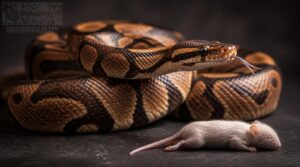
Getting prey selection right matters just as much as feeding frequency. The wrong size or method can lead to regurgitation, injury, or a snake that simply won’t eat. Here’s what you need to know about matching prey to your snake safely and effectively.
Prey Width Versus Snake Girth
Think of your snake’s girth as a doorframe. Prey that’s too wide simply won’t fit cleanly.
Keep prey width below 60–85% of your snake’s widest body point. Ball pythons tolerate slightly wider prey due to their stout build. Corn snakes need narrower options. Exceeding the gape by more than 10% raises regurgitation risk and jaw strain.
Prey Weight Guidelines
A good rule of thumb: prey should weigh 10–15% of your snake’s body weight. Hatchlings need closer to 15–20% to fuel rapid growth. Adults in maintenance do well at 8–12%.
Weigh your snake regularly with a digital gram scale. Recalculate prey weight whenever body condition shifts noticeably. Consistent overfeeding beyond 20% risks obesity and digestive problems.
Frozen-Thawed Versus Live Prey
Frozen-thawed prey is the safer choice for most captive snakes. Live prey can bite and injure your snake during feeding, sometimes causing serious wounds. Frozen prey eliminates that risk.
It also delivers more consistent nutrition. You control prey size each time, and disease and parasite transmission risks drop a lot compared to wild-caught live feeders. Most snakes adapt well with routine.
Safe Thawing and Warming
How you thaw matters as much as what you feed. Thawing frozen prey incorrectly can leave cold pockets that harm your snake’s digestion.
Refrigerator thawing overnight is ideal for larger rodents. Follow it with a warm water bath at 96-100°F. Use an infrared gun for precise temperature control, aiming for 98-100°F, then present prey with feeding tongs.
Post-Meal Handling and Digestion
Postprandial phase means your snake’s body is fully occupied. Handling during this window disrupts gut motility and slows the digestion rate a lot. Wait a full 48 hours.
Five signs your snake is actively digesting:
- Visible prey lump along the body
- Reduced tongue-flicking
- Seeking the warm side of the enclosure
- Staying coiled tightly in a hide
- Slow response to nearby movement
When Should You Adjust Feeding Frequency?

Your feeding schedule isn’t set in stone. A snake’s body will send you clear signals when something needs to change, whether that’s hunger cues, weight shifts, or a sudden refusal to eat. Knowing how to read those signs keeps you one step ahead of problems before they turn serious.
Hunger Versus Food-Seeking Behavior
While hunger cues and food-seeking behavior look alike, they aren’t the same. Real hunger follows energy depletion. External scents can trigger prey selection attempts without real need. Stick to your feeding frequency schedule instead of reacting to every appetite fluctuation.
| Behavior | Hunger-Driven? | Recommended Action |
|---|---|---|
| Tongue-flicking at air | Likely yes | Feed per schedule |
| Glass surfing at night | Sometimes | Check temperatures first |
| Refusing offered prey | No | Wait; retry next week |
Signs of Overfeeding
Overfeeding can creep in even on a steady schedule. Signs of overfeeding usually show up on the body first.
- Scale spreading or visible skin between scales
- Soft, squishy feel during handling
- Fat deposit visibility near the head or cloaca
- Regurgitation — one of the most avoidable regurgitation causes
- Lethargy and slower movement
Monthly body condition scoring keeps obesity prevention within reach.
Signs of Underfeeding
The opposite problem sneaks up quietly. Underfeeding signs appear gradually, as weight loss progression strips fat before muscle.
| Sign | What You’ll Notice |
|---|---|
| Prominent spine | Backbone becomes visible along the body |
| Poor body condition | Ribs show, fat coverage disappears |
| Appetite fluctuations | Frantic response when prey is offered |
| Feeding refusal | Lethargy replaces active food-seeking |
| Slow growth | Juveniles miss expected weight gains |
Weight and Body Condition Checks
Catching gradual changes early starts with routine. Weigh your snake every 2–4 weeks, always before feeding, and log each reading with the date and last meal. A digital gram scale for reptiles makes it easy to track even small weight shifts between sessions with reliable precision.
Numbers alone don’t tell everything. Run your fingers along the midbody — it should feel even and consistent. A noticeably thinner midbody signals reduced body stores worth addressing before the next scheduled feeding.
Concerning Feeding Refusal Signs
When feeding refusal stretches past 3–4 weeks in adults or 1–2 weeks in juveniles, don’t dismiss it. Visible spine, ribs, or lethargy alongside appetite suppression suggests elevated stress hormones disrupting digestive health. Regurgitation, respiratory sounds, or mucus discharge are serious red flags.
Environmental stress feeding can explain short pauses, but neurological signs like stargazing always demand immediate veterinary attention.
Frequently Asked Questions (FAQs)
How do you tell if a snake is hungry?
Watch the movement, the tongue, the focus. A hungry snake actively searches its enclosure, flicks its tongue rapidly, and locks attention on you near the glass.
How long can a snake go without eating?
Most healthy adult snakes can fast for weeks to several months. Large constrictors tolerate the longest gaps. Small species like garter snakes need food more often. Always monitor weight during any extended fasting period.
How soon after a snake eats does it poop?
Spoiler: your snake isn’t broken just because it hasn’t pooped yet. Most pet snakes defecate 3–7 days after eating. Larger meals slow digestion and can push that window to 7–14 days. Temperature always matters too.
Should I feed my snake at night or day?
Night feeding better matches nocturnal snakes’ natural activity window. For diurnal species like boas, daytime works fine. Consistency and correct enclosure temperature matter more than timing.
How often should snakes be fed?
How often should snakes be fed? Hatchlings eat every 5–7 days, juveniles every 5–10, and adults comfortably wait 10–21 days between meals. Your snake’s life stage shapes everything, because as metabolism slows, intervals naturally lengthen.
How often can one eat sweet potatoes?
Sweet potatoes aren’t my specialty — that’s a nutritionist’s territory. But the knowledge base suggests two to three times per week, with one medium potato (130–150g) as a reasonable daily amount if portions stay controlled.
How often should you feed a king snake?
How often should you feed a king snake? Like a clock, age sets the rhythm. Hatchlings eat every 5–7 days, juveniles every 7–10 days, and healthy adults thrive best on a steady 10–14 day schedule.
How much should a snake eat a week?
Most snakes eat 10–15% of their body weight per meal. Juveniles feed more often than adults. Temperature, species, and life stage all shape how much your snake actually needs weekly.
How often should a baby snake eat?
Feed your baby snake every 5 to 7 days. Always choose prey that closely matches their body width. Weigh hatchlings weekly and adjust the schedule if growth slows or stops entirely. Never skip scheduled meals.
How often should you feed a corn snake?
Think of it as appetite management by age. Hatchlings and juveniles eat every 5–7 days, while adult corn snake feeding frequency comfortably extends to every 10–14 days.
Conclusion
What separates a thriving snake from a struggling one? More often than not, it’s the feeding schedule. Knowing how often to feed a snake by age, size, and species gives you a real clinical edge.
A hatchling needs fuel every five to seven days. An adult ball python can comfortably wait two full weeks. Monitor body condition, not just the calendar. When your snake holds steady weight and sheds cleanly, you’re already doing it right.
- https://www.furrycritter.com/pages/articles/snakes/senior_snake_feeding.htm
- https://docs.google.com/document/d/1YZwGGFusSgdyeEy9m_rWBvO3h8OFNtJ40z5B5s4lIB8/mobilebasic
- https://serpentsuppers.com/snake-feeding-chart/
- https://vettoday.com/blog/pet-health/how-often-do-snakes-eat/
- https://www.thebreedinglab.com/food-cycle