This site is supported by our readers. We may earn a commission, at no cost to you, if you purchase through links.

If you’d told a breeder in 2010 that a single ball python could sell for $125,000, you’d have gotten laughed out of the reptile expo. That’s exactly what happened when the first scaleless morph hit the market in 2013, and prices for rare genetics haven’t slowed since.
Collector demand for rare morphs climbed 18% year over year, and the most expensive and rarest ball python morph listings now regularly clear five figures. Genetics like Stranger and Monsoon didn’t exist a generation ago.
Whether you’re hunting your first specimen or adding to a serious collection, knowing what drives these prices, and what separates a $3,000 snake from a $20,000 one, changes how you shop.
Table Of Contents
- Key Takeaways
- 5 Most Expensive and Rarest Ball Python Morphs
- What Makes Rare Ball Python Morphs Expensive?
- How to Buy Rare Ball Python Morphs
- Top 5 Ball Python Collectibles and Novelty Items
- Frequently Asked Questions (FAQs)
- Are ball python morphs expensive?
- Are monsoon ball pythons rare?
- What is the rarest ball python morph?
- Are ball pythons rare?
- Are ball pythons considered rare?
- Are ball pythons generally expensive?
- Is a specific ball python morph rare?
- How much does a ball python morph cost?
- How much does a Stranger Ball Python cost?
- How many morphs does a Ball Python have?
- Conclusion
Key Takeaways
- Rare ball python morphs like Monsoon and Pastel Zebra can sell for $12,000–$20,000+, with prices driven by recessive genetics, breeder reputation, and rising collector demand (up 18% year over year).
- Multi-gene morphs are harder to breed and predict, since stacking genes multiplies possible outcomes and can drop clutch viability, which is a big reason rare combos cost so much more than single-gene snakes.
- Before buying a high-priced morph, you should verify documented lineage, request genetic testing, and get written health guarantees, since unproven pedigrees can turn a "rare" snake into a costly gamble.
- Certain morphs carry real health risks, like wobble syndrome in Spider genes or spinal kinking in Super Cinnamon and Caramel Albino, so understanding these risks is just as important as chasing rarity.
5 Most Expensive and Rarest Ball Python Morphs
If you want to know where your money actually goes in this hobby, these five morphs draw the line. Each one earns its price tag through rarity, genetics, or sheer visual shock — sometimes all three. Here’s what separates a $5,000 snake from a $20,000 one.
Before dropping five figures on a rare morph, it’s worth learning how to breed and sell snakes for a profit so you understand what these animals actually demand in return.
Stranger Ball Python Morph
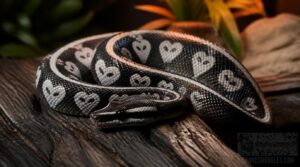
If pixel art slithered, it’d look like the Stranger. This morph’s dark base gets broken up by blocky white "alien head" shapes and a sharp dorsal stripe, pure visual chaos done right. Eye color stays standard, so all the drama’s in the pattern. These distinctive alien head blotch patterns appear as distorted heart-shaped markings with two proportioned dark spots.
- Price range: $6,000–$20,000
- Head-shaped white patterning
- High-contrast dorsal stripe
- Strong collector demand
Rarity and genetic complexity keep the Stranger Ball Python Morph firmly in trophy-collection territory.
Monsoon Ball Python Morph
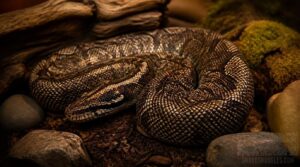
Trade the Stranger’s blocky chaos for something softer, and you land on the Monsoon. Its shattered labyrinth pattern scatters hundreds of tiny speckles across a broken dorsal stripe, overshadowing typical alien head markings entirely.
Monsoon is recessive, so pairing two carriers yields visual offspring in roughly 1 of 4 eggs. That genetic complexity, first stabilized by a single breeder in the 2010s, keeps supply tight.
| Feature | Details | Price |
|---|---|---|
| Pattern | Speckled, mosaic-like | Distinctive |
| Genetics | Recessive, multi-year projects | Limited |
| Market | $12,000–$18,000 | $20,000 average |
Care stays standard ball python husbandry, nothing morph-specific required.
Sunset Ball Python Morph
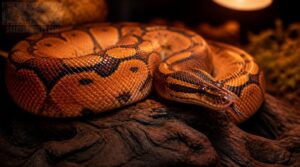
If Monsoon’s speckled chaos didn’t grab you, Sunset’s burnt-orange gradient might. Bred by BHB Reptiles in 2012, this recessive morph needs two copies for those flame-like dorsal patterns.
Pair two carriers, get roughly 1-in-4 visual offspring. Prices settled near $5,000 for quality males, though rare combinations push past $10,000. Care stays standard, just watch lighting to prevent fading.
Scaleless Ball Python Morph
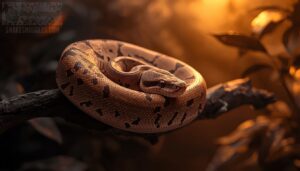
Sunset’s flame patterns are eye-catching, sure, but nothing rewires your idea of "ball python" like skin with zero scales. The first specimen sold for $125,000 in 2013. Today’s market settled at $3,000 to $10,000. If you’re chasing that scaleless look through breeding rather than buying outright, understanding how super form genetics and pairing outcomes work will save you from costly guesswork.
Genetic mutations strip the scale plate entirely, leaving smooth, soft skin (only the ocular scale over each eye stays put). This changes everything about husbandry:
- Humidity swings that barely bother normal balls can crack this snake’s skin
- One rough hide corner means a tear that won’t heal clean
- Shedding happens in fewer, larger pieces, which sounds easy until it isn’t
- Breeder reputation matters more here since lineage integrity affects skin health
- Price fluctuation punishes buyers who skip health guarantees
Pastel Zebra Ball Python Morph
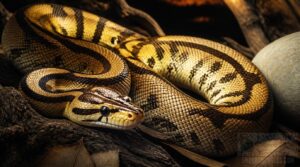
Stripes meet gold when Zebra genetics collide with Pastel coloration, and you get a high-contrast showstopper priced $7,500–$15,000. Patterns pixelate as the snake matures, so what you buy young isn’t quite what you’ll own at three years old.
That kind of unpredictable value shift is exactly why collectors track what drives boa constrictor morph prices upward before committing to a rare pairing.
| Trait | Details |
|---|---|
| Price | $7,500–$15,000+ |
| Pattern | Darkens, pixelates with age |
| Genetics | Zebra + Pastel |
| Breeding | Selective pairing required |
| Demand | Strong among pattern collectors |
What Makes Rare Ball Python Morphs Expensive?
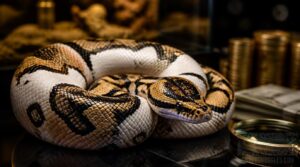
If you’ve ever wondered why one snake sells for $200 and another for $20,000, the answer isn’t just looks. Genetics, breeder reputation, and market demand all stack up to set the price tag. Here’s what actually drives those numbers so high.
Recessive Gene Inheritance
Two copies, zero shortcuts. Recessive genes only show visually when both parents pass the trait, giving het-to-het pairings just a 25% Carrier Probability per egg.
That’s why Visual Expression costs more than Het Carrier Cost, sometimes double or triple.
Always demand lineage documentation and genetic verification before buying, since unproven pedigrees can turn a "rare" morph into an expensive guessing game.
Multi-Gene Breeding Difficulty
If stacking two genes feels tough, try five. Each added gene multiplies your genotype combinations, turning simple math into a probability puzzle.
- Double recessives: roughly 1-in-16 clutch odds
- Epistatic effects skew "expected" phenotypes
- Pedigree tracking becomes essential, not optional
- Clutch viability often drops under heavy stacking
Predicting outcomes demands real data, not guesswork.
Breeder Reputation and Lineage
Would you buy a used car with no title? Same logic applies here.
Buying a rare morph without proven lineage is like buying a used car with no title
Reputable breeders publish lineage trees three generations deep, plus health clearances from real vets. Longstanding operations, ten-plus years, prove stability. Check for founder stock transparency and public records of line transfers. Verified pedigree can boost resale value 15-40% over unknown sourcing.
Collector Demand and Trends
Rare morphs don’t just sell, they get chased. Buyer numbers climbed 18% year over year, and multi-gene combos now outpace single genes in demand.
- Growing collector base
- Multi-gene preference
- Liquid online marketplaces
- Active forum trading
- Expo season price spikes
Pedigreed animals move fastest online. Expos still spike prices on top-tier males, proving genetic rarity remains king.
How to Buy Rare Ball Python Morphs
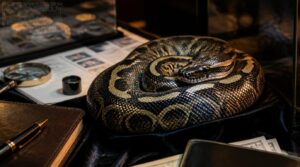
If you’re ready to drop five figures on a snake, you can’t afford to skip the homework. Rare morphs come with real risks — genetic fraud, hidden health issues, breeders who vanish after the sale. Here’s exactly what to check before you wire that deposit.
Verify Genetics and Pedigree
If a seller can’t produce documented lineage, walk away. Genetic testing confirms actual gene presence, not just claims. Check pedigree tracking for consistent generations, verified breeder documentation, and shed DNA results matching the animal in front of you. Carrier detection matters for hets. Punnett Square Ratios only work if the parentage is real, so demand proof before you pay.
Compare Pricing and Traits
Once lineage checks out, put dollar signs next to traits. A Stranger’s metallic sheen can hit six figures; a Pastel Zebra’s banding tops $30,000.
Rarity drives price, but breeder reputation and collector demand trends push it higher. Compare pattern clarity and saturation across morphs before buying. Genetic complexity means no two price tags match exactly.
Check Morph-Specific Health Risks
Beauty carries risk. Spider gene wobble affects 100% of carriers, ranging from mild head tremors to severe equilibrium loss.
Before buying, screen for:
- Spider Gene Wobble (balance issues)
- Bug eyes or microphthalmia (Super Lesser, Pied BluEL)
- Spinal kinking (Super Cinnamon, Caramel Albino)
- Fertility concerns in Desert and Caramel Albino females
Ask breeders directly about deformity risks and incubation sensitivity before committing.
Assess Specialized Care Needs
If wobble syndrome had you thinking twice, wait until you meet a Scaleless Ball Python Morph’s care sheet. These animals need tighter humidity control and steady 78-82°F gradients to prevent shedding issues. Watch for eye moisture loss too.
| Care Factor | Target Range |
|---|---|
| Humidity | 50-60% |
| Temperature | 78-82°F |
| Shedding Support | Weekly checks |
| Eye Monitoring | Daily |
Request Written Breeder Guarantees
Daily eye checks matter, but a written guarantee protects your wallet too. Get a documented lineage, health guarantee, and clear Claim Process Steps before paying. Look for a 30-180 day coverage period, Veterinary Verification Required, and hereditary defects only clauses.
Strong breeder reputation and genetic compatibility records mean fewer surprises, better aftercare guidance, and real market demand backing your investment.
Top 5 Ball Python Collectibles and Novelty Items
If you’re not ready to drop five figures on a live morph, you can still bring some ball python flair home for a lot less.
Collectors have turned the hobby’s iconic patterns and gene names into everything from plush toys to school supplies.
Here are five fun finds worth checking out.
1. Albino Alligator Novelty Toy Figure

Why would a serious morph collector care about a $3.99 toy alligator? Because scarcity psychology works the same at every price point, and this little vinyl figure teaches that lesson fast.
Cast in phthalate-free PVC with hand-painted scale detailing, it’s built for shelves, not sandboxes. Real albino alligators run $16,000 to $25,000, so this piece lets you illustrate albinism genetics to visitors without risking your breeding stock.
At 3.5 inches and barely 5.7 grams, it won’t dominate a display case. But sitting next to your Stranger or Monsoon enclosure, it becomes a low-stakes teaching prop, one that sparks genetics conversations before you ever mention price tags.
| Best For | reptile breeders, educators, and collectors who want an affordable, safe way to spark genetics conversations or add a themed touch to displays. |
|---|---|
| Material | PVC |
| Weight | 5.7 grams |
| Best For | Breeders & Educators |
| Care Instructions | Avoid Sun Exposure |
| Size | 3.5 inches |
| Price Tier | Budget |
| Additional Features |
|
- Hand-painted detailing gives it a realistic, scaled look despite the small size
- Made from durable, phthalate-free PVC that’s safe and long-lasting
- Compact 3.5-inch size makes it easy to display without taking up much space
- Small size poses a choking hazard for children under 3
- Not suitable for chewing or extended mouth contact
- Colors may fade over time with prolonged sun exposure
2. Pied Musical Adventure Middle Grade Novel

Pipes and pythons make an odd pair, but stick with it. This middle-grade novel, out October 2024 from Simon & Schuster, follows a kid who discovers magical musical powers after picking up a pipe, straight out of Pied Piper folklore.
At 352 pages, it’s a shelf item for breeders raising young collectors, not a genetics manual. The identity-concealment plot and hidden melody world echo something every morph hunter knows: rare traits stay hidden until conditions are right.
Fans of Amari and the Night Brothers will feel at home. It won’t teach you a thing about Stranger or Sunset morphs, but it might hook your kid on collecting before they can spell "heterozygous.
| Best For | This book is best for middle-grade readers who love folk tales, myths, and magical adventures, especially fans of series like Amari and the Night Brothers or Nevermoor. |
|---|---|
| Material | Paper |
| Weight | N/A |
| Best For | Young Readers |
| Care Instructions | Keep Dry |
| Size | 352 pages |
| Price Tier | Budget |
| Additional Features |
|
- Creative premise blending Pied Piper folklore with a hidden world of melody-based magic
- Encourages creativity, confidence, and kindness through its story of identity and self-discovery
- Great fit for fans of popular fantasy series aimed at young readers
- No details available on illustrations or specific reading level
- Only moderate niche popularity, ranking 4,108 in its category
- Limited review information makes it hard to gauge overall reader reception
3. Squishmallows Ukee Clown Teal Hair Plush
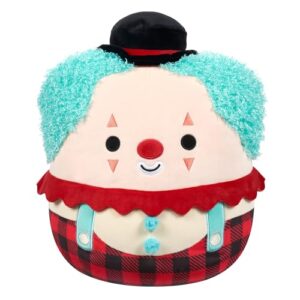
A clown-faced marshmallow with teal hair, that’s the Ukee, and yes, it belongs on this list. Officially licensed by Jazwares with model number SQCR05849, it’s built from ultrasoft ‘Mallow material, measures 10 x 12 x 12 inches, and weighs 1.65 pounds.
The connection to your snake room isn’t a stretch. Rare morphs and rare plush both trade on scarcity and demand, whether that’s a het clutch or a limited character run.
Ukee won’t hold resale value like a Stranger or Monsoon specimen. Surface-clean only, no washing machine, and skip it for toddlers who’ll drag it through the mud. Still, it’s a fun shelf piece for breeders who like their collectibles as soft as their hatchlings.
| Best For | Squishmallows collectors and plush enthusiasts who want a soft, display-worthy piece featuring the teal-haired clown-chef Ukee character. |
|---|---|
| Material | Polyester Mallow |
| Weight | 1.65 lbs |
| Best For | Plush Collectors |
| Care Instructions | Surface Clean Only |
| Size | 10x12x12 inches |
| Price Tier | Mid-Range |
| Additional Features |
|
- Officially licensed, verified Squishmallows product made from ultrasoft, high-quality ‘Mallow material
- Great size for display or cuddling, with soft texture that’s comforting for stress relief
- Recognizable, collectible character design makes it a solid gifting option
- Surface-clean only, not machine washable, so upkeep takes a bit more care
- Plush fabric can attract dust and lint over time
- Large size may be tricky for small children to carry, and it has no electronic or interactive features
4. Fresh and Sweet Banana Bunch
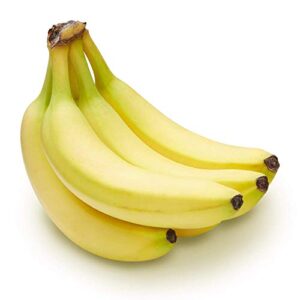
Skip past the incubators for a second, because a bunch of bananas earns its spot here on pure logic: it’s what feeds the rodents that feed your collection.
This bunch runs 5.9 x 2.6 x 1.7 inches and weighs about 2 pounds, harvested green and ripening to that classic yellow with brown speckles. Keep it at cool room temperature, out of direct sun, and let ethylene gas do its job over a few days.
One medium banana packs 422 milligrams of potassium and solid vitamin B-6, the same electrolyte support your feeder rodents need to stay healthy. Ripeness matters here too. A banana that looks perfect on the outside can still be underripe inside, not unlike judging a morph by photos alone.
| Best For | This banana bunch is best for reptile keepers who need a reliable food source to feed the rodents that in turn feed their collection, as well as anyone wanting a quick, nutrient-packed snack. |
|---|---|
| Material | Organic Peel |
| Weight | 2 lbs |
| Best For | Reptile Keepers |
| Care Instructions | Cool Room Temp |
| Size | 5.9×2.6×1.7 inches |
| Price Tier | Budget |
| Additional Features |
|
- Rich in potassium and vitamin B-6, supporting healthy electrolyte and metabolic function for both people and feeder rodents
- Convenient size and weight, making it easy to store and portion out
- Naturally ripens over a few days, so you can time it to when you actually need it
- Must be stored at cool room temperature and kept out of direct sunlight to ripen properly
- Can look ripe on the outside while still being underripe inside
- Not shelf-stable long-term, so it needs to be used within a limited window before spoiling
5. Axanthic Hognose Snake College Notebook
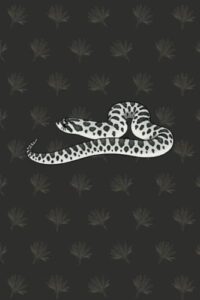
Not every collector item on this list slithers or breathes, and that’s fine, because your desk deserves some morph pride too.
This college notebook features a stylized axanthic hognose on the cover, silver-gray body, dark charcoal saddles, no red pigment anywhere. It’s 6 x 9 inches, 120 college-ruled pages, soft glossy cover that fits any backpack.
Axanthic is a recessive trait in hognoses, same genetic logic driving your ball python purchases. Whether you’re logging clutch numbers, feeding intervals, or shed cycles, the pages handle it. At a fraction of live-animal prices, it’s a low-stakes way to flex your breeder credentials on campus or at the next reptile expo.
| Best For | Reptile keepers, hognose enthusiasts, and students who want a fun way to track clutch numbers, feeding schedules, or shed cycles while showing off their morph knowledge. |
|---|---|
| Material | Paper |
| Weight | 8.3 oz |
| Best For | Note Takers |
| Care Instructions | Avoid Moisture |
| Size | 6×0.28×9 inches |
| Price Tier | Budget |
| Additional Features |
|
- Spacious 120-page, college-ruled layout works well for note taking, journaling, or sketching
- Compact 6 x 9 inch size with a soft glossy cover makes it easy to toss in a bag or backpack
- Crisp white pages give good contrast for both writing and drawing
- Soft cover may wear down faster with heavy daily use
- Screen colors may not perfectly match the printed cover design
- Mobile users may find it easier to view interior page details on a PC
Frequently Asked Questions (FAQs)
Are ball python morphs expensive?
Talk about a wide net. Ball python morph prices run the gamut, from $65 beginner morphs to private sales hitting $30,000, with rarity, lineage, and genetics driving that massive gap.
Are monsoon ball pythons rare?
If you’ve spotted one, count yourself lucky. Monsoon morphs stay genuinely scarce, with limited founder lines keeping global stock small.
Expect $12,000–$18,000 for quality specimens, sometimes climbing toward $20,000 when proven lineage and sporadic breeding cycles collide with heavy collector demand.
What is the rarest ball python morph?
If you want the title, the Pastel Zebra takes it, combining two rare traits into a genetic long shot. First bred in 2005, it stays scarce today, with quality specimens starting around $15,
Are ball pythons rare?
As a species, ball pythons aren’t rare at all. They hold a Least Concern IUCN status, with massive captive-bred numbers worldwide. Individual morphs, though, tell a different story, especially when recessive genes and low production numbers collide.
Are ball pythons considered rare?
Picture thousands of ball pythons hatching every season, practically an army. Not rare at all in captivity. Wild populations dip locally in West Africa, but collector demand for morphs, not the species, drives those jaw-dropping price tags.
Are ball pythons generally expensive?
If you’re chasing basic morphs, expect $50 to $ Designer genes push past $1,000, and true rarities climb into the thousands, so your budget shapes which tier of collector you become.
Is a specific ball python morph rare?
If you’re eyeing Pastel Zebra, Stranger, or Monsoon morphs, yes, they’re genuinely rare. Limited founder animals, tight genetic lines, and unpredictable breeding outcomes keep supply low and prices climbing well past $10,000 for proven specimens.
How much does a ball python morph cost?
Like King Midas, some morphs turn everything gold, others stay ordinary. Prices swing from $65 basic morphs to $26,000 designer combos, with genetics, breeder reputation, and demand deciding whether your snake’s worth pocket change or a car payment.
How much does a Stranger Ball Python cost?
If you’re expecting five figures, think again. Standard Strangers run $800–$2,500, while proven pairs or complex stacks with Clown or Desert Ghost genes push past $3,000, sometimes topping $5,000 for excellent pedigree.
How many morphs does a Ball Python have?
If you think a dozen morph categories sounds like a lot, think again. Over 100 recognized morphs exist today, with new combinations bred into the mix every single season.
Conclusion
Some call it an expensive hobby. Others call it building a bloodline worth bragging about. Either way, chasing the most expensive and rarest ball python morph teaches you patience genetics can’t rush.
Prices will keep climbing as new combos surface, but the fundamentals stay the same: verify lineage, inspect health, and buy from breeders who stand behind their animals.
Master those basics, and you won’t just own a rare snake. You’ll own real bragging rights.