This site is supported by our readers. We may earn a commission, at no cost to you, if you purchase through links.
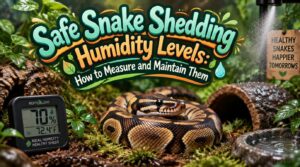
A ball python at 30% humidity can look fine right up until the shed starts. Then the skin tears into flaky scraps, the eye caps stay cloudy, and the tail tip stays stuck for weeks.
Humidity decides whether your snake sheds in one clean piece or struggles through it. The right number depends on the species. A sand boa needs 30–40%, while a Green Tree Python needs 80–90% at shed. Get it wrong and you risk retained eye caps, blocked nostrils, or even cut-off circulation.
Here’s how to pick the right target, measure it accurately, and keep it steady through every shed.
Table Of Contents
- Key Takeaways
- Safe Snake Shedding Humidity Levels: Ideal Ranges by Species
- How to Measure and Monitor Enclosure Humidity
- How to Raise and Maintain Humidity During a Shed
- How to Build and Maintain a Humid Hide
- Signs of Improper Humidity and Shedding Problems
- Frequently Asked Questions (FAQs)
- Is 70% humidity too high for a ball python?
- Are snakes out in 100 degree weather?
- What is a good humidity level for a snake?
- Is it okay to hold my corn snake while it’s shedding?
- What is the ideal temperature range for a ball python’s habitat?
- How should I create a temperature gradient in my ball python’s enclosure?
- How important is maintaining proper humidity for ball pythons?
- Should I use UVB lighting in my ball python’s enclosure?
- How can I ensure safe temperatures for my ball python’s enclosure?
- What happens if humidity drops too low?
- Conclusion
Key Takeaways
- Your snake’s ideal humidity depends on where its species comes from, so aim for 30–40% for desert snakes like sand boas, 40–60% for ball pythons and corn snakes (rising to 65–70% during a shed), and 80–90% for tropical tree species at shed.
- You can’t trust a guess, so use a digital hygrometer accurate to within ±5%, place it at substrate level on the cool side away from water bowls and misters, and watch trends over time instead of single readings.
- You’ll hold steady humidity with a damp humid hide on the warm side, a moisture-retentive substrate like coconut fiber, light misting of walls and decor (never the snake), and balanced ventilation, while skipping fans that drain moisture fast.
- Your snake’s skin shows you when humidity is off, so check for cloudy retained eye caps, flaky or stuck skin, and a dried ring at the tail tip that can cut off circulation, and call a vet for lingering cloudy eyes or whistling and clicking breaths.
Safe Snake Shedding Humidity Levels: Ideal Ranges by Species
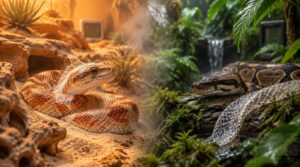
depend on where your snake comes from. A desert species and a rainforest species need very different conditions, and getting them wrong puts a clean shed at risk.
For a closer look at how much moisture each species needs and how to boost it safely, see this guide to humidity requirements during shedding.
Here’s how the ideal ranges break down for desert species, tropical species, and two popular pets, ball pythons and corn snakes.
Desert Species Humidity Range
The desert species you keep, like sand boas and rosy boas, need drier air than you’d expect. Aim for a humidity range of 30-40%, and never let humidity levels climb past 50%. In the wild, these snakes get periodic moisture from natural burrow humidity, which is why a single humid hide can mimic that microclimate without raising overall enclosure humidity.
Here’s how to keep it dialed in:
- Place a hygrometer mid-enclosure.
- Use sandy substrate with low moisture retention.
- Skip daily misting.
- Offer one humid hide.
- Check substrate moisture.
Tropical Species Humidity Range
Tropical species flip the script. Your rainforest snakes need 60–80% humidity to shed cleanly, so aim for the middle of those ideal humidity ranges.
Amazon Tree Boas and Green Tree Pythons want 80–90% during shed. Drop below 60% and risk retained eye caps. Climb past 90% and scale rot follows. Moisture retention and misting systems keep humidity levels steady.
Green tree python keepers can dial in a steady baseline and a safe shedding bump by following these green tree python humidity requirements.
Ball Pythons and Corn Snakes
Now for the beginner favorites. Ball pythons and corn snakes share the same safe snake shedding humidity levels: 40–60% normally, 65–70% during a shed.
- Check your digital hygrometer daily.
- Mist lightly once or twice a day.
- Keep a large water bowl filled.
- Build a humid hide on the cool side.
- Swap the moss every two weeks.
Consistency wins every shed.
How to Measure and Monitor Enclosure Humidity
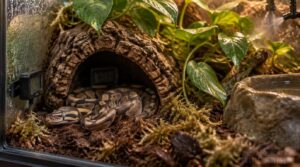
Knowing the right humidity levels means little if you can’t read them accurately.
Skip analog dials. Buy a reliable digital hygrometer accurate to within ±5%. Thermometer-hygrometer combos work well, but probes drift over time and hate water, so keep them dry.
Where you put the probe matters just as much:
- Substrate level, cool side: tuck it under a hide or tape it to the wall.
- Away from trouble: keep it clear of water bowls and misting nozzles.
- Second hygrometer: use one for ambient air and one inside your humid hide.
Monitor with a hygrometer daily or every other day. Watch trends, not single numbers. Humidity dips and climbs, so adjust your enclosure setup when readings drift from your species’ range.
If your readings keep drifting with the seasons, this guide to the ideal humidity for a snake enclosure can help you fine-tune your setup.
How to Raise and Maintain Humidity During a Shed
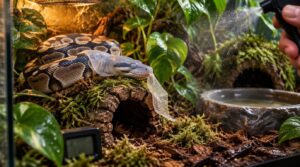
Once you know your humidity reading, you can fix it fast. Every enclosure needs a few key tools to raise and maintain humidity during a shed. Here’s how to set up each one so your snake sheds in one clean piece.
Misting, Humidifiers, and Water Bowls
Need a quick fix for dry shed? Pick your tool by how long you need it.
| Tool | Best Use |
|---|---|
| Hand mister | Short spikes |
| Humidifier | Steady output |
Mist walls and decor, never the snake. Light, frequent misting beats heavy soaking. Misting systems help, but timed humidifiers hold steadier humidity levels.
Set water bowls over heat, then confirm with a digital hygrometer.
Moisture-Retentive Substrates
Layering a moisture-retentive substrate steadies your humidity levels during a shed. Build it like this:
- Coconut fiber, 3–4 inches deep.
- Cypress mulch, 2–3 inches deep.
- Sphagnum moss over either base.
- Gravel under everything for drainage.
Match substrate depth to your species. Mist the mix, don’t flood it. Misting systems help, and a damp humidity chamber covers the rest during shedding.
Ventilation and Temperature Balance
Most tropical snakes need 60 to 80 percent humidity during a shed. Ventilation and drainage decide whether you hold it.
| Problem | Fix |
|---|---|
| Humidity drops fast | Cut vents |
| Heat escapes | Move heat source |
| Wet spots | Mist less |
Place lower inlets and upper outlets. Evaporating moisture then drives air exchange without much heat loss. Skip fans. Even low settings can crush humidity.
How to Build and Maintain a Humid Hide
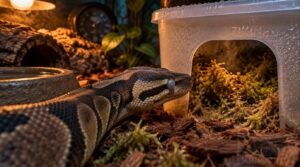
Picture a ball python with cloudy blue eyes, pacing the warm side of her tank. Her skin won’t peel cleanly, and the room’s dry air isn’t helping. A humid hide fixes that fast.
Grab a plastic tub with a locking lid. Cut a smooth-edged hole just wider than your snake’s body, then sand it down. Fill it with damp sphagnum moss for strong moisture retention.
- Place it on the warm end, never touching a heat source.
- Squeeze the moss until it’s damp, not soggy.
- Choose a snug humid hide so your snake feels secure.
- Check moisture daily and re-wet as needed.
- Swap the substrate every 1-2 weeks, or right away if you smell mold.
Expect soaking behavior inside; that’s normal.
Signs of Improper Humidity and Shedding Problems
Your snake can’t tell you its humidity levels are off, but its skin will.
Your snake can’t say when the humidity is wrong, but its shed will show you
Check for retained eye caps first. Cloudy, opaque spectacles after a shed aren’t the same as normal blue eyes before one. If they stay cloudy, call your vet. Vision and infection are on the line.
Next, scan the body. Dull skin, flaky patches, or papery scraps around the chin, neck folds, and tail tip mean a stuck shed. Check the tail tip closely. A dried ring of skin tightens like a rubber band and can cut off circulation.
Listen too. Built-up skin in the nostrils or vent can block airways, causing whistling or clicking. Soaking helps with mild cases, but breathing sounds need a vet fast.
Frequently Asked Questions (FAQs)
Is 70% humidity too high for a ball python?
A 70% reading isn’t a crisis.
Ball python humidity needs climb during sheds, so raised humidity before the blue phase is normal. Confirm hygrometer calibration, and watch your humidity levels for any humidity below
Are snakes out in 100 degree weather?
Midday heat is a locked door for snakes. Most hide at 100°F. They emerge at dusk.
Temperature control means shade, ventilation and drainage, fresh water. Hydration importance rises with seasonal adjustments to humidity levels.
What is a good humidity level for a snake?
Your snake’s ideal humidity depends on its species. Desert snakes like rosy boas need 20-40%. Ball pythons want 50-60%, while rainforest species need 70-90% humidity. Check your humidity levels daily with a digital hygrometer.
Is it okay to hold my corn snake while it’s shedding?
Your corn snake is a grumpy landlord during a shed, so skip handling during shedding. Cloudy eyes blur vision and raise stress.
Wait until the skin’s off, then check eyes and tail for stuck shed.
What is the ideal temperature range for a ball python’s habitat?
Ball pythons are tropical royalty, yet they demand a basement-level cool side. Build a temperature gradient: 80-85°F ambient warm side, 88-92°F basking surface, 72-80°F cool side. Verify with thermometerhygrometer combos and always run a thermostat.
How should I create a temperature gradient in my ball python’s enclosure?
Build your temperature gradient by putting a heat source on the warm side, aiming for an 88-92°F basking spot. Keep the cool side at 78-80°F.
Check both ends with thermometer-hygrometer combos, and watch humidity levels.
How important is maintaining proper humidity for ball pythons?
Humidity is your snake’s invisible safety net. Keep humidity levels at 50-60% for ball pythons, then raise them to 65-70% during the shedding cycle.
A humid hide helps, since hydration importance never takes days off.
Should I use UVB lighting in my ball python’s enclosure?
Is UVB lighting a must? No. Your ball python is nocturnal, so it’s fine without it.
Good enclosure management matters more: steady heat, shaded hides, and safe snake shedding humidity levels. Keep humidity levels consistent.
How can I ensure safe temperatures for my ball python’s enclosure?
Treat your enclosure like a living room with zones: 88-92°F warm side, 76-80°F cool side.
Temperature control for ball pythons starts with a thermostat on every heater. Enclosure management does the rest. Never exceed 95°F.
What happens if humidity drops too low?
Picture a sock two sizes too small. That’s retained shed. When humidity levels crash, stuck shed and dysecdysis follow, choking tail tips, clouding eye caps, and cutting off blood flow. Tighten your humidity control now.
Conclusion
Humidity is the oil in your snake’s shedding machinery. Too little and everything grinds; too much and it clogs. Know your species’ range, and safe snake shedding humidity levels become a habit instead of a guess.
Check your hygrometer daily. Mist before the blue phase, keep a humid hide stocked, and balance ventilation with heat. Watch for stuck eye caps and ragged skin, then adjust fast.
Nail it, and each shed leaves one clean skin.