This site is supported by our readers. We may earn a commission, at no cost to you, if you purchase through links.
Your snake’s scales should feel smooth, uniform, and supple—like glass stretched over muscle. When that texture shifts to something rough, pitted, or unnaturally loose, you’re witnessing a life-or-death warning sign that demands immediate attention.
Abnormal snake skin texture isn’t cosmetic; it’s a visible symptom of underlying crises ranging from severe dehydration and enclosure contamination to bacterial infections that can trigger fatal systemic sepsis within 72 hours. The problem escalates rapidly because reptilian skin, unlike mammalian tissue, cannot regenerate damaged scales between shedding cycles, meaning every day of delayed intervention allows pathological changes to become permanently embedded in the integumentary structure.
Understanding the specific patterns—whether you’re seeing raised granular patches indicative of fungal colonization or the paper-thin wrinkling that signals critical fluid loss—determines whether your intervention saves your snake or allows irreversible organ damage to take hold.
Table Of Contents
Key Takeaways
- Abnormal snake skin texture—whether rough patches, wrinkling, or granular areas—signals critical health crises like dehydration, bacterial infections, or fungal colonization that can progress to fatal septicemia within 72 hours if left untreated.
- Specific texture patterns provide diagnostic clues: raised scales indicate possible infection or trauma, wrinkled skin reveals severe dehydration compromising tissue elasticity, and chalky patches suggest environmental failures or pathogenic invasion requiring immediate intervention.
- Prevention centers on maintaining 40-60% humidity with daily monitoring, rigorous weekly enclosure sanitation using reptile-safe disinfectants, selecting smooth substrates and furniture to prevent scale injuries, and tracking shedding cycles every 4-8 weeks to catch dysecdysis early.
- Early detection through daily visual inspections separates reversible conditions from permanent integumentary damage—catching texture changes within 48 hours means the difference between simple husbandry corrections and life-threatening medical emergencies demanding veterinary intervention.
What is Abnormal Snake Skin Texture?
Abnormal snake skin texture isn’t just a cosmetic concern—it’s a critical diagnostic indicator that demands your immediate attention. When your snake’s scales deviate from their species-typical appearance, whether through raised patches, abnormal dryness, or irregular surface changes, you’re witnessing a potential life-or-death warning sign.
Blister disease, one of the most serious causes of these texture abnormalities, develops when bacteria invade damaged scales and create fluid-filled lesions that can rapidly spread across your snake’s body.
Abnormal snake skin texture is a critical life-or-death diagnostic indicator demanding immediate attention, not merely a cosmetic concern
Understanding what constitutes normal skin texture will determine whether you catch a developing health crisis early or face devastating complications including systemic infection, permanent scarring, or fatal septicemia.
Definition of Abnormal Skin Texture
Abnormal skin texture in your snake refers to surface irregularities that deviate from the firm, uniform scale health you’d expect—think rough patches, lifted scales, or wrinkled folds that feel different under your fingers.
These dermatological signs matter because texture analysis reveals critical information about keratin structure integrity, potential skin lesions, snake skin infection, abnormal molting, and overall snake skin health that demands your immediate attention.
Some of these textural changes in reptiles may be connected to underlying genetic factors similar to those found in congenital abnormalities in skin morphology.
Normal Vs. Abnormal Scale Appearance
Healthy scales lie flat, uniform across your snake’s body, with consistent color and a tight grip to underlying tissue—no slack, no wrinkling. Abnormal scale texture shows raised bumps, ridges, or irregular contour you can feel during gentle palpation.
In snake dermatology, texture analysis reveals scale variations that signal scale rot, snake skin infection, or abnormal shedding before visible skin health deteriorates into life-threatening abnormal molting or systemic disease.
Why Texture Changes Matter for Snake Health
Texture shifts function as an early health indicator, reflecting disease progression long before appetite declines or lethargy sets in.
Wrinkled scales telegraph hydration status failures, while rough patches expose bacterial colonization that can spiral into fatal snake skin disease. Abnormal scale texture predicts shedding impact—retained sheds compound dermatological issues, trapping moisture and bacteria against vulnerable tissue.
Your care decisions hinge on recognizing these warning signs immediately. For further insight, owners should understand key indicators of snake health to guarantee early detection and prevention.
Common Types of Skin Texture Anomalies
When your snake’s skin doesn’t feel or look right, you’re not imagining it—texture changes signal real problems that demand immediate attention.
These abnormalities fall into distinct patterns, each pointing toward specific underlying causes ranging from environmental failures to active infections. Recognizing which type of texture change you’re seeing is the critical first step in protecting your snake from potentially fatal complications.
Raised or Rough Scales
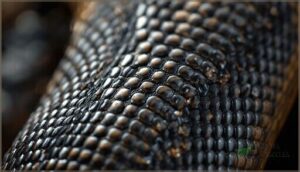
When your snake’s scales show a raised ridge or keel running down the center, you’re observing a critical aspect of scale morphology that can signal either normal keratin structure or early snake skin disease.
Rough texture across the dorsal midline demands immediate attention, particularly if it coincides with dullness or color shifts, because raised scales create microabrasions where scale infection and dermatological issues gain their first foothold, progressing rapidly toward scale rot if your humidity and sanitation protocols fail.
Wrinkled and Loose Skin
When loose snake skin drapes around your animal’s body like an oversized coat, you’re witnessing a life-or-death warning sign tied to skin elasticity, hydration levels, and collagen health.
Wrinkly snake skin appears when dehydration, aging factors, or environmental stress compromise dermal turgor, creating visible creases along the dorsal surface that signal scale texture breakdown requiring immediate humidity correction to prevent fatal systemic infection.
Dry, Powdery, or Dull Patches
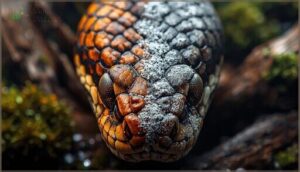
Dull patches resembling chalk dust signal dermatological issues compromising your snake’s skin barrier through dehydration effects, enclosure contamination, or pathogenic invasion. These flat-to-raised areas lose their natural sheen, often feeling velvety where healthy scales should gleam.
Understanding normal scale texture and color patterns helps you spot these chalky abnormalities early before they progress to serious skin infections.
Patchy shedding, scale damage, and persistent dullness despite humidity control improvements demand veterinary evaluation—bacterial or fungal skin lesions frequently masquerade as simple dryness, threatening your reptile skin condition if left unchecked.
Granular or Pitted Areas
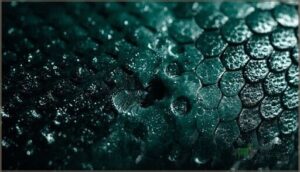
Bead-like bumps and shallow craters signal scale microstructure breakdown—granular patterns and pitted surfaces mark sites where infectious dermatitis, trauma, or dermatological issues have altered your snake’s protective barrier, compromising skin elasticity and scale texture integrity.
- Discrete raised bumps create rough patches across dorsal scales
- Shallow indentations cluster in matte-finish areas collecting debris
- Texture variations persist through shedding cycles, worsening without intervention
- Early detection prevents secondary snake skin infection from colonizing compromised sites
Causes of Abnormal Skin Texture in Snakes
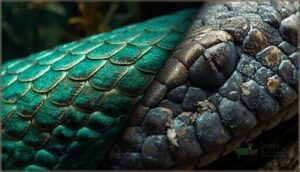
Your snake’s skin texture doesn’t deteriorate on its own—specific environmental failures, infectious agents, and physical stressors drive these pathological changes. Understanding the exact causes separating normal variation from disease progression is critical because early intervention prevents minor textural abnormalities from escalating into life-threatening systemic infections.
The four primary causative categories you must evaluate include humidity dysregulation, sanitation failures, infectious disease processes, and mechanical trauma to the integument.
Improper Humidity and Dehydration
Your enclosure’s moisture level dictates whether your snake’s skin thrives or degrades. Suboptimal humidity triggers dehydration, compromising skin elasticity and causing wrinkled, powdery textures that signal urgent intervention. Maintaining 50–70 percent relative humidity prevents shedding failure and promotes reptile hydration levels.
| Humidity Issue | Skin Response | Intervention Timeline |
|---|---|---|
| Below 40% for 3+ days | Dry, wrinkled dorsal scales | Rehydration methods within 24 hours |
| Inconsistent gradient | Uneven texture, dull patches | Humidity control adjustment immediately |
| Prolonged |
- https://talis-us.com/blogs/news/understanding-and-preventing-ball-python-scale-rot
- https://lbah.com/reptile/snake-skin-conditions/
- https://www.vettimes.co.uk/app/uploads/wp-post-to-pdf-enhanced-cache/1/snakes-husbandry-and-common-health-problems.pdf
- https://vcahospitals.com/know-your-pet/snakes-problems
- https://wpvet.com/exotic-pets-care-guides/reptile-shedding-ecdysis