This site is supported by our readers. We may earn a commission, at no cost to you, if you purchase through links.
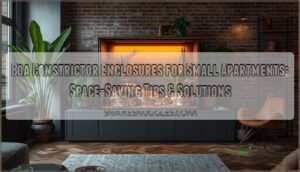
A full-grown boa can stretch across your living room, yet there’s good news for apartment dwellers—they don’t need a mansion-sized cage to thrive.
The real challenge comes from blending your snake’s needs with a city lifestyle, where every square foot matters and escape-proofing is a must. Creative enclosures, clever heating, and humidity tricks mean you can keep a healthy, happy boa without giving up valuable space or peace of mind.
From stacking cages to smart material choices, you’ll find practical ways to make room for these dazzling reptiles, no matter how tiny your apartment feels.
Table Of Contents
- Key Takeaways
- Choosing The Right Boa Constrictor Enclosure
- Best Materials for Compact Boa Enclosures
- Heating and Lighting Solutions in Apartments
- Maintaining Humidity and Security
- Tips for Setting Up and Maintaining Enclosures
- Frequently Asked Questions (FAQs)
- What is the minimum enclosure for a boa constrictor?
- Can a boa constrictor live in a 4x2x2?
- Are there boas that stay small?
- How big of a tank do I need for a boa constrictor?
- Are there quiet enclosure options for noise-sensitive households?
- How to manage enclosure odor in small apartments?
- What safety tips exist for children near enclosures?
- Can boas be housed near other pets safely?
- Are apartment restrictions common for pet snakes?
- Conclusion
Key Takeaways
- Modular and stackable cages are lifesavers for small apartments, letting you build upward and use your space wisely while still meeting your boa’s needs.
- PVC enclosures stand out by balancing durability, light weight, and insulation, making them ideal for both the boa’s comfort and your apartment layout.
- Proper heating, humidity, and secure, escape-proof doors are must-haves for a healthy, safe boa habitat in city living.
- Even in tight quarters, smart planning lets your enclosure grow and adapt as your boa does, ensuring care stays simple and effective.
Choosing The Right Boa Constrictor Enclosure
Finding the best home for your boa means weighing both your pet’s needs and your own space.
If you’re curious about what’s typical for baby boas and when to seek expert advice, this detailed guide on health milestones and signs to watch for in young boas is packed with practical tips.
With smart options out there, you really can keep your snake happy in a small apartment.
Let’s look at what works best in tighter spaces.
Minimum Size Requirements for Small Apartments
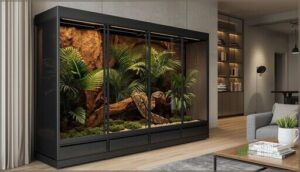
Space efficiency truly shapes your boa constrictor enclosure in any small apartment. Focus on minimum dimensions—usually 6 feet long by 2 feet deep for adult boas—that mimic your pet’s full snake length.
If your apartment layout is tight, a vertical design or clever use of enclosure depth ensures your boa’s habitat fits right in with your living space. For more details on how to achieve proper terrarium ventilation and size, consider expert recommendations suited to boa constrictors.
Modular and Stackable Cage Options
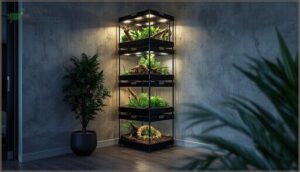
When you’re stretched for room but want your boa to thrive, modular and stackable cages are a game-changer. These cage configurations click together like building blocks—expandable, easy to assemble, and designed for true space saving.
Modular and stackable cages let you easily expand upward, saving space while giving your boa a thriving, flexible home
For added convenience and security, many systems use a metal stacking dowel connection to keep enclosures sturdily in place.
Stackable enclosures let you customize your setup and build vertically, bringing freedom and flexibility to boa care in a small apartment.
Space-Saving Designs for Urban Living
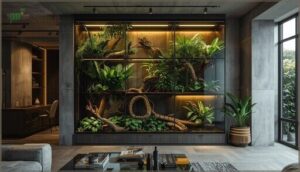
For city dwellers, it’s remarkable how a well-placed reptile enclosure design can change the flow of a room. Compact housing options like Custom Cages bring urban reptile care within reach, combining space efficiency with smart features.
Stackable enclosures and modular, expandable setups hug long walls or corners, offering simple apartment solutions—even letting you grow upward with vertical designs when floorspace gets tight.
Best Materials for Compact Boa Enclosures
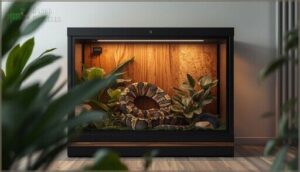
Choosing the right material for your boa’s enclosure makes a big difference, especially in tight spaces. Each option comes with its own strengths and challenges.
For extra tips on choosing safe and comfortable flooring, check out this guide to the best boa substrate options for beginners boa constrictor habitat essentials.
Let’s take a look at what you’ll find, so you can pick what fits your space and your boa best.
Glass Vs. PVC Vs. Wood Comparison
Curious which enclosure works best for your boa? Glass enclosures offer exceptional viewing but can stress shy snakes, especially in bustling apartments.
PVC shines for thermal control and visual security, giving you more peace of mind. Wood melamine blends noise reduction with cozy, opaque walls. Comparing these materials highlights how reptile enclosure design impacts both your snake’s comfort and your apartment’s vibe.
Durability and Weight Considerations
Toughness matters. Choosing enclosure materials that balance light weight with serious structural integrity can spare you both backaches and stress.
Most modular or stackable boa constrictor enclosures, like modern PVC builds, are easy to move yet sturdy enough for heavy décor. Always check load capacity and hardware durability—good reptile enclosure design means your setup stands the test of time.
Humidity and Insulation Needs
Humidity control shapes the comfort and health of your boa—especially in a compact apartment.
Materials matter: glass leaks warmth and dries fast, while PVC holds moisture and helps cut down heat loss, making moisture management a breeze.
Smart ventilation systems, paired with the right insulation materials, let you maintain steady temperature gradients and stable humidity, optimizing reptile enclosure design for modern living.
Heating and Lighting Solutions in Apartments
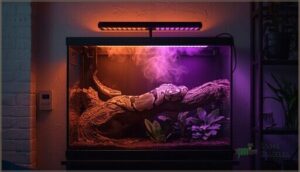
Keeping your boa comfortable in an apartment starts with smart heating and lighting choices. The right setup keeps your snake both healthy and secure, no matter how much space you have.
Here’s a look at some safe options you can use.
Safe Heat Sources for Small Spaces
In the context of Reptile Care and Housing in apartments, reliable Heat Source Safety is non-negotiable. For your Boa Constrictor Enclosure, these tips make all the difference:
- Always use a thermostat control.
- Choose ceramic emitters for gentle, night heat.
- Try radiant panels for quiet, steady warmth.
- Avoid stacking heat mats.
- Prioritize fire prevention—check cords often.
Creating Proper Temperature Gradients
When you picture Temperature Control in your Boa Constrictor Habitat, think of a gentle sunrise on one end and a cool, shady retreat on the other.
This Heat Gradient lets your boa self-regulate, cruising between a warm basking spot (86–90°F) and a cooler zone. Careful Gradient Layout and vigilant Thermostat Settings keep Reptile Care and Housing effortless—even in tight apartments.
Lighting Options for Healthy Boas
Ever noticed how the right light transforms a room? Your boa feels the same way. Thoughtful UVB Lighting and visible lighting are essential to a thriving reptile environment, not just to see, but to live well.
In boa constrictor enclosures, proper photoperiod control and LED safety help support natural rhythms and strong reptile care and housing. To achieve this, consider the following:
- UVB Lighting aids bone health and natural behavior
- Keep lights on timers for consistent photoperiod control
- Use LED bulbs for safe visible lighting, but never as heat sources
- Provide total darkness at night—skip “moonlight” bulbs for true rest
- Mount all fixtures outside the enclosure for maximum boa safety
Maintaining Humidity and Security
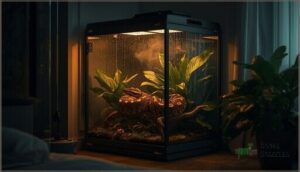
Keeping your boa healthy in a small apartment means staying on top of humidity and making sure the enclosure is escape-proof.
The right setup helps your snake thrive and gives you peace of mind. Here are the best ways to handle both humidity and security in your space.
Easy Humidity Control Methods
Trying to manage humidity maintenance in Boa Constrictor Enclosures is like balancing rain in a bottle—humidity maintenance is all about smart tools and small habits.
Humidity gauges and regular hygrometer calibration guarantee snake habitats stay just right. Add a humid hide box, misting systems for fine evaporation control, and place water bowls on warm sides for steady temperature and humidity control in any reptile housing.
Preventing Escapes in Apartment Settings
Even in small apartments, escape prevention starts with front-opening doors that lock—think keyed cam locks or clever child-proof latches.
Snake proofing means checking for escape routes, sealing gaps with weatherstripping, and ensuring stackable cages sit squarely.
Regular door checks and keeping ventilation control tight help guarantee boa constrictor enclosures offer real snake safety and security. If they do slip out, act fast—emergency response matters!
Choosing The Right Water Bowl and Substrate
Locked doors are just the start—secure reptile care depends on smart choices inside the cage, too. In tight apartments, snake habitats work best with a deep substrate for burrowing and moisture, plus a water bowl sized for soaking but heavy enough to stay put.
Thoughtful bowl placement and diverse substrate types help regulate humidity and boost comfort in boa constrictor enclosures.
Tips for Setting Up and Maintaining Enclosures
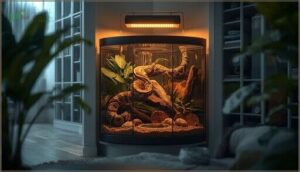
Getting your boa’s home set up right doesn’t have to feel overwhelming, even in a small space. A little planning now will make things easier down the road.
Here are some simple ways to keep your enclosure easy to assemble, care for, and adjust as your boa grows.
Easy Assembly and Relocation in Apartments
When you need to move or build a setup quickly, Modular Designs and Portable Enclosures are lifesavers.
Most modern Boa Constrictor Enclosures come flat-packed, easy to assemble with just an Allen wrench.
Expandable or stackable cages boost Space Efficiency, letting you fit your boa’s home neatly into apartment logistics—ideal Relocation Tips for anyone shuffling rooms or moving units.
Cleaning and Maintenance in Tight Spaces
With Boa Constrictor Enclosures tucked close in small apartments, daily cleaning is your best Odor Control secret. Many folks keep a space-efficient caddy handy for quick wipe-downs, switching out liners or tackling waste in a flash.
Well-placed Ventilation keeps humidity balanced, while modular or stackable cages make every bit of maintenance feel manageable—even when you’re short on elbow room.
Adapting Enclosures as Your Boa Grows
Adaptability defines your journey with boa constrictor enclosures. As your snake grows, so do its needs, prompting timely Growth Stage Planning and Enclosure Upgrades.
Keep things simple by relying on expandable enclosures and modular cages that flex with your boa’s development:
- Expandable enclosures for every stage
- Customizable cages for space optimization
- Modular cages simplify upgrades
- Hide options support changing snake behavior
- Arrange habitats for easy adaptation
Frequently Asked Questions (FAQs)
What is the minimum enclosure for a boa constrictor?
It’s oddly ironic that such a powerful snake can be content in a modest space—yet the minimum enclosure size for a boa constrictor hinges on both snake growth and essential needs: floor dimensions, climbing space, and humidity levels.
Can a boa constrictor live in a 4x2x2?
A 4x2x2 snake enclosure works as a practical “grow-out” for young boas and certain smaller adults.
But once your red tail boa reaches 6 feet, most care guides recommend upgrading to larger boa constrictor cages.
Are there boas that stay small?
Like a secret garden tucked away, some boas stay small—think Rosy boas, Rubber boas, and certain Dwarf Boa Species.
Thanks to Boa Size Genetics, these Miniature Boa Breeds fit perfectly with Compact Enclosure Tips and Small Boa Care routines.
How big of a tank do I need for a boa constrictor?
You’ll want your snake enclosure to at least match your boa’s body length; most adult boas require a minimum of 6’L x 3’W x 3’H.
Prioritize animal welfare—bigger, well-designed boa constrictor cages always benefit their habitat and health.
Are there quiet enclosure options for noise-sensitive households?
Much like thick carpeting muffles footsteps in a library, quiet Boa Constrictor Enclosures use solid PVC and acoustic panels for true Noise Reduction.
These Quiet Materials, plus soft-close Front Opening Doors, add peace to your snake care routine.
How to manage enclosure odor in small apartments?
Odor control methods for reptile enclosures start with daily spot cleaning and bioactive substrates that break down waste.
Pair those with thoughtful ventilation systems, air purification, humidity management, and secure enclosure decor to keep snake care fresh and comfortable.
What safety tips exist for children near enclosures?
Imagine a curious child facing a reptile enclosure—what stands between them and danger? Child supervision, secure locks, and safety barriers are your first line of escape prevention.
Teach kids “look, don’t touch” to protect both animal safety and child security.
Can boas be housed near other pets safely?
Boas can coexist safely with other pets when their Reptile Enclosure has secure locks and is placed out of reach.
Pet Safety Tips include closing doors during handling, strict Snake Escape Prevention, and proper hygiene—especially in Multi Pet Households.
Are apartment restrictions common for pet snakes?
It’s almost comical how many apartment policies throw up roadblocks for pet snake lovers. Rental restrictions, exotic pet bans, and strict snake ownership rules often appear, making Pet Snake Laws a true maze for anyone setting up reptile enclosures.
Conclusion
Much like a key unlocking a secret garden, the right boa constrictor enclosure transforms a cramped apartment into a thriving habitat.
Each thoughtful detail—a carefully chosen material, a clever system, an escape-proof design—creates harmony between city living and your snake’s wild spirit.
When you blend creativity with understanding, you foster not just safety and health, but a lively sense of adventure in your home. Your apartment becomes proof: even small spaces can hold something remarkable.
- https://reptifiles.com/boa-constrictor-care/boa-constrictor-enclosure-size/
- https://www.petmd.com/reptile/boa-constrictor-care-sheet
- http://www.exoticpetvet.com/boa-constrictor-care.html
- https://www.thebiodude.com/blogs/snake-caresheets/boa-constrictor-care-guide-and-bioactive-terrarium-maintenance
- https://www.zenhabitats.com/blogs/reptile-care-sheets-resources/3-simple-tips-on-keeping-your-pet-snake-secure-in-a-zen-habitats-enclosure