This site is supported by our readers. We may earn a commission, at no cost to you, if you purchase through links.
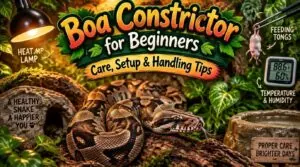
Boa constrictors have a reputation for being intimidating, but a well-raised captive-bred juvenile is one of the most handleable large snakes available to new keepers. They tolerate interaction patiently, adapt to routine, and rarely show the defensive aggression that surprises beginners working with other large species.
That said, boa constrictor for beginners is not a beginner-simple topic. These snakes reach six to eight feet, live over twenty years, and need precise heat gradients before they even arrive home.
Get the setup and habits right from the start, and you’ll build a rewarding relationship with a genuinely impressive animal.
Table Of Contents
- Key Takeaways
- Is a Boa Constrictor Right for Beginners?
- Choose a Healthy, Beginner-Friendly Boa Constrictor
- Set Up a Secure Boa Constrictor Enclosure
- Feed and Handle Your Boa Safely
- Keep Your Boa Healthy With Routine Care
- Frequently Asked Questions (FAQs)
- Is a boa constrictor a good beginner snake?
- Which boa constrictor is best for a beginner?
- What’s the most beginner friendly snake?
- How big should a 3 year old boa be?
- Are boas high maintenance?
- What are the friendliest boas?
- Do boa constrictors like to be handled?
- What are the different types of boa constrictors?
- Are boa constrictors a good pet snake?
- Can boa constrictors be handled?
- Conclusion
Key Takeaways
- Captive-bred juvenile boas are among the most manageable large snakes for beginners, but their 20-plus year lifespan and six-to-eight foot adult size demand honest long-term commitment before you bring one home.
- Getting the enclosure right before your boa arrives is non-negotiable — a stable temperature gradient (28–34°C), humidity held at 60–70%, and two snug hides on opposite ends of the enclosure prevent the majority of beginner mistakes.
- Match prey to no more than 1.5–2 times your boa’s widest girth, feed juveniles every 5–7 days and adults every 7–21 days, and always wait at least 48 hours after a meal before handling to avoid regurgitation and stress.
- Daily observation during handling sessions is your most effective health tool — changes in posture, breathing, skin condition, or body weight typically signal problems well before formal symptoms appear.
Is a Boa Constrictor Right for Beginners?
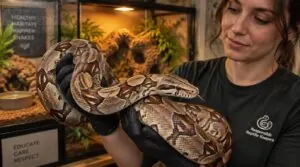
Among large pet snakes, boa constrictors are one of the more beginner-friendly choices, largely because of their calm, adaptable temperament when raised properly in captivity. They tolerate regular handling better than many species their size. A young, captive-bred individual between two and four feet is a realistic and manageable starting point if you’re new to snake keeping.
Their naturally curious and patient disposition is well-documented in guides like this boa constrictor temperament overview for beginners, which reinforces why the species earns its reputation as a forgiving first snake.
But the difficulty level isn’t trivial. Boas grow to six to eight feet and live twenty-plus years, making this a long-term commitment that deserves honest self-reflection. You’ll need a secure enclosure with proper heat gradients set up before your boa arrives. If you can commit to consistent care and gradual handling and temperament work, a boa is a genuinely rewarding first large snake.
Boas live twenty-plus years, so honest self-reflection now prevents regret later
Choose a Healthy, Beginner-Friendly Boa Constrictor
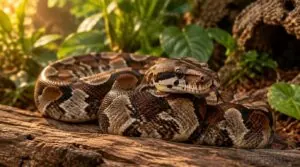
Once you’ve decided a boa fits your lifestyle, the next step is choosing the right individual. Aim for a captive-bred juvenile in the three-to-six foot range. Captive-bred snakes handle stress better, carry fewer parasites, and show more predictable temperament from the start.
Before you commit, look for these indicators of a healthy animal:
- Clear, alert eyes with no cloudiness between sheds
- Rounded body condition, not a spine that’s visibly protruding
- Calm, deliberate movement when gently handled
Growth rate and temperament vary by individual, so spend at least fifteen minutes watching the snake in its enclosure before you buy. A boa that moves steadily without constant gaping or thrashing is less likely to develop common health issues tied to chronic stress.
Pay attention to feeding behavior too, since a calm, food-secure snake is often a healthier one — these safe live prey feeding practices for snakes can help you avoid unnecessary stress responses long before they become a problem.
Set Up a Secure Boa Constrictor Enclosure
Getting your boa’s enclosure right from the start prevents most beginner mistakes. A proper setup covers space, hides, and enrichment along with precise heat and humidity control. Here’s what you need to build an environment your boa can actually thrive in.
Space, Hides, and Enrichment
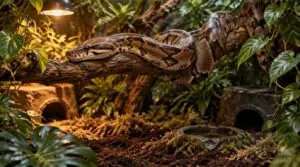
Picture your boa draped across a branch, fully at ease.
| Element | Setup Tip |
|---|---|
| Juvenile enclosure | 18×18×12 in. minimum |
| Adult enclosure | 48×24×24 in. minimum |
| Hide boxes | Two snug, opaque hides |
| Climbing branches | Durable, non-toxic wood |
| Enrichment | Rotate decor monthly |
You’ll place one hide near the warm end, another on the cool side. Line a moist hide with substrate. Vary branches weekly.
For more ideas on fitting all of this into a tight setup, ball python kits for small spaces can help you choose hides and branches that won’t overwhelm a compact enclosure.
Heat, Humidity, and Monitoring
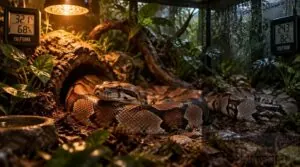
Once your hides are placed, heat is next. Aim for a temperature gradient of 28-32°C ambient, with a basking hotspot at 32-34°C. Run your ceramic heat emitter through a thermostat.
Keep humidity levels at 60-70% for juveniles, 50-60% for adults. Place two digital probes, one near the heat source, one in the cool zone, and check them morning and evening.
Feed and Handle Your Boa Safely
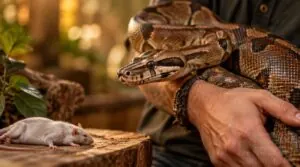
Feeding and handling are two areas where consistency matters most. Get these right, and your boa will be calmer, healthier, and easier to work with over time. The following covers what you need to know about prey sizing and feeding frequency, as well as how to build trust through safe, low-stress handling.
Feeding Schedule and Prey Size
Your boa’s feeding schedule depends on age: juveniles eat every 5-7 days, adults every 7-21 days. Adjust feeding frequency downward in cooler months when metabolism slows.
Get prey sizing right and you’ll avoid most common digestion problems. Match prey to no more than 1.5-2 times your boa’s widest girth. Any larger prey size risks regurgitation and a prolonged digestion period.
Safe Handling and Trust Building
A calm routine is the foundation of stress-free handling. Watch your boa’s body language closely before and during each session:
- Don’t approach from directly overhead
- Support the full body, not just the tail
- Avoid handling after meals for at least 48 hours
- Keep sessions brief until tolerance builds
Stress reduction in captivity starts with predictability. Repetition builds trust over time.
Keep Your Boa Healthy With Routine Care
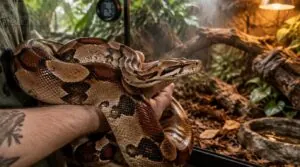
Most boa health problems don’t appear overnight. They build gradually, which is why consistent daily observation is your best diagnostic tool.
Each handling session is a chance to assess your animal. Check posture, alertness, and breathing. Inspect the mouth lining, eyes, and skin for retained shed or unusual patches. Stuck shed clusters first around the eye caps and tail tip. If you spot retained shed around the eye caps or tail tip, a reptile shed aid spray or warm soak can loosen stubborn pieces safely without tearing delicate skin.
Also review your enclosure setup regularly. Confirm the temperature gradient is stable, that humidity levels are where they should be, and that the substrate isn’t sitting wet. Adjust your feeding schedule if body condition shifts, since weight loss often signals a problem before other symptoms appear.
See a reptile vet at least once a year, even when everything looks fine.
Frequently Asked Questions (FAQs)
Is a boa constrictor a good beginner snake?
Wrapped slowly around your forearm with calm, deliberate purpose, it’s not a snake for the unprepared. A boa constrictor suits beginners who commit to consistent handling, a proper enclosure setup, and a stable daily routine.
Which boa constrictor is best for a beginner?
Ironically, the ‘best’ choice isn’t the most impressive specimen. A captive-born Boa constrictor imperator juvenile, docile and feeder-trained, suits you best. Skip temperamental bloodlines and choose instead a calm, healthy individual from a reputable breeder.
What’s the most beginner friendly snake?
What makes a snake beginner-friendly? Predictable temperament, a manageable enclosure setup, and real tolerance for regular handling. The boa constrictor checks all those boxes, and it’s genuinely easy to maintain on a consistent feeding schedule.
How big should a 3 year old boa be?
Surprised by your boa constrictor’s size? At three, expect 5 to 5 feet. Female boa size runs larger than male boa size, but both are 60–80% of adult size, so keep growth rate tracking consistent.
Are boas high maintenance?
Boas aren’t low-effort pets. They need a precise temperature gradient, consistent humidity, and a spacious enclosure. Add regular feeding schedules and a lifespan exceeding 20 years, and you’re signing up for serious, long-term commitment.
What are the friendliest boas?
Colombian red-tail boa constrictors rank among the friendliest beginner snakes. With consistent proper handling, they stay calm, curious, and rarely defensive. Their adaptable temperament and manageable size make them a natural first redtail boa choice.
Do boa constrictors like to be handled?
They won’t actively seek you out, but with regular, brief handling sessions, most boas learn to stay calm and read your movements as safe and predictable. That’s the closest thing to ‘liking’ it you’ll get.
What are the different types of boa constrictors?
There are two main types you’ll encounter: Boa constrictor constrictor, a large South American species, and Boa constrictor imperator, a smaller, calmer Central American boa. Both offer morph variations widely available in the pet trade.
Are boa constrictors a good pet snake?
Captive boas can live 25 years or more, and that lifespan alone signals something: a boa constrictor rewards patience. With proper handling and solid enclosure setup, their calm beginner-friendly temperament makes them genuinely rewarding pets.
Can boa constrictors be handled?
Most captive boas acclimate within one to two weeks. Support their full body with both hands, stay calm, and read body language cues like hissing or tightening. Short, regular sessions build the trust you need.
Conclusion
Most keepers notice that their boa’s feeding response becomes reliably predictable within the first three months, and that’s exactly when real confidence starts to build. A boa constrictor for beginners rewards steady patience more than instinct. Set the habitat up correctly, feed on schedule, and handle your snake consistently. The animal will meet you halfway.
Over twenty years, that patience compounds into something rare. You won’t just own a large snake. You’ll genuinely understand one.