This site is supported by our readers. We may earn a commission, at no cost to you, if you purchase through links.
You notice clear fluid forming at your ball python’s nostrils during handling, or worse, frothy bubbles accumulating around its mouth after it hisses. While bubbles coming from snake mouth openings can stem from harmless defensive behaviors, they often signal respiratory infections that demand immediate attention.
Healthy snakes occasionally expel air forcefully when threatened, producing temporary bubbles that dissipate quickly. However, persistent bubble formation accompanied by mucus discharge, lethargy, or open-mouth breathing indicates bacterial, viral, or fungal infections compromising your snake’s respiratory tract. Understanding the difference between normal exhalations and pathological symptoms can mean the difference between a quick environmental adjustment and a life-threatening medical emergency.
Table Of Contents
- Key Takeaways
- What Causes Bubbles From a Snake’s Mouth?
- What Do Snake Mouth Bubbles Look Like?
- Are Bubbles From a Snake’s Mouth Dangerous?
- Respiratory Infections and Snake Bubble Blowing
- What to Do if Your Snake Blows Bubbles
- When to Seek Veterinary Care
- Preventing Bubble Blowing in Pet Snakes
- Special Considerations for Ball Pythons
- Frequently Asked Questions (FAQs)
- How to tell if a snake has mouth rot?
- What are the early signs of mouth rot?
- Can snakes blow bubbles while swimming?
- Do all snake species blow bubbles equally?
- Are bubbles different between venomous and non-venomous snakes?
- Can diet changes trigger bubble blowing behavior?
- Do baby snakes blow bubbles more frequently?
- Conclusion
Key Takeaways
- Bubbles at your snake’s mouth can signal harmless defensive reactions during handling or stress, but persistent bubbling paired with mucus discharge, lethargy, or open-mouth breathing indicates bacterial, viral, or fungal respiratory infections requiring immediate veterinary intervention.
- Maintaining precise environmental conditions, specifically 50-60% humidity and proper temperature gradients between 78-88°F on the warm side, prevents most respiratory problems and bubble-blowing episodes in captive snakes.
- Ball pythons show heightened susceptibility to respiratory issues when humidity drops below 50%, making them particularly vulnerable to infections that manifest as bubble production alongside wheezing, nasal discharge, and reduced appetite.
- Early recognition of warning signs like persistent bubbles lasting beyond three days, foul-smelling discharge, or behavioral changes such as open-mouth breathing can mean the difference between simple environmental adjustments and life-threatening medical emergencies.
What Causes Bubbles From a Snake’s Mouth?
When you spot bubbles forming at your snake’s mouth, you’re witnessing a sign that demands your attention and understanding. Several distinct factors trigger this behavior, ranging from harmless defensive responses to serious health complications that require immediate intervention.
If you’re also noticing mucus discharge from your snake’s nose, that’s often another red flag pointing to respiratory trouble that shouldn’t be ignored.
The causes fall into four primary categories, each with unique characteristics and implications for your snake’s wellbeing.
Defense Mechanisms
When your snake perceives a threat, defensive behavior kicks in—bubbles become part of its survival toolkit. This defensive mechanism mirrors psychological processes like denial, where the snake avoids confronting danger directly by appearing larger or more unpredictable.
Snake posturing paired with bubble blowing acts as warning signals, communicating discomfort through visible animal defense mechanisms that demand respect for its stress response and boundaries.
Stress and Fright
Your snake’s bubble blowing often stems from fear responses triggered by sudden movements, loud noises, or unfamiliar handling. Stress triggers increase heart rate and breathing, prompting forceful exhalations that produce bubbles—a visible stress response intertwined with defensive mechanism behaviors.
Recognizing fright behaviors helps you decode snake anxiety.
- Rapid tongue flicking paired with bubble production signals heightened alertness
- Coiled posture alongside bubbles warns you to respect its boundaries
- Persistent bubbling without calming techniques may mask early respiratory infection signs
Shedding and Humidity Issues
Humidity control during shedding skin determines whether your snake completes molts smoothly or struggles with partial sheds that trigger bubble blowing. Maintaining 50 to 60 percent relative humidity promotes skin health, while levels below 40 percent cause brittle scales and air pockets that force bubbles from the glottis during forceful exhalations.
| Humidity Issue | Impact on Snake Hydration |
|---|---|
| Too low (under 40%) | Brittle shed, difficulty completing molts |
| Too high (above 60%) | Mold growth, skin maceration |
| Fluctuating levels | Disrupted epidermal hydration |
| Proper range (50-60%) | Successful shed, environmental balance |
Monitor enclosure humidity with a digital hygrometer during blue stage to prevent shedding tips complications and respiratory stress.
Respiratory Infections
Beyond environmental factors, respiratory infections in snakes trigger persistent bubble blowing when bacteria, viruses, mycoplasma, or fungi colonize airways and produce excess mucus.
You’ll recognize snake pneumonia through these signs:
- Open-mouth breathing paired with audible wheezing
- Thick mucus accumulation around the glottis
- Lethargy combined with reduced feeding response
Airway diseases progress rapidly without reptile medicine intervention, making infection control critical for snake health and wellness.
What Do Snake Mouth Bubbles Look Like?
Recognizing what snake mouth bubbles actually look like can help you determine whether your snake needs immediate attention or is simply exhibiting normal behavior.
The appearance of these bubbles varies substantially depending on the underlying cause, from harmless clear bubbles to concerning mucus-filled foam. You’ll want to pay attention to three key characteristics: the physical size and appearance of the bubbles, their color and texture, and any behaviors your snake displays while blowing them.
Bubble Size and Appearance

You might spot anything from tiny, barely visible specks to larger, glossier formations when your snake exhales forcefully. Bubble size reveals plenty about what’s happening beneath the scales, particularly regarding respiratory disease and overall snake health and wellness.
Small bubbles paired with lethargy or loss of appetite often point to early-stage respiratory infection that needs prompt attention.
| Bubble Type | What You’re Seeing |
|---|---|
| Fine foam patterns | Submicron to millimeter-sized clusters with high surface tension, often shimmering under light |
| Large individual bubbles | Several millimeters in diameter, rising quickly with clear visual clarity due to increased gas exchange |
| Mixed clusters | Variable sizes that may coalesce, indicating active bubble formation and potential respiratory infections in snakes |
Bubble blowing creates distinct visual textures that shift with environmental factors and your snake’s respiratory condition. Understanding the significance of bubble size distribution is also vital in related.
Color and Consistency
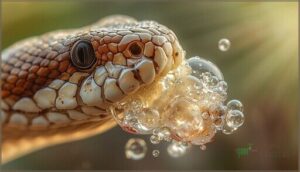
Clear to pale yellow bubbles usually emerge from healthy mouths, reflecting normal saliva composition. When you notice cloudy or opaque formations, mucous membranes may be producing excess secretions due to respiratory infections in snakes.
Bubble color variations from bright red to brown signal potential blood presence, while foam formation factors like thick, stringy mucus texture analysis points toward respiratory disease requiring immediate attention.
Associated Behaviors
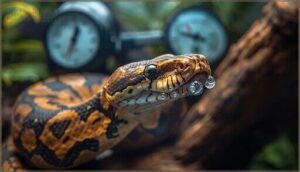
When your snake blows bubbles, watch for accompanying body language that reveals stress responses or respiratory illness. Quick head movements, tail coiling, and body flattening indicate defensive reactions tied to environmental cues, while open-mouth breathing with chin lifting signals potential snake health issues requiring assessment.
- Hissing or low vocalizations during bubble emission suggest threat perception
- Sudden stillness or freezing before bubble bursts reflects heightened alertness
- Labored breathing paired with bubble trails indicates possible respiratory distress
- Exploratory movements with bubbles may represent normal reptile behavior and habitat enrichment
Are Bubbles From a Snake’s Mouth Dangerous?
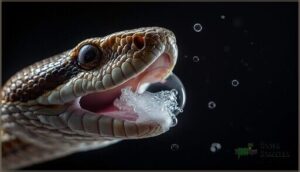
The danger level of snake mouth bubbles depends entirely on the context and accompanying symptoms.
A single bubble during handling or environmental changes isn’t usually cause for alarm, but persistent bubbling combined with behavioral shifts can signal serious respiratory illness.
Understanding when bubbles indicate normal behavior versus medical emergencies will help you protect both your snake’s health and your own safety.
When It’s Normal
You might spot your snake blows bubbles during normal breathing cycles, especially after vigorous activity or gentle jaw movements while yawning. Mild secretions can mix with high humidity levels in the enclosure, creating temporary froth that clears within seconds.
The shedding process also triggers brief bubble blowing as moisture balance adjusts, so don’t panic if this reptile behavior appears occasionally without other symptoms.
Warning Signs of Illness
Persistent bubbles signal respiratory illness that demands your attention, especially when multiple symptoms cluster together. Health monitoring becomes critical if you notice:
- Gurgling sounds during breathing or frequent sneezing alongside bubbles
- Open-mouth breathing with visible mucus accumulation around the glottis
- Reduced appetite combined with lethargy lasting more than 48 hours
- Persistent nasal discharge or wheezing that worsens over several days
Respiratory problems in snakes escalate quickly, so veterinary care shouldn’t wait.
Potential Risks for Owners
While your snake’s bubbles rarely pose direct Owner Safety Tips threats, they can signal contagious Respiratory Illness requiring Animal Health awareness. Understanding Health Risks helps with Bubble Prevention during Snake Handling.
| Risk Category | Concern Level | Owner Precautions |
|---|---|---|
| Airborne droplets | Low for most | Wash hands after handling |
| Contagious spread | Moderate (multi-snake homes) | Isolate affected individuals |
| Underlying pneumonia | High for snake | Seek Veterinary Care for Reptiles |
Monitor Snake Behavior and Health closely, as Respiratory Problems in Snakes escalate without intervention.
Respiratory Infections and Snake Bubble Blowing
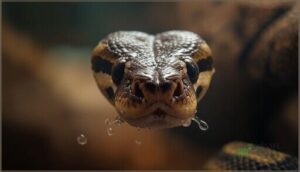
Respiratory infections represent one of the most serious causes of bubble blowing in snakes, often requiring immediate veterinary intervention to prevent life-threatening complications.
These infections arise from bacteria, viruses, fungi, mycoplasma, and parasites that compromise your snake’s respiratory system and produce characteristic mucus-filled bubbles.
Understanding the infectious agents, recognizing symptoms beyond bubble production, and knowing the potential complications will help you respond effectively when your snake shows signs of respiratory distress.
Common Infectious Agents
Your snake’s respiratory illness can stem from several infectious agents that demand attention. Bacterial infections, particularly from organisms like Mycoplasma, frequently trigger bubble production alongside breathing difficulties.
However, veterinary medicine for reptiles recognizes multiple culprits:
- Bacterial infections causing mucus accumulation in airways
- Viral outbreaks compromising respiratory function
- Fungal diseases like Aspergillus targeting lung tissue
- Parasite control failures leading to respiratory complications
- Zoonotic diseases requiring careful disease diagnosis and treatment
Early identification reduces zoonotic risks to you.
Symptoms Beyond Bubble Blowing
Respiratory illness doesn’t announce itself with bubbles alone. Watch for open-mouth breathing, wheezing sounds from the trachea, and nasal discharge that signals compromised airways.
Your snake may show behavioral changes like lethargy, reduced appetite causing feeding issues, or abnormal posturing with its head elevated. Skin lesions near the nostrils occasionally appear.
Environmental factors like poor humidity often worsen these respiratory signs, demanding your immediate attention.
Complications if Left Untreated
Ignoring these symptoms invites respiratory failure. Untreated respiratory infections escalate to pneumonia, airway obstruction, and even respiratory failure as inflamed tissues narrow essential passages.
Systemic infection spreads through the bloodstream, potentially triggering septicemia that compromises multiple organs. Chronic illness weakens your snake’s immune defenses, shortens lifespan, and transforms manageable conditions into veterinary emergencies requiring intensive hospitalization and supportive therapies that dramatically exceed early intervention costs.
Unchecked infection can overwhelm your snake’s body, turning a treatable illness into a life-threatening crisis that demands urgent, intensive care
What to Do if Your Snake Blows Bubbles
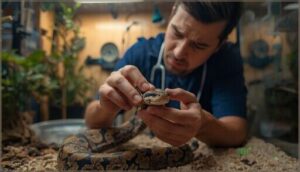
When you notice bubbles coming from your snake’s mouth, your response depends on whether this is an isolated event or part of a pattern. A single bubble during handling or shedding doesn’t usually require intervention, but repeated bubble blowing with other symptoms demands immediate action.
The steps you take will focus on three key areas: evaluating your snake’s immediate condition, adjusting its environment, and tracking symptoms over time.
Immediate Steps for Pet Owners
When you spot bubbles forming at your snake’s mouth, quick action can prevent a minor concern from escalating into a veterinary crisis. Start by documenting the date and time of bubble appearance in a health log, noting any accompanying coughing or wheezing sounds.
Emergency planning for pet snake ownership means keeping your reptile veterinarian’s contact information accessible alongside a basic snake first aid kit containing nonlatex gloves and a digital thermometer for immediate medical checks and crisis management.
Environmental Adjustments
After documenting bubble formation, you’ll need to recalibrate your enclosure’s microclimate to support respiratory health and proper snake care.
Temperature control requires maintaining daytime ranges of 82 to 88 Fahrenheit with a thermostat-regulated heat source, while humidity management demands adjusting levels to 50 to 60 percent using a hygrometer placed at snake level.
Enclosure design improvements include adding submarine-style hides at both thermal gradient ends, ensuring air quality monitoring through weekly disinfection, and establishing consistent lighting systems with 12-hour photoperiods for ideal reptile care and animal health.
Monitoring and Record Keeping
Systematic tracking reveals patterns that transform scattered observations into actionable insights for reptile health and disease prevention.
Your daily log management should include:
- Date, time, and bubble event details with behavioral context for trend identification
- Environmental readings (temperature, humidity) linked to each occurrence for data analysis
- Weight measurements and shedding dates as part of thorough reptile care and management
- Veterinary medicine consultations with diagnostic results for compliance tracking
Record templates guarantee you capture consistent information about snake behavior, enabling veterinarians to diagnose respiratory issues faster and recommend targeted treatments for animal health.
When to Seek Veterinary Care
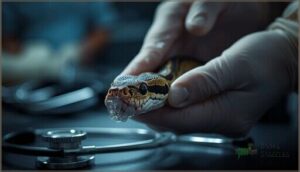
You need to act quickly when bubble blowing signals something more serious than a brief moment of stress. Knowing when your snake’s condition requires professional intervention can mean the difference between a simple treatment and a life-threatening situation.
The following guidelines will help you recognize the critical warning signs that demand immediate veterinary attention.
Persistent or Worsening Symptoms
You should seek veterinary intervention when symptom escalation becomes clear—respiratory decline marked by increased mouth breathing, chronic infections producing foul-smelling discharge, or health deterioration affecting your snake’s appetite and activity.
Watch for worsening bubble production over three days, changes in snake behavior like reduced movement, or spreading mucus. Disease prevention depends on recognizing these patterns early in reptile health monitoring.
Finding a Reptile Veterinarian
You need a reptile veterinarian with proven credentials in exotic animal health and disease prevention. Start by checking the Association of Reptile and Amphibian Veterinarians directory for reptile specialists in your area.
Look for clinic experience with snake care, emergency services availability, and insurance coverage options. University teaching hospitals and local breeders often recommend veterinary medicine experts who understand your pet snake’s unique respiratory needs.
For guidance on locating reptile veterinarian directories online, consult resources that connect you with qualified professionals.
What to Expect During Diagnosis
Your reptile veterinarian will perform a thorough veterinary examination to assess your snake’s breathing, mucus presence, and overall animal health and disease prevention status. Diagnosis involves collecting detailed medical history about environmental conditions and recent behavioral changes.
Expect these diagnostic tests during your visit:
- Physical assessment of the glottis and respiratory tract for inflammation or blockage
- Bacterial or fungal culture from oral swabs to identify infectious agents
- Radiographs to visualize lung tissue and detect pneumonia or fluid accumulation
- Blood work to evaluate immune response and organ function
- Microscopic examination of mucus samples for parasites or cellular abnormalities
Your veterinarian will explain treatment options and prognosis factors based on test results, which guide the path toward restoring your snake’s respiratory health through targeted veterinary medicine and animal health interventions.
Preventing Bubble Blowing in Pet Snakes

You can prevent most bubble-blowing episodes by maintaining your snake’s environment with precision and consistency.
Most respiratory problems and stress-related behaviors stem from incorrect temperature gradients, poor humidity control, or inadequate enclosure maintenance.
The following practices will help you create conditions that support healthy respiratory function and reduce the likelihood of bubble formation.
Optimizing Humidity and Temperature
You can stop respiratory problems before they start by mastering climate management in your snake’s enclosure. Temperature gradients between 78 and 88 degrees Fahrenheit on the warm side, with a cooler zone around 72 to 78 degrees, support healthy thermal regulation. Humidity control demands precision—target 40 to 60 percent relative humidity using hygrometers at snake eye level.
Proper ventilation systems prevent moisture buildup without creating drafts, ensuring your reptile’s respiratory health remains protected through consistent climate conditions.
| Climate Factor | Target Range |
|---|---|
| Warm Side Temperature | 78–88°F (26–31°C) |
| Cool Side Temperature | 72–78°F (22–26°C) |
| Relative Humidity | 40–60% |
| Nighttime Drop | 5–10°F below day temps |
Enclosure Cleanliness and Enrichment
Beyond climate management, maintaining sterile enclosure conditions prevents bacterial accumulation that triggers respiratory stress in your pet snake. Daily water changes and weekly substrate replacement reduce pathogen load, while non-porous surfaces simplify sanitation protocols.
Enrichment strategies—climbing branches, rotation of hiding spots—stimulate natural behaviors without compromising humidity control. Clean environments paired with thoughtful reptile enrichment create respiratory resilience.
Proper Shedding Support
Shedding skin often triggers bubble blowing when humidity drops below 50 percent or temperature gradients fail to support skin separation.
Offer a moistened moss hide in the warm zone and mist lightly once daily during shedding cycles to prevent respiratory strain from dry air.
Monitor with a digital hygrometer, adjusting ventilation as your pet snakes progress through sloughing—proactive reptile care and maintenance safeguards both skin health and respiratory function.
Special Considerations for Ball Pythons
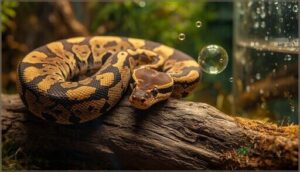
Ball pythons are particularly prone to respiratory issues and stress-related bubble blowing, so you’ll need to pay extra attention to their care requirements.
Their preference for higher humidity levels and tendency to be sensitive snakes means environmental problems show up quickly as health symptoms. Understanding the specific triggers for bubble blowing in ball pythons will help you distinguish between normal behavior and signs that require immediate veterinary attention.
Common Causes in Ball Pythons
Ball Python bubble blowing often stems from humidity levels drifting below 50 percent, which stresses your pet snake during shedding and breathing.
Poor enclosure temperature gradients can irritate airways, while dirty substrates raise bacterial exposure around the mouth.
Respiratory issues in ball pythons develop when stress combines with inadequate ventilation, producing visible bubbles during normal breathing or defensive behavior.
Ball Python-Specific Care Tips
Your ball python habitat design should prioritize clean substrates, weekly water changes, and stable temperature zones between 88 to 92 Fahrenheit on the warm side.
Python handling tips include avoiding contact after feeding to reduce regurgitation risk, while snake environmental enrichment means adding branch decor for shedding grip.
Reptile health checks demand daily monitoring for nasal discharge, ensuring your pet snake thrives through proper reptile care and maintenance supporting animal health and disease prevention.
Recognizing Serious Health Issues
Vigilance becomes critical when your ball python displays respiratory distress signs like persistent wheezing, open-mouth breathing, or blue tongue tips.
Snake behavior changes such as sudden lethargy, refusal to eat beyond 24 hours, or excessive hiding demand immediate veterinary care. Health monitoring paired with emergency response prevents infectious diseases from progressing, ensuring pet health through expert veterinary advice for pet owners prioritizing animal health and disease prevention.
Frequently Asked Questions (FAQs)
How to tell if a snake has mouth rot?
Open wide and check for trouble: mouth rot symptoms include swollen, reddened gums, yellow cheesy patches on oral tissues, foul breath, excess saliva, and reduced appetite requiring prompt veterinarian assessment of your pet snake.
What are the early signs of mouth rot?
Early mouth rot symptoms include subtle gum swelling, redness along the mouth lining, and excessive thin saliva pooling at corners.
You’ll notice reduced appetite, slight oral lesions, and difficulty closing the jaw during feeding attempts.
Can snakes blow bubbles while swimming?
Yes, snakes blow bubbles while swimming to regulate buoyancy control and breathing.
Water-loving species exhale through nostrils during aquatic behavior, creating bubble streams as they adjust diving reflexes and explore their humidity-rich environment underwater.
Do all snake species blow bubbles equally?
No, bubble blowing varies widely among species.
Ball pythons and northern water snakes frequently produce bubbles, while other genera rarely exhibit this behavior.
Environmental factors, breeding differences, and individual temperament influence bubble frequency across snake biology.
Are bubbles different between venomous and non-venomous snakes?
No consistent visual difference in bubble patterns reliably separates venomous from non-venomous species.
Bubble occurrences link to environmental stress and respiratory health rather than toxicity levels, making venom detection through bubble behavior unreliable.
Can diet changes trigger bubble blowing behavior?
Dietary changes don’t directly trigger bubble blowing in snakes. Reptile behavior remains unaffected by food types or feeding habits.
Instead, you should examine environmental stressors and respiratory infections when your ball python or other pet snakes exhibit bubble formation.
Do baby snakes blow bubbles more frequently?
Neonates display bubble blowing more often than adults when exploring new surroundings or after handling, though frequency varies by individual temperament and species.
Environmental factors like enclosure humidity and water availability influence this reptile behavior in pet snakes.
Conclusion
A single bubble at your ball python’s nostril seems trivial until morning reveals labored breathing and discharge crusting around its mouth.
When you observe bubbles coming from snake mouth openings, distinguishing between momentary stress responses and progressive respiratory decline determines whether you’re adjusting humidity levels or racing to an emergency veterinarian.
Your vigilance, informed by the clinical markers outlined above, protects your snake’s respiratory health before infection gains ground.