This site is supported by our readers. We may earn a commission, at no cost to you, if you purchase through links.

Most people picture massive, intimidating snakes when they think about keeping a python—not a compact, curious little reptile that fits comfortably in your hands and rarely causes trouble. The Children’s python breaks that mental image completely. Named after a 19th-century museum curator (not its suitability for kids, though the irony works), this northern Australian native tops the list of snakes that won’t overwhelm a first-time keeper.
A manageable size, a calm disposition, and straightforward care needs make it genuinely forgiving while you learn. Everything you need to set one up correctly, keep it healthy, and build real confidence as an owner starts here.
Table Of Contents
- Key Takeaways
- What is a Children’s Python?
- Why Choose a Children’s Python First?
- Setting Up The Perfect Enclosure
- Essential Equipment for Beginners
- Feeding Your Children’s Python
- Handling and Bonding Techniques
- Health and Hygiene Basics
- Legal and Ethical Ownership
- Troubleshooting Common First-Time Challenges
- Frequently Asked Questions (FAQs)
- Can childrens pythons live with other snakes?
- How much does a childrens python cost?
- What happens if my python refuses food?
- Do childrens pythons need special winter care?
- Can childrens pythons be kept in bedrooms?
- How often do childrens pythons explore outside their enclosure?
- Can childrens pythons recognize their owners over time?
- Do childrens pythons need companions or prefer solitude?
- What sounds or vibrations stress childrens pythons most?
- How do seasonal changes affect childrens python behavior?
- Conclusion
Key Takeaways
- Children’s pythons stay small (under 90 cm), have calm temperaments, and forgive beginner mistakes better than almost any other snake you could choose.
- Getting the enclosure right before your snake arrives — warm side at 30–33°C, cool side at 22–26°C, two snug hides, and 45–65% humidity — is the single biggest factor in keeping your python healthy and stress-free.
- These snakes live 20 to 30 years, so owning one isn’t a hobby you can put down — it’s a decades-long commitment that needs financial planning, stable housing, and a backup caretaker lined up.
- Most first-time problems like food refusal, bad sheds, or hiding all trace back to the same root causes: temperatures that dropped too low, humidity that’s off, or handling that happened too soon.
What is a Children’s Python?
Before you bring one home, it helps to know exactly what you’re working with. The Children’s Python has a surprisingly interesting story — from where it got its name to where it actually comes from.
Here’s what every first-time owner should know.
One thing that trips up a lot of new owners is figuring out whether their snake is rough or smooth green, since care needs can vary between the two.
Species Overview and Origins
The Children’s Python isn’t named for kids — it honors John George Children, a 19th-century British Museum curator. Scientist John Edward Gray first described the species in 1842, originally classifying it as Liasis childreni before its taxonomic history shifted it to genus Antaresia in 1984.
Here’s what makes this snake distinct:
- Scientific name: Antaresia childreni
- Family: Pythonidae
- Geographic range: Northern Australia — Queensland, Northern Territory, and Western Australia
Understanding their bioactive habitat needs is essential for their care.
Natural Habitat and Behavior
These pythons call northern Australia home — from rocky outcrops to wet savannas, their habitat diversity is striking. They’re nocturnal hunters, most active after dark, pursuing small mammals and birds. Their arboreal behavior shows up at night too, climbing to snatch prey. Understanding their wild diet and natural rhythms helps you replicate a setup where they genuinely thrive. To create an ideal environment, consider the importance of proper snake care guidelines for your pet.
| Behavior | When | Why It Matters |
|---|---|---|
| Nocturnal Patterns | After dark | Peak hunting activity |
| Arboreal Behavior | Nighttime climbing | Targets elevated prey |
| Daytime sheltering | Daylight hours | Temperature regulation |
| Cave/stalactite perching | Wet season | Ambushes microbats mid-flight |
| Ground foraging | Late wet season | Aligns with prey availability |
Common Myths and Misconceptions
If you’re picturing a snake that’s fierce, dangerous, or cramped in a tiny box, let’s clear things up. Many myths—like Bite Danger, Size Myths, and Temperament—mislead new keepers. Here’s what matters:
- Nonvenomous bites are safe with basic care.
- Proper space prevents stress and promotes Snake Safety.
- Calm handling builds trust—feeding facts matter, too.
Why Choose a Children’s Python First?
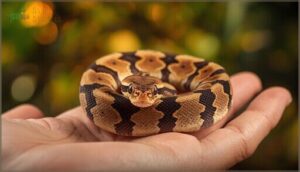
Choosing your first snake is a big decision, and Children’s Pythons make it a whole lot easier. They’re small, calm, and surprisingly forgiving for beginners still finding their footing.
Here’s what makes them such a great starting point.
Beginner-Friendly Temperament
One of the biggest worries new owners have is temperament — and this is where the Children’s python genuinely shines. Most captive-bred individuals are calm and docile, adapting quickly to gentle care and regular handling.
Short sessions of 5–10 minutes, a few times a week, are all it takes. Consistent, stress-reduction routines build real trust fast.
Manageable Size and Growth
Size is one thing you won’t stress about here. Most adults stay between 75 and 85 cm — compact enough to house in a standard 36 x 18 x 18 inch enclosure for life.
Growth patterns are steady and predictable, so space requirements never catch you off guard.
That manageable size also makes handling techniques easier to learn, especially for first timers building confidence early on.
Pairing that with guidance from a solid resource on beginner-friendly snake breeds and their care helps new owners build real confidence from day one.
Long-Term Commitment Considerations
Owning one is genuinely a decades-long relationship. These snakes regularly live 20 to 30 years, so this isn’t a short-term hobby.
Owning a Children’s Python is a decades-long relationship — these snakes live 20 to 30 years
Think about your lifetime care responsibilities now:
- Financial planning covers heating, feeding, and vet visits — budget 300–500 euros yearly
- Housing stability matters because frequent moves stress the snake
- Owner responsibilities include daily temperature checks and weekly feeding
- Future proofing means naming a backup caretaker
Plan ahead. Commit fully.
Setting Up The Perfect Enclosure
Getting the enclosure right is one of the most important things you’ll do as a new snake owner. A well-set-up space keeps your Children’s Python healthy, comfortable, and calm from day one.
Here’s what you need to know before you start building your snake’s new home.
Minimum Size and Dimensions
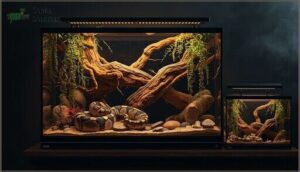
Getting the tank size right from day one saves you a lot of headaches. A single adult needs at least a 36×18×18 inch enclosure — that’s your non-negotiable floor area and vertical height minimum.
Match the snake space to your python’s current size, then upgrade as it grows.
| Life Stage | Minimum Enclosure Length |
|---|---|
| Hatchling | 20 cm (8 inches) |
| Juvenile | 45 cm (18 inches) |
| Adult | 91 cm (36 inches) |
Ideal Substrate and Decor
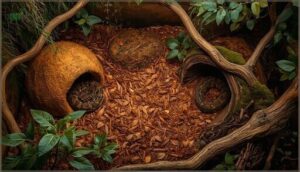
Think of the enclosure floor as your python’s foundation — get it right, and everything else falls into place. For substrate options, aspen shavings or cypress mulch work well for adults, while paper-based bedding keeps hatchlings safe.
- Hide Placement: One warm side, one cool side
- Vertical Structures: Low branches for semi-arboreal resting
- Bioactive Designs: Layered soil, leaf litter, and live plants
Temperature, Humidity, and Lighting Needs
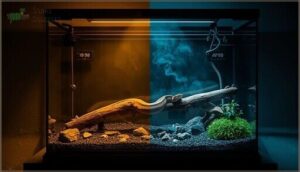
Your python can’t regulate its own body heat — so you have to do it for them. Keep the basking spot at 30–33°C and the cool side around 22–26°C. That thermal gradient promotes healthy digestion and behavior.
Aim for 45–65% humidity, and run a 10–12 hour lighting cycle daily. A reliable thermostat keeps ambient conditions steady without guesswork.
Essential Equipment for Beginners
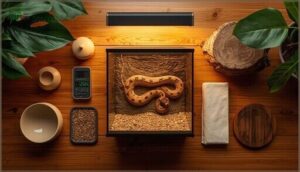
Once the enclosure is ready, it’s time to fill it with the right gear. Getting the equipment right from day one makes a real difference in how comfortable and safe your snake feels.
Here’s what every beginner needs to have in place before bringing their Children’s Python home.
Heating and Thermostat Options
Getting the temperature right is your snake’s lifeline. Children’s Pythons need real thermal gradients—a warm end around 31–33°C and a cool retreat near 22°C.
To achieve this, start with these three essentials:
- Heat Mat Options connected to a thermostat for steady belly warmth
- Thermostat Settings that automate safe heating cycles without overheating
- Temperature Control probes to verify surface gradients daily
Safe Hides and Climbing Features
Once the heat is sorted, your snake needs places to feel safe. A snug hide box design matters more than size — your children’s python wants to touch the walls when curled up.
Add two dry hides plus a humid hide filled with damp moss for humidity control.
Use secure decor like cork rounds or resin caves, and include sturdy climbing structures so your python can explore naturally.
Water Bowl and Cleaning Supplies
Fresh water is just as important as a secure hide. Match your bowl size to your python’s coiled body — adults usually need something holding around 10 to 12 liters. Place it on the cool side for natural humidity control.
Change water daily, and scrub weekly with a reptile-safe disinfectant. Simple cleaning tools like a brush and rubber gloves keep snake hygiene straightforward.
Feeding Your Children’s Python
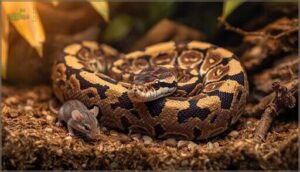
Feeding your Children’s Python doesn’t have to feel intimidating. Once you understand what they need at each stage of life, it quickly becomes one of the most rewarding parts of ownership.
Here’s what every first-timer should know about diet, schedule, and safe feeding habits.
Appropriate Diet for All Life Stages
Your snake’s nutritional needs shift as it grows. Hatchlings start on pinky mice — tiny, hairless, and perfectly sized for small jaws. Juveniles move up to fuzzies, then hoppers. Adults thrive on appropriately sized mice or rats.
Prey selection matters: match prey width to your snake’s body thickness. Whole rodents cover everything — no supplements needed. Diet variation stays simple at every stage.
Feeding Schedule for First Timers
Once you’ve matched the right prey size, timing is everything. Hatchlings need meals every 5 to 7 days — their metabolism runs fast. Juveniles shift to every 7 to 10 days as they grow. Adults do well on a 10 to 14 day schedule.
Keep a simple feeding log to track meal planning and growth monitoring. Consistency builds trust.
Safe Feeding Practices
Feeding techniques matter more than most beginners expect. Always thaw frozen prey in a warm water bath — never microwave it. Use curved tongs to wiggle the mouse gently, mimicking live movement. Feed in a separate tub to avoid substrate ingestion.
After eating, wait 48 hours before handling. Rushing that window risks digestion issues and stress-induced regurgitation you definitely want to avoid.
Handling and Bonding Techniques
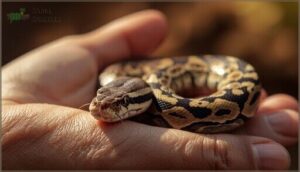
Handling your Children’s Python for the first time can feel a little nerve-wracking, but it gets easier with practice and patience. The good news is that these snakes are naturally calm and respond well to gentle, consistent interaction.
Here’s what you need to know to start building real trust with your snake.
Initial Handling Tips for Beginners
Your first pick-up sets the tone for everything. Gentle touch and proper snake support matter more than confidence right now. Keep these safe handling basics in mind:
- Wait 5–7 days before your first session.
- Scoop from mid-body — never grab near the head.
- Keep sessions short: 5–10 minutes max.
Watch for stress signs like rapid tongue-flicking or escape attempts.
Building Trust and Reducing Stress
Trust building takes patience, not flawlessness. Handle your children’s python 2 to 3 times weekly, keeping sessions to 10 to 15 minutes. Always approach from below, support the mid-body, and move slowly.
A calm environment with stable temps and two snug hides makes a real difference. Consistency is everything — your python learns safety through gentle handling and predictable routine.
Recognizing Signs of Distress
Your python’s body never lies. Learning to read its stress signals early makes all the difference.
Watch for these defensive postures and escape behavior cues:
- Tight coiling or balling up — protection mode, not playfulness
- S-shaped neck posture — a clear "back off" warning
- Glass surfing or lid-pushing — escape behavior driven by anxiety
- Hissing or striking — vocal cues that handling should stop immediately
Health and Hygiene Basics
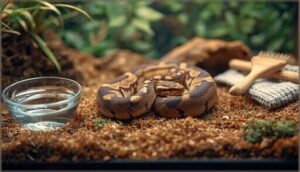
Keeping your Children’s Python healthy doesn’t have to feel overwhelming. A few simple habits go a long way toward catching problems early and keeping their home clean. Here’s what every first-timer should know.
Monitoring Shedding and Hydration
Shedding is your snake’s built-in health report card. A healthy shed cycle runs every 4–8 weeks in young snakes, slowing as they age. Watch for cloudy eyes and dull skin — those are your cues to boost humidity control and leave them alone.
| Sign | What It Means |
|---|---|
| Smooth, supple skin | Good hydration signs |
| Chalky or orange urates | Early dehydration prevention needed |
| Incomplete shed patches | Low humidity, add moist hide |
Common Health Issues and Prevention
Most health problems in children’s pythons are preventable. Watch for wheezing or open-mouth breathing, signs of respiratory care issues from cool or damp conditions. Skin infections and scale rot usually follow wet bedding.
Stay on top of parasite control with regular fecal checks. For nutritional advice, avoid overfeeding.
When in doubt, veterinary guidance beats guessing every time.
Cleaning and Bioactive Enclosure Care
Keeping the enclosure clean is just as important as getting the setup right. Spot cleaning daily removes waste before it becomes a problem.
For bioactive setups, substrate management happens naturally — springtails and isopods do the heavy lifting. Deep disinfection every four to six weeks manages the rest.
Keep humidity control steady, and your python stays healthy, comfortable, and stress-free.
Legal and Ethical Ownership

Owning a Children’s Python isn’t just about feeding schedules and enclosure setups — there’s a legal and ethical side you need to know too. Depending on where you live, keeping a python may require a permit or come with specific rules.
Here’s what responsible ownership actually looks like.
Local Regulations and Permits
Before you bring your new snake home, check your local exotic pet laws — they vary more than you’d expect.
Here’s what to have in order:
- Confirm permit requirements in your state or country
- Identify licence types (personal, breeding, or both)
- Review zoning restrictions for your property
- Check annual renewal deadlines
- Keep acquisition records for regulatory compliance inspections
Responsible Sourcing and Adoption
Once permits are sorted, think carefully about where your snake comes from. Ethical sellers always offer captive breeding documentation — hatch date, feeding history, weight.
If you’d rather give a snake a second chance, the reptile rescue adoption process is straightforward and often includes starter equipment.
Either path promotes sustainable trade and keeps wild Australian populations exactly where they belong.
Commitment to Animal Welfare
Owning a children’s python isn’t just about permits and sourcing — it’s a 20-plus-year welfare commitment.
Follow humane care standards: correct temperatures, enrichment, regular vet visits, and stress-free handling.
Animal ethics means planning for the snake’s full life, including end-of-life decisions. Your python depends entirely on you, so go in with both eyes open.
Troubleshooting Common First-Time Challenges
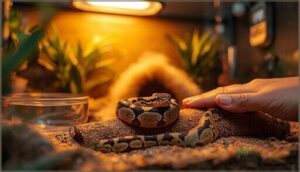
Every first-time snake owner hits a few bumps along the way, and that’s completely normal. The good news is that most challenges have simple, practical fixes once you know what to look for.
Here are the three most common issues beginners face and exactly what to do about them.
Refusing Food or Hiding Excessively
Don’t panic if your snake turns its nose up at dinner. Food refusal and hiding behavior are the most common feeding issues new owners face.
Stress signals like hissing or refusing meals often mean the enclosure temperature dropped, or you handled your snake too soon.
Keep the warm end at 32–34°C, limit handling, and give it time to settle.
Shedding and Skin Problems
Shedding cycles are a window into your python’s overall health. Healthy sheds come off in one clean piece — dull skin and cloudy eyes are normal beforehand.
Retained sheds, scale rot, and skin infections usually trace back to low humidity or dirty substrate. Keep humidity around 60%, offer a humid hide, and check for mites if shedding stays patchy.
When to Seek Veterinary Help
Some signs can’t wait. When health monitoring reveals any of the following, contact a reptile vet right away:
- Respiratory issues — wheezing, open-mouth breathing, or mucus around the nose
- Emergency signs — stargazing, rolling, or loss of balance
- Sudden weight loss or repeated regurgitation
- Visible wounds, lumps, or constant soaking
Trust your instincts. Catching problems early is the basics of responsible snake behavior and veterinary care.
Frequently Asked Questions (FAQs)
Can childrens pythons live with other snakes?
Children’s pythons seem social, but they’re actually solitary. Snake compatibility is nearly impossible to achieve safely.
Cohabitation risks, species mixing stress, and enclosure sharing problems make solo housing the smartest, safest choice for your python.
How much does a childrens python cost?
Expect to pay $200–$250 for a standard hatchling. Rare morphs push snake pricing higher — albinos can hit $ Factor in ownership expenses like setup, food, and vet visits too.
What happens if my python refuses food?
Don’t panic — food refusal is normal. Stress, shedding, or cool temperatures are the usual culprits.
Check your basking spot hits 32°C, offer warmed prey at night, and give your snake space to settle.
Do childrens pythons need special winter care?
Yes, winter temperature management matters. Cold stress is real — keep the warm end at 32–35°C.
Watch humidity control, refresh water often, and verify heating systems stay reliable through the colder months.
Can childrens pythons be kept in bedrooms?
As the saying goes, "a place for everything, and everything in its place." A Children’s python can thrive in a bedroom, provided the enclosure is secure, heating options are stable, and noise stays minimal.
How often do childrens pythons explore outside their enclosure?
Most of their exploration happens at night. Two short supervised outings weekly — about 10 to 15 minutes each — satisfy their natural roaming urge without encouraging escape behavior.
Can childrens pythons recognize their owners over time?
Your children’s python won’t love you — but it will learn you. Through sensory cues and the habituation process, snake recognition builds over time, making owner bonding a quiet, practical trust.
Do childrens pythons need companions or prefer solitude?
Children’s pythons are solitary animals by nature. In the wild, they live alone and only meet briefly to mate.
Your snake doesn’t need a companion — solo housing is healthier and simpler for you both.
What sounds or vibrations stress childrens pythons most?
Even a door slam can send your Children’s Python into full panic mode. Ground vibrations and low frequency noise pollution trigger the most vibration stress — keep their space calm and quiet.
How do seasonal changes affect childrens python behavior?
Seasonal Activity shifts are normal. Your Children’s Python slows down in winter, eats less, and hides more. Warmer months bring climbing, feeding, and shedding. Match your setup to these rhythms.
Conclusion
Snake keeping isn’t just for experienced reptile enthusiasts—it’s for anyone willing to learn and stay consistent. The children’s python for first timers proves that point every day. You don’t need years of experience to succeed. You need the right setup, a little patience, and the confidence to trust what you’ve learned.
This snake won’t demand flawlessness from you. Show up, pay attention, and it will thrive—and so will your skills as an owner.