This site is supported by our readers. We may earn a commission, at no cost to you, if you purchase through links.

Most ball pythons max out your patience before they max out in size, but a children’s python stops growing at 3 to 5 feet and stays that way for two to three decades. That’s a snake you can actually manage in a 40-gallon tank without renovating your living room.
For childrens python for first timers, that manageable size pairs with a calm, curious temperament that recovers fast from handling stress. You get an animal that tolerates your presence without demanding attention, strikes rarely, and settles into a routine within weeks.
Get the enclosure, feeding schedule, and handling technique right from day one, and you’ll build the kind of trust that makes the next 20 years genuinely enjoyable.
Table Of Contents
- Key Takeaways
- Is a Children’s Python Beginner-Friendly?
- Set Up The Enclosure Before Buying
- Feed Your Children’s Python Safely
- Handle and Bond Without Stress
- Keep Your Children’s Python Healthy
- Frequently Asked Questions (FAQs)
- Are Childrens Pythons good for beginners?
- What is the best beginner snake for kids?
- Are Childrens Pythons good pets for kids?
- How long does it take for a Childrens Python to fully grow?
- Can childrens pythons live with other snakes?
- How much does a childrens python cost?
- What happens if my python refuses food?
- Do childrens pythons need special winter care?
- Can childrens pythons be kept in bedrooms?
- How often do childrens pythons explore outside their enclosure?
- Conclusion
Key Takeaways
- Children’s pythons stay small for life, maxing out at 3-5 feet and living 20-30 years, so you get a manageable pet without constant tank upgrades.
- Their calm, tolerant temperament means fewer defensive strikes and faster recovery from handling stress, making daily care feel simple rather than stressful.
- Getting the basics right matters most: proper enclosure size, a stable temperature gradient (28-32°C warm side, 22-26°C cool side), and correct prey sizing based on girth all prevent the most common beginner mistakes.
- Building trust takes patience, not shortcuts, so give your snake 1-2 weeks to settle in first, then stick to short 2-4 minute handling sessions while watching for stress signals.
Is a Children’s Python Beginner-Friendly?
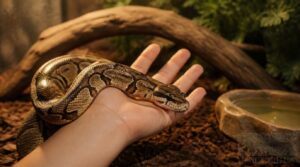
A Children’s python earns its reputation as one of the most beginner-friendly snakes you can own, but that reputation rests on a handful of specific traits worth understanding upfront.
Their calm demeanor and manageable size make them a favorite among first-timers, as this guide to choosing a snake with the right temperament makes clear.
Size, temperament, cost, and the challenges that catch new keepers off guard all shape whether this species truly fits your life.
Here’s what you need to know before bringing one home.
Before you fall in love with that boa, check boa constrictor ownership laws and regulations in your state — illegal ownership can mean confiscation, criminal charges, and losing your snake for good.
From permits to species restrictions, this guide to snake ownership requirements walks you through the legal boxes you’ll need to check first.
From proper enclosure sizing to feeding schedules and humidity levels, this complete boa constrictor pet care guide covers the essentials every new owner should master first.
Adult Size and Lifespan
A four-foot adult staying manageable for decades—that’s the appeal. Children’s pythons usually reach 3-5 feet, living 20-30 years with proper care.
- Slower growth than large constrictors
- Longer lifespan tied to modest size
- Manageable energy allocation for keepers
Slow growth often means slower aging, so patient keepers gain a smaller, longer-lived companion perfect for first-time reptile owners.
Temperament and Activity Levels
Size aside, temperament seals the deal. Most Children’s pythons show moderate activity levels, alternating steady exploration with calm rest—no frantic bursts to manage.
| Trait | Typical Pattern |
|---|---|
| Energy Needs | Low to moderate |
| Handling Response | Settles quickly with consistency |
| Social Openness | Tolerant, not needy |
| Recovery Speed | Fast after mild stress |
That balance makes daily care feel less like problem solving and more like straightforward, beginner-friendly routine.
Benefits for First-Time Keepers
That calm nature pays off fast. New keepers gain real stress reduction from day one, since gentle temperament means fewer defensive strikes to worry about.
- Space efficiency fits compact rooms
- Easy feeding builds confidence quickly
- Support network answers early questions
- Step-by-step learning suits beginners
This mirrors how kids grasp beginner-friendly syntax in Python: small wins, logical reasoning, and steady problem solving compound into real mastery.
Common Beginner Challenges
Every calm reptile still comes with rookie mistakes. New keepers often skip enclosure security checks, leading to escapes, or misjudge feeding size entirely.
| Challenge | Cause | Fix |
|---|---|---|
| Escapes | Loose lid | Lock clips |
| Refused meals | Wrong prey size | Match girth |
| Stress strikes | Over-handling | Shorter sessions |
| Poor shedding | Low humidity | Add moisture |
Late-start behavior in programming tasks has been linked to lower academic performance, similar to delayed actions in reptile care affecting outcomes. solver behavior patterns
Costs and Long-Term Commitment
Before buying, budget honestly: initial setup costs run 200-600 euros, monthly upkeep adds 25-70 euros (food, heating), and annual vet checks cost 40-100 euros. It’s also worth budgeting time, not just money—learning proper snake handling techniques early on helps you bond safely while avoiding stress-related feeding or shedding issues.
Choosing the right substrate also pays off long-term, since coconut fiber’s moisture-retaining properties make it easier to maintain stable humidity for clean, complete sheds.
- Enclosure upgrades every 3-5 years
- Thermostat replacements: 40-120 euros
- 10-20 year commitment required
Plan finances like you’d plan step-by-step learning—consistent budgeting builds future-proof habits, much like consistent practice through online coding classes for kids.
Set Up The Enclosure Before Buying
Before your children’s python ever comes home, its enclosure needs to be ready and waiting. Getting this step right from the start saves you money, stress, and unnecessary trips back to the pet store. Here’s exactly what to sort out first, from size to temperature to that all-important water dish.
Enclosure Size by Life Stage

Think of your snake’s home like leveling up in a game.
Hatchling Tank Dimensions start at 20 gallons; Juvenile Space Guidelines call for 30. Subadult Volume Standards jump to 40 gallons, while Adult Enclosure Specifications demand 50-60. Senior Habitat Scaling stays generous—60-70 gallons with extra height for climbing.
Escape-Proof Housing and Ventilation
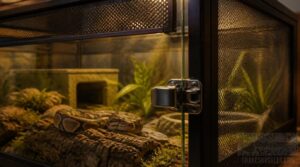
Since ball pythons are notorious escape artists, lock every seam: clips, locking doors, and childproof access points matter more than tank size.
Run seal integrity checks monthly. Build in ventilation redundancy through side and top vents, keeping airflow balance zones even so no single spot drafts more than another—pressure differential management in miniature.
Substrate, Hides, and Climbing Decor
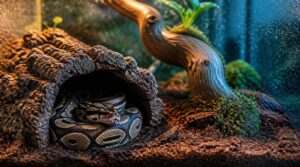
Skip scented substrate—cypress mulch, aspen, or coco coir hold humidity without irritating skin.
Cork bark hides resist mold and last years untouched. Add cork panels or driftwood, sized to your snake’s girth, anchored securely. Rotate worn pieces on a replacement schedule once cracked or caking.
Good microclimate design helps healthy sheds, much like debugging skills sharpen through step-by-step, interactive learning.
Temperature Gradient and Thermostat

A stable gradient beats guesswork every time. Set a warm side near 28-32°C and a cool retreat around 22-26°C, using thermostat calibration and secondary probes for accuracy. Position heating elements away from direct contact, add safety shutoff devices, and allow a gentle nighttime temperature drop of 2-6°C—precision here mirrors debugging variables and data types step by step.
Humidity, Lighting, and Water
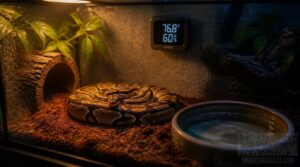
Humidity sits between 40-60%, checked daily with digital hygrometers at eye level. Run 12 hours light, 12 dark, timer-controlled. Place water bowls off-center, refill daily. Coconut fiber substrate holds moisture without soaking. Adjust seasonally as rooms dry out.
For species-specific humidity ranges and troubleshooting tips, this grass snake humidity and enclosure care guide walks through common misting mistakes that lead to respiratory issues.
This precision mirrors step-by-step Python learning for kids—patient, measurable, building real cognitive skills through parental involvement.
Feed Your Children’s Python Safely
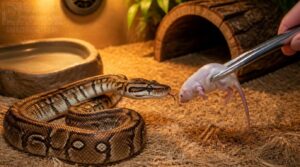
Feeding time is where most beginner mistakes happen, and getting it right builds real confidence fast. Your children’s python depends on you to get prey size, timing, and technique correct every single feeding.
Here’s exactly what you need to know before that first rodent goes anywhere near the enclosure.
Choosing The Correct Prey Size
Most feeding mistakes come down to guesswork. Match prey to your snake’s girth at its widest point, not its length. If you’re also planning your snake’s home, that same midbody measurement doubles as a handy starting point for choosing the right tank size for your snake by species.
- Juveniles: 0.5–0.8x girth
- Subadults: 0.8–1.0x girth
- Adults: 1.0–1.5x girth
- Never jump stages
Check gape width too. Rejected meals or lethargy signal it’s time to recalibrate size.
Feeding Schedules by Age
Getting size right solves half the problem; timing solves the rest. Hatchlings eat every 5 days, juveniles every 7, subadults every 10, adults every 14–21.
If your snake starts pacing the enclosure between scheduled meals, check out these reliable signs a snake is ready to eat a frozen mouse to know whether it’s hunger or something else.
| Age Stage | Interval | Weight Range |
|---|---|---|
| Hatchling | 5 days | 30–60g |
| Juvenile | 7 days | growing steadily |
| Adult | 14–21 days | 800–1200g |
Winter slows everyone to once monthly—patience matters here.
Offering Frozen-Thawed Rodents
Skip live prey entirely. Thawing techniques matter: cold water or fridge thawing, 30 minutes to 2 hours, no ice left in the center.
Temperature matching brings prey near body heat, triggering natural strike instincts. Dry the surface, then use tongs for safe prey presentation—wiggling gently entices reluctant feeders while proper hygiene practices keep both snake and keeper protected.
Safe Feeding and Handling Timing
Timing turns a good meal into a safe one. Feed after a 48-hour settle-in from prey introduction, never within 24 hours of handling, and skip cooler daytime hours entirely.
Watch stress indicators feeding brings out: pacing, hiding, or striking at glass. Post-meal, keep vibrations away for 24 hours and maintain temperature stability for proper digestion.
Troubleshooting Refused Meals
When your snake turns its nose up at dinner, don’t panic. Start with hunger level assessment—young pythons refuse meals more during growth transitions. Check sensory triggers, too warm or oddly-scented prey.
- Confirm meal temperature consistency
- Adjust feeding schedule slightly
- Remove parental pressure equivalents (poking, forcing)
Like debugging code, refused meals need patient troubleshooting, not panic—identify the variable, adjust, retry.
Handle and Bond Without Stress
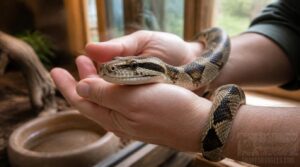
Handling isn’t just about picking up your snake, it’s about building trust one session at a time. Your Children’s Python reads confidence and calm through how you move, so patience matters as much as technique. Here’s exactly how to get it right, from first touch to full supervision.
Allowing Time to Settle
That first week tests your patience more than any lesson plan ever will.
Give your snake 1 to 2 weeks to settle before any handling begins, keeping the space quiet, dim, and away from household noise. Stick to feeding and cleaning only. Watch daily for odd behavior. Rushing this stage undoes the trust you’re trying to build.
Supporting The Snake’s Body
Because a snake’s spine runs its entire length, mid-body support matters as much as steadying the head.
Cradle behind the head, then support the mid to rear body so weight spreads evenly, protecting spinal flexibility and organs.
- Never grab the tail
- Avoid squeezing
- Support multiple points
- Keep movements slow
Scales reduce friction, aiding smooth, confident handling.
Keeping Handling Sessions Short
Two to four minutes—that’s the whole window before stress creeps in. Run a quick mood check first, then use gentle grip methods throughout.
| Element | Guideline | Why It Matters |
|---|---|---|
| Duration | 2–4 min | Prevents escalation |
| Daily cap | 3 sessions | Limits fatigue |
| Ending | Calm, in enclosure | Builds trust |
Recognizing Defensive Body Language
A tensed body tells you more than any chart ever could. Watch for muscle bunching near the tail or a head pulled tight against the coils—these beat any handling clock.
Tucked head, held breath, stillness that doesn’t relax: that’s your cue to stop, breathe, and try again tomorrow.
Supervising Children During Handling
Never let a child handle alone. Active supervision means eyes on the child every second, not just being nearby. Sit where you get a full view—end of the table beats the side. Stay close enough to shadow every move. If something goes wrong, you should always be able to explain exactly how.
Keep Your Children’s Python Healthy
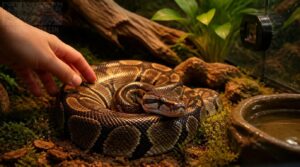
A healthy children’s python isn’t an accident, it’s the result of steady habits you build week after week.
A healthy children’s python is no accident—it’s built through steady habits, week after week
Your snake can’t tell you when something’s wrong, so you have to know what to look for before small issues become big ones.
Here’s exactly what a proper health routine covers, from daily checks to knowing when it’s time to call a vet.
Daily and Weekly Health Checks
Rarely does good husbandry happen by accident, it happens through habits.
Run a daily visual inspection for breathing issues, discharge, or lethargy. Add weekly weight tracking, a feeding log review, and shedding observation. Watch behavior monitoring closely.
Just as step-by-step learning builds coding skills, consistent checks build snake-keeping mastery, whether you’re new to Python for Kids or beginner-friendly programming.
Healthy Shedding and Hydration
Weight logs matter, but shedding tells the real hydration story.
Healthy sheds come off in one piece; patchy sheds signal low humidity impact skin—keep tanks at 50-60%.
- Mist enclosure daily
- Provide a humid hide
- Check water bowl freshness
- Watch for retained eye caps
Like step-by-step learning in coding for children, consistent moisture habits, not guesswork, build a thriving Children’s Python.
Cleaning The Enclosure Properly
Moisture keeps skin healthy, but a dirty tank undoes that progress fast. Daily spot cleaning removes waste immediately; run a deep cleaning routine weekly, scrubbing furniture separately with safe cleaning products—never ammonia-based.
Follow a strict substrate replacement schedule, dry everything fully, then rebuild. Like debugging practice in coding for children, consistent maintenance catches problems before they spread.
Common Illness Warning Signs
A clean tank won’t help if you miss the signs your snake is struggling. Watch for breathing changes, unusual lethargy, or alertness decline—these mirror sepsis warnings in kids, oddly enough.
Check skin for a persistent rash, and monitor fluid intake alongside appetite. Fever symptoms and weight loss demand fast action.
Just like Python for kids rewards step-by-step learning, spotting illness early protects long-term health.
Finding a Reptile Veterinarian
Before the first illness strikes, track down a reptile-savvy vet. Use ARAV’s directory or RCVS Find a Vet, filtering by species treated.
- Confirm vet credentials for reptile training
- Ask about consultation and X-ray cost considerations
- Check emergency referral options
- Bring husbandry notes for first visit prep
Like step-by-step Python for kids, sorted care now prevents scrambling later.
Frequently Asked Questions (FAQs)
Are Childrens Pythons good for beginners?
Yes, staying under 105 centimeters with a calm temperament, they suit beginner commitment well. Like Python for kids’ step-by-step learning, keepers build skills gradually, gaining confidence through consistent, hands-on care consistency rather than rushing the process.
What is the best beginner snake for kids?
For docile temperament and manageable size, Children’s Pythons stand out as the top pick—non-venomous, allergy-friendly, no dander, suited to kids aged 8+, with calm handling traits beating jumpier species like garter or corn snakes.
Are Childrens Pythons good pets for kids?
Picture a calm, coiled snake barely a meter long living happily for two decades: that’s the reward. With parental involvement, proper living area planning, and future expense planning, these snakes make genuinely good, manageable pets for kids.
How long does it take for a Childrens Python to fully grow?
Expect 2 to 3 years for full growth, sometimes 4 with slower feeders. Steady feeding and warmth speed things along, much like structured learning speeds a child through Python fundamentals, session by session.
Can childrens pythons live with other snakes?
Sharing a tank isn’t safe: cohabitation stress risks trigger fighting, feeding competition, and disease spread. Separate enclosure necessity applies even to same-species pairs — solo housing keeps monitoring simple.
Just like teaching Python fundamentals step-by-step builds confidence one session at a time.
How much does a childrens python cost?
Pricing varies by region: standard hatchlings run $200 to $300, while marble or dark marble morphs reach $500–$ Add setup, feeding, and vet costs—ownership expenses often exceed the snake’s original purchase price over time.
What happens if my python refuses food?
Don’t panic — food refusal is common and rarely an emergency. Check enclosure temperatures, reduce handling stress, and offer warmed prey after dark. Most snakes resume eating within weeks once conditions and confidence are restored.
Do childrens pythons need special winter care?
Yes. Maintain a winter temperature gradient — basking around 32–34°C, cool end 24–26°C — watch humidity (40–60%), adjust feeding schedules, and monitor breathing and alertness closely for cold-stress signs.
Can childrens pythons be kept in bedrooms?
Bedrooms work well, provided the enclosure keeps a stable heat gradient, stays quiet during the day, and gets checked daily for temperature, water, and waste — a snake’s comfort depends entirely on your consistency, not the room itself.
How often do childrens pythons explore outside their enclosure?
Nighttime is prime time here — your snake follows natural nocturnal patterns. Plan two supervised sessions weekly, roughly 10 to 15 minutes each, satisfying roaming instincts safely without triggering the escape-seeking behavior tied to poor enclosure setup.
Conclusion
Patient preparation pays off long before your snake ever arrives home. Success as a childrens python for first timers isn’t about luck; it’s about consistent temperatures, correct prey size, and calm, confident handling repeated week after week. Skip a step, and you’ll troubleshoot problems for months.
Follow the routine, and you’ll gain a snake that trusts you completely. That trust, built one gentle session at a time, becomes the real reward of two decades together.