This site is supported by our readers. We may earn a commission, at no cost to you, if you purchase through links.

Most snake enclosures look tidy to the keeper and barren to the snake. A water dish, a hide, and a branch might meet the basics, but they rarely allow natural behavior like climbing, burrowing, scent tracking, and ground patrols.
That gap matters more than many owners realize. A ball python may want tight warm and cool hides, while a corn snake uses height and route choice, and a boa needs room, humidity, and sturdy structure. Good enrichment ideas for snake enclosure setups make those instincts possible, turning empty space into a habitat that aids confidence, movement, and welfare every day.
Table Of Contents
- Key Takeaways
- Match Enrichment to Your Snake
- Create Secure Hides and Tunnels
- Add Climbing and Stretching Features
- Try Digging, Scent, and Foraging
- Rotate Enrichment and Monitor Stress
- Frequently Asked Questions (FAQs)
- What can I give my snake for enrichment?
- What are some good enrichment toys for snakes?
- What do snakes like in their enclosure?
- What do snakes like to play with?
- How often should I change enrichment items?
- What temperature ranges are safe for exploration?
- Can multiple snakes share enrichment activities together?
- Which substrates are toxic or unsafe for snakes?
- How do I know if enrichment causes stress?
- How often should enrichment items be sanitized?
- Conclusion
Key Takeaways
- Snake enrichment should be built around your species’ natural behavior, because climbers, burrowers, and ground-dwellers use space in very different ways.
- The most valuable enclosure upgrades are secure warm and cool hides, usable climbing or digging features, and enough structure for your snake to move, stretch, and choose where to rest.
- Simple enrichment like scent trails, hidden prey, puzzle feeders, digging boxes, and target training can improve activity, confidence, and natural foraging without adding unnecessary stress.
- Enrichment works best when you rotate changes slowly, secure all heavy or hazardous items, and watch closely for stress signs like food refusal, frantic escape behavior, or constant hiding.
Match Enrichment to Your Snake
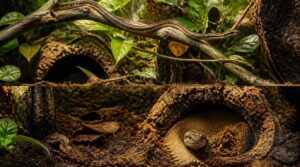
Good enrichment starts with the kind of snake you keep, because a branch-loving climber and a burrower won’t use space in the same way.
Noticing those preferences can also help you read subtle behaviors, especially if you’re curious about how snakes show affection through body language.
When you match the setup to natural behavior, the enclosure works better and the snake is more likely to use it.
The options below will help you choose features that fit your snake rather than just fill the tank.
Arboreal Climbing Needs
Because tree-dwelling snakes use height like a highway, arboreal climbing needs begin with secure vertical space and sturdy climbing structures that let them rest above ground. Varying branch materials can better support surface texture for climbing and improve route use.
- Vertical perch placement across levels
- Branch angle variety for route choice
- Elevated shelf height, 60 to 90 centimeters
- Foliage coverage options and climbing surface texture that build habitat complexity through environmental enrichment for welfare
Fossorial Burrowing Needs
Height matters, but burrowers need ground that works for them. Give fossorial snakes 6 to 8 inches of loose, non toxic burrowing substrate so they can bury and tunnel.
Use a sand and soil mix with 1 to 3 millimeter particles, add leaf litter, keep moisture moderate, and offer dig boxes for supervised exercise, natural tunneling materials, and substrate variety.
Terrestrial Exploration Needs
Once burrowers are covered, terrestrial exploration needs come down to movement and choice:
- Substrate layering builds substrate variety.
- Ground-level pathways support safe travel.
- Exploration textures and surface variation increase habitat complexity.
- Use foraging trails, Creating Dig Boxes and Burrowing Areas, and Encouraging Climbing and Exploration with low branches, tiles, and hides across a 4×2-foot footprint for confident, steady patrols daily.
Ball Python Enrichment Preferences
After ground-level travel, ball pythons do best with secure choice: tight warm and cool hides across a thermal gradient, sturdy low climbing branches, and substrate deep enough for light rooting.
Add mild scent trails, rotate prey placement, and use simple puzzle feeders for controlled foraging.
These species-specific cues build confidence, movement, and calmer behavior without overstimulation in daily routines.
Corn Snake and Boa Needs
A corn snake needs secure space: at least a 40-gallon enclosure, a proper temperature gradient, shallow water dish, and hiding spots on both sides.
For inspiration on layout and enrichment, creative corn snake habitat ideas can help you design a setup that’s both functional and visually engaging.
For layout ideas, this naturalistic corn snake enclosure guide explains how to combine safety with enrichment.
Boas need larger enclosure size, a humid basking area, sturdy climbing structures and hides.
Use species-specific enrichment, including puzzle feeders and hidden food, scent trails and olfactory enrichment, then keep rotating and rearranging enclosure decor regularly.
Create Secure Hides and Tunnels
For most snakes, good enrichment starts with feeling secure enough to rest, hide, and move without stress. That means giving them enclosed spaces that support normal behavior across the warm and cool sides of the enclosure.
The options below show a few practical ways to build that sense of cover into your setup.
Warm and Cool Hides
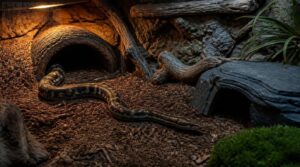
A snake regulates itself by choice, not luck. Give it warm and cool hides on opposite ends to create a reliable temperature gradient.
A snake regulates by choice, so warm and cool hides create the control it needs
Keep the warm hide 28 to 32 C in a dark, insulated shelter near heat, never touching a mat. Place the cool hide at 22 to 26 C, ventilated, stable, clean, easy to enter, and safely textured.
Moss-filled Humidity Hides
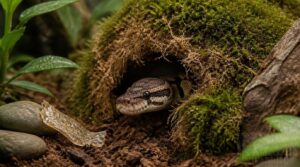
A well-made humidity hide gives your snake a stable, damp refuge during sheds and dry spells. Use clean sheet or sphagnum moss over coconut fiber, keep it lightly damp, never wet, and check with a hygrometer for 70 to 90 percent humidity.
Replace moss monthly, remove slimy patches at once, and watch use, posture, and rubbing for stress clues.
Cardboard Tubes and Cork Tunnels
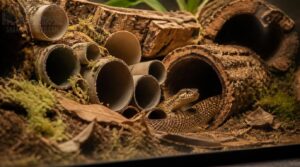
Think like a burrow builder: Cardboard tubes and cork tunnels turn empty floor space into physical enrichment. Reuse shipping tubes for multi-entrance designs, cluster them for natural burrow simulation, and add novel objects and visual contrasts through varied sizes and placement.
Cork offers smooth, low-friction cover, while cardboard adds light insulation benefits, making these smart Environmental Enrichment Techniques for snakes.
Budget-friendly DIY Hide Boxes
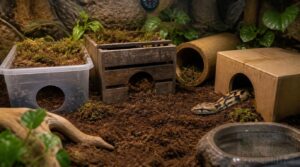
Start with a box, because secure cover matters more than price.
Budget-friendly DIY Hide Boxes can use fruit crates, plastic bins, bamboo sections, or cardboard with smooth 1.5-inch entries. Add moss or coconut fiber for humidity, place one hide warm and one cool, and rotate them biweekly.
These DIY options deliver lowcost enrichment through affordable hide materials and easy cleaning.
Multi-level Hiding Spots
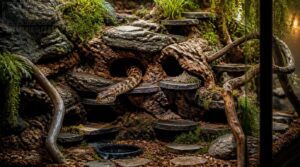
Built well, Multi-level Hiding Spots use Hide compartment stacking, Staggered entry points, and Low tolerance tunnels to create Vertical access design without trapping your snake. Keep Safe escape paths open, pair them with climbing structures, and use regular rotation of enclosure elements to increase habitat complexity while Creating a SpeciesAppropriate Enclosure that allows choice, retreat, and controlled exploration across levels.
Add Climbing and Stretching Features

Climbing and stretching features do more than fill empty space; they give your snake real chances to move, explore, and use its body normally.
When these additions are stable and well placed, they support activity without creating extra stress.
The enclosure options below show how to build that usable space in safe, practical ways.
Sterilized Hardwood Branches
Because climbing is exercise with purpose, Sterilized Hardwood Branches improve Environmental Enrichment by adding texture, grip, Physical Opportunities, and Habitat Complexity.
Choose oak, maple, or ash, then steam clean or oven dry branches at 180 to 200°F for 60 minutes. Cool them completely, secure them as Climbing Structures, rotate every 2 to 3 weeks, and discard cracked or moldy wood.
Stable Shelves and Elevated Perches
Branches work harder when they connect to stable perches, turning unused vertical space in climbing structures into sensory enrichment within smart habitat design.
- Secure anchoring to walls or frames
- Shelf weight capacity, 2.5 times body weight
- Non-slip surfaces for confident movement
- Graduated platforms with rounded edges
- Watch posture, grip, route choice, and resting preference during behavioral observation each week
Full-body Stretching Space
Perches matter most when they lead somewhere. Add a stretch corridor beside warm climbing structures, wide enough for full lateral extension, with rounded edges, firm grip, and overhead clearance.
This predictable pathway helps build muscle tone, increases exploratory activity, and helps lower stress during cleaning or handling. Watch how your snake lengthens, rests, and reuses the route as a training cue.
Snake-safe Plants and Foliage
After you build a stretch route, soften it with non-toxic foliage. Pothos, spider plants, Boston ferns, and calathea create natural shelter and visual cover without sharp edges. These humidity-friendly plants support species-specific enrichment, add sensory stimulation through scent and shifting shadows, and make simple changes to your snake’s environment feel safer, richer, and more worth exploring during routine enclosure use.
Secure Basking Stones
Stone matters. Secure basking stones give your snake a warm, stable platform for stretching after climbing structures and feeding work.
- Textured surfaces improve grip.
- Rounded edges reduce injury risk.
- Ceramic or resin bodies hold 28 to 32°C warmth for hours, with wall brackets or pedestal bases that stay put.
Good habitat design works well with sensory enrichment and puzzle feeders together.
Try Digging, Scent, and Foraging
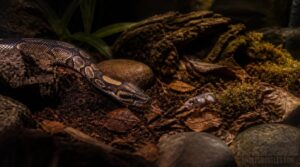
Good enrichment doesn’t stop at hides and branches. Your snake also needs chances to investigate, work, and use natural behaviors in a low-stress way. The options below show simple ways to build that into the enclosure.
Deep Species-safe Substrate
Choose Deep Species-safe Substrate with Inert material safety, Grain size suitability, and strong Substrate moisture balance. Providing Loose and Varied Substrates improves digging, scent work, and Microfauna support benefits.
Good substrate options avoid toxic substrates, match needed substrate depth, and use Humidity buffering depth to keep hides slightly moist while the surface stays dry and stable for shedding comfort.
Dedicated Digging Boxes
Because many snakes benefit from focused burrowing zones, a digging box gives safe environmental enrichment without disrupting the whole enclosure.
Use a smooth 12 by 18 inch plastic tub, lined with HDPE, filled with four inches of coconut coir and sand. Place it on the cool side, anchor it, clean weekly, and monitor natural behaviors for species-specific needs over time.
Prey Scent Trails
Scent Trails and Olfactory Enrichment turn feeding cues into low-stress hunting practice. Use prey cue specificity, watch substrate scent diffusion, and vary paths through scent trail rotation. Start simple, then use trail complexity scaling.
Good olfactory enrichment provides sensory stimulation through scent trails, steady olfactory stimulation, and careful olfactory enrichment monitoring, so scent trails stay engaging without overwhelming your snake.
Puzzle Feeders and Hidden Prey
A feeder can turn dinner into work worth doing, which sharpens problem solving and encourages natural foraging behavior.
- rotating disk
- sliding lid
- hidden thawed prey
- stable corner placement
- weekly edge checks
Start easy, use prey sized for easy swallowing, and watch learning and adaptation. Hidden food should challenge, not frustrate. This is cognitive enrichment with clear welfare gains for snakes.
Target Training With Rewards
Think of Target Training With Rewards as guided problem solving. Use Cue Consistency, immediate Reward Timing, and simple Behavior Shaping, starting with approach, then touch, then follow. This builds mental stimulation, cognitive stimulation, and lasting behavioral enrichment without force.
Keep sessions short, add Safety Checks, and use Progress Tracking to spot stress, progress, and setbacks early in your snake reliably.
Rotate Enrichment and Monitor Stress
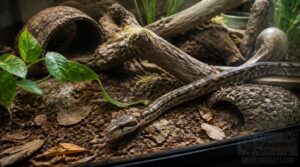
Enrichment works best when you change it with purpose, not all at once. Small rotations keep the enclosure interesting, but your snake’s behavior tells you whether a change is helping or adding stress. The next options will show you how to refresh the setup safely while keeping welfare front and center.
Rotate Decor Every Few Weeks
Regular Rotating and Rearranging Enclosure Decor helps Environmental Complexity without overwhelming your snake. Use Seasonal decor swaps, Texture rotation, Height variation, and Novelty introduction every two to four weeks, keeping each change gentle and using only Safe item rotation.
Good Habitat Design keeps routes usable, while Novelty Rotation paired with Behavioral Monitoring helps you spot early curiosity, not stress.
Introduce One Change Gradually
After Rotating and Rearranging Enclosure Decor, start slow. Introduce One Change Gradually, introduce one change at a time, and observe closely for two to four weeks. Monitor behavior response, appetite, shedding, and hiding before adding more. This helps Rotating Activities to Prevent Boredom while Monitoring WellBeing and Reducing Stress, so your snake adapts without feeling pushed too soon.
Secure Heavy Enclosure Features
Once your snake settles, secure every heavy feature before adding more complexity.
- Latch systems
- Locking mechanisms
- Heavy-duty hinges
- Reinforced corners
- Secure access points
Branches, shelves, and hides must not shift under climbing structures or near hiding spots. Stable hardware protects habitat specialization, preserves thermal gradients, and lets environmental complexity work without turning enrichment into a crushing or escape risk overnight.
Avoid Sharp or Swallowable Items
After anchoring heavy decor, Avoid Sharp or Swallowable Items with a Safe Materials Check. Use Chew-Resistant Props, Sharp-Free Decor, and weekly Edge Inspection to catch splinters, cracks, and loose parts.
Prevent Swallow Hazards during Safe Supervised Exploration Outside The Enclosure.
Ask, Which substrates are toxic or unsafe for snakes? These simple changes to your snakes environment support Speciesspecific enrichment well.
Watch for Stress Behaviors
How do you know enrichment is helping? Watch baseline behavior, then flag stress indicators fast:
- tense posture or guarded stillness
- escape pushing and frantic cover climbing
- repeated feeding refusal
- excessive hiding, poor snake acclimation
- altered waste, bad sheds, guiding welfare assessment
Use behavioral monitoring during gradual exposure to new decor, because a settled snake resumes movement, thermoregulation, and normal routines.
Frequently Asked Questions (FAQs)
What can I give my snake for enrichment?
Offer species-matched enrichment: deep substrate for digging, climbing branches and hides, scent trail foraging, and puzzle feeders with hidden food. Rotate items weekly, and let your snake’s natural history guide feels safe, stimulating, and useful.
What are some good enrichment toys for snakes?
Good options include Puzzle feeders, Scent trails, Hanging rings, chew mats, driftwood branches, and sturdy climbing structures. Add rotating hides and simple foraging activities to build investigation, movement, and problem-solving without causing preventable stress today.
What do snakes like in their enclosure?
Picture a ball python choosing a warm hide, then climbing a sturdy branch to follow a scent trail. Snakes like secure hides, thermoregulation zones, natural substrate, vertical space, and hidden food that creates cognitive challenge.
What do snakes like to play with?
Snakes usually engage with scent trails, puzzle feeders, digging boxes, climbing branches, target training, and secure hiding spots. These create foraging opportunities, let them investigate with tongue flicks, stretch, burrow, and practice natural hunting behavior.
How often should I change enrichment items?
Refresh every 1 to 2 weeks with novelty rotation and frequency guidelines that limit habituation. Let habitat specialization, replacement timing, and behavioral monitoring determine change interval, stretching updates to 3 to 4 weeks if calm.
What temperature ranges are safe for exploration?
Get it wrong, and exploration stalls: keep safe exploration zones at 24 to 30 C, a cool retreat at 20 to 24 C, thermal gradients of 28 to 32 C, and basking under 32 C.
Can multiple snakes share enrichment activities together?
Usually, no. Most species prefer solitary setups; shared enrichment can cause resource competition, stress, and disease transmission. A few, including garter snakes, may tolerate cohabitation if each snake has separate access and you monitor closely.
Which substrates are toxic or unsafe for snakes?
Avoid toxic substrates like cedar shavings, walnut shells, sand, dusty bedding, and treated wood. These unsafe substrates can cause respiratory irritation, impaction, poisoning, and skin exposure risks, undermining reptile welfare, environmental stimulation, and natural behaviors.
How do I know if enrichment causes stress?
Watch for behavioral changes: constant hiding, glass surfing, nose rubbing, food refusal, jerky movement, flattened posture, rapid tongue flicking, or chest heaving.
Good habituation looks like slow exploration, normal feeding, relaxed breathing, and deliberate movement.
How often should enrichment items be sanitized?
Sanitize hard items weekly, and clean them immediately after prey contact or suspected contamination. Your cleaning schedule should launder or replace porous items weekly. This disinfection routine protects hygiene maintenance, animal welfare, and behavioral ecology.
Conclusion
What looks like decor to you is a living map to your snake, guiding movement, choice, and daily security. The best enrichment ideas for snake enclosure design don’t chase novelty, they restore behavior the animal was built to perform.
When hides fit, branches hold, substrate yields and change is measured, welfare stops being abstract for the animal. You won’t just keep a snake alive. You’ll give it a habitat that lets it act like one.