
This site is supported by our readers. We may earn a commission, at no cost to you, if you purchase through links.

A $3,000 guitar can crack overnight. Not from a drop or a knock—just from dry winter air pulling moisture out of the wood while it sits in its case.
I’ve seen it happen more times than I’d like to count, and it never gets easier to explain to a player that their instrument needs hundreds of dollars in repairs from something entirely preventable.
Wood moves constantly in response to humidity, and guitars are especially vulnerable because they’re built from thin, carefully graduated pieces held together with hide glue. The right humidity gauges for guitar storage give you eyes inside that case, so you’re never guessing.
Table Of Contents
- Key Takeaways
- Why Humidity Control Matters for Guitars
- Key Features of Guitar Humidity Gauges
- Types of Humidity Gauges for Guitar Storage
- Top 8 Humidity Gauges for Guitar Storage
- Oasis O Digital Hygrometer Clip
- 1. SensorPush HT1 Smart Temperature Humidity Sensor
- 2. Oasis Digital Hygrometer Thermometer
- 3. Humitar ONE Acoustic Guitar Humidifier Hygrometer
- 4. MusicNomad Guitar Hygrometer Monitor
- 5. Inkbird Digital Thermometer Hygrometer
- 6. MusicNomad Humitar Instrument Case Humidifier
- 7. Oasis Guitar Case Humidifier
- Best Practices for Using Guitar Hygrometers
- Frequently Asked Questions (FAQs)
- What is the best humidity for storing guitars?
- What is the best humidity system for a guitar?
- Where to put a hygrometer in a guitar case?
- Does keeping a guitar in its case help with humidity?
- Can humidity damage electric guitars permanently?
- How often should hygrometers be replaced?
- Do different wood types require different humidity?
- What causes hygrometer readings to become inaccurate?
- Should vintage guitars have stricter humidity control?
- Can hygrometers work for electric guitars too?
- Conclusion
Key Takeaways
- Dry air is the silent killer — wood shrinkage from low humidity can crack a guitar overnight, and keeping your case between 45–55% RH is the single most effective thing you can do to prevent it.
- Digital hygrometer beats analog every time for guitar storage, since analog sensors can drift 10% or more without warning, giving you a false sense of security.
- Place your hygrometer matters — keep it away from the humidifier sponge and position it near the soundhole or neck heel to get an honest read of what your guitar is actually breathing.
- Calibrate your hygrometer every six months using the salt test or a Boveda kit, because even quality sensors drift over time and an inaccurate reading is worse than no reading at all.
Why Humidity Control Matters for Guitars
Your guitar is wood, and wood reacts to its environment more than most people realize. Humidity that’s too low dries it out, while too much moisture causes swelling, warping, and worse.
Here’s what you need to know to keep your instrument safe.
Effects of Incorrect Humidity on Guitar Wood
When humidity swings out of range, your guitar pays the price. Wood Cracking, Neck Warping, Bridge Lifting, and Fret Sprout aren’t just repair‑shop terms — they’re real damage from real neglect. Here’s what incorrect humidity actually does:
- Dry air shrinks the wood, causing Finish Cracking and sharp fret ends
- Excess moisture swells the top, lifting the bridge and muffling tone
- Rapid swings stress glue joints, loosening braces and separating seams
- Prolonged exposure outside safe ranges leads to permanent structural failure
Humidity Control for Guitars isn’t optional — it’s core to Guitar Preservation, Wood Care, and smart Instrument Maintenance. For best results, aim to maintain 40-50% humidity.
Ideal Humidity and Temperature Ranges for Storage
Keeping your guitar stable comes down to humidity and temperature: For most acoustics, the sweet spot is 45–55% Ideal RH Range, with 50% being ideal.
A reliable hygrometer or climate monitor helps you catch humidity swings before they warp your neck or crack your top.
Temperature Stability matters too — aim for 70–75°F.
Here’s a quick reference for smarter Guitar Storage and Instrument Care:
| Condition | Safe Range | Risk if Ignored |
|---|---|---|
| Acoustic Humidity | 45–55% RH | Cracking, swelling |
| Electric Humidity | 40–60% RH | Fret sprout, finish lift |
| Storage Temp | 70–75°F | Glue joint failure |
| Winter RH (Seasonal RH Shifts) | Keep above 45% | Extreme wood shrinkage |
| Summer RH | Keep below 60% | Top swelling, mold |
Wood Expansion Limits are tighter than most people realize — even a 10% humidity swing can stress your guitar overnight.
Maintaining proper humidity control is essential for long‑term instrument health.
Risks of Ignoring Humidity Monitoring
Skip humidity monitoring for long enough, and you’ll start seeing the consequences — structural cracks in the soundboard, neck warping that no truss rod adjustment can fix, and tone degradation that’s often permanent.
Ignore humidity long enough and your guitar can suffer irreversible cracks, warping, and deadened tone
Hardware suffers cosmetic corrosion within a single damp season.
Repair bills climb fast, sometimes costing more than the guitar itself.
Consistent environmental monitoring is simply the cheapest form of instrument care you’ll ever invest in.
Key Features of Guitar Humidity Gauges
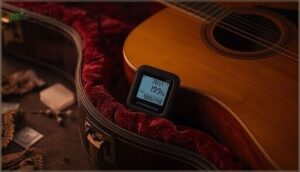
Not all humidity gauges are built the same, and the difference really matters when your guitar’s health is on the line.
Before you buy, there are a handful of key features worth knowing so you can pick the right one. Here’s what to look for.
Measurement Accuracy and Calibration
Accuracy is everything when your guitar’s health is on the line. For reliable humidity control and instrument care, look for digital hygrometers with accuracy standards of ±1–3% RH.
Sensor drift is real — analog models can wander 5–10% without warning. Calibrate using the salt test method every six months.
Placement impact matters too: keep sensors away from humidifier sponges for honest readings.
Display Readability and Design
A display you can actually read saves you guesswork.
Look for a digital hygrometer with high contrast digits and large character size — you want numbers visible the moment you crack the case.
Models like the Oasis OH-2, SensorPush, and Inkbird ITH-10 nail this.
A backlit screen feature helps in dim rooms, while clear icon labels and an adjustable viewing angle round out a solid guitar hygrometer design.
Placement Options for Guitars and Cases
Where you put your hygrometer matters more than most players realize. A soundhole mount reads the air right at the guitar’s heart, while under-neck placement or a case wall mount gives you a quick glance the moment you open the lid.
- Soundhole Mount – most guitar-focused reading
- Under-Neck Placement – visible at first open
- Case Wall Mount – stays clear of the finish
- Velcro Secure – easy removal, no sliding
- Closet Shelf Position – covers multiple guitars at once
Battery Life and Maintenance Needs
Keeping your digital hygrometer running is simple guitar maintenance.
Most units, including the Oasis OH-2 and SensorPush, run over a year on a single coin cell. Their power‑saving modes stretch battery life without sacrificing accuracy.
Watch for the low‑battery indicator, then swap it out — stick to an annual battery replacement schedule and keep spare batteries in your case.
Recalibrate every six months to stay reliable.
Extra Functions (Thermometer, Alerts, Connectivity)
Some hygrometers do far more than show a number. The Oasis OH2 and SensorPush track temperature alongside humidity, flagging safe-zone indicators right on screen.
SensorPush adds Bluetooth sync and Wi‑Fi remote access, so temperature alerts reach your phone before damage starts.
Data logging records weeks of history, letting you spot slow seasonal drifts. A digital hygrometer with these extras gives you real control.
Types of Humidity Gauges for Guitar Storage
Not all humidity gauges work the same way, and the right type makes a real difference for your guitar. Knowing your options helps you choose what actually fits your setup.
Here are the three main types worth knowing.
Digital Vs. Analog Hygrometers
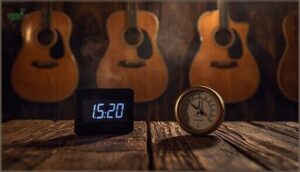
Two types of hygrometers exist for guitar storage, and each one has real trade-offs worth knowing.
- Digital hygrometers update every few seconds, show exact numbers, and offer easy offset calibration — ideal for humidity control and instrument protection.
- Analog models need no batteries, but sensor drift can push errors past 10% without regular maintenance.
- Cost comparison favors analog upfront, but digital wins long-term reliability.
In-Case Vs. Room Hygrometers
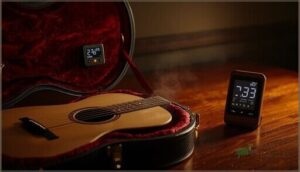
store your guitar changes everything. Guitar case hygrometers handle microclimate monitoring — tracking the air your instrument actually breathes in a closed case.
Room units focus on seasonal trend detection, flagging dry winter stretches early.
Smart players use a dual sensor strategy: one inside, one outside. case buffering effect is real — case humidity often runs 10 points higher than room air.
Wireless and Smart Hygrometer Options
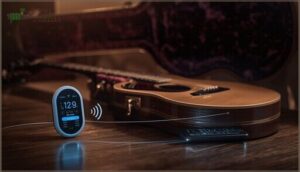
Smart options take monitoring further.
The SensorPush connects via Bluetooth up to 325 feet, syncing data to an app with cloud backup and customizable alerts.
Govee Bluetooth Hygrometer updates every two seconds — fast enough to catch sudden drops.
Inkbird ITH10 pairs across multiple devices with solid battery longevity.
With app alerts and multi-device pairing, you’re always in the loop, wherever you are.
Top 8 Humidity Gauges for Guitar Storage

Not all humidity gauges are built the same, and the right one can make a real difference in how well you protect your guitar.
These eight options cover a range of needs, from simple clip-on monitors to smart wireless sensors.
Here’s what’s worth your attention.
Oasis O Digital Hygrometer Clip
The Oasis OH-2 Digital Hygrometer Clip is a solid choice for guitar storage and instrument preservation. Clip installation takes seconds — just attach it inside your case near the sound hole.
It reads humidity and temperature display in real time, updating every 10 seconds. Calibration procedure is straightforward using Boveda kits. One CR2032 battery powers it all, and case compatibility is nearly universal.
1. SensorPush HT1 Smart Temperature Humidity Sensor
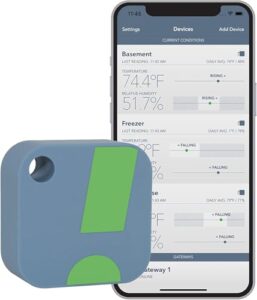
If you need to watch more than one guitar or a whole room, the SensorPush HT1 steps things up. It tracks humidity from 0 to 100 percent and temperature from -40 to 140°F, with accuracy within ±3% RH and ±0.5°C.
The compact cube fits anywhere — a shelf, a cabinet, even near a wall hanger.
It logs readings every minute and stores two weeks of data.
Pair it with the app for custom alerts when conditions drift outside your safe range.
| Best For | Anyone who needs to keep tabs on temperature and humidity across multiple spots — whether that’s a guitar collection, a wine cellar, a greenhouse, or really any space where conditions matter. |
|---|---|
| Humidity Accuracy | +/- varies (2-10%) |
| Display Type | Digital LCD |
| Weight | 1.6 oz |
| Battery Type | Not specified |
| Mounting Method | Clip-on / Velcro |
| Primary Function | Monitor |
| Additional Features |
|
- Super easy to set up and small enough to tuck just about anywhere
- Logs readings every minute and keeps two weeks of history, so you always have data to look back on
- Battery lasts one to two years, so it’s pretty much set-it-and-forget-it
- Bluetooth range tops out around 75 feet, which can be limiting in bigger spaces
- Remote monitoring requires a separate WiFi gateway, which adds to the overall cost
- No built-in WiFi means you’re dependent on that extra hardware for alerts on the go
2. Oasis Digital Hygrometer Thermometer
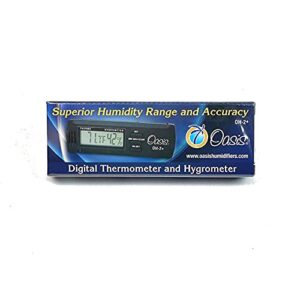
For something built to live inside a guitar case, the Oasis OH-2+ punches well above its price. At $29.95, it tracks humidity between 20–80% with ±3% accuracy and updates every 10 seconds — quick enough to catch a problem before it starts.
The slim 4" x 1.25" profile tucks neatly with the retaining clip or Velcro squares included.
One CR2032 battery keeps it running about 12 months.
Min-max memory lets you see how conditions shifted while your guitar sat unattended.
| Best For | Acoustic guitar players who want a reliable, no-fuss way to keep tabs on humidity and temperature inside their case. |
|---|---|
| Humidity Accuracy | +/- not specified |
| Display Type | App/Bluetooth |
| Weight | 0.811 oz |
| Battery Type | Not specified |
| Mounting Method | Freestanding |
| Primary Function | Monitor |
| Additional Features |
|
- Slim, compact design fits easily in any guitar case without getting in the way
- Updates every 10 seconds and stores min/max readings so you never miss a shift
- Good accuracy at ±3% keeps you informed without breaking the bank at $29.95
- Calibration range is limited to ±6%, which may not satisfy players who need precision
- Some buyers have run into defects or frustrating customer service depending on the seller
- Doesn’t always come with a holder, so mounting it cleanly can be a minor hassle
3. Humitar ONE Acoustic Guitar Humidifier Hygrometer
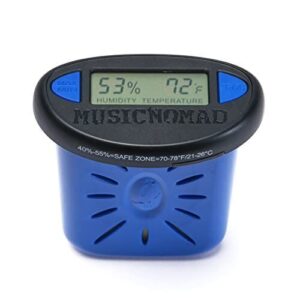
Two tools in one — that’s the Humitar ONE’s biggest selling point. It combines a digital hygrometer with a built‑in Humid-i-Bar sponge humidifier, so you are monitoring and maintaining humidity at the same time.
The sensor updates every 20 seconds and shows real‑time RH and temperature on a small LCD. It runs on a single AG13 battery and fits neatly inside most acoustic guitar cases. If you want one less thing to juggle, this one’s worth considering.
| Best For | Acoustic guitar players who want a simple, all-in-one solution to monitor and maintain humidity without carrying separate tools. |
|---|---|
| Humidity Accuracy | +/- 3% |
| Display Type | Digital LCD |
| Weight | 1.92 oz |
| Battery Type | Not specified |
| Mounting Method | Freestanding |
| Primary Function | Monitor |
| Additional Features |
|
- Combines a hygrometer and humidifier in one compact device — less gear, less hassle
- Updates humidity and temperature readings every 20 seconds so you always know what’s going on
- Easy to use and fits in most acoustic guitar cases without a fuss
- Needs regular refilling with distilled water, which can get tedious
- Sticks out vertically, so it might not play nice with snug or hard-shell cases
- A few users have questioned how accurate the hygrometer actually is
4. MusicNomad Guitar Hygrometer Monitor
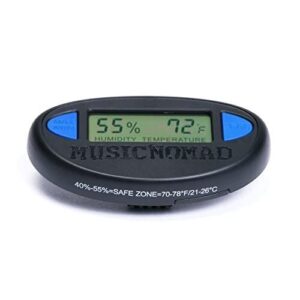
The MusicNomad HONE clips right onto your guitar strings and sits inside the sound hole — no case lid required.
It reads humidity and temperature every 20 seconds and tracks max/min values over time, so you can spot problem trends before damage happens. The LCD is easy to read, and switching between Fahrenheit and Celsius takes one button press.
One AG13 battery keeps it running for months. Simple, practical, and purpose‑built for guitars.
| Best For | Guitar owners who want a simple, no-fuss way to keep an eye on humidity and temperature before their instrument takes damage. |
|---|---|
| Humidity Accuracy | +/- not specified |
| Display Type | Digital LCD |
| Weight | 1.73 oz |
| Battery Type | AG 13 |
| Mounting Method | Sound hole mount |
| Primary Function | Humidify & Monitor |
| Additional Features |
|
- Clips right onto the strings — no extra mounting, no hassle
- Updates every 20 seconds and tracks max/min trends over time
- Runs on a single AG13 battery for months
- No on/off switch — you have to pull the battery to power it down
- Can leave an impression on your case lid if installed on top of the strings
- May not fit or work well in every guitar case setup
5. Inkbird Digital Thermometer Hygrometer
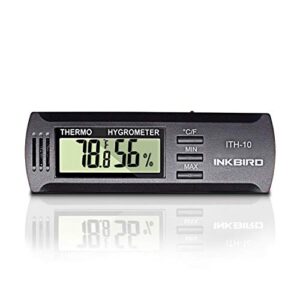
The Inkbird ITH-10 is a no-frills hygrometer that does exactly what guitar players need — and nothing more. At just 0.32 ounces, it slips inside any case without a second thought.
It tracks humidity within ±3% and temperature within ±1.8°F, covering the 40–60% RH sweet spot where your guitar stays healthy. The built-in max/min memory lets you catch dangerous dips or spikes you might’ve missed overnight. Velcro mounting is included, so you’re ready to go straight out of the box.
| Best For | Guitar players and hobbyists who want a simple, affordable way to keep tabs on humidity and temperature in a case, humidor, or small space. |
|---|---|
| Humidity Accuracy | +/- not specified |
| Display Type | Digital LCD |
| Weight | 0.67 oz |
| Battery Type | AG 13 |
| Mounting Method | String clip |
| Primary Function | Monitor |
| Additional Features |
|
- Tiny and light — at 0.32 oz, you’ll forget it’s even in your case
- Tracks max/min readings so you catch any overnight swings you missed
- Works right out of the box with Velcro mounting included
- Accuracy can be hit or miss, and some users have had to calibrate manually
- No adjustable settings — calibration means just noting the offset and doing the math yourself
- Not ideal if you need precision-grade readings for professional or lab use
6. MusicNomad Humitar Instrument Case Humidifier
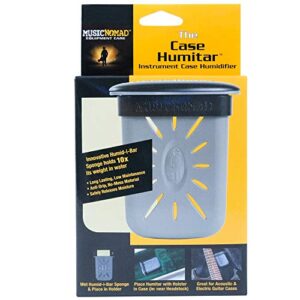
What if your case could do double duty — humidifying and monitoring? The MusicNomad Humitar MN303 does exactly that.
Its Humid-I-Bar sponge holds 10 times its weight in water, releasing moisture evenly so your guitar stays in the 45–55% RH range without dripping on your finish. The anti-drip design works whether your case stands upright or lies flat.
Just pop the quick-flip top to check the sponge — if it feels dry, soak it in distilled water and you’re back in business.
| Best For | Guitar and large-instrument players in dry climates who want a simple, set-it-and-check-it way to protect their gear from humidity damage. |
|---|---|
| Humidity Accuracy | +/- 3% |
| Display Type | Digital LCD |
| Weight | 0.32 oz |
| Battery Type | Not specified |
| Mounting Method | Freestanding |
| Primary Function | Monitor |
| Additional Features |
|
- The Humid-I-Bar sponge holds a ton of water and releases it evenly — no drips, no soggy surprises on your finish
- Quick-flip top makes it dead simple to check if it needs a refill, no guesswork involved
- Compact and lightweight, so it tucks right into your case without taking up space
- The adhesive backing can struggle with shaggy or textured case linings — it might not stick the way you’d hope
- You have to use distilled water every time, or you risk mold and bacteria building up in the sponge
- If you let the sponge dry out completely, it can develop hard spots and lose some of its effectiveness
7. Oasis Guitar Case Humidifier
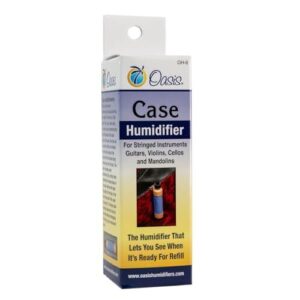
The Oasis OH-6 is built for one job — keeping your guitar safe from dry air — and it does it well. Two neodymium magnets hold it firmly to the steel clip inside your case, right near the headstock.
Fill it with distilled water using the included 10 cc syringe, and the Humigel crystals take care of the rest. Refills take about a minute every three to seven days. It’s small, reliable, and won’t leak on your finish.
| Best For | Acoustic guitar players (and other string instrument owners) who live in dry climates and want a simple, low-maintenance way to protect their instrument from humidity damage. |
|---|---|
| Humidity Accuracy | N/A (humidifier) |
| Display Type | None |
| Weight | 2.11 oz |
| Battery Type | Not specified |
| Mounting Method | Adhesive holster |
| Primary Function | Humidify |
| Additional Features |
|
- Stays put with two strong neodymium magnets — no fumbling around inside the case
- Refilling is quick and easy with the included syringe, and it only takes about a minute
- Works for more than just guitars — violins, violas, and cellos are all fair game
- Needs a distilled water refill roughly once a week, which can feel like a chore
- Struggles in really extreme dry conditions (think below 10% humidity)
- The adhesive backing on the metal plate tends to wear out with regular use
Best Practices for Using Guitar Hygrometers
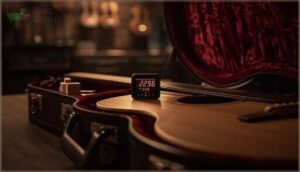
Owning a hygrometer is only half the battle — knowing how to use it well is what actually keeps your guitar safe.
A few simple habits make a big difference in getting reliable readings and catching problems before they cause damage.
Here’s what every guitar owner should know.
Correct Placement for Accurate Readings
Where you place your hygrometer matters as much as which one you buy. A reading that’s off by 10% can mean the difference between a healthy guitar and a cracked top.
- Soundhole Positioning captures humidity right where your humidifier works.
- Neck Clip Placement monitors the fretboard zone effectively.
- Case Wall Adhesive mounts keep sensors clear of strings.
For guitar storage tips, maintain humidifier distance — keep sensors several inches away to avoid false readings.
Calibration and Ongoing Maintenance
Even the best hygrometer drifts over time. That’s why calibration is part of good guitar care and maintenance.
Salt Test Calibration seals your unit in a bag with a saltwater slurry for 4–36 hours — it should read 75% RH. Boveda Kit Calibration simplifies this, hitting 75% in 24 hours without the mess.
| Task | Frequency |
|---|---|
| Calibration check | Every 6 months |
| Battery replacement procedure | Every 1–2 years |
| Surface cleaning method | Monthly |
| Reset adjustment function | After battery swap |
Monitoring and Adjusting Humidity Levels
Calibration is dialed in, consistent monitoring is where real guitar care and maintenance happens.
Check your hygrometer daily — winter heating drops case microclimate humidity fast. If readings fall below 40%, add a humidifier immediately. Above 60%? Drop in silica gel.
Models with wireless sync and real-time alerts make this simple, notifying you before temperature‑humidity correlation shifts and damages your instrument.
Seasonal Adjustments for Guitar Storage
Seasons shift fast, and your guitar feels every change.
- Winter Dryness drops indoor humidity below 30% — rewet your soundhole humidifier every 5–7 days.
- Summer Moisture swells guitar tops and raises action — use absorb packs for humidity control.
- Spring Shift and Fall Preparation demand weekly hygrometer checks and fresh humidipaks.
Regional Climate shapes your guitar storage and protection routine year-round.
Frequently Asked Questions (FAQs)
What is the best humidity for storing guitars?
For guitar protection, keep relative humidity between 45 and 55 percent.
This range promotes fretboard stability, prevents wood expansion damage, and stops mold prevention issues before they start.
Pair it with 72–77°F for best results.
What is the best humidity system for a guitar?
A two-way system like D’Addario Humidipak is your best bet. It automatically adds or removes moisture to hold 45–50% RH — no guesswork, no daily fuss. Simple, reliable guitar protection.
Where to put a hygrometer in a guitar case?
Place it in the open case section, neck heel spot, headstock zone, accessory door mount, or wall side mount — each gives reliable humidity control for instruments and provides long-term instrument preservation.
Does keeping a guitar in its case help with humidity?
Yes, keeping your acoustic guitar in its case genuinely helps.
Case humidity buffering slows moisture swings, giving your guitar wood a steadier environment — especially during dry winter months when rapid swing mitigation matters most.
Can humidity damage electric guitars permanently?
Absolutely — and the damage can be permanent. Neck warping, fretboard shrinkage, finish cracking, hardware corrosion, and body wood cracks are all real risks for your electric guitar without proper humidity control.
How often should hygrometers be replaced?
Most hygrometers last 5 to 7 years, but sensor lifespan shortens fast with calibration drift, battery degradation, and environmental wear. If readings stay off after calibration, that’s your replacement indicator.
Do different wood types require different humidity?
All woods breathe — but not the same way. Spruce tops crack fast in dry air, while mahogany stays calmer. Rosewood and maple each have their own sweet spot.
Most guitars thrive at 45–55% RH.
What causes hygrometer readings to become inaccurate?
Several things throw off readings: sensor contamination, temperature fluctuations, improper placement, calibration drift, and low battery.
Even a quality digital hygrometer like SensorPush loses accuracy without proper care and consistent temperature monitoring.
Should vintage guitars have stricter humidity control?
Yes — vintage guitars need tighter humidity control. Think of them like aged museum pieces.
Their brittle wood, hide glue joints, and thin tops demand a strict 45–50% range to prevent cracks and value depreciation.
Can hygrometers work for electric guitars too?
electric guitars need humidity control too. Solid-body humidity fluctuations still affect fretboard moisture and wood stability.
Clip a hygrometer inside your case using case clipping methods to protect your investment year-round.
Conclusion
An ounce of prevention is worth a pound of cure, especially when you’re protecting a wooden instrument that never stops moving.
Choose one or two humidity gauges for guitar storage that you trust, put them where they can read accurately, and check them often. Those tiny numbers on the display are your early warning system, giving you time to humidify, dehumidify, or move the guitar before damage starts.
Your future self will thank you quietly.
- https://www.stewmac.com/strings-and-accessories/instrument-accessories/humidity-control-and-monitoring/digital-humidity--temperature-gauge/
- https://blog.taylorguitars.com/using-a-guitar-humidifier-and-other-guitar-humidity-tips
- https://orangewoodguitars.com/blogs/news/a-player-s-guide-to-humidity-and-acoustic-guitars
- https://guitartopreview.com/best-hygrometer-for-guitar/
- https://guitarsonmain.com/blogs/news/the-effects-of-high-humidity-on-your-guitar-and-how-to-combat-them