This site is supported by our readers. We may earn a commission, at no cost to you, if you purchase through links.
Here’s the thing about Okeetees that trips up new keepers: there’s no single "Okeetee gene" sitting on a chromosome waiting to be found. You can’t point to one spot and say "that’s it." Instead, you’ve got a whole crew of genes working together, like ingredients in grandma’s pie recipe, each one adding a little something to the final flavor.
That’s what makes okeetee corn snake genetic facts so fun to dig into. This isn’t a morph, it’s a locality line, born from wild South Carolina snakes and shaped by breeders chasing bold color and crisp black borders.
Stick around, and you’ll start seeing these snakes the way a geneticist does.
Table Of Contents
- Key Takeaways
- What Makes Okeetee Corn Snake Genetics Unique?
- How Polygenic Okeetee Traits Are Inherited
- Okeetee Corn Snake Traits and Identification
- Genes That Modify The Okeetee Appearance
- Breeding Okeetee Corn Snakes Responsibly
- Frequently Asked Questions (FAQs)
- What is the rarest cornsnake morph?
- Where do okeetee corn snakes come from?
- How do corn snake genetics work?
- Can Okeetee corn snakes be het for other traits?
- How do Okeetee genetics impact temperament?
- Are there visual markers of inbreeding in Okeetee lines?
- What is the average clutch size for Okeetee morphs?
- How long do Okeetee corn snakes typically live?
- What size enclosure does an adult Okeetee need?
- How often should you feed an Okeetee corn snake?
- Conclusion
Key Takeaways
- Okeetee isn’t a single-gene morph—it’s a locality line from wild South Carolina snakes, so its bold color and black borders come from a whole team of genes working together, not one switch flipping on.
- Because these traits are polygenic, clutchmates can look pretty different from each other even with the same parents, thanks to genetic shuffling, modifier genes, and even incubation conditions.
- You can spot a true Okeetee by five signature traits: red-orange ground color, wide black saddle borders, crisp dorsal blotches, checkerboard belly markings, and natural variation between siblings.
- Responsible breeding means selecting for the classic look while tracking pedigrees and locality, and actively fighting genetic drift with bigger breeding pools and diversity monitoring to keep the line healthy for generations.
What Makes Okeetee Corn Snake Genetics Unique?
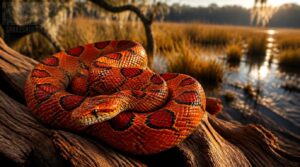
When you hear "Okeetee," you’re not just hearing a color pattern—you’re hearing a whole backstory. This snake earned its stripes (or saddles, really) through a mix of place, history, and careful breeding choices. Here’s what actually makes its genetics stand out from the pack.
If you’re curious how selective breeding sharpened those fiery orange saddles and black borders over generations, this guide to corn snake colors and patterns breaks it down nicely.
Locality Line Versus Single-Gene Morph
When you hear "Okeetee," think origin story, not single trait. A locality line carries genetic variance from a whole wild population, so siblings vary in shade and border width.
A single-gene morph works like a light switch, one allele flips and every carrier looks nearly identical. Locality lines rely on selective breeding for polygenic inheritance and broader trait expression range. Genetic variation arises from mutations, recombination, and independent assortment, which is essential for understanding trait diversity in populations like the Okeetee corn snake. Genetic variation and inheritance plays a key role in how traits are passed down and expressed in reptile morphs.
South Carolina Okeetee Origins
So where did this whole thing start? Right in South Carolina’s coastal plain, near the Okeetee region, where sandy soils and sun-soaked clearings shaped the look.
- Coastal Plain Adaptation to warm, open habitat
- Early Breeder Selection for bold saddle borders
- Regional Lineage Purity kept through careful pairing
- Habitat-Driven Coloration from sun and prey
- Founding Snake Documentation tracing original wild stock
Wild Traits Refined Through Selection
Those wild founders weren’t perfect out the gate. Breeders picked snakes with the boldest borders and richest orange, paired them, then repeated it. That’s selective breeding in action, and it works slow, like baking a pie from scratch.
Hatchlings still show real genetic variance, but by the third molt, colors settle and trait expression locks into that classic Okeetee look.
Lineage Standards Among Breeders
So how do you know a snake’s really Okeetee and not just orange with black bits? You check the paperwork. Good breeders keep pedigree verification going back generations, with locality notes and health certs attached.
That’s what lineage documentation standards are for, proving the line’s real before you ever pay a dime.
How Polygenic Okeetee Traits Are Inherited
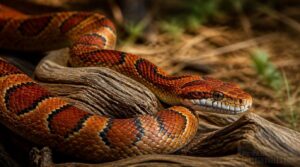
When you look at an Okeetee’s colors, you’re not looking at one gene doing all the work. You’re looking at a whole team of genes, each pulling their own weight like relatives at a potluck. Here’s what’s actually going on behind that bold red-and-black look.
Multiple Genes Shape Appearance
Think of Okeetee looks like a family recipe, not one secret ingredient. Polygenic trait expression means many genes team up, some boosting red, some sharpening borders. Gene interaction shapes each snake differently, like siblings baking the same pie but each getting their own crust texture. Allele combinations from mom and dad decide how bold or soft that final pattern turns out.
If you want to see how these inherited traits actually build a snake’s identity, this guide to understanding snake morphs breaks down the genetics behind every pattern.
Okeetee coloring is a family recipe, many genes teaming up so each snake bakes its own crust
Additive Effects Across Generations
When breeders pair sharp Okeetees generation after generation, small gains stack like snowballs. This is allele accumulation in action, each pairing nudging trait expression a notch deeper.
- Bolder red hues
- Wider black borders
- Crisper blotch edges
That’s how trait intensification over generations happens, and why heritability climbs when polygenic inheritance gets steady, deliberate encouragement.
Color Pigment Pathways
Picture your snake’s color like a layer cake baked by three different cooks. The melanin synthesis pathway controls black, carotenoid pigment deposition and xanthophyll color conversion build orange, and pheomelanin balance plus structural color iridophores add glow. Pigment genetics stacks these layers through allele interaction, so no two Okeetees bake up identical.
Black Border Width Inheritance
Ever wonder why some Okeetees look like they’re wearing a thick racing stripe? That’s additive genetic effects at work.
Wide-border parents pass wider borders down, narrow pairs do the opposite, and alleles stack like pie layers each generation.
Pedigree tracking helps predict it, since environment barely nudges the outcome, this is genetics doing the heavy lifting, clutch after clutch.
Why Clutchmates Look Different
Same clutch, same parents, so why do siblings look nothing alike? Blame the genetic shuffle.
- Genetic Assortment Effects mix alleles differently each egg
- Modifier Gene Influence shifts color and border width
- Environmental Incubation Impact tweaks pigment during development
- Pattern Edge Differences show up even in true siblings
Polygenic inheritance guarantees phenotypic variation, no trait fixation, ever.
Okeetee Corn Snake Traits and Identification
So once you know the genes are stacked up like ingredients in a pie, the next question is: what does the finished pie actually look like? That’s where identification comes in—spotting an Okeetee isn’t about guesswork, it’s about knowing the five telltale signs. Let’s break down what to look for, one trait at a time.
Red-Orange Ground Color
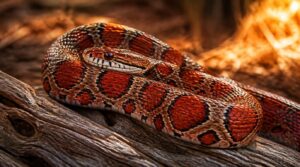
That fiery glow isn’t luck, it’s chemistry. Bold red color comes from diet-driven carotenoids mixing with melanin, creating your snake’s signature warmth.
Temperature and light shift things too: warm incubation deepens orange, bright light boosts red. Combined with polygenic inheritance, no two hatchlings glow quite the same, even with crisp black borders framing that gorgeous Red-Orange Ground Color.
Wide Black Saddle Borders
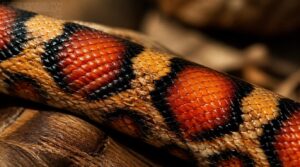
Now flip your attention to the black borders framing all that color. Standard okeetee lines run 2.5 to 4mm thick, curving slightly inward like a picture frame around each saddle. Edges stay solid, no fuzzy feathering. Borders widen a touch in juveniles, then settle as your snake matures. And here’s the fun part: border width is heritable, so selective breeding locks in that crisp, family trademark look.
Crisp Dorsal Blotch Patterns
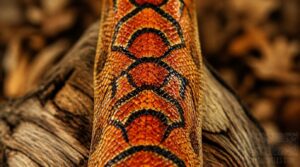
Now look down the spine. That’s where saddle marks link up into a crisp dorsal blotch, sharp-edged and running straight down the midline like a well-drawn racing stripe.
Scale row alignment keeps everything tidy, though blotch width and edge sharpness vary a bit clutch to clutch. Pattern genetics reward symmetry, and that midline contrast is what gives okeetees their signature punch.
Checkerboard Belly Markings
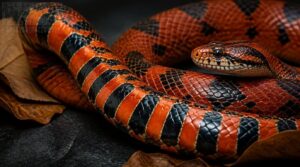
Flip your snake over and the show keeps going. Ventral pattern genetics paint a checkerboard belly, alternating orange and black squares lined up like tile work.
Belly scale alignment keeps borders crisp, but checkerboard intensity variation means some bellies pop harder than others. Juvenile belly contrast usually runs bold, like a fresh coat of paint before it mellows.
Natural Variation Within Lines
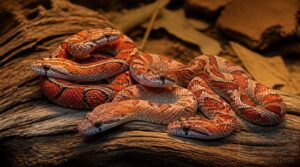
Even siblings from the same clutch won’t be carbon copies. Clutchmate color differences show up fast, some with bolder ground color, others softer. Border width variation runs a few millimeters wide, eye stripe brightness shifts 5-8%.
That’s polygenic genetic expression at work, proof that lineage purity doesn’t mean identical snakes, just reliable genetic diversity and steady color stability.
Genes That Modify The Okeetee Appearance
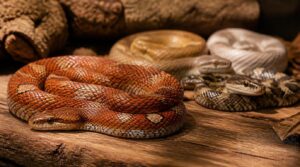
So you’ve got the classic Okeetee look down, but what happens when a single gene jumps into the mix? That’s when things get interesting – one extra gene can flip colors, wipe out borders, or reshape the whole pattern. Let’s break down the main ones you’ll actually run into.
Single-Gene Versus Polygenic Effects
Think of a single gene like flipping one light switch, on or off, done. Polygenic traits work more like a dimmer, dozens of tiny genes blending together for shading and border width.
Why it matters for you:
- Predicting hatchling looks gets tricky
- Clutchmates vary despite shared parents
- Modifier genes tweak intensity quietly
- Epistasis adds surprise twists
Amelanism and Reverse Okeetees
Picture pulling black pepper out of a spice mix. That’s Amelanism at work, wiping out dark pigment but leaving red-orange fully intact.
| Trait | Amelanistic | Reverse Okeetee |
|---|---|---|
| Ground color | Pale, bright | Pale with dark saddles |
| Amel gene | Present | Present |
| Belly pattern | Reduced | Bold, checkerboard |
Hatchling visual differentiation shows fast, so lineage tracking matters.
Hypomelanism and Ultramel Effects
When the Hypo gene shows up, it’s like turning down the oven on your black pigment, giving you softer, warmer okeetees.
Pair it with Ultramel Okeetee genetics, and you get real color intensity variation, oranges and golds instead of harsh red.
Border definition shift follows too, saddles thin out, and belly pattern enhancement gets bolder from the contrast.
Tessera Pattern Combinations
Ever seen a snake that looks like it’s wearing a patchwork? That’s Tessera pattern genetics at work, mixing striped and diamond shapes into the classic Okeetee base.
- Tessera edge variation shifts saddle border width
- Blotch elongation rate changes stripe length
- Checkerboard symmetry stays intact on the belly
- Pattern alignment effects create speckled fringes
- Tessera mutation preserves main color, alters layout only
Scaleless Okeetee Expression
Run your hand down a scaleless Okeetee and you’ll swear it’s wearing silk. This scale mutation softens texture and blunts pattern contrast, but the ground color holds strong.
It’s polygenic scaleless inheritance, so modifier genes decide how smooth things get. Even with that satin finish, ventral checkerboard retention stays put on the belly, proof this pattern genetics trick only changes the wrapping, not the gift.
Breeding Okeetee Corn Snakes Responsibly
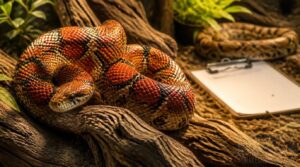
Breeding Okeetees isn’t just tossing two snakes together and hoping for the best — it takes a game plan. When you’re aiming for that classic look, every choice you make ripples down through generations. Here’s what actually matters when you’re building a responsible breeding program.
Selecting for Signature Traits
Good breeders don’t just breed pretty snakes, they breed to a standard. That means locking in bold red-orange color, wide black borders, and crisp saddle patterns through careful selective breeding, generation after generation.
Visual assessment happens at set stages, records track every clutch, and only snakes matching the target phenotype move forward. Consistency beats luck every time.
Predicting Variable Offspring Appearance
Locking in a standard is one thing, but hatchlings still surprise you. That’s offspring color variability in action, coral to copper, thanks to polygenic scoring across genes.
Border width prediction stays fuzzy too, additive effects nudge things generation to generation. Pattern sharpness and belly marking variation follow the same rule: no two siblings inherit identically.
Tracking Pedigrees and Locality
So how do you keep siblings honest about where they came from? You track pedigrees like a family scrapbook. Geographic provenance ties each snake to South Carolina roots, sometimes Abbotts Okeetee lines specifically.
Pedigree verification and lineage consistency records catch drift early. Ancestral trait documentation plus solid locality breeding standards protect genetic diversity while keeping that classic look intact.
Preventing Genetic Drift
Pedigrees only work if you actually act on what they tell you. When lines get too cozy, that’s genetic drift creeping in.
Fight it with bigger breeding pools, rotational pairings, and occasional outside gene flow. Track effective population size, run diversity monitoring protocols, and adjust before bottlenecks shrink your gene pool down to a puddle.
Preserving Healthy Genetic Diversity
Once genetic drift prevention is on autopilot, the bigger goal is keeping your whole gene pool thriving, not just one clutch.
- Track haplotypes
- Monitor allelic richness
- Manage inbreeding coefficients
- Rotate breeding stock
- Support effective population size
Healthy genetic diversity protects your lines from bottlenecks, keeping Okeetees vibrant, resilient, and true to their wild roots for generations.
Frequently Asked Questions (FAQs)
What is the rarest cornsnake morph?
Picture a breeder hunting for years, only to land one scaleless Okeetee hatchling. That’s your answer: scaleless Okeetee tops the rarity chart, with Lavender, Tessera, and Ultramel combos close behind, each limited by tricky genetic bottlenecks.
Where do okeetee corn snakes come from?
Your snake’s roots trace to Jasper County, South Carolina, near the Okeetee Hunt Club, where wild Pantherophis guttatus from the Pee Dee and Savannah River corridors got selectively bred into today’s bold, high-contrast Okeetee look.
How do corn snake genetics work?
Think of it like a recipe with many cooks: multiple genes stack their effects, shifting allele frequencies over generations. Pigment pathways, pattern genes, and inheritance probability all mix together, so no single ingredient decides how your snake turns out.
Can Okeetee corn snakes be het for other traits?
Yes, absolutely. Trait stacking happens all the time, since locality genes and single-gene traits like Amel or Hypo ride along on separate alleles. So hets pass silently, showing up only when paired with another matching het down the line.
How do Okeetee genetics impact temperament?
Bold saddles won’t make a snake with a bad attitude, that’s not how genes work. Temperament heritability, activity level genes, and early handling shape behavior. Your Okeetee stays a docile temperament, curious nonvenomous constrictor, same as any well-raised corn snake.
Are there visual markers of inbreeding in Okeetee lines?
Watch for saddle border variance, deeper head color saturation, rough scale edges, dull belly pattern sharpness, and fading dorsal blotch clarity. These signs signal genetic drift, so it’s time to widen your family lines.
What is the average clutch size for Okeetee morphs?
Picture a picnic basket brimming with eggs, that’s clutch season for you. Clutch size ranges from 10 to 30 eggs, shifting with female health, lineage variation, and environmental influences, so no two breeding cycles ever play out quite the same way.
How long do Okeetee corn snakes typically live?
With solid care, you’re looking at 15 to 20 years, sometimes 25 plus. Wild snakes fare worse, dodging predators and rough weather. Genetics won’t guarantee longevity, but good feeding schedules, stable temps, and health monitoring stack the odds in your favor.
What size enclosure does an adult Okeetee need?
Home is where you hang your hat, and your snake needs a proper one too. Give adults a 40 gallon tank minimum, 4 to 6 feet long, with room to stretch and explore comfortably.
How often should you feed an Okeetee corn snake?
Feed juveniles every 5 to 7 days, subadults every 7 to 10, and adults every 10 to 14 days. Chunkier snakes do fine on 14 to Watch body condition and adjust prey size as they grow.
Since leftover waste and soiled bedding invite trouble, it helps to know how to prevent snake infections through steady habits like spot-cleaning after every feeding.
Conclusion
Somewhere, a wild Okeetee is laughing at anyone who thought one gene ran this whole show. It doesn’t work that way, and honestly, that’s the good news.
Okeetee corn snake genetic facts boil down to teamwork, dozens of genes trading notes like cousins arguing over grandma’s pie recipe. No two batches taste exactly alike, but the family flavor always shines through. Master that idea, and you’ll read every hatchling like a genetics pro.