This site is supported by our readers. We may earn a commission, at no cost to you, if you purchase through links.

Your snake’s hunting instincts are hardwired—but feeding pet snakes the RIGHT way? That’s where many reptile owners stumble. A ball python won’t tell you when their frozen mouse is too large or their calcium levels are dropping.
You’ve got to master the science BEFORE problems show up! Here’s the truth: proper reptile snake food supplies aren’t just about tossing prey into a tank. You need species-specific sizing, nutritional variety, safe thawing methods, and quality feeding tools that prevent stress and disease.
Getting these fundamentals right means the difference between a thriving snake and costly vet visits for metabolic bone disease or chronic malnutrition.
Table Of Contents
- Key Takeaways
- Essential Snake Food Types for Reptiles
- Top 10 Reptile Snake Food Supplies
- 1. Repti Zoo Cricket Feeder Mixer
- 2. Boao Reptile Food Water Bowls
- 3. Fulanfudi Reptile Food And Water Bowls
- 4. CalPalmy Reptile Food and Water Bowls
- 5. Reptile Corner Food And Water Bowls
- 6. Zilla Reptile Vitamin Supplement Spray
- 7. Flukers Reptile Food Bowl
- 8. CoguZed Reptile Corner Food Water Bowls
- 9. Reptile Stainless Steel Feeding Tongs
- 10. Canned Insect Food for Pets
- Choosing The Right Diet for Your Snake
- Safe Food Storage and Handling Tips
- Maintaining Optimal Nutrition and Health
- Frequently Asked Questions (FAQs)
- What supplies do I need for a snake?
- What is the best thing to feed a snake?
- What can I feed my corn snake if I don’t have mice?
- What is a snake’s favorite food?
- What reptile snake food is highest in protein?
- Can snakes eat wild caught insects safely?
- How often should I feed my pet snake?
- What is the best snake food for beginners?
- Are live or frozen foods better for snakes?
- Can snakes eat fish or amphibians safely?
- Conclusion
Key Takeaways
- Proper snake nutrition requires matching prey size to your snake’s girth at each life stage, rotating between whole prey options (frozen mice, rats, quail, and insects), and supplementing with calcium and vitamin D3 to prevent metabolic bone disease.
- Essential feeding supplies include stable, easy-to-clean bowls (ceramic, stainless steel, or BPA-free plastic with anti-skid bases), long feeding tongs (10+ inches) to prevent bites, and vitamin spray supplements to fill nutritional gaps in frozen prey diets.
- Safe food handling demands refrigerator thawing (24 hours at 34-39°F), thorough bowl sanitation with hot soapy water plus weekly bleach disinfection, and vacuum-sealed storage to extend frozen prey shelf life up to 2-3 years.
- Feeding frequency varies by age—hatchlings need meals every 5-7 days for growth while adults thrive on 10-14 day schedules—and you should monitor for deficiency warning signs like soft jaw bones, patchy scales, cloudy eyes, or persistent feeding refusal.
Essential Snake Food Types for Reptiles
Your snake’s health starts with what you feed it! The right food keeps their bones strong, their skin vibrant, and their energy levels exactly where they need to be.
Understanding the different needs across corn snake morphs, care, and maintenance will help you tailor their diet perfectly as they grow.
Here are the five essential food types every snake owner should know about.
Frozen Mice and Rats
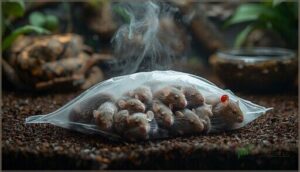
Frozen mice and rats are your go-to staple for most pet snakes—simple, nutritious, and SAFE! These whole prey frozen foods deliver balanced rodent nutrition that bolsters your snake’s health from head to tail.
Here’s what makes frozen thawing the smart choice:
- Humane sourcing ensures CO2-euthanized prey with no stress to your snake
- Proper prey storage in vacuum-sealed bags prevents freezer burn and keeps nutrition intact
- Flexible reptile feeding options from pinkies to jumbo rats match any snake size
- Clean snake feeding eliminates injury risk compared to live prey
Whole Prey Blends (e.g., MEGA-BLEND)

Want to level up your snake’s menu beyond basic rodents? Whole Prey Blends like MEGA-BLEND pack guinea fowl, chicken, quail, rabbit, and bullfrog into convenient sausage-style links—multiple protein sources in ONE meal! These Whole Animal Diets deliver premium Prey Blend Nutrition with natural bone, organs, and feathers intact.
MEGABLEND Benefits include a calcium-rich profile and easy portioning. Your Reptile Feeding Systems just got smarter with these nutrient-dense Prey Link Varieties! For a deeper dive into the specific ingredients and target species, check out this.
Insect-Based Diets (Dubia, Hornworms, Waxworms)
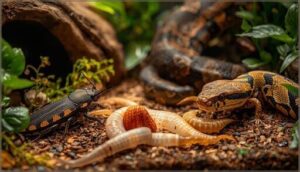
Looking for powerful Insect Nutrition beyond rodents? Dubia roaches deliver 40–50% protein with near-ideal calcium ratios—perfect for InsectBased Diets! Hornworms pack muscle-building protein for juveniles, while Waxworms make irresistible high-fat treats. Here’s your game plan:
- Match insect size to your snake’s age
- Gut-load Dubia with calcium-rich greens
- Use Hornworms for picky eaters
- Limit Waxworm Feeding to occasional rewards
- Rotate insects weekly for balanced Roach Supplements intake
Your snake will THRIVE on variety! For a nutritional breakdown between these feeder insects, see this detailed comparison of protein and mineral content.
Alternative Prey (Quail, Chicks)

Ready to shake up your Whole Prey Diets? Quail and chicks deliver outstanding Quail Nutrition—packed protein, calcium-rich bones, and organ vitamins!
Match Prey Sizing to your snake’s girth: 10–20g chicks for juveniles, 60–120g quail for adults. Always prioritize Sourcing Quality from trusted suppliers with biosecurity measures.
Thawing Quail safely in a dedicated setup prevents contamination and keeps your Reptile Dietary Needs on track!
Supplemented Prey and Treats
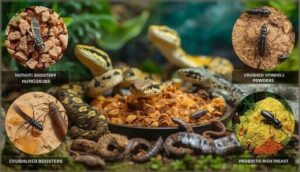
Protein Supplements packed with amino acid blends transform your Whole Prey Diets into powerhouse meals! NutriGrubs and fortified treats deliver Nutrient Boosters—calcium, vitamin D3, omega-3s—for exceptional Reptile Nutrition.
Gut Health enhancers with probiotics support digestion, while Prey Variety keeps picky eaters engaged. These Alternative Feeding Methods fill dietary gaps and boost bone strength in your Reptile Food rotation!
Top 10 Reptile Snake Food Supplies
You’ve nailed the food part—now let’s talk about the supplies that make feeding your snake safer and easier! The right bowls, tongs, and supplements transform mealtime from stressful to smooth.
Here are ten essential tools every snake owner should have in their reptile care arsenal.
1. Repti Zoo Cricket Feeder Mixer
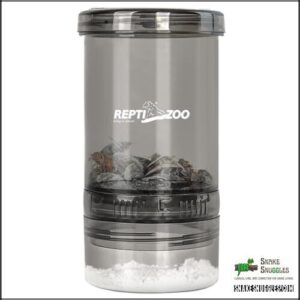
If you’re tired of wasting calcium powder and watching crickets escape, the Repti Zoo Cricket Feeder Mixer is your ultimate solution! This transparent acrylic mixer uses patented shaking technology to coat insects evenly in seconds.
The rotating outlet lets you control portion sizes, while the bottom storage catches leftover powder—reducing waste by up to 73%! At 6 inches tall with a twist-lock ventilated lid, it keeps feeders secure during prep. Clean it easily between uses, and you’ll wonder how you ever managed without it!
| Best For | Reptile owners who want to save time, reduce calcium powder waste, and ensure their bearded dragons, chameleons, geckos, or other reptiles get evenly coated feeder insects without the mess. |
|---|---|
| Material | Acrylic |
| Target Species | Reptiles |
| Easy to Clean | Yes |
| Suitable for Food | Yes |
| Compact Size | Yes |
| Special Feature | Patented Shaking |
| Additional Features |
|
- Cuts supplement waste by up to 73% with bottom storage that catches leftover powder
- Patented shaking technology coats crickets evenly in seconds without the hassle of traditional methods
- 6-inch escape-proof design with twist-lock ventilated lid and adjustable outlet keeps feeders secure during prep
- May leak small amounts of powder during the shaking process
- Requires regular cleaning to maintain effectiveness
- Higher price point compared to basic feeder containers
2. Boao Reptile Food Water Bowls
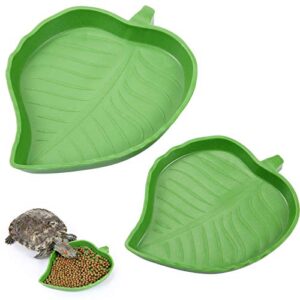
Your snake deserves a feeding station that WON’T tip over mid-meal! Boao’s leaf-shaped bowls come in a 2-piece set with a wide, stable base that prevents spills during feeding sessions.
You’ll get both small (4.72 x 3.74 inches) and large (6.06 x 4.88 inches) sizes, perfect for different prey portions. The smooth BPA-free plastic resists staining from blood and fluids—making cleanup incredibly simple! Plus, the shallow design lets you secure them with adhesive to prevent your snake from overturning them.
| Best For | Snake owners who need stable, easy-to-clean feeding bowls that won’t tip over during meals or water breaks. |
|---|---|
| Material | Plastic |
| Target Species | Reptiles |
| Easy to Clean | Yes |
| Suitable for Food | Yes |
| Compact Size | Yes |
| Special Feature | Leaf Shape |
| Additional Features |
|
- Two-size set accommodates different feeding portions and water needs
- Wide, stable base with shallow design minimizes spills and tipping
- Smooth BPA-free plastic resists staining and cleans up easily after messy feedings
- May be too small for larger snake species
- Requires adhesive or securing method to fully prevent overturning
- Leaf shape might collect debris in curved edges
3. Fulanfudi Reptile Food And Water Bowls
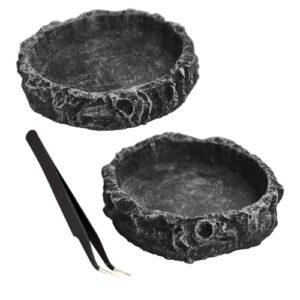
When your terrarium needs a natural aesthetic and practical function, Fulanfudi delivers both. This 2-pack features realistic tree stump bowls made from durable resin that won’t crack when you’re thawing frozen prey.
The set includes feeding tweezers—perfect for hand-feeding finicky eaters or positioning prey safely. You’ll love how EASY the non-porous surface cleans after messy meals.
The bowls are heavy enough to resist tipping from enthusiastic snakes, though smaller insects like mealworms might escape. Best suited for compact enclosures and small to medium reptiles.
| Best For | Reptile owners with small to medium pets who want a natural-looking feeding setup that’s easy to clean and includes tweezers for safe hand-feeding. |
|---|---|
| Material | Resin |
| Target Species | Reptiles |
| Easy to Clean | Yes |
| Suitable for Food | Yes |
| Compact Size | Yes |
| Special Feature | Tree Stump Design |
| Additional Features |
|
- Realistic tree stump design adds natural aesthetic to your terrarium
- Heavy resin construction prevents tipping from active reptiles
- Easy-to-clean non-porous surface and includes feeding tweezers
- Small size limits use to compact enclosures and smaller reptiles
- May not contain tiny feeders like mealworms effectively
- Tweezers might be too sharp for some delicate feeding situations
4. CalPalmy Reptile Food and Water Bowls
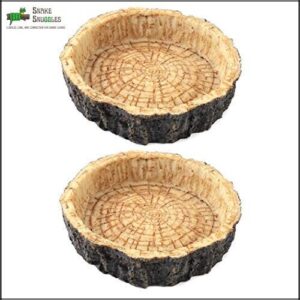
Looking for bowls that ACTUALLY stay put during feeding time? CalPalmy’s BPA-free plastic design features an anti-skid base that keeps meals exactly where you place them—no more chasing bowls across your enclosure!
At roughly 4″ x 4″ x 0.9″, these lightweight bowls resist cracking from tipping and clean up fast with their smooth, nonporous surface. You’ll appreciate the rounded edges that protect your snake during handling.
They’re dishwasher safe (top rack!) and dry quickly to prevent mold. Perfect for small to medium snakes!
| Best For | Snake owners with small to medium-sized pets who want lightweight, stable feeding bowls that won’t tip over and are easy to clean between meals. |
|---|---|
| Material | Plastic |
| Target Species | Reptiles |
| Easy to Clean | Yes |
| Suitable for Food | Yes |
| Compact Size | Yes |
| Special Feature | Novelty Bowl |
| Additional Features |
|
- Anti-skid base keeps the bowl in place during feeding, so you’re not constantly repositioning it
- BPA-free plastic with smooth surfaces makes cleanup quick and prevents bacteria buildup
- Dishwasher safe and dries fast, which helps you maintain a hygienic feeding routine
- Size might be smaller than expected at 4″ x 4″, so double-check it’ll work for your snake
- Some users struggle to clean it thoroughly when using meat-based foods
- Not suitable for larger reptiles—strictly a small to medium snake product
5. Reptile Corner Food And Water Bowls
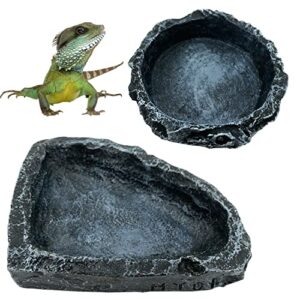
Tight on space? Corner bowls nestle perfectly into enclosure angles, giving you MORE floor area for hides and climbing features!
These space-savers come in ceramic for cooler water temps, stainless steel for rust-free durability, or BPA-free plastic for lightweight convenience. Many feature textured interiors that prevent slipping during feeding—genius for snakes who dive into their meals!
You’ll find sizes from 4 ounces for hatchlings up to 32 ounces for larger species. Some even include wall-mount adapters that keep substrate OUT of your snake’s water!
| Best For | Reptile owners with small to medium pets like geckos, bearded dragons, or hermit crabs who want a low-maintenance feeding setup that maximizes terrarium floor space. |
|---|---|
| Material | Resin |
| Target Species | Reptiles |
| Easy to Clean | Yes |
| Suitable for Food | Yes |
| Compact Size | Yes |
| Special Feature | Rock-Like Surface |
| Additional Features |
|
- Rock-like design blends naturally with terrarium décor while staying functional and easy to clean
- 2-pack set provides both water and food dishes at once, perfect for daily feeding routines
- Shallow depth prevents drowning risks for smaller reptiles and amphibians
- Small size won’t work for larger reptiles that need bigger water sources
- May arrive with a chemical smell that requires washing before use
- Rough surface texture might be harder to scrub clean compared to smooth bowls
6. Zilla Reptile Vitamin Supplement Spray

Your snake devours frozen mice like a champ, but is it getting ALL the vitamins it needs? That’s where Zilla’s Vitamin Supplement Spray becomes your secret weapon!
This 8-ounce bottle packs vitamins C, B1, B2, B6, B12, D3, niacin, folic acid, and beta carotene—everything your snake needs for strong bones and vibrant energy. Just mist prey items 15 seconds before feeding. The fine spray coats evenly, whether you’re offering frozen-thawed rodents or live insects.
Pair it with calcium spray for COMPLETE nutritional coverage!
| Best For | Reptile and amphibian owners looking for an easy spray-on vitamin supplement to boost their pets’ nutritional intake, especially for animals that don’t get regular outdoor sunlight exposure. |
|---|---|
| Material | Liquid |
| Target Species | Reptiles |
| Easy to Clean | Yes |
| Suitable for Food | Yes |
| Compact Size | Yes |
| Special Feature | Vitamin Spray |
| Additional Features |
|
- Delivers a comprehensive blend of essential vitamins (C, B-complex, D3, and beta carotene) in one convenient spray bottle
- Quick and easy application—just spray prey items 15 seconds before feeding for even coating
- Works well alongside calcium supplements to provide complete nutritional support for bone health and overall vitality
- Spray nozzle can stick or break according to some user reports, which may require transferring to another bottle
- Application can get messy depending on spray consistency and technique
- Needs to be paired with a separate calcium supplement for optimal results rather than being a complete all-in-one solution
7. Flukers Reptile Food Bowl

Your snake deserves a feeding station that looks natural AND stays clean! The Flukers Reptile Food Bowl features a realistic rock-like exterior that blends seamlessly into your terrarium setup. The heavyweight non-porous resin won’t tip during feeding—no more chasing bowls around the enclosure!
Here’s the BEST part: it wipes clean in seconds with soap and water, preventing bacteria buildup. At 8 x 5 x 1 inches, it’s perfect for medium snakes. Use it for thawed mice or fresh water—it accommodates both beautifully!
| Best For | Snake owners who want a stable, easy-to-clean feeding dish that looks natural in their terrarium. |
|---|---|
| Material | Plastic |
| Target Species | Reptiles |
| Easy to Clean | Yes |
| Suitable for Food | Yes |
| Compact Size | Yes |
| Special Feature | Natural Tones |
| Additional Features |
|
- Heavy resin construction prevents tipping during feeding time
- Non-porous surface wipes clean quickly and resists bacteria
- Realistic rock appearance blends into naturalistic enclosures
- Colors may vary from what’s pictured
- Grooves can trap water and potentially harbor mold
- Size may be too large for smaller enclosures or very small snakes
8. CoguZed Reptile Corner Food Water Bowls
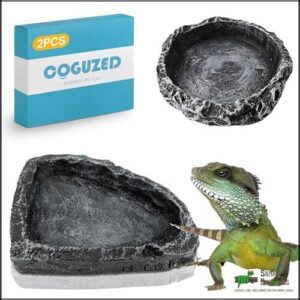
Tight on terrarium space? The CoguZed Reptile Corner Food Water Bowls optimize every inch with their clever corner design! This dual-compartment system gives your snake food AND water in one compact unit—no more juggling multiple dishes.
The non-porous plastic resists scratches and bacteria, making cleanup a breeze. At 5.9 x 5.11 x 1.49 inches, it’s PERFECT for small to medium snakes. The reinforced corners withstand curious nudging without tipping. Plus, it’s dishwasher-safe for easy sanitation!
| Best For | Owners of small to medium snakes, geckos, or lizards who need a space-saving solution that combines food and water in one corner-friendly setup. |
|---|---|
| Material | Resin |
| Target Species | Reptiles |
| Easy to Clean | Yes |
| Suitable for Food | Yes |
| Compact Size | Yes |
| Special Feature | Earthy Colors |
| Additional Features |
|
- Corner design maximizes terrarium space while providing separate compartments for food and water
- Durable resin construction with a naturalistic rock-like appearance that blends into reptile habitats
- Easy to clean and maintain with a smooth, non-porous surface that resists bacteria
- Smaller dimensions (5.9 x 5.11 x 1.49 inches) may not accommodate larger reptiles or those needing deeper water bowls
- Limited to small to medium-sized terrariums due to compact design
- Shallow depth might require frequent refills for reptiles that drink a lot of water
9. Reptile Stainless Steel Feeding Tongs
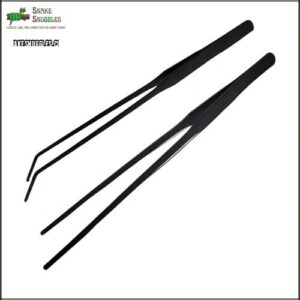
Safety first—you need feeding tongs for EVERY snake meal! The MRTIOO Stainless Steel Feeding Tongs measure 10-3/5 inches, keeping your hands safely away from strikes. Those serrated tips? They grip frozen mice securely without tearing flesh during thawing.
Choose between straight and curved models for the perfect feeding angle in your setup. At just 5 ounces, they’re lightweight enough for daily use yet durable enough to last years. The rust-resistant construction manages regular sanitizing—just wash and dry thoroughly!
| Best For | Reptile owners who feed live or frozen prey and want to protect their hands from accidental bites or strikes during feeding time. |
|---|---|
| Material | Stainless Steel |
| Target Species | Reptiles |
| Easy to Clean | Yes |
| Suitable for Food | Yes |
| Compact Size | Yes |
| Special Feature | Long Tweezers |
| Additional Features |
|
- Long 10-3/5″ design keeps your hands at a safe distance from snakes, lizards, and other reptiles during feeding
- Serrated tips provide a secure grip on prey items like frozen mice, crickets, and mealworms without tearing or dropping
- Durable stainless steel construction resists rust and holds up to regular cleaning and sanitizing
- Can be stiff when new and may take some time to break in for smoother handling
- Requires thorough cleaning and drying after each use to prevent rust buildup
- Price point may be higher than some users expect for feeding tongs
10. Canned Insect Food for Pets
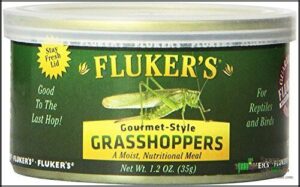
Convenience meets nutrition with Fluker’s Canned Grasshoppers! This 1.2-ounce jar delivers gourmet-style insect chunks perfect for smaller snakes, lizards, and amphibians. You’re getting all-natural grasshoppers packed with protein—no live prey hassles required.
Store opened cans in the refrigerator for up to one month. Watch for swelling or odd smells that signal spoilage before feeding. Some reptiles reject the texture initially, so mix with familiar foods during adaptation.
The strong odor when opening? That’s normal! Just portion carefully and wash bowls between servings to prevent bacterial buildup.
| Best For | Reptile and amphibian owners looking for a convenient, protein-rich alternative to live insects without the hassle of maintaining live prey. |
|---|---|
| Material | Plastic |
| Target Species | Reptiles |
| Easy to Clean | Yes |
| Suitable for Food | Yes |
| Compact Size | Yes |
| Special Feature | Resealable Jar |
| Additional Features |
|
- All-natural grasshoppers provide excellent protein nutrition for various pets including reptiles, amphibians, fish, and birds
- Resealable 1.2-ounce jar stays fresh in the refrigerator for up to a month after opening
- Eliminates the need to handle or store live insects while still delivering gourmet-quality nutrition
- Strong odor when opening the can may be off-putting to some pet owners
- Some pets reject the product due to texture differences compared to live or dried insects
- Quality control issues reported with occasional spoilage or can swelling
Choosing The Right Diet for Your Snake

Picking the right food isn’t just about what’s available—it’s about what YOUR snake actually needs at each stage of life. The wrong prey size or unbalanced diet can lead to serious health issues, while the perfect feeding plan keeps your snake thriving for years.
Let’s break down exactly how to match food to your snake’s age, add variety safely, tackle picky eating, and get nutrition dialed in perfectly.
Matching Prey Size to Snake Age
Getting prey size right is THE cornerstone of reptile health and nutrition. Your snake’s girth determines everything—younger snakes need prey matching the width behind their head, then you’ll shift to larger options as snake growth rates accelerate.
Follow prey size charts closely, respect gape limitations, and adjust feeding schedules during ontogenetic shifts. Corn snakes especially benefit from this precision!
Benefits of Diet Variety
Dietary variety transforms reptile nutrition from good to GREAT! Rotating prey types—mice, rats, whole-prey blends, insects—delivers nutrient diversity your snake simply can’t get from one food source alone.
The benefits of dietary rotation include:
- Nutrient balance improves across vitamins, minerals, and amino acid profiles
- Gut health benefits from varied textures stimulating digestive enzyme production
- Immune support strengthens through broader antioxidant and micronutrient intake
- Dietary rotation prevents reliance on single nutritionally balanced diets
- Alternative feeding methods keep your snake engaged and adaptable!
Handling Picky Eaters
Your snake turning up its nose at dinner? You’re not alone! Picky eaters need patience and smart feeding strategies. Start with appetite stimulation through scent cues—try rubbing prey with fish oil or warming it slightly.
Dietary enrichment matters too: rotate between mice, alternative feeding methods like whole-prey blends, and insect options weekly. This reptile nutrition approach keeps meals interesting!
| Strategy | How It Helps |
|---|---|
| Scent boosters (fish oil) | Enhances prey attraction |
| Warmed prey items | Stimulates natural feeding response |
| Prey rotation weekly | Prevents boredom, adds nutrients |
| Gradual size increases | Matches growth without overwhelming |
| Consistent feeding routine | Reduces stress, builds habits |
Nutritional Balance and Supplements
Think of nutrients as the foundation for reptile health—without proper calcium supplements and mineral balance, your snake’s skeletal system suffers. Here’s how to nail reptile food and nutrition:
- Aim for calcium-to-phosphorus nutrient ratios between 1.0 and 1.5
- Add vitamin D3 when UV exposure is limited
- Dust prey with calcium supplements for bone support
- Rotate prey weekly for dietary variety
- Monitor for nutritionally balanced whole-prey options
Meeting vitamin needs prevents metabolic disasters!
Safe Food Storage and Handling Tips
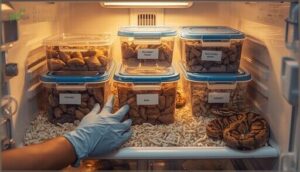
You’ve picked the perfect diet for your snake—now let’s talk about keeping that food SAFE and fresh. Proper storage and handling aren’t just about convenience; they’re about protecting your reptile from bacteria and foodborne illness.
Here’s everything you need to know to handle, thaw, and store snake food like a pro!
Proper Thawing Techniques
You can’t rush thawing frozen rodents without risking your snake’s health! Refrigerator safety means planning 24 hours ahead for that one-pound prey item to thaw at 34-39°F.
Need faster results? Cold water thaw works if you change water every 30 minutes. Microwave guidelines allow defrost settings ONLY if you’re feeding immediately.
Proper frozen prey handling protects reptile health!
Using Vacuum Sealers for Freshness
Once your frozen rodents are thawed, vacuum sealers become your BEST FRIEND for food preservation! Sealing techniques that remove air can extend snake food freezer life up to 2–3 years.
Choose 3–5 mil bags for reptile food products, and use moist vacuum modes when sealing rodents to prevent crushing. Proper bag selection and storage methods keep your reptile care supplies fresh between feedings!
Hygiene Practices for Food Bowls
After every feeding, wash your bowls with hot water and dish soap—then rinse THOROUGHLY to remove soap residue.
Sanitize weekly using 1 tablespoon unscented bleach per gallon of water for just 1 minute! Stainless steel or high-quality ceramic bowls beat porous materials hands-down for food safety.
Dry completely between uses to prevent algae and mold in your reptile care routine.
Avoiding Cross-Contamination
Sanitation protocols go beyond just bowls—contamination risks lurk wherever prey meets preparation surfaces! Follow these handling practices to keep your snake’s food safety locked down:
- Wear disposable gloves when touching raw prey, and change them between different food types
- Use dedicated tongs for each prey category to prevent cross-contact
- Store frozen items in clearly labeled, airtight containers on separate shelves
- Thaw in sealed containers at 1–4°C, never at room temperature where bacteria thrive
Maintaining Optimal Nutrition and Health

Getting the feeding schedule right is just the start of keeping your snake healthy! You also need to watch for sneaky health issues that can creep up when nutrition isn’t quite right.
Let’s cover the essentials—from how often to feed to spotting those red flags that mean something’s off with your snake’s diet.
Feeding Frequency Guidelines
Your snake’s hunger cycles aren’t guesswork—they’re biology. Adult snakes usually thrive on feeding schedules of every 7–14 days, while juveniles need meals every 5–7 days to fuel growth. Nutrient timing matters for metabolism and health.
Check this quick reference:
| Life Stage | Meal Frequency | Dietary Rhythms |
|---|---|---|
| Hatchlings | Every 5–7 days | Rapid growth phase |
| Juveniles | Every 7–10 days | Active development |
| Adults | Every 10–14 days | Maintenance mode |
| Large species | Every 14–21 days | Slower metabolism |
| Breeding females | Every 7–10 days | Increased energy needs |
Adjust raw feeding intervals based on body condition and activity!
Importance of Hydration
Beyond feeding schedules, water balance is your snake’s silent lifeline! Fresh water aids shedding cycles, kidney function, and digestion efficiency.
Watch for dehydration signs like sunken eyes or wrinkled skin—these signal urgent hydration needs. Humidity control through misting or humid hides complements water dishes, creating ideal reptile hygiene.
Consistent hydration methods prevent stress and keep your exotic pet thriving between meals!
Monitoring for Metabolic Bone Disease
Metabolic bone disease sneaks up when calcium supplements or vitamin D fall short. Early detection safeguards your snake’s metabolic health and prevents skeletal collapse.
- Check for soft jaw bones, kinked spine, or tremors—classic MBD red flags
- Maintain proper bone density through UVB exposure and fortified prey
- Schedule yearly vet exams for disease prevention and reptile care assessment
Vigilant reptile nutrition monitoring keeps your pet thriving through every growth stage.
Signs of Nutritional Deficiencies
Vigilance is your best defense against nutritional deficiencies! Watch for skin problems like patchy scales or excessive shedding—classic signs of vitamin deficits.
Eye issues such as cloudiness point to vitamin A shortfalls, while digestive trouble may signal mineral gaps.
Nutrient imbalance shows through lethargy, muscle wasting, or persistent refusal to eat. Regular monitoring of reptile care and nutrition keeps your snake thriving through proper animal nutrition and smart reptile food options!
Frequently Asked Questions (FAQs)
What supplies do I need for a snake?
You’ll need a Snake Enclosure first, plus Heating Sources and Humidity Control systems.
Don’t forget Snake Hides, quality Substrate Options, and Premium Reptile Food—including Live Foods when your snake demands variety!
What is the best thing to feed a snake?
Frozen mice and rats reign dominant for most captive snakes.
Thawed whole prey delivers complete nutrition—bone, tissue, and organs—mimicking their natural carnivore diet while keeping feeding safe and fuss-free for you.
What can I feed my corn snake if I don’t have mice?
Your corn snake can thrive on defrosted small rats, appropriately sized quail chicks, or whole prey blends like MEGA-BLEND! These alternative feeding options deliver complete snake nutrition without traditional mice.
What is a snake’s favorite food?
Most carnivores gravitate toward prey that triggers their hunting instincts.
Your snake’s feeding habits lean heavily toward appropriately sized rodents—mice and rats dominate their prey selection because they deliver complete dietary needs in one satisfying meal.
What reptile snake food is highest in protein?
Whole mice and rats top the chart at 60 to 70 percent crude protein in dry matter.
MEGA-BLEND style whole prey combinations deliver similarly dense nutrition, while Dubia roaches offer excellent insect-based protein for variety.
Can snakes eat wild caught insects safely?
You should avoid wild caught insects for your snake. Parasite control matters—wild prey risks include pesticides, parasites, and poor snake nutrition.
Stick to safer feeding alternatives like rodents for reptile care and nutrition.
How often should I feed my pet snake?
Your snake’s meal frequency depends on its age and size.
Young snakes need food twice weekly for growth, while adults thrive on weekly or biweekly feedings based on body condition and digestion rates.
What is the best snake food for beginners?
Frozen mice suit most newcomers perfectly! They’re easy to store, thaw gently, and match your Pet Snake Care needs.
Pair them with calcium supplements for complete Reptile Diets—simple Feeding Basics that build confidence fast.
Are live or frozen foods better for snakes?
You’re choosing between feeding methods here. Frozen prey wins for safety—zero bite risk, fewer parasites, and easier storage.
Live feeding sparks natural hunting, but frozen thawed offers reliable nutrition with way less stress.
Can snakes eat fish or amphibians safely?
Garter snakes and water snakes thrive on fish or amphibians as part of their natural diet.
Just make sure whole prey items match body width and rotate sources to prevent thiaminase-related vitamin B1 deficiency in your reptile.
Conclusion
Feeding fundamentals make ALL the difference! You’ve now got the reptile snake food supplies and feeding strategies to keep your snake thriving—not just surviving.
Remember: proper prey sizing, safe thawing, and nutritional variety aren’t optional extras. They’re your defense against metabolic disasters and vet emergencies.
Start applying these principles TODAY, and you’ll watch your snake’s health transform. Your commitment to mastery means your scaly companion gets the vibrant, disease-free life they deserve!