
This site is supported by our readers. We may earn a commission, at no cost to you, if you purchase through links.
Your snake hasn’t eaten in two weeks, and you notice something off—its mouth hangs slightly open between breaths, a behavior you’ve never seen before. That subtle change could be your first warning of respiratory distress, a condition that kills more captive snakes than most keepers realize.
Respiratory infections account for nearly 30% of all reptile veterinary visits, yet many owners miss the early signs until their snake is gasping for air. The challenge is that snakes don’t wheeze like mammals or cough in obvious ways—their symptoms emerge as behavioral shifts and physical cues that blend into normal activity.
Recognizing these respiratory distress signs early gives you a critical window to intervene before a treatable infection becomes life-threatening.
Table Of Contents
- Key Takeaways
- Key Signs of Respiratory Distress in Snakes
- Common Causes of Respiratory Issues
- How Respiratory Distress Affects Snake Behavior
- Diagnosing Respiratory Problems in Snakes
- Preventing Respiratory Distress in Snakes
- Frequently Asked Questions (FAQs)
- How to tell if your snake has respiratory issues?
- Can a snake recover from a respiratory infection?
- Can respiratory infections spread between different snake species?
- How long does recovery from respiratory distress take?
- Are certain snake breeds more prone to issues?
- What home treatments are safe before veterinary care?
- When is respiratory distress considered a veterinary emergency?
- Conclusion
Key Takeaways
- Respiratory infections cause 30% of reptile vet visits, yet symptoms like open-mouth breathing, nasal discharge, and audible wheezing often go unnoticed until snakes are critically ill—catching these signs within the first few days dramatically improves survival rates.
- Most respiratory problems stem from preventable husbandry mistakes: poor ventilation, humidity below 50-60%, temperatures outside the 75-92°F range, and dusty substrates create conditions where bacteria like Pseudomonas and fungi like Aspergillus thrive.
- Behavioral changes—lethargy, refusing food for 24-48 hours, abnormal head positioning, or excessive hiding—signal respiratory distress before physical symptoms become obvious, giving you a critical window to seek veterinary care.
- Recovery requires both medical intervention (antibiotics, antifungals) and immediate fixes to enclosure conditions, with mild cases improving in 1-2 weeks but moderate infections demanding 3-6 weeks of treatment alongside strict quarantine protocols to prevent spread.
Key Signs of Respiratory Distress in Snakes
Respiratory problems don’t always announce themselves with dramatic symptoms. Your snake might show subtle changes days or even weeks before things get serious.
Watch for behavioral symptoms like lethargy or loss of appetite, as they often signal respiratory trouble before physical signs appear.
Here are the five most reliable warning signs you need to watch for in your animal.
If you’re new to reptile care, starting with the right UVB lighting systems for beginners can help you prevent many of these health issues before they start.
Open-mouth Breathing and Gasping

Open-mouth breathing isn’t normal for your snake—it signals respiratory distress or airway obstruction. When gasping episodes occur, you’ll notice your snake holding its mouth open at rest, struggling to pull air through blocked airways.
If you notice mucus discharge from your snake’s nose, this confirms a respiratory infection is blocking their nasal passages and forcing mouth breathing.
These breathing difficulties often worsen after handling or stress. Labored breathing with visible effort during inhalation points to ventilation issues that demand immediate veterinary attention, especially if gasping persists beyond a few minutes.
In other species, such as humans, persistent open-mouth breathing can lead to long-term respiratory issues.
Nasal and Oral Discharge

Nasal discharge often appears alongside open-mouth breathing when your snake develops a respiratory infection. You’ll spot serous, mucoid, or purulent material around the nostrils—each type reveals disease severity. Discharge color matters: clear signals irritation, while yellow or green indicates bacterial involvement requiring intervention.
- Thick, paste-like mucus production suggests nasal irritation or developing sinus infections
- Bilateral discharge points to systemic respiratory distress affecting both passages
- Crusty buildup around nostrils indicates chronic respiratory obstruction and dehydration
A thorough review of the diagnostic approaches for nasal discharge can help identify underlying causes and guide effective treatment.
Audible Wheezing or Clicking
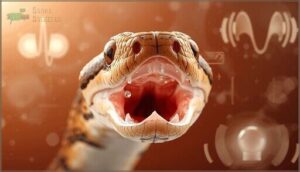
Beyond visible discharge, you’ll sometimes hear your snake’s respiratory distress. Wheezing sounds emerge as high-pitched whistles signaling airway obstruction or fluid buildup in the tracheal passages. Clicking accompanies each breath when turbulence strikes narrowed airways—these auditory diagnosis clues reveal breathing difficulty you can’t ignore.
If you notice these warning signs, understanding why your snake is breathing heavily can help you respond quickly before the condition worsens.
| Sound Type | What It Indicates | When You’ll Notice It |
|---|---|---|
| High-pitched wheeze | Narrowed airways or fluid | During stress or activity |
| Clicking sounds | Tracheal issues or blockages | At rest in quiet moments |
| Persistent noise | Ongoing respiratory infection | Throughout daily observation |
Listen closely during handling—respiratory sounds often intensify when your snake moves or feels stressed, making snake breathing problems easier to detect.
Lethargy and Loss of Appetite

Respiratory distress often drains your snake’s energy reserves, triggering lethargy that’s among the most subtle warning signs of illness. You’ll notice decreased appetite within 24 to 48 hours as breathing becomes painful during feeding.
Energy conservation kicks in while the body fights infection. Watch for dehydration management needs—sunken eyes and weight loss compound respiratory disease.
Nutritional support becomes critical when snake respiratory problems persist beyond two days.
Abnormal Head and Neck Positioning

When your snake struggles to breathe, you’ll often see its head tilted to one side or neck extended unnaturally—a respiratory posture that signals distress.
If you also notice your snake breathing with its mouth open, that’s another clear sign something’s wrong with its respiratory health.
Lateral posturing and gape response accompany openmouth breathing in snakes with respiratory infection. Watch for head tilt signs paired with lethargy or wheezing. These snake breathing problems demand immediate veterinary attention before respiratory distress worsens.
Common Causes of Respiratory Issues

Respiratory problems in snakes don’t happen in a vacuum—they’re triggered by specific factors you can identify and address.
Some stem from pathogens like bacteria or parasites, while others result from the environment you’ve created in the enclosure.
Understanding these five common causes helps you pinpoint what’s compromising your snake’s breathing and how to fix it.
Bacterial Infections
Bacterial infections rank among the most common culprits behind respiratory distress in your snake. Microscopic organisms like Pseudomonas, Mycobacterium, and Mycoplasma invade the respiratory tract, triggering inflammation and mucus buildup.
Understanding these respiratory bacteria helps you recognize when infection control becomes critical:
- Gram-negative bacteria cause rapid-onset infections requiring prompt antibiotic therapy
- Bacterial resistance develops when treatment courses aren’t completed fully
- Microbial ecology shifts when enclosure hygiene falters
- Respiratory infection symptoms worsen without veterinary intervention
- Antibiotic treatment selection depends on culture results and sensitivity testing
Your snake’s respiratory health depends on early detection and appropriate care.
Viral and Fungal Diseases
While bacteria often steal the spotlight, viral infections and fungal diseases pose equally serious threats to snake respiratory health. Nidovirus and other respiratory viruses spread quickly through collections, while Aspergillus and Penicillium fungi thrive in poorly ventilated enclosures. Snake immunology differs from mammals—your pet can’t shake these infections without intervention.
| Pathogen Type | Common Examples | Primary Risk Factors | Recovery Outlook |
|---|---|---|---|
| Viral Outbreaks | Nidovirus, respiratory viruses | Poor quarantine, direct contact | Guarded; supportive care essential |
| Respiratory Mycoses | Aspergillus, Penicillium | High humidity, inadequate airflow | Variable; early treatment critical |
Disease transmission accelerates when you house multiple snakes together. Fungal infections often develop secondary to viral respiratory disease, creating complex coinfections that demand aggressive antifungal therapy alongside respiratory support.
Parasitic Infestations
Parasites don’t always announce themselves with obvious symptoms. Nematodes infiltrating your snake’s respiratory tract trigger coughing and wheezing, while ectoparasites like mites create crusty lesions that invite secondary respiratory infections.
Understanding the parasite life cycle helps you spot infestation symptoms early—pale skin, labored breathing, unexplained weight loss. Respiratory protozoa and snake ectoparasites compromise immunity, turning minor irritation into infectious diseases in reptiles requiring aggressive mite control and veterinary intervention.
Poor Enclosure Conditions
Your setup might be silently sabotaging your snake’s lungs. Ventilation issues and poor air quality monitoring trap ammonia and dust, triggering respiratory distress.
Temperature control gaps below 70°F (21°C) weaken immunity, while humidity management failures breed mold. Enclosure design mistakes—cluttered layouts, damp substrate—fuel bacterial growth.
Husbandry isn’t optional; proper enclosure maintenance determines whether your snake breathes freely or struggles with chronic snake respiratory problems.
Environmental Stressors
Stress doesn’t just come from inside the enclosure—it radiates from outside too. Noise reduction matters: constant vibrations or loud sounds increase cortisol, weakening reptile health.
Air quality management includes avoiding chemical fumes and fragrances that irritate airways. Temperature fluctuations and humidity control failures compound the problem. Ventilation systems prevent stale air buildup.
Your snake care routine must address these hidden threats through careful enclosure maintenance and consistent husbandry practices to prevent respiratory distress.
How Respiratory Distress Affects Snake Behavior

When a snake can’t breathe properly, you’ll see it in how they move—or don’t move.
Their entire daily routine shifts as they try to compensate for the lack of oxygen.
Understanding these behavioral changes helps you catch problems before they become life-threatening emergencies.
Changes in Activity Levels
When respiratory distress takes hold, you’ll notice your snake’s activity level changes dramatically. Movement patterns shift from normal exploration to shorter bursts followed by extended rest periods.
Exercise tolerance plummets—your snake tires quickly during handling and needs longer recovery times. Lethargy becomes obvious as behavioral cues like refusing meals and staying motionless in one corner signal deteriorating snake health.
Unusual Resting or Posture
Your snake’s posture analysis tells you everything you need to know about its comfort. Watch for abnormal body language like ventral curling where the belly presses hard into the substrate, or a rigid, elevated neck stretch that screams respiratory distress.
These coiled postures aren’t typical resting behaviors—they’re compensatory moves to ease labored breathing. Posture analysis reveals what lethargy alone won’t show you.
Reduced Feeding Response
When your snake repeatedly refuses meals—even with varied prey or scent stimulation—suspect respiratory issues alongside lethargy. Decreased appetite often signals underlying infection or metabolic stress before obvious wheezing appears.
Environmental factors like poor temperature gradients suppress feeding behavior and worsen respiratory distress. Track every rejected meal. Persistent anorexia combined with labored breathing demands immediate veterinary assessment to prevent nutritional deficits and progressive weight loss.
Increased Hiding or Avoidance
Beyond appetite loss, you’ll notice your snake retreating more often—even during daylight hours. This hiding behavior signals stress response to respiratory distress.
Watch for these environmental factors:
- Prolonged sheltering in cooler corners to ease feverish respiration
- Reduced alertness and slower reaction to stimuli
- Camouflaged breathing difficulties masked inside hide boxes
Excessive avoidance paired with lethargy means airway irritation demands veterinary attention before respiratory cues become critical.
Diagnosing Respiratory Problems in Snakes

Getting to the bottom of respiratory problems in your snake requires more than just watching for symptoms—you need a proper diagnosis.
Your vet will use a combination of hands-on examination, imaging technology, and your observations to pinpoint what’s wrong.
Understanding what happens during this diagnostic process helps you know what to expect and how to communicate what you’ve noticed at home.
Physical Examination Indicators
Your vet will first assess respiratory patterns—watching for open-mouthed breathing or labored breathing with visible chest effort. They’ll check body language for lethargy, abnormal posture, and muscle tone indicating weakness.
Scale condition around the glottis reveals mucus buildup from snake breathing problems. Eye appearance changes, like sunken or cloudy eyes, often accompany respiratory distress. These observations guide further testing.
Diagnostic Imaging (X-rays, CT Scans)
When physical signs point toward respiratory infections, diagnostic imaging reveals what’s hidden inside your snake’s coelomic cavity.
Radiographic techniques show lung consolidation and airway blockages clearly.
Your vet may use contrast agents for better respiratory visualization, though imaging safety requires sedation to prevent movement artifacts during veterinary care. A CT scan benefits include three-dimensional views that expose subtle respiratory distress invisible on standard X-rays.
Recognizing Early Versus Advanced Signs
Timing is everything in catching respiratory distress before it turns critical. Early signs of respiratory issues show up as subtle shifts in snake behavior—occasional nasal discharge, slight changes in respiratory patterns, or reduced appetite over 5–7 days.
Respiratory infections that are further along bring unmistakable distress signals:
- Persistent open-mouth breathing with visible effort
- Audible wheezing or clicking during every breath
- Blood-tinged discharge and severe lethargy
Health monitoring catches breathing difficulties early, when treatment success rates stay highest.
Preventing Respiratory Distress in Snakes
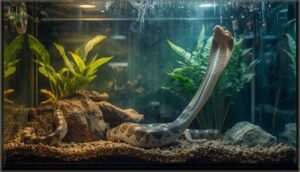
Prevention is always easier than treatment in regards to respiratory distress in snakes.
Most respiratory problems don’t just happen—they’re the result of small husbandry mistakes that build up over time.
Most respiratory problems in snakes stem from small husbandry mistakes that accumulate over time
By focusing on five key areas, you can dramatically reduce your snake’s risk of developing these serious complications.
Optimal Enclosure Setup
Your enclosure design sets the stage for healthy snake respiratory function. Proper ventilation systems demand a 12 to 16 inch intake at the base and an 8 to 12 inch exhaust up top—this creates steady airflow management that prevents stagnant pockets where pathogens thrive.
Substrate selection matters too: choose non-dusty materials like reptile carpet or paper towels to minimize respiratory irritants during routine snake husbandry and enclosure management activities.
Proper Humidity and Temperature Control
You can’t separate snake respiratory health from climate control—your snake breathes what its enclosure offers. Maintain 50 to 60 percent humidity levels and temperature gradients from 75 to 92 Fahrenheit using calibrated instruments at both ends.
Poor ventilation systems paired with inadequate enclosure materials trap moisture and pathogens. Monitor daily with hygrometers and thermometers because respiratory issues develop when these parameters drift beyond species-specific ranges.
Quarantine Practices for New Snakes
You’ll guard your collection’s respiratory health by quarantining every new snake for six to eight weeks in a dedicated space. Use separate equipment, change clothes between enclosures, and schedule a reptile vet exam within week one.
Health screening detects respiratory infections before they spread—biosecurity measures aren’t optional when one sick snake can compromise your entire husbandry protocol.
Reducing Stress and Supporting Immunity
Beyond quarantine, your snake’s immune system needs daily support to resist respiratory infections. Chronic stress weakens immunity—handle your snake only when necessary, limit feeding disruptions, and maintain consistent temperature gradients.
Think of sleep patterns and nutrition tips for yourself: reptiles thrive on predictability. Stress management through stable husbandry directly prevents respiratory issues, giving your snake’s defenses the upper hand against bacterial and viral threats.
Routine Health Monitoring and Cleaning
Daily sanitation and enclosure maintenance work hand-in-hand to prevent respiratory issues before they start. Your health checks during cleaning protocols reveal early warning signs—nasal discharge, labored breathing, or unusual posture.
Here’s what proper habitat hygiene looks like in practice:
- Wipe down surfaces with reptile-safe disinfectant every morning
- Replace substrate every 1–2 weeks to prevent bacterial buildup
- Inspect eyes, nostrils, and mouth during weekly handling sessions
- Track appetite and weight changes to spot trends early
Consistent husbandry and prevention are your best tools in reptile care.
Frequently Asked Questions (FAQs)
How to tell if your snake has respiratory issues?
Watch for labored breathing patterns, nasal discharge, audible wheezing, and reduced appetite.
Your snake may rest with its neck extended upward or open its mouth frequently—clear respiratory distress signals requiring prompt veterinary care.
Can a snake recover from a respiratory infection?
Yes, snakes can recover from respiratory infections with prompt veterinary guidance and proper antibiotic treatment.
Most healthy snakes show improvement within 1 to 4 weeks when you address underlying husbandry issues alongside respiratory care.
Can respiratory infections spread between different snake species?
Respiratory infections absolutely spread between snake species through shared enclosures and contaminated surfaces.
Bacteria like Pseudomonas, viruses, and fungal pathogens cross species boundaries easily, making strict quarantine and biosecurity measures essential infection control practices.
How long does recovery from respiratory distress take?
Recovery time for respiratory infection varies widely based on severity. Mild cases improve within one to two weeks with proper respiratory care.
While moderate distress management requires three to six weeks of breathing therapy and snake rehabilitation.
Are certain snake breeds more prone to issues?
Certain morphs carry genetic predisposition to respiratory anatomy weaknesses.
Ball python lavender morphs and inbred carpet pythons historically showed higher respiratory distress rates.
Breeding practices combining multiple traits without careful selection increase snake health vulnerabilities substantially.
What home treatments are safe before veterinary care?
Before veterinary care, you can offer safe hydration, gentle handling, humidity control within species ranges, and stable warmth. Don’t force feed or medicate.
Emergency care means minimizing stress until professional help arrives.
When is respiratory distress considered a veterinary emergency?
Open-mouth gasping, blue tongue discoloration, breathing exceeding 60 breaths per minute, or sudden collapse signals that critical care is needed.
These Emergency Signs demand Urgent Assessment—respiratory failure progresses rapidly, making immediate Veterinary Intervention essential for survival.
Conclusion
Your snake can survive months without food, yet respiratory distress signs in snakes demand action within days. That difference matters.
The clicking breath you ignore today becomes pneumonia by next week—and once your snake gasps with its mouth open, you’re fighting against time. Check humidity levels tonight. Observe breathing patterns tomorrow morning. Because the best treatment for respiratory illness is the one you never need to administer.