This site is supported by our readers. We may earn a commission, at no cost to you, if you purchase through links.

Most vets never touch a snake in vet school. Reptile medicine barely gets a passing mention in most programs, so when your ball python stops eating or your corn snake shows a swollen jaw, you can’t just call the clinic down the street. You need someone trained specifically in reptile anatomy and behavior.
That gap matters more than most owners realize until they’re standing in an ER lobby holding a pillowcase.
Finding a qualified snake vet near me takes more than a Google search and a prayer. Here’s how to find one you can trust, before you actually need to.
Table Of Contents
- Key Takeaways
- How to Find a Snake Vet Nearby
- Browse Snake Vets by State
- How to Choose a Snake Veterinarian
- Snake Vet Services to Expect
- Book and Prepare for Your Visit
- Frequently Asked Questions (FAQs)
- How much does a snake vet visit cost?
- What kind of vet treats snakes?
- How much does a vet cost for a snake?
- Can you take a snake to the vet?
- What are signs my reptile needs a vet?
- Do vets for pets treat snakes?
- What kind of vet do you take a snake to?
- Do snakes need regular vet visits?
- Who are reptile vets & doctors?
- Are there any good reptile vets?
- Conclusion
Key Takeaways
- Most vets never get real reptile training, so you need a specialist who knows snake anatomy, not just your regular neighborhood vet.
- Use directories like ARAV or ReptiFiles, check AVMA listings, and ask fellow snake owners to find someone genuinely qualified.
- Look past the diploma on the wall and ask about actual hands-on experience, proper equipment, and true 24-hour emergency coverage.
- Set aside $200 to $400 a year for routine care and keep an emergency fund ready, since urgent visits can climb past $800.
How to Find a Snake Vet Nearby

Finding the right vet for your snake doesn’t have to feel overwhelming, even if you’ve never had to search before. A few reliable methods will get you there faster than you’d think. Here’s where to start looking.
Before you commit to a clinic, it’s worth checking out this breakdown of what a typical snake vet visit costs so you can budget with confidence.
Search Reptile Vet Directories
A reptile vet directory is your fastest starting point. The Association of Reptile and Amphibian Veterinarians runs a "Find A Vet" search built around reptile expertise, while state-specific pages, like a Texas reptile vet list, curate options from keeper submissions. For a free, science-based option, ReptiFiles offers a vetted reptile veterinarians directory curated by a professional reptile husbandry specialist.
Look for:
- Directory filtering options
- Vet listing details
- Contact information access
Search City, State, ZIP
When directories fall short, Google itself works well. Type "reptile vet near me," and Google leans on your ZIP code or city name to rank nearby clinics by distance. Try narrowing results with state filters, or drop a map pin on your exact address.
Adjustable radius settings help too, especially in rural areas where the closest herp vet might sit fifty miles out.
Check Veterinary Association Listings
Professional associations offer another layer of vetting. The AVMA directory search lets you filter by location, then narrow by species served options to confirm snake experience specifically.
Check practice affiliation status too, since member verification confirms real credentials, not just a listed name. This Reptile Vet Directory approach adds confidence Google alone can’t match.
Ask Local Snake Owners
Credentials tell you what’s on paper, but fellow owners tell you what actually happens in the exam room. Snake owner recommendations carry real weight.
- Ask in Facebook groups like Corn Snake Owners – Worldwide
- Check Kingsnake.com forum threads for local reviews
- Attend herp society vet roundtables
- Visit reptile expos for breeder referrals
- Join herp nights at local reptile shops
Confirm Emergency Care Availability
Before a crisis hits, call and ask directly: does this exotic animal vet treat snakes after hours, or only during set shifts?
Confirm on-site equipment (radiography, bloodwork), triage protocols, and transfer policy if they can’t treat your snake. Save the emergency contact number now.
Reptile emergency care availability varies wildly, so verify it before you need it, not during a crisis.
Browse Snake Vets by State

No matter where you live, help isn’t as far away as it might feel right now.
If you’re ever unsure what you’re dealing with, learning to spot key features of venomous snake species can guide your next move while you wait for help.
Every state has its own set of clinics ready to care for snakes, from busy city practices to small-town offices that know their local wildlife well.
Here’s a state-by-state look to help you find the right one near you.
Northeast Snake Vet Listings
Owners across Maine, Massachusetts, and neighboring states benefit from state-specific directories like Morereptiles.com, listing clinics with phone numbers, locations, and hours.
Northeast Veterinary Partners, based in Dracut, MA (Unit 27B, 01826), offers direct phone and email contact.
Searching "snake vet near me" with geographic filtering by ZIP narrows results to nearby exotic animal vet practices offering genuine regional clinic availability.
Southern Snake Vet Listings
If you’re searching "snake vet near me" across Georgia, Alabama, or South Carolina, the Georgia Reptile Society directory lists clinics like Chatham Animal Hospital in Savannah and Avian and Exotic Animal Hospital in Pooler.
Alabama owners rely on All Creatures Veterinary Clinic in Auburn.
Rural residents near Albany, GA aren’t left out, and telemedicine snake services through Arbor View extend care to venomous and native species alike.
Midwest Snake Vet Listings
The Midwest offers dense regional coverage, anchored by Midwest Bird and Exotic Animal Hospital in Elmwood Park, IL, serving five states with daily hours until midnight (708-453-8181).
Illinois clients can reach Chicago Exotics in Skokie or Ness Exotic Wellness in Lisle.
For mobile vet services, Midwest Animal Hospital in Orland Park sends care to your door, ideal for snakes too fragile to transport during a health emergency.
Western Snake Vet Listings
The West offers rare depth: board-certified specialists most states can’t match. Dr. Lisa Harrenstien (DACZM) treats snakes in Portland and Vancouver through Pacific Northwest Specialists, while Arizona Exotic Animal Hospital’s Southwest Vet Networks span Phoenix, Tucson, Denver, and Portland with shared records.
- Venomous species treated under strict permits
- 24-hour Emergency Snake Care at WSU’s teaching hospital
- Reptile Diagnostic Surgery with scaled-body ultrasound imaging
Rural and Telemedicine Options
Live two hours from the nearest reptile specialist? Rural veterinary care now leans on remote consultations for triage, with in-person visits reserved for procedures needing hands-on skill.
| Requirement | Why It Matters |
|---|---|
| Stable internet | Allows real-time video triage |
| Backup phone line | Covers connectivity gaps |
| Prepped photos/videos | Speeds emergency assessment |
Telehealth setup won’t replace surgery, but it bridges dangerous gaps when minutes count.
How to Choose a Snake Veterinarian

Not every vet who lists "reptiles" on their website is equipped to handle your snake’s care. Finding the right one takes a bit of digging into their background and setup. Here’s what to check before you book that first appointment.
Reptile Medicine Qualifications
A DVM alone doesn’t make someone a reptile specialist. Look for board certification through ABVP’s Reptile and Amphibian Practice, which demands three years of specialized training plus a rigorous exam.
Valid veterinary licensing is non-negotiable, and ongoing continuing education signals a vet who stays current. Ask about their specialized reptile training directly.
Snake Treatment Experience
Credentials open the door, but hands-on experience is what controls the emergencies. Ask how many snake surgeries, anesthesia cases, and envenomation emergencies they’ve managed.
A vet who’s placed endotracheal tubes, monitored jaw tone under isoflurane, and handled post-op wound checks knows snakes aren’t "exotic dogs." Real experience means faster, calmer decisions when your snake needs it most.
Real snake experience—not just credentials—means faster, calmer decisions when your pet needs it most
Diagnostic and Surgical Equipment
Experience means little without the right tools backing it up. Look for digital radiography and ultrasound for organ evaluation, plus rigid endoscopes (1.9-2.7mm) for coelomic exams.
Ask about cardiocentesis needles, blood smear microscopes, and Doppler monitoring during anesthesia. Clinics equipped with electrosurgical units and biopsy instruments can handle complex reptile surgery, not just basic wellness checks.
Emergency Service Hours
Equipment matters little at 2 a.m. if no one answers the phone. Ask whether the clinic offers 24-hour emergency care with true on-call staff, or only after-hours triage by phone.
- A snake owner terrified their pet won’t survive the night
- Relief when someone finally picks up
- Trust built when help arrives fast
Check holiday hours and, in rural areas, ask about telemedicine coordination.
Reviews and Client Feedback
Before booking, read what other snake owners actually experienced. Look for details like how fast staff responded, whether the vet clearly explained the diagnosis, and if follow-up care instructions were provided.
Honest reviews mention real service, from wellness exams to emergency treatment. A reptile vet directory with client feedback helps you compare exotic clinics and spot which ones truly practice sound reptile health management.
Snake Vet Services to Expect

Once you’ve found a vet you trust, it helps to know what actually happens during a visit. A good reptile clinic offers more than a quick look-and-go exam. Here’s what you can expect them to cover, from routine checkups to emergency care.
Knowing the typical steps involved in reptile health checkup procedures can help you feel more prepared and less anxious walking into the appointment.
Wellness Exams and Prevention
A wellness exam catches trouble your snake can’t tell you about. Vets check skin, eyes, mouth, and heart rate, then run parasite screening and review vaccination protocols.
Husbandry and nutrition evaluation round things out:
- Enclosure temperature and humidity checks
- Diet and feeding frequency review
- Body condition scoring
Regular visits support long-term reptile health and calmer behavior.
Imaging and Bloodwork
When your snake’s symptoms don’t tell the whole story, imaging fills the gaps. X-ray interpretation reveals bone and lung issues; ultrasound findings assess organs like the liver and kidneys.
| Test | Reveals | Paired With |
|---|---|---|
| X-ray | Bones, masses | Bloodwork |
| Ultrasound | Soft tissue | CBC results |
| Blood panel | Organ function | Exam findings |
Blood panel analysis and CBC results guide diagnosis, supporting sound reptile health management decisions.
Husbandry and Nutrition Guidance
Good husbandry prevents most illnesses vets see. Your vet should review:
- Temperature gradient: 88-90°F basking, 75-80°F cool side
- Humidity control: 50-60%, rising to 70% during shedding
- UVB lighting setup: 6% T5 HO, 12 hours daily
- Substrate selection guide: aspen or cypress, changed every 4-6 weeks
Feeding schedule tips and reptile nutrition guidance round out a thorough husbandry consultation.
Emergency and Surgical Care
A bite, a prolapse, a bone break: these can turn fatal fast without swift care. Emergency triage protocols determine what happens first.
| Condition | Response | Timeline |
|---|---|---|
| Snake bite | Antivenom, debridement | Minutes |
| Prolapse | Surgical correction | Same day |
| Fracture | Stabilization | Immediate |
Anesthesia safety and post-op monitoring span 1-2 weeks, with fluid therapy and bloodwork tracking recovery closely.
Book and Prepare for Your Visit
Finding the right vet is only half the job—showing up prepared makes the visit go smoothly for you and your snake. A little planning ahead of time can save you stress, money, and unnecessary back-and-forth. Here’s what you need to know before, during, and after your appointment.
Snake Vet Visit Costs
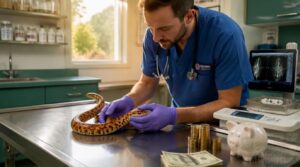
Budget $85 to $300 per visit, plus more for diagnostic testing like imaging or bloodwork. After-hours emergencies cost extra, so ask beforehand.
Set aside $200 to $400 yearly for routine care, plus a $500-$1,000 emergency fund. Monthly savings of $20-$50 helps.
Confirm payment options, including Care Credit, before your appointment starts.
Safe Snake Transportation

Once payment’s settled, getting your snake there safely matters just as much.
- Container security: lockable, tip-proof enclosure
- Ventilation control: steady airflow, no drafts
- Temperature stability: avoid extremes, monitor stops
- Handling safety: secure restraint before transit
- Route planning: stable placement, periodic checks
Safe snake transportation protects both pet and handler during reptile husbandry visits, easing stress before emergency reptile care or routine exams begin.
Records and Supplies Needed

Getting there safely is half the job; showing up prepared is the other half.
Bring your medical history form, a fresh stool sample, enclosure details, current diet notes, and emergency authorization. Pack your transport carrier kit too. Any reptile vet directory listing will confirm these basics, but good reptile husbandry and reptile diet records speed diagnosis, especially during reptile emergency care.
Follow-Up Care Instructions

The visit isn’t over once you’re home. Your discharge sheet spells out temperature monitoring, hydration checks, and a feeding schedule individualized to recovery. Expect activity restriction, dimmer light, less handling.
Practice symptom watching for wheezing, regurgitation, or lethargy. These follow-up steps, paired with routine exams, parasite control, and ongoing diet consultations, keep your snake’s recovery on track.
Frequently Asked Questions (FAQs)
How much does a snake vet visit cost?
Here’s something to chew on: annual snake exams can run as low as $65, yet total care often lands between $200 and $400 a year once bloodwork, imaging, and follow-ups join the exam fee.
What kind of vet treats snakes?
Look for an exotic veterinarian with true reptile experience, ideally board-certified through DABVP in Reptile and Amphibian Practice. A reptile vet directory or herpetology services listing helps confirm snake handling skill and diagnostic expertise before booking.
How much does a vet cost for a snake?
Picture a coiled body warming under a basking lamp, calm until illness strikes. Routine exams run $50 to $200, while emergency care can climb past $800, depending on diagnostics, location, and your reptile vet’s expertise.
Can you take a snake to the vet?
Yes, snakes can visit vets. Reptile vets perform wellness exams, bloodwork, and imaging at any exotic pet care clinic.
Snake vet availability varies by region, so confirm emergency reptile care and vet visit preparation steps before scheduling your reptile health checks.
What are signs my reptile needs a vet?
Silence can be its own alarm bell. Watch for breathing changes, stuck shedding, appetite loss, waste changes, and behavioral shifts, these signal a reptile vet visit is needed for proper diagnostic care and wellness exams.
Do vets for pets treat snakes?
Not always. Many small animal clinics limit their scope to cats and dogs, so you’ll need a practice offering exotic pet services. Confirm the clinic explicitly treats reptiles before booking, since general veterinary practice reptiles coverage varies widely by location.
What kind of vet do you take a snake to?
Take your snake to a reptile specialist, not a general practice. Look for a herpetology-trained veterinarian or exotic pet veterinarian listed in a reptile vet directory, someone who understands snake-specific biology, husbandry, and reptile veterinary medicine.
Do snakes need regular vet visits?
Absolutely, and not just when something looks wrong. Annual wellness exams catch parasites, infections, and organ issues early, while routine reptile diagnostic screening builds a health baseline your vet relies on to spot subtle changes before they become emergencies.
Who are reptile vets & doctors?
Board certification requires four years of reptile practice and 10+ weekly cases. These DVM-trained specialists combine herpetology background with exotic animal vet skills, delivering true reptile clinical expertise, not general practice guesswork applied to your snake.
Are there any good reptile vets?
Yes, many skilled reptile vets exist. Look for vet credentials verification, professional organization membership, and high practice reptile percentage.
A trusted Reptile Vet Directory and genuine client satisfaction ratings point you toward real species specialization, not general exotic animal care.
Conclusion
An ounce of prevention is worth a pound of cure, and that’s especially true when scales and sharp fangs are involved.
Finding the right snake vet near me isn’t a chore you save for emergencies. It’s a relationship you build early, so trust already exists before trouble shows up.
Check credentials. Confirm experience. Ask questions.
Your snake can’t tell you where it hurts, but a qualified reptile vet can find out, quickly and calmly.