This site is supported by our readers. We may earn a commission, at no cost to you, if you purchase through links.

Your thermostat controls nearly half of your home’s energy bill—yet most households set it once and forget it, bleeding money through every season without realizing it. A five-degree setback while you sleep can save up to 10% annually on heating and cooling costs, and that’s before occupancy detection or time-of-use pricing even enters the picture.
The right thermostat doesn’t just follow your schedule; it learns it, adjusts to it, and quietly trims waste you’d never catch manually. These nine models represent the clearest path from outdated temperature guessing to measurable, compounding savings.
Table Of Contents
- Key Takeaways
- How Thermostats Reduce Home Energy Costs
- Key Features for Energy-Saving Thermostats
- Top 9 Thermostats for Energy Savings
- 1. Amazon Smart Thermostat Alexa Compatible
- 2. Vine 4.3 Inch WiFi Smart Thermostat
- 3. Ecobee Smart Thermostat Essential
- 4. Google Nest Programmable Thermostat
- 5. Honeywell Home Smart Color Thermostat
- 6. Google Nest Smart Thermostat Charcoal
- 7. Ecobee Premium Smart Thermostat Air Quality
- 8. Ecobee Smart Thermostat Enhanced WiFi
- 9. Google Nest Smart Thermostat Snow
- Choosing The Right Thermostat for Your Home
- Installation Tips for Maximum Energy Savings
- Frequently Asked Questions (FAQs)
- How long do smart thermostats typically last?
- Can renters install smart thermostats in apartments?
- Do smart thermostats work during power outages?
- Whats the average payback period for installation?
- Are there government rebates for smart thermostats?
- Can smart thermostats work during a power outage?
- Do utility companies offer rebates for smart thermostats?
- Are smart thermostats compatible with older home wiring?
- Conclusion
Key Takeaways
- 5-degree temperature setback while you sleep can cut heating and cooling costs by up to 10% annually, and stacking occupancy detection or time-of-use pricing pushes those savings even further.
- Best smart thermostats don’t just follow a schedule—they learn your habits, detect when you’re home, and quietly trim waste you’d never catch on your own.
- Before buying, check your HVAC system’s voltage, whether you have a C-wire, and which smart home ecosystem you’re already using, since mismatches can cancel out any savings before you even get started.
- Most smart thermostats pay for themselves within 1.5 to 2.5 years, and utility rebates of $50–$125 for ENERGY STAR-certified models can shrink that timeline even faster.
How Thermostats Reduce Home Energy Costs
Your thermostat is quietly running the show regarding your energy bill — heating and cooling alone eat up nearly half of what you pay each year.
Most people have no idea how much control they actually have — understanding thermostat basics can turn that mystery box into a real money-saver.
The good news is that smarter temperature control can chip away at that cost in ways most people don’t expect.
Here’s how it actually works.
The Role of Thermostats in Energy Efficiency
Your thermostat is quietly running the show behind every heating and cooling decision in your home. Through setback strategies, smart thermostats cut HVAC runtime by matching temperature zoning to your actual schedule — not a fixed one.
- User behavior impact shapes energy efficiency more than most people realize
- ENERGY STAR models support grid demand response and seasonal calibration
- Home automation keeps savings consistent without daily effort
A 1 degree setback saves about 4.5% energy, as shown in the 1 degree setback saves.
Impact on Heating and Cooling Bills
Heating and cooling bills eat up nearly half your annual energy budget — often more than $900 a year.
Smart thermostats tackle this through Behavioral Setbacks and Energy Management that respond to your actual schedule.
Seasonal Savings add up fast when Peak Pricing and Utility Rebates work together.
| Factor | Potential Saving | Payback Timeline |
|---|---|---|
| Smart Thermostat Use | 10–26% Energy Savings | 1.5–2.5 years |
| Utility Rebates | $50–100 upfront | Immediate reduction |
| Behavioral Setbacks | ~10% on Heating and Cooling Bills | Ongoing, monthly |
Energy Efficiency compounds over time — each season, your savings grow.
An outdated thermostat energy impact can raise your energy costs due to inaccurate temperature readings.
Cost Savings From Optimized Temperature Control
Optimized Temperature Control turns small daily habits into real dollars back in your pocket.
Setback Strategies alone — dropping temps 7–10 degrees during sleep — can cut bills by up to 10%. Layer in Occupancy‑Driven Savings, Humidity‑Aware Settings, and Time‑of‑Use Pricing, and your ROI Timeline shrinks fast:
- Setbacks save ~10% annually on heating and cooling
- Occupancy detection cuts energy use up to 30%
- Humidity‑aware control reduces unnecessary cooling cycles
- Time‑of‑use response slashes peak-hour AC runtime by ~60%
Key Features for Energy-Saving Thermostats

Not all smart thermostats are built the same, and the right features can make a real difference in how much you save.
Before you buy, it’s worth knowing which capabilities actually move the needle on your energy bill.
Here are the four key features to look for.
Learning and Adaptive Temperature Schedules
The best smart thermostat features work quietly in the background, doing the thinking so you don’t have to.
Behavior-Based Scheduling watches your adjustments for one to two weeks, then builds a Smart Schedule around your habits.
Adaptive Eco Setpoints and AutoEco widen temperature ranges during idle hours.
Smart Recovery Preconditioning starts your HVAC 20 to 30 minutes early.
Time-of-Use Scheduling and Weather-Responsive Adjustments cut energy use by 10 to 15 percent annually.
Geofencing and Occupancy Detection
Geofencing takes Smart Thermostat Features a step further by using your phone’s GPS to create a virtual boundary — generally 0.5 to 3 miles — around your home. When everyone leaves, the system switches to away mode automatically.
PIR Sensor Placement and Multi‑Device Coordination make certain, while Geofence Radius Optimization balances early preconditioning against wasted runtime. Apply these Energy Saving Tips carefully, since Battery Impact and Privacy Safeguards deserve equal attention.
Remote Access and Mobile App Controls
Your smart thermostat’s app puts full Remote Control in your pocket — adjust setpoints, switch modes, or build Seasonal Scheduling blocks from anywhere with WiFi.
Energy Usage Analytics breaks down runtime by day or month, while Remote Diagnostics flags unusual HVAC behavior before it inflates your bill.
Multi‑Device Management lets you oversee every zone from one screen, and Push Notifications alert you the moment something’s off.
Voice Assistant and Smart Home Integration
When your thermostat speaks the same language as your home, everything clicks into place. Voice control through Alexa or Google Assistant lets you manage comfort hands‑free, while Cross‑Platform Compatibility connects your thermostat to lights, locks, and blinds.
- Voice‑Triggered Routines that adjust heat automatically at bedtime
- Multi‑Zone Voice Control for upstairs and downstairs separately
- Voice‑Activated Scenes like "I’m leaving" that trigger eco mode
- Privacy Settings Management to review or delete voice data
- Cross-ecosystem links to smart home devices via HomeKit or SmartThings
Top 9 Thermostats for Energy Savings
Not all smart thermostats are built the same, and the one you pick can make a real difference in how much you save.
These nine models stand out for their energy-saving features, compatibility options, and overall value in 2026. Here’s a closer look at each one.
1. Amazon Smart Thermostat Alexa Compatible
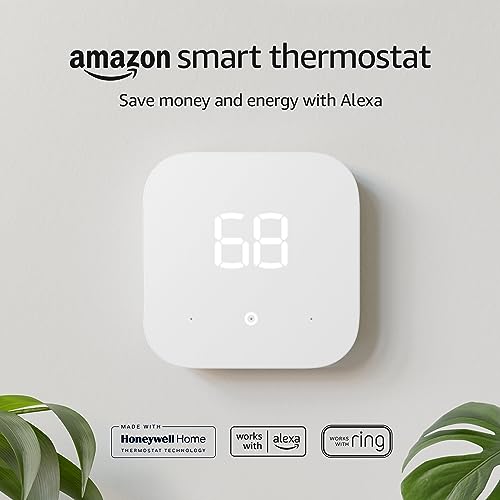
At just $79.99, the Amazon Smart Thermostat punches well above its price tag. It’s ENERGY STAR certified and built on Honeywell Home hardware, so you’re getting decades of HVAC engineering without the premium cost.
Installation is DIY-friendly — most homeowners finish in under 30 minutes using the Alexa app’s step-by-step wiring guide. You’ll need a C-wire, though, so check before you buy. Four programmable periods daily, Alexa voice control, and automatic adjustments when nobody’s home make cutting your energy bill surprisingly hands‑off.
| Best For | Budget-conscious homeowners who already use Alexa and want an easy, no-fuss way to cut their energy bills without spending a fortune. |
|---|---|
| Price | $79.99 |
| ENERGY STAR | Certified |
| Voice Control | Alexa |
| C-Wire Required | Yes |
| Remote App Control | Alexa App |
| Wi-Fi Connectivity | Yes |
| Additional Features |
|
- At $79.99, it’s one of the most affordable smart thermostats out there — and it’s ENERGY STAR certified, so it can actually pay for itself over time.
- Alexa integration is seamless, and you can control everything through the app whether you’re on the couch or across town.
- Built on Honeywell Home hardware, so there’s real HVAC know-how baked in under the hood.
- You need a C-wire to install it — if your home doesn’t have one, you’re stuck before you even start.
- Some users have run into connectivity hiccups and scheduling glitches that can be a headache to sort out.
- There’s a reported bug involving heat and supplementary heat use, which is worth knowing about before you commit.
2. Vine 4.3 Inch WiFi Smart Thermostat
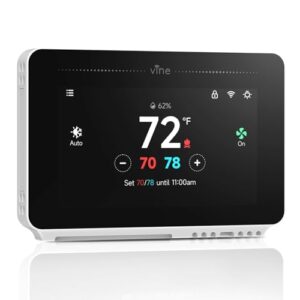
At $109.99, the Vine TJ-919T gives you a lot of screen for your money — literally. Its 4.3-inch full-color touchscreen shows indoor temperature, mode, and setpoints in bold, easy-to-read digits.
Pair that with 7-day scheduling, geofencing, and Alexa or Google Assistant support, and you have real daily flexibility.
Vine claims up to 20% energy savings through smart scheduling and Auto Home/Away mode.
Just note that it needs a C-wire and only connects to 2.4 GHz networks — worth confirming before installation.
| Best For | Anyone who wants a big, easy-to-read smart thermostat with solid app and voice control without breaking the bank. |
|---|---|
| Price | $69.99 |
| ENERGY STAR | Certified |
| Voice Control | Alexa |
| C-Wire Required | Yes |
| Remote App Control | Alexa App |
| Wi-Fi Connectivity | Yes |
| Additional Features |
|
- The 4.3-inch touchscreen is genuinely large and clear — no squinting required
- Works with Alexa and Google Assistant, plus 7-day scheduling keeps your energy use in check
- At $109.99, you’re getting a lot of smart home features for the price
- You’ll need a C-wire, so check your setup before ordering
- Only works on 2.4 GHz Wi-Fi, which can be a dealbreaker for some newer routers
- The app doesn’t show real-time heating or cooling status, which feels like a missed detail
3. Ecobee Smart Thermostat Essential
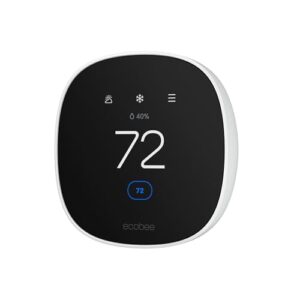
The Ecobee Smart Thermostat Essential punches well above its price point. It’s ENERGY STAR certified, works with 85% of HVAC systems, and can cut your heating and cooling costs by up to 23% annually.
The 2.8-inch color touchscreen is clean and responsive, and setup is genuinely DIY-friendly — a Power Extender Kit supports homes without a C-wire.
It plays nicely with Alexa, Google Assistant, and Apple HomeKit, so it fits most smart home setups without forcing you to rewire anything.
| Best For | Homeowners who want an easy-to-install, app-friendly thermostat that works with their existing smart home setup without breaking the bank. |
|---|---|
| Price | $109.99 |
| ENERGY STAR | Not Specified |
| Voice Control | Alexa, Google |
| C-Wire Required | Yes |
| Remote App Control | Vine/Smart Life App |
| Wi-Fi Connectivity | Yes (2.4GHz only) |
| Additional Features |
|
- Cuts heating and cooling costs by up to 23% — real savings you’ll notice on your bill
- Works with Alexa, Google Assistant, and Siri right out of the box
- DIY install is straightforward, even if your home doesn’t have a C-wire
- No remote sensor included, so multi-room temperature control costs extra
- Needs a solid Wi-Fi connection to unlock most of its best features
- The app can feel a little clunky until you get used to it
4. Google Nest Programmable Thermostat
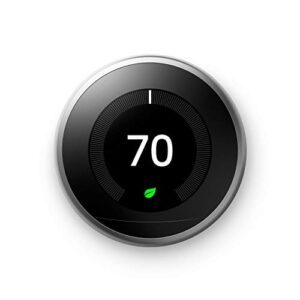
Google takes a different approach with its Nest Programmable Thermostat (T3007ES).
It learns your preferred temperatures over about a week, then builds a schedule automatically — no manual programming needed.
The Home/Away Assist feature detects when you’ve left and eases off heating or cooling to avoid waste.
You can adjust everything remotely through the Google Home app, and it works with Alexa and Google Assistant.
It’s ENERGY STAR certified and compatible with most 24-volt HVAC systems.
| Best For | Anyone who wants a hands-off thermostat that learns their habits and cuts energy costs without a lot of setup or fuss. |
|---|---|
| Price | N/A |
| ENERGY STAR | Certified |
| Voice Control | Siri, Alexa, Google |
| C-Wire Required | Optional (PEK) |
| Remote App Control | ecobee App |
| Wi-Fi Connectivity | Yes |
| Additional Features |
|
- It programs itself — just live your life for a week and it figures out your schedule
- Control it from anywhere with the app, or just ask Alexa or Google Assistant
- Tracks your energy usage so you can actually see what you’re saving
- Needs a solid Wi-Fi connection to get the most out of it — no internet, no remote features
- Some older HVAC systems aren’t compatible, so check before you buy
- Can get pricey if you’re outfitting a home with multiple zones
5. Honeywell Home Smart Color Thermostat
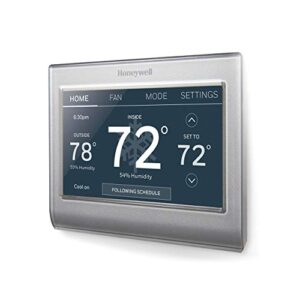
Prefer something more customizable? The Honeywell Home Smart Color Thermostat (RTH9585WF1004/W) gives you a full-color touchscreen you can match to your wall décor — a small detail, but it makes the device feel like it belongs in your space.
Beyond looks, it’s 7-day programmable, ENERGY STAR certified, and works with Alexa, Google Assistant, and SmartThings. Smart Response technology starts your HVAC early so temperatures hit your target on time.
One catch: it requires a C-wire and won’t work with electric baseboard heating.
| Best For | Homeowners who want a stylish, easy-to-use smart thermostat that fits into their existing décor and works with multiple heating and cooling systems. |
|---|---|
| Price | N/A |
| ENERGY STAR | Not Specified |
| Voice Control | Alexa, Google |
| C-Wire Required | Sometimes |
| Remote App Control | Nest App |
| Wi-Fi Connectivity | Yes |
| Additional Features |
|
- Full-color touchscreen you can customize to match your wall — looks great, not just functional
- Works with Alexa, connects via Wi-Fi, and lets you control everything from your phone
- ENERGY STAR certified with monthly energy reports to help keep your bills in check
- Requires a C-wire, so older homes without one may need extra wiring work
- Won’t work with electric baseboard heating (120-240V systems)
- Some users have run into quirks with humidity readings and fan control
6. Google Nest Smart Thermostat Charcoal
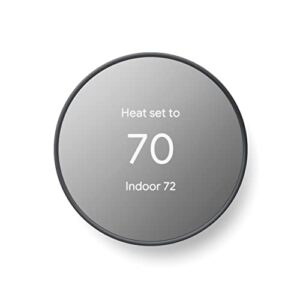
If color customization isn’t your priority, the Google Nest Smart Thermostat in Charcoal keeps things clean and simple.
Its 2.4-inch color LCD and mirrored glass finish look sharp on most walls without trying too hard.
ENERGY STAR certified and compatible with most 24-volt systems, it uses built-in motion and proximity sensors to detect when you’re home — automatically shifting to energy‑saving temperatures when you’re not.
Control it through the Google Home app, and it works with both Alexa and Google Assistant.
| Best For | Anyone who wants a no-fuss smart thermostat that plays well with Google Home and doesn’t need a lot of bells and whistles. |
|---|---|
| Price | N/A |
| ENERGY STAR | Certified |
| Voice Control | Alexa |
| C-Wire Required | Yes |
| Remote App Control | Honeywell App |
| Wi-Fi Connectivity | Yes |
| Additional Features |
|
- Saves energy automatically by learning when you’re home and when you’re not
- Easy to control from anywhere with the Google Home app
- ENERGY STAR certified, so you may qualify for utility rebates
- Might need a C wire installed, which can be a headache depending on your setup
- Not compatible with every HVAC system, so check before you buy
- Google’s support is pretty limited — you’ll likely end up on YouTube or community forums if something goes wrong
7. Ecobee Premium Smart Thermostat Air Quality
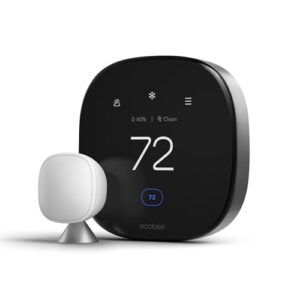
Want more than just temperature control? The Ecobee Smart Thermostat Premium covers a lot more ground than the Nest Charcoal.
It includes a built‑in air quality monitor that tracks VOCs, estimated CO2 levels, and humidity — showing everything right on the screen.
A SmartSensor comes in the box for multi‑room accuracy.
It’s compatible with 95% of HVAC systems, saves up to 26% annually, and works with Alexa, Google Assistant, and Siri.
| Best For | Anyone who wants full smart home integration with air quality insights, not just a thermostat that adjusts the temperature. |
|---|---|
| Price | N/A |
| ENERGY STAR | Certified |
| Voice Control | |
| C-Wire Required | Sometimes |
| Remote App Control | Google Home App |
| Wi-Fi Connectivity | Yes |
| Additional Features |
|
- Built-in air quality monitor tracks VOCs, CO2, and humidity right on the screen — no extra gadget needed
- Comes with a SmartSensor so you’re not just reading temps from one room
- Works with Alexa, Google Assistant, and Siri, making it easy to fold into whatever smart home setup you already have
- Needs a C-wire to work, though a Power Extender Kit is included if your home doesn’t have one
- The scheduling and interface can feel like a lot to figure out at first
- A few features like location-based settings might not be available depending on where you live
8. Ecobee Smart Thermostat Enhanced WiFi
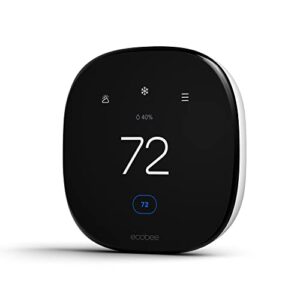
Step down from the Premium, and the Ecobee Smart Thermostat Enhanced still delivers serious savings — up to 26% annually on heating and cooling costs.
Its built-in radar occupancy sensor adjusts temperatures automatically when no one’s home, so you’re not paying to heat an empty house.
Dual-band WiFi, Alexa, Google Assistant, and Siri support keep everything connected.
The included Power Extender Kit solves the no-C-wire problem many homes face.
At roughly 15 ounces and Energy Star certified, it balances performance with practical installation.
| Best For | Homeowners who want smart thermostat features and real energy savings without paying premium-tier prices. |
|---|---|
| Price | N/A |
| ENERGY STAR | Certified |
| Voice Control | Siri, Alexa, Google |
| C-Wire Required | Optional (PEK) |
| Remote App Control | ecobee App |
| Wi-Fi Connectivity | Yes |
| Additional Features |
|
- Saves up to 26% a year on heating and cooling — the radar occupancy sensor handles it automatically, no manual scheduling needed
- Works with Alexa, Google Assistant, and Siri, so it fits into whatever smart home setup you already have
- Comes with a Power Extender Kit, so no C wire? Not a problem
- Pricier than a lot of competing thermostats at this feature level
- Installation instructions have tripped up some users — you may need to do a little extra digging
- Fan circulation settings are pretty limited if that level of control matters to you
9. Google Nest Smart Thermostat Snow
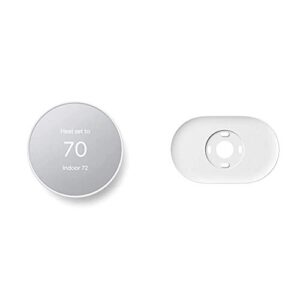
The Google Nest Smart Thermostat Snow is a quiet overachiever — compact at 3.3 inches, yet packed with five sensors that handle motion, temperature, humidity, and light automatically.
It trims heating bills by 10–12% and cooling costs by up to 15% through Eco mode, without needing a C wire.
Quick Schedule and Savings Finder make optimization genuinely simple.
ENERGY STAR certified and compatible with 85% of home HVAC systems, it installs in about 30 minutes using the Google Home app.
| Best For | Homeowners and renters who want an easy, app-controlled way to cut energy bills without messing with complicated wiring. |
|---|---|
| Price | N/A |
| ENERGY STAR | Certified |
| Voice Control | Siri, Alexa, Google |
| C-Wire Required | Optional (PEK) |
| Remote App Control | ecobee App |
| Wi-Fi Connectivity | Yes |
| Additional Features |
|
- Automatically dials back when you leave, so you’re not heating or cooling an empty home
- Works right from your phone through the Google Home app — great for remote scheduling
- ENERGY STAR certified and installs in about 30 minutes with no C wire needed
- Needs a Google Mesh network to work, which is a real dealbreaker if you don’t have one
- Wiring compatibility can be hit or miss, especially with separate RH and RC wire setups
- If your Mesh router goes missing or breaks, you lose connection until it’s replaced
Choosing The Right Thermostat for Your Home

Picking the right thermostat isn’t just about price — it’s about finding one that actually works with your home.
A few key factors will make or break that decision, and getting them right upfront saves you from costly headaches later.
Here’s what to check before you buy.
Compatibility With HVAC Systems
Not every thermostat works with every HVAC system — and that mismatch can cost you. Before buying, confirm voltage compatibility, since most smart thermostats require low-voltage 24V systems.
Fuel type matching matters too: gas, oil, electric, and propane systems each have specific wiring needs. Multi-stage support, heat pump integration, and zoned system wiring determine whether your thermostat actually controls your heating and cooling systems correctly.
Importance of a C Wire and Power Requirements
Think of the C wire as your smart thermostat’s lifeline.
Without it, your thermostat resorts to power stealing — pulling current through control circuits, which can cause your furnace to short-cycle or behave erratically.
Without a C wire, your thermostat steals power from control circuits, leaving your furnace to short-cycle and misbehave
A C wire adapter solves this cleanly when rewiring isn’t practical.
Always check your transformer’s VA rating too, since smart thermostats draw considerably more power than older battery-operated models.
ENERGY STAR Certification and Efficiency Ratings
ENERGY STAR label isn’t just a sticker — it’s proof that a thermostat meets strict EPA certification criteria covering performance metrics, power standards, and feedback reporting.
Certified models must cut heating and cooling costs by at least 8%, provide monthly runtime data, and stay within ±2°F accuracy.
That combination of energy savings and energy consumption reduction translates directly to a smaller bill — and real market impact for your home.
Smart Home Ecosystem Considerations
Your thermostat doesn’t live in isolation — it needs to play well with everything else in your home. Before buying, consider which ecosystem you’re already in.
- Matter Compatibility lets one thermostat work across Alexa, Google Assistant, and Apple Home
- Thread Networking keeps connections stable without depending on WiFi alone
- Platform Lock-In is real — single-ecosystem models limit future flexibility
- Data Privacy policies vary widely; check what each brand stores and shares
- Utility Integration unlocks bill credits through demand response programs
Installation Tips for Maximum Energy Savings
Getting the most out of your smart thermostat starts before you even touch the settings.
A few smart installation choices can mean the difference between modest savings and real bill cuts.
Here’s what to get right from the start.
DIY Vs. Professional Installation

Installing a smart thermostat yourself can save $100–$200 in labor costs, but it’s not always the safer call. Professional installation usually runs $300–$400 and often protects your equipment warranty — skipping it can void coverage on furnaces or air handlers.
| Factor | DIY | Professional |
|---|---|---|
| Cost | Thermostat price only | $300–$400 total |
| Safety Risks | Higher without experience | Minimized with tools |
| Warranty Impact | Potentially voided | Fully protected |
| Installation Time | 1+ hours | Single efficient visit |
WIFI Connectivity and Router Placement
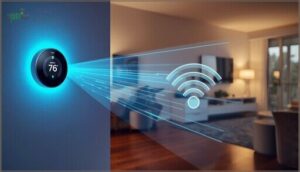
Once your thermostat is mounted, wireless connectivity becomes your next hurdle. Most smart thermostats only join a 2.4 GHz SSID — not 5 GHz — so check your router settings before setup.
Keep these Wi‑Fi factors in mind:
- Target signal strength above −65 dBm for reliable remote control
- Router Central Positioning to cover distant rooms evenly
- Mesh Network Benefits to eliminate dead zones
- Interference Mitigation by keeping thermostats away from microwaves
- Signal Strength Thresholds to confirm stable smart home devices connectivity
Optimal Sensor and Thermostat Placement

Where you mount your thermostat matters as much as which one you buy.
For accurate readings, aim for Central Wall Positioning at Mid‑Wall Height — roughly 52 to 60 inches up — away from vents, lamps, and windows.
Avoid Heat Sources like direct sunlight or cooking areas.
In larger homes, Remote Sensor Zones and Multi‑Story Zoning enable real heating and cooling efficiency and meaningful energy savings.
Frequently Asked Questions (FAQs)
How long do smart thermostats typically last?
Like a reliable appliance, smart thermostats generally last 7 to 10 years, with some brands reaching Lifespan estimates vary by model, installation impact, and how well you maintain battery longevity and firmware updates.
Can renters install smart thermostats in apartments?
Renters can, but lease permission comes first. HVAC compatibility varies widely in apartments. If installation isn’t allowed, portable radiator valves offer a renter-friendly workaround without touching fixed wiring.
Do smart thermostats work during power outages?
Smart thermostats shut off with your HVAC during outages. Backup Power batteries keep the display alive briefly, but remote control and heating stop until power returns and Wi‑Fi reconnects.
Whats the average payback period for installation?
Most homeowners see a payback period of 5 to 5 years, though Climate Influence, Home Size Impact, and Rebate Effects all shift that timeline — sometimes dropping it under 12 months.
Are there government rebates for smart thermostats?
federal incentives exist, though not as a single national rebate.
Utility rebates, state programs, and tax credits combine to offset costs.
ENERGY STAR certified models enable the best eligibility criteria for maximum energy savings.
Can smart thermostats work during a power outage?
During a power outage, your smart thermostat loses control of heating and cooling since the HVAC equipment can’t run.
Battery backup and local control keep settings saved, but actual comfort depends on restored power.
Do utility companies offer rebates for smart thermostats?
Many utility companies do offer rebates for smart thermostats, generally ranging from $50 to $ Rebate eligibility usually requires ENERGY STAR certification, and the application process varies by regional programs.
Are smart thermostats compatible with older home wiring?
Smart thermostats work with most older homes — but the answer depends on your wiring.
Low‑Voltage Wiring systems are usually compatible, while line‑voltage setups need relays or Retrofit Adapter Kits first.
Conclusion
Upgrading doesn’t have to mean overhauling your entire home setup—most of today’s best thermostats for energy savings install in under an hour and pay for themselves within a year.
The real cost is leaving an outdated model in place, quietly inflating every utility bill.
Pick the model that fits your HVAC system, connect it to your schedule, and let it do the math.
Your future energy bills will tell the difference.
- https://lifestyle.sustainability-directory.com/learn/what-is-the-estimated-percentage-of-energy-savings-from-using-a-smart-thermostat/
- https://whatissmartenergy.org/featured-article/is-a-smart-thermostat-a-worthwhile-investment-for-your-home
- https://www.trane.com/residential/en/resources/glossary/setback-thermostat/
- https://www.energy.gov/energysaver/programmable-thermostats
- https://powerley.com/thermostatsetback/