
This site is supported by our readers. We may earn a commission, at no cost to you, if you purchase through links.
A rattlesnake’s fang can punch through your jeans in 0.2 seconds. That hollow needle—backed by specialized jaw muscles—delivers venom with surgical precision, and most hikers, ranchers, and outdoor workers don’t realize their everyday clothing offers zero defense.
The difference between a close call and a medical emergency often comes down to what’s covering your legs. Snake fangs measure 1–15mm depending on species, but they’re designed to pierce hide and flesh, not fabric barriers. The right material stops penetration cold by forcing fangs to deflect or bend before reaching skin.
Kevlar, ballistic nylon, heavy canvas, and treated leather each block strikes differently—some through sheer thickness, others through tightly woven fibers that trap and redirect the fang tip. Understanding which materials actually work means knowing how puncture resistance, denier ratings, and weave density combine to create a genuine barrier between you and a venomous bite.
Table Of Contents
- Key Takeaways
- Key Properties of Snake-Proof Materials
- How Snake Fangs Penetrate Fabrics
- Heavy Canvas: Classic Snake Protection
- Kevlar and Aramid Fibers for Snake Safety
- Nylon and Cordura: Modern Snake Barriers
- Leather and Rawhide: Natural Defenses
- Denim and Canvas Pants: How Much Protection?
- Materials That Do Not Stop Snake Fangs
- Top 6 Snake-Proof Products
- Choosing The Right Snake-Resistant Gear
- Frequently Asked Questions (FAQs)
- What material can snakes not bite through?
- What material can snake fangs not penetrate?
- Will Kevlar stop a snake bite?
- Can snakes bite through multiple layers of clothing?
- Do snake gaiters protect against all venomous species?
- How often should snake-proof gear be replaced?
- Are there snake-resistant gloves for handling vegetation?
- What footwear height best prevents ankle strikes?
- Conclusion
Key Takeaways
- Kevlar, Cordura nylon (500+ denier), heavy canvas (600D+), and thick leather create effective barriers against snake fangs through tight weaves and puncture-resistant fibers that deflect or stop fang penetration before reaching skin.
- Standard clothing like thin cotton, regular denim, and synthetic blends under 150gsm offer minimal protection—even heavy denim only reduces venom delivery by 60-66% rather than fully stopping fangs.
- Snake fangs penetrate fabric based on strike angle, fang length (1-15mm depending on species), and material thickness, with multi-layer systems combining different protective fabrics providing the most reliable defense.
- Quality snake-proof gear like gaiters and chaps should cover ankle to knee where most strikes occur, feature materials rated 500+ denier with double-layer construction in high-risk zones, and be replaced immediately after any confirmed strike or visible damage.
Key Properties of Snake-Proof Materials
Not all fabrics can stop a snake’s fangs from reaching your skin. The difference between safe and unsafe materials comes down to a few measurable qualities that outdoor experts rely on.
Thick denim, leather, and specialized snake gaiters offer the best protection, while understanding snake behavior and vision helps you avoid dangerous encounters altogether.
Let’s look at the three properties that separate protective gear from everyday clothing.
Understanding how snakes hunt and deliver toxins—like whether snakes target amphibians such as frogs—helps explain why protective materials need puncture resistance, venom barriers, and durability.
Puncture Resistance and Denier Rating
Denier rating measures fabric thickness in grams per 9,000 meters of yarn, so 1,000D Cordura feels heavier than 500D nylon. Don’t rely on denier alone—puncture resistance depends more on weave density and how tightly those threads pack together.
A tight weave with high cover factor stops snake fangs from slipping between yarns, while loose fabrics fail even at high denier. For example, specialized gear like puncture-resistant hunting pants is designed with materials that block even fine penetrators.
Tear and Stretch Resistance
Tear strength matters just as much as stopping fangs—a ripped gaiter exposes your skin to the next strike.
Snake chaps built from 1200D Oxford or Cordura resist tearing when brush snags the fabric, while thin denim splits under sharp bites. Kevlar’s high tensile strength adds puncture resistance, but tight weaves in ballistic nylon limit stretch so the material stays firm during impact.
For more information on the importance of using snake-fang-resistant materials, visit this detailed guide.
Water Resistance and Breathability
Waterproof coatings and breathable membranes transform snake-proof gear for wet climates. Gore-Tex membranes in boots block liquid water while allowing sweat vapor to escape through 0.2 to 0.5 micron pores.
Pairing these waterproof boots with proper snake-proof clothing and thick leather gloves creates a complete protective system that works in any weather condition.
Cotton shells breathe better than synthetics in 90-degree heat, but fabric ventilation matters most during long hikes.
Climate adaptation guides your choice—humid regions need moisture management, while desert conditions demand maximum breathability over water resistance.
Desert dwellers thrive with proper ventilation in snake enclosures that prioritize airflow over sealed, high-humidity designs.
How Snake Fangs Penetrate Fabrics
Before you invest in protective gear, you need to understand how snake fangs actually work. The mechanics of a strike—fang design, bite pressure, and attack angle—determine whether fabric holds up or fails.
Fangs also wear down or break during strikes, but most venomous species can regrow damaged fangs within weeks to maintain hunting effectiveness.
Let’s look at what happens when fangs meet cloth and which materials collapse under pressure.
Fang Structure and Bite Force
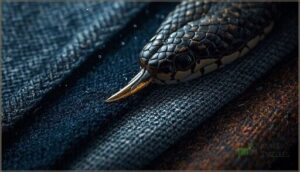
Understanding fang geometry helps you choose the right snake-proof fabrics. Venomous snakes deliver venom through hollow fangs that act like hypodermic needles.
Large vipers produce fangs over 4 centimeters long, concentrating bite mechanics into a tiny, sharp point. That focused pressure means puncture dynamics matter more than raw force when evaluating puncture resistance in materials like Kevlar for reliable snake bite protection.
Vulnerable Clothing Types
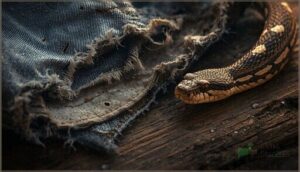
Thin fabrics and loose weaves let fangs pass straight through. Standard cotton jeans, yoga pants, and lightweight hiking pants offer almost zero barrier. Poor materials with weak seams unravel under bite pressure, leaving you exposed.
Flawed designs with single-layer construction can’t compete with proven snake-proof fabrics like Kevlar, ballistic nylon, heavy canvas, or multi-layer denim that actually resist puncture when fangs strike.
Depth and Angle of Penetration
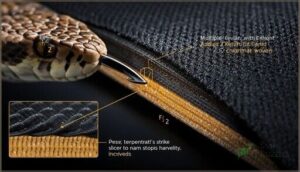
Fang penetration depends on strike angles and material thickness working together. A direct, perpendicular hit drives fangs deeper than a glancing blow that slides off dense fabric technology.
Snake bite dynamics show that multi-layer systems with Kevlar or high-denier Cordura limit puncture depth to fractions of an inch:
- Large rattlesnakes have 1.5 to 2 inch fangs
- Quality gear stops penetration at 0.03 inches
- Venom pores stay outside protective barriers
Penetration resistance beats tensile strength alone.
Heavy Canvas: Classic Snake Protection
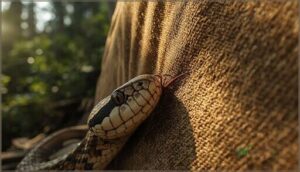
Heavy canvas has been keeping hikers safe from snake fangs for decades, and there’s a reason it’s still popular today. This tightly woven fabric creates a barrier thick enough to stop most venomous snakes in their tracks without breaking the bank.
Let’s look at what makes canvas work, where you’ll find it used, and what you’ll pay for this tried-and-true protection.
Thickness and Weave Quality
Canvas thickness, measured in denier, determines how well fabric density blocks fangs. Heavy canvas rated at 600D or higher uses thick yarns in a tight weave pattern that resists puncture resistance far better than lightweight options. Material thickness matters, but don’t overlook weave patterns—a tightly constructed canvas with a higher thread count creates smaller gaps that fangs can’t easily slip through.
| Canvas Weight | Puncture Protection |
|---|---|
| 100D Standard | Easily penetrated |
| 300D Medium | Limited resistance |
| 600D Heavy | Strong barrier |
| 1000D Premium | Maximum defense |
Typical Uses in Protective Gear
You’ll find heavy canvas in snake gaiters, leg chaps, and brush pants designed for rugged terrain. Gear material selection often pairs 600D to 1000D canvas with reinforced stitching at ankles and calves, where strikes happen most.
Protective clothing makers combine canvas with Kevlar, Cordura, or ballistic nylon layers for snake bite prevention. This fabric durability makes canvas a go-to choice in safety equipment for hikers and field workers facing venomous threats.
Cost and Availability
You can grab basic cotton canvas for eight to fifteen dollars per yard at most fabric stores, making it one of the cheapest options in any fabric price comparison. Heavy canvas suitable for gaiters sits in local stock year-round, unlike specialized Kevlar or Cordura.
Material sourcing is simple—production costs stay low because canvas weaving requires standard looms, keeping market demand steady and availability factors favorable for budget-conscious buyers.
Kevlar and Aramid Fibers for Snake Safety

Kevlar stands apart from most fabrics because it’s built from aramid fibers that can withstand extreme force without tearing or puncturing. You’ll find this material in bulletproof vests and firefighter gear, which tells you something about its protective power against snake fangs.
Here’s what makes Kevlar work for snake safety, how it compares to other options, and what you need to know about its drawbacks.
Kevlar’s Unique Properties
When you need serious snake bite protection, Kevlar fiber stands apart with tensile strength around 3,000 megapascals. This aramid material resists puncture resistance from venomous snakes because tightly woven Kevlar fabric properties spread fang force across a broader area.
You’ll also get excellent tear resistance and thermal stability, since Kevlar won’t melt until temps hit 427 degrees Celsius. Chemical behavior stays stable in neutral conditions.
Comparison to Other Synthetics
Kevlar’s strength-to-weight ratio reaches five times that of steel, outperforming standard nylon and high-tenacity polyester at similar fabric weights. While Cordura and ballistic nylon deliver solid abrasion resistance in synthetic materials, their fiber-level puncture resistance falls short of aramid innovations.
That’s why many gaiters pair heavy denier nylon shells with internal Kevlar layers—pure nylon at practical weights won’t reliably stop fangs alone.
Limitations and Care
High dryer heat weakens Kevlar fibers over time, so air-dry your snake-proof gear instead of tossing it in the machine. Harsh detergents and bleach strip protective coatings on aramid blends, meaning you’ll want mild soap and cool water for cleaning.
Store your Kevlar gaiters in a cool, dry spot away from direct sunlight—UV exposure and humidity gradually degrade textile technology that stops fangs.
Nylon and Cordura: Modern Snake Barriers
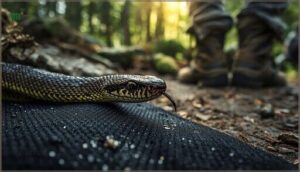
Modern synthetics have changed the game in protecting against snake fangs without weighing you down. Ballistic nylon and Cordura offer serious puncture resistance while keeping you mobile enough to hike, hunt, or work all day.
Here’s what sets these high-performance materials apart from traditional options.
Ballistic Nylon and Cordura Features
Modern synthetic fibers have transformed snake-proof fabrics through cutting-edge textile technology. Ballistic nylon and Cordura represent the summit of material strength, combining fabric density with specialized weave patterns that outperform traditional materials in ballistic protection scenarios.
Key Features That Set These Synthetics Apart:
- Denier ratings – Ballistic nylon ranges from 840D to 1680D, while Cordura commonly appears in 500D and 1000D weights for ideal protection.
- Surface texture – Ballistic nylon shows a smooth, glossy finish; Cordura offers a matte, rugged appearance from air-textured yarns.
- Construction method – Ballistic weaves use two-ply basket patterns; Cordura employs textured high-tenacity nylon for excellent coverage.
- Weight options – 1000D Cordura weighs around 11.24 ounces per square yard, balancing durability with field mobility.
- Color availability – Cordura comes in diverse patterns, including military camouflage; ballistic nylon usually appears in limited shades.
Abrasion and Puncture Resistance
Those impressive denier ratings translate directly into real-world protection when fangs strike. Ballistic nylon proves its worth in puncture testing, where high tensile strength stops fangs cold.
Cordura’s engineered fiber strength adds outstanding abrasion resistance—your gaiters won’t tear when you’re scrambling through rocky terrain.
Even Kevlar fabric can’t always match Cordura’s balance of penetration resistance and material thickness for snake country durability.
Flexibility for Outdoor Activities
For outdoor mobility that doesn’t quit, modern Cordura and ballistic nylon deliver movement freedom you can feel. Flexible materials like 420-denier nylon let you climb over logs, kneel to tie boots, and hike all day without that stiff-armor sensation.
Snake-proof fabrics built from Cordura combine protective gear strength with activity comfort—gaiters stay put while your legs move naturally through brush.
Leather and Rawhide: Natural Defenses
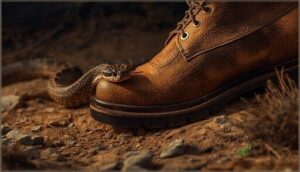
Before synthetics took over, leather and rawhide were your go-to materials for stopping snake fangs. These natural defenses still show up in serious outdoor gear because they’re tough, thick, and proven against strikes.
Let’s look at how well they actually work, where you’ll find them in boots and gaiters, and what it takes to keep them performing.
Effectiveness Against Snake Fangs
Leather and rawhide act as stiff barriers that force snake fangs to slow or deflect before reaching your skin. Thick cowhide boots and rawhide inserts can stop shorter fangs entirely, though longer viper fangs may still penetrate if they hit at a perfect angle.
These natural materials offer solid puncture resistance and fabric durability, but they won’t match the fang-stopping power of Kevlar fabric or Cordura nylon in true snake proof fabrics.
Common Uses in Boots and Gaiters
You’ll find leather in tall boots that cover your calf and shin, where ranchers and forestry workers rely on thick cowhide to block fangs during fence checks and timber surveys. Rawhide panels reinforce gaiter designs and chap construction, adding fabric thickness and puncture resistance without the bulk of Kevlar fabric or high-denier nylon.
Consider these common leather applications:
- Knee-high snake boots for hunting turkey in creek bottoms and briar patches
- Gaiter overlays that pair with your regular boots on remote job sites
- Chap panels combining rawhide, leather, and snake proof fabrics like Cordura or Dyneema for brush work
Durability and Maintenance
Thick cowhide on your boots can outlast Kevlar fabric in abrasion resistance, but moisture and heat will crack leather if you don’t condition it every few months. Regular oiling extends wear resistance and maintains the tensile strength you need against fangs.
Inspect stitching and check for soft spots annually—rawhide panels lose penetration resistance once they dry-rot. Field repair demands leather cement or heavy thread, while composite materials using modern textile technology often need only adhesive patches.
Denim and Canvas Pants: How Much Protection?
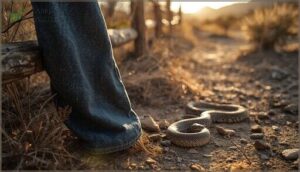
You’ve probably wondered if your regular jeans or canvas work pants will stop a snake bite when you’re out hiking or working in the field. The truth is, standard denim offers some protection but falls short of what dedicated snake-proof gear delivers.
Let’s break down how much safety heavy denim and canvas actually provide, when doubling up helps, and where these everyday materials hit their limits.
Effectiveness of Heavy Denim
Heavy denim cuts venom delivery by 60–66% during rattlesnake strikes, but it won’t stop fangs completely. Your best protection comes from 14–18 oz denim with a tight fabric weave—thick enough to disrupt fang penetration and reduce the venom that reaches your skin.
Heavy denim reduces rattlesnake venom delivery by up to 66% but won’t fully stop fangs from penetrating your skin
- Denim thickness of 16+ oz offers meaningful puncture resistance in snake country
- Loose-fitting heavy denim creates an air gap that limits fang depth during a snake bite
- Wet or worn denim loses structural integrity, making venom reduction less reliable
Double-layer Construction
Stacking two fabric shells—Cordura over denim or canvas over polyester—doubles the puncture resistance by forcing fangs through multiple weave paths. This fabric layering traps venom between layers and cuts delivery by distributing fang pressure across deeper yarn networks, boosting snake bite protection without sacrificing mobility.
You’ll find layered materials in commercial snake gaiters that extend from ankle to knee, concentrating double thickness where bites most often land.
Standard Vs. Specialized Materials
While everyday canvas and denim make comfortable field clothes, they weren’t engineered for snake bite prevention. Fabric comparison tests reveal specialized gear outperforms standard pants in critical ways:
- Everyday denim ranges from 100D to 300D, while snake-proof nylon starts at 500D for real puncture testing standards
- Standard canvas pants lack the layered polyester or Kevlar fabric inner linings that snake gaiters include
- Textile engineering for snake protection adds weight-rated puncture barriers, not found in casual canvas workwear
- Kevlar gear costs more because material science demands aramid fibers standard clothing skips
Materials That Do Not Stop Snake Fangs

Not all fabrics offer real protection when a snake strikes. Some materials look tough but won’t stop fangs from reaching your skin, while others seem protective based on common myths that don’t hold up in the field.
Here’s what won’t keep you safe from a venomous bite.
Thin Cotton and Standard Denim
Lightweight options won’t shield you from fangs. Thin cotton fabric weighing 3 to 5 ounces per square yard offers comfort but zero puncture resistance against snake strikes. Standard denim fares slightly better—experimental rattlesnake tests showed it reduced venom delivery by 60 to 66 percent, but that still leaves dangerous exposure. Neither fabric provides reliable protection compared to Kevlar fabric, Canvas, or ballistic Nylon.
| Fabric Comparison | Weight (oz/sq yd) | Protection Level |
|---|---|---|
| Thin Cotton | 3–5 | Minimal |
| Standard Denim | 10–12 | Low (60–66% reduction) |
| Heavy Canvas | 15+ | Moderate |
| Kevlar/Cordura | Varies | High |
Breathability Tests confirm thin cotton excels at airflow but fails at safety. Denim Thickness matters—12-ounce twill resists tearing better than lightweight weaves, yet fangs still penetrate. Cotton Durability and Wear Resistance decline rapidly with friction, creating thin spots at knees and ankles where you’re most vulnerable during outdoor activities.
Synthetic Blends With Low Resistance
Polyester blends under 150 grams per square meter crumble under Puncture Tests—their open weaves and thin yarns let fangs through like butter. Stretch leggings with spandex deform around sharp points, spreading stitches instead of blocking them.
Material Density matters: lightweight hiking pants lack the tightly woven structure of Canvas or Kevlar fabric.
Don’t trust “abrasion resistant” labels—they measure rubbing, not Fang Penetration. Fabric Weakness shows when compression meets force.
Misconceptions About Rubber and Duct Tape
Rubber Boot Myths claim any tall welly guards against Snake Fang Penetration, but standard 3 to 6 millimeter rubber compresses under strike force, letting rattlesnake fangs reach skin.
The Duct Tape Fallacy—wrapping pant legs for makeshift Fabric Protection—fails even worse: adhesive gaps under heat, thin backing tears on contact, and no Puncture Resistance exists.
Venomous Snake Safety demands purpose-built Snake Proof Clothing with ballistic layers, not improvised fixes that crumble during Snakebite Prevention when Outdoor Safety and Reptile Protection matter most.
Top 6 Snake-Proof Products
You’ve seen what works and what doesn’t regarding stopping snake fangs. Now let’s look at six specific products you can actually buy and trust with your safety.
These options range from raw protective fabrics to fully assembled chaps that are ready to wear in the field.
1. Aramid Kevlar Protective Fabric
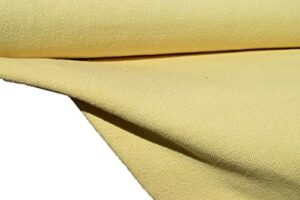
Kevlar fabric stands as one of the toughest synthetic materials you’ll find for snake protection. This aramid fiber boasts tensile strength roughly five times that of steel by weight, which means your Kevlar gear won’t let fangs punch through easily.
The 17oz military-grade version offers serious puncture resistance while maintaining enough flexibility to move comfortably through brush. You’ll find it layered into premium gaiters and chaps where rattlesnakes usually strike—from ankle to knee.
Just remember, this protective clothing requires proper care to maintain its penetration resistance over time.
| Best For | Outdoor workers, hunters, and hikers in snake-prone areas who need reliable fang protection without the bulk of traditional canvas gaiters. |
|---|---|
| Material Type | Aramid (Kevlar) |
| Primary Protection | Abrasion resistance |
| Color | Yellow |
| Form Factor | Fabric bolt |
| Width/Coverage | 60 inches |
| Water Resistance | Not specified |
| Additional Features |
|
- Exceptional puncture resistance—aramid fibers are five times stronger than steel by weight, creating a solid barrier against snake fangs and thorns
- Maintains protective qualities across extreme temperatures, from hot deserts to cooler forests, without becoming brittle or losing strength
- Lighter and more flexible than heavy canvas alternatives while delivering military-grade protection where you need it most
- UV sensitivity means you can’t leave it in direct sunlight for extended periods or the fibers will gradually weaken
- Higher upfront cost compared to standard nylon or canvas snake protection gear
- Requires careful maintenance with mild detergents and cool water—harsh chemicals and high heat during washing can compromise the fabric’s strength
2. Nomex Kevlar Fire Retardant Fabric
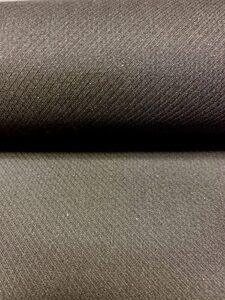
A 50/50 Nomex Kevlar blend gives you dual protection that most snake bite prevention gear can’t match. This protective clothing combines Nomex’s thermal protection with Kevlar fabric’s puncture testing credentials—the result carbonizes under flame instead of melting onto your skin.
The fire resistance won’t wash out after repeated laundering, and the fabric durability holds up through abrasion that would shred standard materials.
At roughly 7 oz per square yard, you’ll get penetration resistance without the bulk, though the stiffness means you’ll want another layer between this Kevlar gear and your skin for comfort during long treks.
| Best For | Welders, industrial workers, and outdoor enthusiasts who need serious protection from both puncture risks and flash fire hazards without wearing heavy leather. |
|---|---|
| Material Type | Nomex/Kevlar Blend |
| Primary Protection | Fire/abrasion resistance |
| Color | Black |
| Form Factor | Fabric bolt |
| Width/Coverage | 61 inches |
| Water Resistance | Water repellent |
| Additional Features |
|
- Flame resistance is built into the fibers themselves, so it won’t wash out or fade after repeated cleaning cycles
- High tensile strength from the Kevlar content resists tears and punctures far better than cotton or standard synthetics
- Maintains protective performance even when exposed to high heat, since the fabric chars instead of melting or dripping
- Stiff texture makes it uncomfortable against bare skin, so you’ll need to layer it over softer base clothing
- Difficult to cut and sew with regular household tools like scissors or rotary cutters
- Not completely fireproof—prolonged flame exposure or extreme temperatures can still damage the material
3. Olive Drab Green Cordura Nylon Fabric
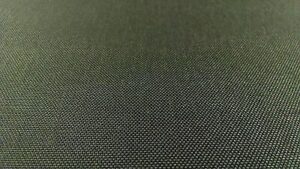
You’ll get serious wilderness protection with 1000 denier Cordura nylon in olive drab—this snake-resistant clothing brings puncture resistance that standard outdoor gear can’t touch. The Cordura weave delivers around 528 pounds of grab strength, creating a tough barrier your lower legs need when fangs strike.
Olive drab benefits include blending into brush while solution-dyed fibers resist fading through seasons of hard use. That nylon thickness, combined with fabric durability from the basketweave construction, gives you a proven defense without sacrificing the flexibility you need on rough terrain.
| Best For | Hunters, hikers, and outdoor workers who need heavy-duty snake protection that can handle brush, thorns, and rough terrain without falling apart. |
|---|---|
| Material Type | Nylon |
| Primary Protection | Durability |
| Color | OD Green |
| Form Factor | Cut by yard |
| Width/Coverage | 60 inches |
| Water Resistance | Water-resistant |
| Additional Features |
|
- Serious puncture resistance with 1000 denier construction and grab strength around 528 pounds, giving you a real barrier against snake fangs and sharp objects
- Olive drab color blends naturally into wilderness settings and resists UV fading thanks to solution-dyed fibers that lock pigment in
- Water-repellent coating sheds rain and dew while blocking dust, keeping you drier and more comfortable on long treks
- Width can vary between orders—some customers report receiving 40-inch material instead of the advertised 60-inch, which limits what you can build
- Material thickness and quality aren’t always consistent, with some batches coming in thinner than expected or showing discoloration marks
- Shipping tends to be slow, and the fabric may not always be true 1000D Cordura as advertised
4. Waterproof Canvas Fabric For Outdoor Use
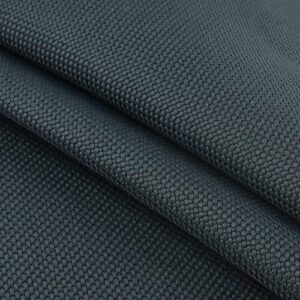
When you need waterproof coatings that deliver real snake fang protection, 600×600 denier polyester canvas with PVC backing hits the mark. That fabric thickness—around 0.40 to 0.55 mm—paired with a 1800 denier rating gives you puncture resistance that standard outdoor gear can’t match.
You’ll find this waterproof nylon in snake proof chaps and gaiters because its tight weave blocks fangs while keeping moisture out.
Outdoor durability stays high thanks to UV resistance and quick-dry properties, making it a smart choice for wilderness survival situations where both rain and serpents threaten your safety.
| Best For | Outdoor enthusiasts and workers in snake-prone areas who need durable, waterproof fabric for making protective gear like chaps, gaiters, or equipment covers that can handle rough conditions. |
|---|---|
| Material Type | Polyester |
| Primary Protection | Water resistance |
| Color | Gray |
| Form Factor | Cut by yard |
| Width/Coverage | 60 inches |
| Water Resistance | Waterproof coating |
| Additional Features |
|
- Heavy-duty 600×600 denier construction with PVC backing creates a tight barrier that resists snake fangs and keeps water out completely, even in prolonged rain
- The thick 0.40–0.55 mm fabric holds up against abrasion from rocks and branches while blocking UV rays, so your gear lasts years in harsh outdoor use
- Wide 60-inch width and easy-to-work-with polyester material let you cut and sew large protective panels for tarps, covers, or custom snake-proof clothing
- The waterproof coating can crack or peel after machine washing or repeated folding, so you’re stuck with hand-cleaning and careful storage
- Only available in gray, which limits your options if you need specific colors for visibility or matching other gear
- While it offers good snake fang resistance, it’s not as puncture-proof as Kevlar or ballistic nylon, so it works best when layered or doubled up for maximum protection
5. TurtleSkin Snake Protection Chaps
You won’t find lighter snake proof chaps than TurtleSkin’s patented SnakeArmor fabric—weighing just a third of traditional protective gear while delivering full-leg coverage against rattlesnakes and cottonmouths.
This chap design uses high-strength ballistic fibers in a super-tight fabric weave that blocks fangs, thorns, and cactus spines without the bulk.
Knee-high zippers let you pull them over boots fast, and the flexible construction bends with your stride instead of fighting every step.
At $349.99, you’re investing in proven reptile defense that’s machine washable and made in the USA.
| Best For | Hunters, hikers, and outdoor workers who need reliable snakebite protection without the weight and bulk of traditional chaps. |
|---|---|
| Material Type | High-strength fabric |
| Primary Protection | Snake bite resistance |
| Color | Not specified |
| Form Factor | Full chaps |
| Width/Coverage | Full leg length |
| Water Resistance | Water-resistant |
| Additional Features |
|
- Ultra-lightweight design weighs one-third as much as competing chaps, reducing leg fatigue on long treks through snake country.
- Patented SnakeArmor fabric blocks venomous fangs, thorns, and briars while staying flexible enough to move naturally with your legs.
- Knee-high zippers and machine-washable construction make them easy to use and maintain in the field.
- High price point at $349.99 puts them out of reach for casual users or budget-conscious buyers.
- Design can cause sweating similar to wearing a sauna suit, which may be uncomfortable in hot weather.
- Limited sizing options (specific inseam lengths and thigh measurements) may not accommodate all body types.
6. Rattler Snake Protection Chaps
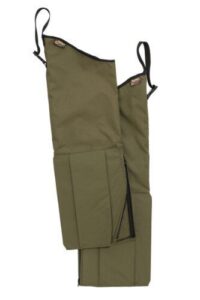
Rattler Snake Protection Chaps wrap your legs in 1000 denier Cordura nylon—tight basketweave construction that stops rattlesnake fangs, briars, and thorns across North American pit viper country. You get hip-to-ankle coverage with double-layer reinforcement below the knee where strikes happen most.
The 14-inch zippers slide over boots fast, adjustable straps let you dial in the fit, and a water-resistant coating sheds light rain during long walks through brushy draws.
At around $100, these chaps deliver guaranteed snake proof protection for hunters and ranch hands facing desert cactus and rocky ground.
| Best For | Hunters, ranch workers, and outdoor enthusiasts who need reliable protection from rattlesnakes and thorny vegetation in the southern and western U.S. |
|---|---|
| Material Type | ScaleTech fabric |
| Primary Protection | Snake bite resistance |
| Color | Not specified |
| Form Factor | Half chaps |
| Width/Coverage | Above knee |
| Water Resistance | Water repellent |
| Additional Features |
|
- Double-layer Cordura below the knee stops venomous snake fangs and sharp brush where bites happen most
- 14-inch zippers and adjustable straps make them easy to pull on over boots and fit to your exact leg length
- Water-resistant coating keeps you dry in light rain while the heavy-duty fabric handles rocks, barbed wire, and rough terrain
- Heavy 1000 denier fabric gets hot and sweaty in warm weather with limited airflow around your legs
- Sizing runs inconsistent—some users find them too loose or tight even after checking measurements
- Stitching quality can be hit-or-miss, with zippers and hems sometimes needing repairs after hard use
Choosing The Right Snake-Resistant Gear
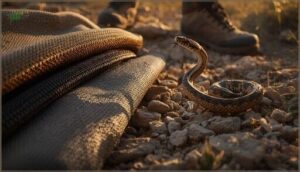
Picking the right snake-resistant gear isn’t just about finding the toughest fabric—you need to think about where you’ll be walking, how far you’ll go, and whether you can actually keep the material in good shape. A pair of heavy Kevlar chaps might stop any fang, but they won’t do you much good if they’re too stiff to hike in or too expensive to replace when they wear out.
Let’s look at three practical factors that’ll help you choose gear that actually works for your situation.
Matching Material to Environment
Your terrain determines which snake-resistant clothing will actually keep you safe. Desert fabrics like light-colored Cordura reflect heat while blocking Western diamondback strikes, wetland materials use quick-drying, water-repellent nylon for bayou hikes, and forest textiles combine briar resistance with puncture protection.
Match your outdoor safety gear—whether snake gaiters, snake proof pants, or mountain gear—to your specific environment, and you’ll get the personal protective equipment that performs when it counts.
Comfort and Mobility Considerations
You’ve locked in the right material for your landscape—but the best outdoor safety gear fails if it’s too stiff to wear all day. Lightweight designs around 1.5 pounds per pair let you hike miles without leg fatigue, while flexible materials with multiple small panels bend at the knee for easy climbing. Breathable fabrics keep you cool enough to leave your leg protection on when heat rises.
| Comfort Factor | Mobility Impact | Real-World Benefit |
|---|---|---|
| Weight under 2 lbs | Reduced hip strain | Walk farther without fatigue |
| Multi-panel flex | Full stride length | Squat and climb easily |
| Breathable weave | Less overheating | Wear protection all day |
Maintenance and Longevity
Your gear won’t last without simple upkeep. Clean synthetic fabrics like Spectra and Cordura after muddy outings—cold water and mild detergent preserve puncture resistance. Leather needs dedicated conditioner, not household soap.
Store everything dry and away from sunlight to slow material degradation. Inspect seams and high-wear zones yearly; professional users replacing chaps every two to three years avoid failures when seconds count.
Skip duct tape and spandex fixes—retire damaged gear.
Frequently Asked Questions (FAQs)
What material can snakes not bite through?
High-density Kevlar, thick leather boots, and Cordura nylon rated 500 denier or higher stop most venomous snake fangs.
Multi-layer systems combining these synthetic materials with canvas create effective snake-resistant clothing that provides reliable puncture resistance outdoors.
What material can snake fangs not penetrate?
Fangs meet their match when they strike ballistic nylon rated 500 denier or higher, Cordura synthetics, Kevlar aramid fibers, and multi-layer snake-resistant clothing with rigid inserts—materials engineered to stop puncture-proof bite protection cold.
Will Kevlar stop a snake bite?
Yes, Kevlar stops most snake bites when woven into multi-layer gaiters or chaps. Snake-resistant clothing using Kevlar reaches 96 to 99 percent effectiveness against venomous snakes in controlled bite force analysis testing.
Can snakes bite through multiple layers of clothing?
Can layers alone keep you safe? Multiple layers of medium-weight fabric slow snake fangs and reduce fang penetration depth, but large venomous snakes can still drive through stacked clothing unless you’re wearing snake-proof pants or snake-resistant clothing with proper fabric puncture resistance.
Do snake gaiters protect against all venomous species?
Quality snake gaiters block 96 to 99 percent of bites from common pit vipers and similar-sized venomous snakes, but they aren’t guaranteed against every species—especially large exotic vipers with long fangs and powerful strikes.
How often should snake-proof gear be replaced?
Most snake-resistant clothing lasts several years with weekly use, though you should replace gaiters immediately after any confirmed strike.
Inspect your protective layer before each trip—torn seams or thinning fabric means it’s time for new gear.
Are there snake-resistant gloves for handling vegetation?
Several companies sell gloves combining thick cowhide leather with internal Kevlar or denim layers for hand protection when clearing brush.
These extended cuff designs shield your forearms while reaching into tall grass where snakes hide.
What footwear height best prevents ankle strikes?
Most strikes land below the knee, so you’ll want boots that rise 15 to 18 inches from the sole.
Leather boots or tall rubber boots paired with snake-proof pants give your ankle and lower leg complete coverage.
Conclusion
Think of snake-proof fabric as armor that never sleeps—it stands between you and a strike you’ll never see coming. When you understand what material protects against snake fangs, you’re not just shopping for gear; you’re building a barrier that buys time, prevents venom delivery, and turns a potential emergency into a story you walk away from.
The right fabric doesn’t eliminate risk. It stacks the odds heavily in your favor.
- https://bushbuck.com/blogs/campfire-chats/snake-gaiters-everything-you-need-to-know
- https://www.stonecreekhounds.com/post/what-is-the-best-material-for-snake-chaps
- https://blog.goclogger.com/snake-safe-gaiters-for-outdoor-activities-usa/
- https://www.activefabrics.net/Kevlar-Aramid/
- https://litfl.com/denim-as-snake-bite-protection/