This site is supported by our readers. We may earn a commission, at no cost to you, if you purchase through links.

A rattlesnake loses a fang mid-strike, buried in prey it will swallow whole. It doesn’t panic, and it doesn’t need to. Another fang is already waiting behind it, growing in like a soldier stepping up in formation.
So yes, do snake fangs grow back? Every venomous species keeps a backup supply moving through the jaw, replacing fangs on a rolling cycle for life. It’s less like healing an injury and more like a scheduled swap, built into the snake’s biology from birth.
Understanding how that cycle works reveals a lot about what keeps a snake’s bite reliable, and what can throw it off track.
Table Of Contents
- Key Takeaways
- Yes, Snake Fangs Grow Back
- How Do Snake Fangs Grow Back?
- How Long Does Fang Regrowth Take?
- Why Do Snakes Lose Fangs?
- Does Fang Loss Harm a Snake?
- Frequently Asked Questions (FAQs)
- How long does it take a venomous snake to regenerate a Fang?
- Why do fangs regenerate faster than rear-fanged snakes?
- Do snakes replace their fangs naturally?
- Do snakes lose fangs?
- How long does it take for a snake to regrow a fang?
- What happens if a snake loses a fang?
- Can snakes survive without fangs?
- What snake has a 100% fatality rate?
- How long do snake fangs typically last?
- Can snakes survive without their fangs permanently?
- Conclusion
Key Takeaways
- Venomous snakes keep backup fangs growing behind their active ones, so a lost fang gets replaced on a rolling cycle for life instead of leaving them defenseless.
- Regrowth usually takes about 1 to 2 weeks under good conditions, but stress, poor nutrition, or injury can stretch that out to several weeks or even months.
- Only around 600 of nearly 4,000 snake species have venom fangs at all, while nonvenomous snakes like pythons and boas rely on solid grip teeth instead.
- Fang loss is rarely dangerous on its own, but you should watch for swelling, redness, or discharge around the socket since infection is the real risk to your snake’s health.
Yes, Snake Fangs Grow Back

Yes, snake fangs grow back, and nature has this process well figured out. Your snake isn’t stuck with one set of fangs for life. Here’s what actually happens behind the scenes to keep that venom system running.
Behind each active fang, a series of replacement fangs waits in line, ready to rotate into place as explained in this breakdown of how venomous snake fangs grow and replace themselves.
Lifelong Fang Replacement
Unlike your own teeth, a snake’s fangs never stop renewing. This lifelong fang replacement system works through polyphyodont tooth replacement, meaning new fangs form continuously, not just once.
Each fang shedding process feeds into the next tooth replacement cycle, keeping the venom system maintenance running smoothly. It’s a built-in safeguard: fangs wear out, but the snake never truly runs out of backups. The fang replacement mechanism ensures minimal disruption to hunting abilities.
Backup Fangs in Development
Behind that ready fang sits a whole lineup waiting their turn. Backup fangs form from a dental pad on the upper jaw, part of the same dental lamina that never quits producing new teeth.
Stem cell activation kicks off each fang development cycle, growing new fangs already aligned with the venom groove before jaw growth coordination signals full functional fang readiness.
Fangs Versus Regular Teeth
That backup fang stockpile explains why fang regeneration works so differently from your own dental setup. Snake fangs have a narrower root-to-crown ratio than grinding teeth, favoring piercing over chewing. Thicker enamel resists puncture fractures, while frequent tooth replacement keeps the whole system fresh, cycling out worn fangs faster than typical bite-and-grind dentition ever needs to.
Venomous and Nonvenomous Dentition
Not every snake even has this system. Only about 600 of nearly 4,000 species carry medically significant venom fangs — think vipers and elapids with hollow, grooved teeth wired to venom glands.
Nonvenomous snakes, like pythons and boas, skip that setup entirely. They rely on solid teeth for grip, not injection, so their dentition evolved for holding prey, not delivering venom.
How Do Snake Fangs Grow Back?
Fang regrowth isn’t just one quick swap. It’s a series of steps happening in order, each one building on the last. Here’s how a snake goes from losing a fang to striking with a fully working one again.
Old Fang Loss
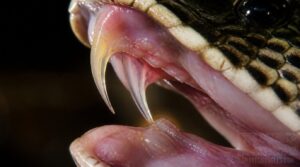
So what actually happens when a fang wears out? The fang shedding cycle kicks in. This is old fang loss, the period where a worn fang gets pushed out and makes room for its replacement.
The new fang actually ankyloses, or fuses, into place before the old one drops, so there’s never a gap in biting power—a process detailed in this breakdown of king cobra venom gland anatomy.
It’s not injury. It’s routine tooth replacement, part of the continuous fang replacement system every venomous snake relies on for steady venom flow.
Replacement Fang Development

While one fang works, another is already forming behind it. Dental lamina activity drives this growth, building a new fang with proper fang socket alignment and an intact venom canal. Connective tissue growth gets the socket ready for attachment.
This steady tooth replacement rate keeps a fang ready at every stage, matching the snake’s natural fang eruption sequence.
Forward Movement Into Position

Once a replacement fang matures, pressure from behind pushes it along the fang shedding cycle, guided by jaw ligaments toward the old socket. No hips or weight transfer here — this is tissue-driven, part of the fang rotation mechanism tied to fang eruption.
The new fang creeps forward within maxillary dentition, closing the gap left by its predecessor.
Attachment to The Jaw

Getting into place is only half the job. The new fang must lock into the fang socket, anchored by a periodontal ligament-like structure in the maxillary dentition.
Jaw bone remodeling reshapes the socket walls, while connective tissue anchoring secures the base. This keeps the fang stable, aligned, and ready for its role in the jaw.
Venom Delivery Restoration

A new fang is useless without a working venom line. Within 48 hours, it aligns with the delivery groove, and duct capping begins by 72 hours, forming a full venom canal within a week.
By the third molt, venom yield matches the original fang, restoring true fang functional parity and strike efficiency.
How Long Does Fang Regrowth Take?

So how fast can you expect a new fang to show up? The timeline isn’t the same for every snake, and a few key factors shape the process. Let’s look at what actually speeds up or slows down fang regrowth.
Typical Replacement Timeline
A snake’s fang replacement rate isn’t fixed. Cycle duration commonly runs 1–2 weeks, though ideal conditions can push it to just 24 hours.
Under stress or poor health, tooth replacement timing stretches to 6–10 weeks. Some sources even cite a broader 1–3 month window for full cycles.
Species and Age Differences
Not every snake regrows fangs at the same pace. Younger snakes replace fangs faster, tied to quicker sheds and growth spurts, while adults settle into steadier cycles once jaws mature.
Species matter too:
- Rattlesnakes cycle quickly
- Pythons lag behind
- Juveniles outpace adults
- Geographic populations vary by prey
- Renewal rates shift with age
Health and Nutrition
Age isn’t the only factor. What a snake eats matters just as much.
Protein needs support tissue repair, while whole prey supplies the vitamins and minerals behind healthy fang regeneration. Skimping on prey variety or hydration levels can leave tooth replacement sluggish. Malnourished snakes simply rebuild slower. Good nutrition keeps fang replacement timing on schedule, restoring bite function without unnecessary delay.
Fang Socket Damage
Nutrition aside, the socket itself takes a beating over time. Repeated shedding leaves microfractures around the fang base, and healing brings scar tissue, swelling, and real infection risk if bacteria sneak in.
- Microfractures form near the socket
- Scar ridges build during healing
- Swelling signals active regrowth
- Infection risk rises with damage
Why Do Snakes Lose Fangs?

Fangs don’t just fall out for no reason. A few clear causes explain why a snake sheds one and grows another. Here’s what usually triggers the process.
Natural Fang Replacement
Losing a fang isn’t an accident, it’s the plan. This continuous fang replacement system keeps venom flowing for life.
A snake never truly loses a fang; it simply trades one for a replacement already waiting in line
Behind each fang, backups wait mid-development. When one falls, the tooth replacement cycle shifts a new fang forward, guided by jaw tissue guidance, then fuses through ankylosis formation. The venom canal stays preserved, so fang regeneration never leaves your snake defenseless for long.
Normal Wear and Tear
Not every fang loss comes from injury. Daily strikes cause enamel thinning and tiny microcrack formation on the crown, plus surface pitting near the base.
Jaw cartilage wear and mild ligament laxity build up over years too. That’s why the continuous fang replacement system matters. Fang shedding keeps pace with oral tissue regeneration, so fang regeneration stays uninterrupted despite this ordinary wear and tear.
Jaw or Mouth Injuries
When trauma strikes a snake’s mouth, healing gets complicated fast. Jaw fracture healing takes weeks, and fang socket trauma can disrupt venom duct connectivity entirely.
Real damage looks like:
- Tooth displacement affecting bite alignment
- Mucosal injury slowing oral tissue regeneration
- Nerve sensitivity changes near the jaw
Unlike routine fang shedding, injury-driven fang regeneration isn’t guaranteed. Severe cases may need veterinary intervention.
Does Fang Loss Harm a Snake?

Losing a fang isn’t usually a crisis, but it does change things for a while. Your snake may deal with a few short-term effects until the new fang settles in. Here’s what to watch for, and how to keep its mouth healthy during the process.
Temporary Feeding Difficulties
Missing a meal isn’t cause for alarm. When fangs are damaged during feeding or simply worn out from regular use, you may notice prey capture challenges and increased feeding latency. Head shaking or tentative strikes often follow.
Offer smaller prey and watch weight closely—weight monitoring matters most here, since normal feeding resumes once fang regeneration finishes.
Reduced Venom Delivery
A new fang isn’t a full replacement on day one. Venom flow disruption happens because early fangs have a shallow venom canal, and jaw misalignment can break the duct seal. Bite efficacy drops as your snake compensates with altered strikes.
Thanks to the fang backup system, venom efficacy climbs steadily and returns to normal once regrowth finishes.
Infection Warning Signs
An empty fang socket is an open wound, and your snake’s mouth can’t always keep bacteria out. Watch for redness, swelling, or heat near the socket, along with pain when it feeds. Pus, foul discharge, fever, or lethargy point to stomatitis.
Regular fang inspection catches infection early, before oral tissue regeneration stalls.
Healthy Mouth Care
Good hygiene speeds fang shedding and keeps new fangs healthy. Try these:
- Gentle enclosure cleaning to limit bacteria
- Soft-food feeding during fang transitions
- Routine visual checks of gum tissue
- Clean water for natural mouth rinsing
- Minimal handling near the mouth
Human tools like brushing, flossing, or fluoride toothpaste don’t apply here. Snakes rely on oral tissue regeneration and a clean habitat instead.
When to Contact a Vet
Care habits help day to day, but some situations need a professional. Watch for emergency symptoms like swelling, bleeding, or a broken fang after feeding.
| Sign | Action |
|---|---|
| Delayed swelling | Call vet same day |
| Systemic signs | Seek care now |
| Retained fang fragments | Vet exam |
| No regrowth in weeks | Schedule checkup |
| Post-bite monitoring | Recheck 7–14 days |
Frequently Asked Questions (FAQs)
How long does it take a venomous snake to regenerate a Fang?
Most replacement fangs emerge within 1 to 2 months. Juveniles regrow faster (2 to 6 weeks) thanks to quicker metabolism, while adults take 6 to 8 weeks. Species, nutrition, and jaw socket healing all shape the exact timeline.
Why do fangs regenerate faster than rear-fanged snakes?
Front fangs see near-constant use, so front fang turnover stays fast by design. Higher bite frequency drives quicker odontogenic stem cell activity and Wnt signaling, while rear fangs, used less often, simply don’t need the same regeneration speed.
Do snakes replace their fangs naturally?
Yes — it’s a built-in biological process. Through natural fang regeneration, jaw tissue guidance directs new fangs forward as dentin resorption and ankylosis fuse them into place, giving snakes a continuous fang replacement system that keeps venom delivery working without needing an injury to trigger it.
Do snakes lose fangs?
Snakes definitely get "fanged out" now and then. A fang breaks off during prey struggle, jaw trauma, or regular wear, but backup fangs wait behind it, part of a continuous fang replacement system keeping bites functional.
How long does it take for a snake to regrow a fang?
On average, expect 1 to 6 weeks, though full functional restoration can stretch to 10 weeks. Species variation, juvenile vs adult metabolism, nutrition, and temperature all shape fang regeneration speed within this continuous tooth replacement system.
What happens if a snake loses a fang?
A small gap opens where the tooth once sat, socket healing within days. Venom flow continues through neighboring fangs, feeding barely skips a beat, and a replacement fang is already moving into place behind it.
Can snakes survive without fangs?
Absolutely, thanks to the fang backup system. Even during fang trauma, snakes shift to fangless feeding strategies, relying on jaw adaptation and rear teeth until fang regrowth restores venom duct reconnection and normal hunting ability.
What snake has a 100% fatality rate?
The Inland Taipan holds that grim record: untreated bites carry near 100 percent mortality. Its venom shuts down the nervous system fast. Coastal taipans, black mambas, death adders, and tiger snakes are also dangerously lethal without prompt antivenom.
How long do snake fangs typically last?
Picture a rattlesnake striking prey, snapping a fang clean off. Within days, a backup moves forward. Most fangs last weeks to months before this tooth replacement cycle kicks in, keeping venom delivery uninterrupted.
Can snakes survive without their fangs permanently?
Permanent fang loss threatens venomous snakes, since their venom delivery system drives survival. Without functioning fangs, hunting fails and starvation risk climbs.
Non-venomous species adapt easily, relying on ordinary tooth replacement cycles instead of specialized venom injection structures for feeding success.
Conclusion
A young copperhead once shed a fang while biting through tough lizard scales, yet fed normally within two weeks. That’s the system working as designed.
So do snake fangs grow back? Always, on a built-in replacement cycle that never really stops. You don’t need to fear a broken fang derailing a snake’s survival.
Watch for swelling or drooping instead. A healthy mouth means a reliable bite, fang after fang, for the snake’s entire life.