This site is supported by our readers. We may earn a commission, at no cost to you, if you purchase through links.

Your snake just swallowed a rat the size of your fist, and there’s a mess in the enclosure you’re itching to clean. But reaching in too soon could trigger regurgitation—a dangerous situation that stresses your snake and wastes the meal entirely.
Cleaning after snake feeding isn’t about convenience; it’s about understanding digestion cycles, recognizing behavioral cues, and timing your maintenance to avoid health complications. The window between feeding and safe cleaning varies dramatically based on species, meal size, and temperature, with small colubrids requiring 3-5 days while larger boas need up to a week.
Getting this timing wrong doesn’t just risk a messy regurgitation—it can lead to chronic digestive issues, defensive strikes, and unnecessary stress that compromises your snake’s long-term health.
Table Of Contents
- Key Takeaways
- Why Cleaning After Snake Feeding Requires Care
- How Snake Digestion Impacts Cleaning Timing
- Determining When Your Snake is Ready for Cleaning
- Safe Cleaning Procedures After Snake Feeding
- Managing Substrate and Enclosure Hygiene
- Best Practices for Post-Feeding Snake Care
- Frequently Asked Questions (FAQs)
- Conclusion
Key Takeaways
- Wait at least 48–72 hours after feeding before cleaning your snake’s enclosure to prevent regurgitation, which occurs when handling forces the snake to expel undigested prey to regain mobility and can lead to severe weight loss or organ damage.
- Digestion timing varies dramatically by species, meal size, and temperature—small colubrids need 3–5 days while larger boas require up to a week, with temperatures below the mid-70s Fahrenheit potentially stalling digestion completely.
- Your snake signals readiness for cleaning through behavioral cues like increased activity, defecation (typically 6–10 days post-feeding), reduced basking, and a restored normal body contour after days of stillness.
- Use hands-off cleaning techniques with 12–18 inch tongs to remove waste without handling your snake, and always disinfect tools with a 1:10 bleach solution or F10SC for 15 minutes to prevent Salmonella contamination.
Why Cleaning After Snake Feeding Requires Care
Cleaning your snake’s enclosure after feeding isn’t as simple as wiping down the glass and swapping out substrate. The timing of your maintenance work directly affects your snake’s ability to digest its meal safely, and getting it wrong can trigger serious health problems.
Understanding the risks of premature cleaning helps you protect your snake from regurgitation, stress-related behaviors, and digestive complications that could compromise its long-term health.
Regurgitation Risks From Premature Handling
When you handle your snake too soon after feeding, you’re not just risking discomfort—you’re potentially triggering regurgitation, the second most common cause of vomiting in captive snakes. This physiological response happens because your snake’s full stomach impairs its fight-or-flight response, forcing it to expel undigested prey to regain mobility.
Handling a snake too soon after feeding can trigger regurgitation as its full stomach forces it to expel prey to escape
Veterinary guidelines recommend waiting at least 48 hours before any handling or cage maintenance to protect your snake’s digestive system. Regurgitation in snakes is often linked to poor husbandry practices.
Stress and Defensive Behaviors Post-Feeding
Beyond the physical risk of regurgitation, premature disturbance triggers measurable stress in your snake. Research shows plasma corticosterone can spike by 300 ng/mL within 50 minutes of handling, activating acute stress responses.
Watch for these defensive postures that signal your snake isn’t ready:
- Tight coiling with S-shaped striking position
- Increased hissing or tail rattling
- Persistent escape attempts and nose rubbing
Reducing handling snakes after feeding prevents these stress indicators entirely. Understanding the importance of low stress environments is key for maintaining your snake’s well-being.
Health Consequences of Disrupted Digestion
When regurgitation occurs two or three times in a row, your snake faces severe weight loss and potential organ damage that often requires veterinary care. Gut disruption from premature handling impairs nutrient absorption, while metabolic strain peaks at nearly 180% increased oxidative damage during snake digestion.
These survival risks compound quickly—chronic digestive health problems can progress from weight loss to life-threatening illness if you don’t correct poor handling habits promptly.
How Snake Digestion Impacts Cleaning Timing

Understanding how your snake processes its meal isn’t just biology—it’s the key to knowing when cleaning won’t cause problems. Temperature, humidity, and the size of the prey all change how quickly digestion happens, which means your cleaning schedule can’t be one-size-fits-all.
Let’s break down the factors that determine when it’s safe to get in there and tidy up.
Typical Digestion Timeline After Feeding
Your snake’s digestion time isn’t a one-size-fits-all formula. Gastric processing begins immediately, with roughly 17–27% of a rodent meal entering the small intestine within the first 24 hours.
Intestinal remodeling peaks early but continues for days as the snake absorbs nutrients.
Most species complete the full digestive cycle—including waste elimination—within 5–10 days, though the metabolic window remains elevated throughout that period.
Effects of Temperature and Humidity
If your enclosure’s environmental temperature drops below the mid-70s Fahrenheit, digestion can stall completely—snakes held at 68°F often regurgitate within days. Thermal gradients between 77°F and 86°F maximize nutrient absorption, while humidity levels around 60–70% support healthy shedding and prevent scale rot.
Low temperatures invite bacterial growth in undigested prey; excessive moisture saturates substrate, compounding infection risk and creating environmental conditions that demand careful timing before you clean.
Influence of Meal Size and Snake Species
A prey item wider than 75% of your snake’s head diameter can trigger regurgitation and dramatically extend digestion time. Meal size determines metabolic cost—oversized feedings demand longer rest periods before you attempt any snake enclosure maintenance or handling.
Pythons and boas consuming large meals may require 72 to 96 hours before safe snake tank cleaning, while active colubrids often finish within 48 hours.
Determining When Your Snake is Ready for Cleaning

Knowing when it’s safe to clean your snake’s enclosure isn’t about watching the clock—it’s about reading your snake. Your pet will give you clear signals once digestion is complete and it’s ready for you to handle routine maintenance.
Let’s walk through the key behavioral cues, stress indicators, and health signs you need to monitor before you touch that enclosure.
Recognizing Post-Digestion Behavioral Cues
Your snake’s behavior tells you when digestion wraps up. Watch for increased activity resumption and movement after days of stillness—snakes often emerge from refugia use and explore their enclosure once the meal is fully processed.
Usually 6–10 days post-feeding, defecation timing signals that nutrients have been absorbed.
You’ll also notice thermoregulatory shifts, with reduced basking as metabolic demands drop and morphological reset restores the snake’s normal body contour.
Signs of Stress or Discomfort to Watch For
Recognizing signs of stress and agitation keeps your snake healthy and prevents handling mishaps. Watch for defensive postures like coiling tightly or mock strikes—surveys show over half of stressed snakes display these warning signals. Erratic movement, persistent hiding behavior, and repeated pushing against glass walls all indicate discomfort.
Appetite changes, shedding issues, and unusual withdrawal from gentle contact also reveal compromised snake health that demands immediate attention.
Monitoring for Regurgitation or Health Issues
Vigilance after meals can mean the difference between routine care and an emergency vet visit. Regurgitation commonly strikes within 24 to 72 hours, when prey remains largely intact—a clear warning that something’s wrong with your snake’s digestion.
Watch closely for these critical regurgitation signs and health issues:
- Persistent anorexia or refusal of multiple meals alongside lethargy
- Defecation abnormalities like absent, dry, or unusually small stools
- Respiratory distress including open-mouth breathing or nasal discharge
- Dehydration risks shown by sunken eyes and reduced skin elasticity
Safe Cleaning Procedures After Snake Feeding
Once your snake shows clear signs it’s finished digesting, you can clean the enclosure without risking its health. The key is knowing exactly how long to wait and using techniques that don’t disturb your pet.
Let’s walk through the proper timing, hands-off cleaning methods, and sanitation steps that keep both you and your snake safe.
Waiting Periods Based on Meal and Species
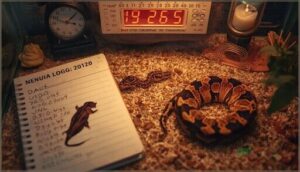
Your waiting periods depend on three factors: species, meal size, and temperature.
Small colubrids usually digest within 3–5 days at best warmth, so you can clean after 48 hours. Ball python habits call for 72 hours minimum, extending to 5–7 days for large meals. Boa meal sizes demand even longer—wait 3–5 days for medium prey, up to a week for substantial feedings.
After regurgitation recovery, avoid disturbance for 2–4 weeks minimum.
Step-by-Step Cleaning Without Handling
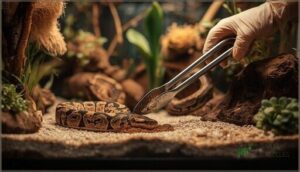
Once you’ve honored the waiting period, you can tackle enclosure cleaning routines without ever picking up your snake. Smart tool selection keeps both you and your pet safe while maintaining snake health and hygiene.
Follow these steps for minimal disturbance during enclosure maintenance:
- Position yourself to the side or behind your snake, never directly in front
- Use 12–18 inch tongs or scoops for safe removal of feces and urates
- Move slowly and deliberately, avoiding sudden gestures that startle
- Lift only soiled substrate patches, leaving most of the enclosure environment intact
- Complete waste disposal quickly, then retreat to reduce stress
This gradual approach to enclosure cleaning protects digestion while keeping your snake enclosure hygienic.
Disinfecting Tools and Preventing Contamination
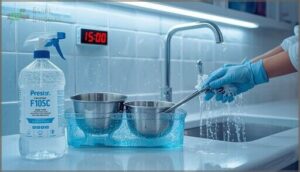
Every tong or bowl touching your snake or its food carries Salmonella risks, making thorough disinfection non-negotiable. Use a 1:10 bleach solution or F10SC, ensuring 15-minute contact time to kill bacterial contamination. Rinse completely before reintroducing tools.
Maintain separate equipment for each enclosure to prevent cross-contamination, and wash your hands immediately after handling any feeding gear—this sanitation routine protects both snake health and human hygiene from bacterial infections.
Managing Substrate and Enclosure Hygiene

Your snake’s bedding requires careful attention after feeding to prevent bacterial buildup and protect your pet’s health. The frequency and method of substrate changes depend on the type of enclosure you’re maintaining, whether it’s a traditional setup or a more complex bioactive system.
Let’s look at how to manage each approach safely while minimizing stress to your digesting snake.
Bedding Replacement Frequency After Feeding
Generally, you’ll replace loose substrates once or twice monthly under regular spot-cleaning routines, independent of individual feedings. Paper-based bedding allows daily substrate replacement for maximum hygiene outcomes, while bark or mulch can last several weeks between full changes.
Your cleaning frequency should increase when post-feeding defecation creates damp, soiled areas—preventing mold, bacteria buildup, and odor control issues that compromise enclosure cleaning routines.
Adapting Cleaning for Bioactive Setups
Bioactive terrariums shift your cleaning schedule dramatically. You won’t replace substrate monthly, but spot cleaning remains necessary. Remove visible feces and urates daily to prevent parasite management problems, even though your cleanup crew takes care of most waste processing within 24 hours under ideal conditions.
Stir the upper substrate layer weekly and maintain your invertebrate populations. Perform targeted substrate maintenance every 3 to 6 months after heavy feeding periods or health concerns.
Preventing Mold, Bacteria, and Scale Rot
Balancing humidity control and substrate choice prevents the conditions mold and bacteria thrive in. You need to factor ventilation importance into your enclosure cleaning routines—stagnant, moist air accelerates fungal growth and scale rot.
Spot cleaning waste immediately reduces bacterial loads, while regular scale inspection catches early signs of infection.
Your snake bedding replacement schedule matters less than keeping surfaces dry between mistings, especially in bioactive terrarium cleaning where moisture retention poses ongoing snake health problems.
Best Practices for Post-Feeding Snake Care

Proper post-feeding care extends beyond just waiting to handle your snake—it’s about creating conditions that support healthy digestion and catching potential problems early.
The following best practices will help you maintain your snake’s wellbeing while keeping the enclosure clean and safe.
Let’s look at three key areas that deserve your attention after every feeding.
Creating a Stress-Free Environment
Think of your snake’s enclosure environment as a sanctuary where stress can’t reach. Secure hiding spots on both warm and cool sides, ambient stability in temperature and humidity, and minimal disturbance all work together to protect snake health during digestion.
Quiet housing away from traffic, predictable routines, and consistent light cycles help your snake behavior remain calm, lowering stress while environmental factors support recovery after feeding.
Monitoring Health and Appetite Regularly
Weekly weigh-ins reveal weight trend analysis that catches trouble before it escalates. Record keeping benefits you by spotting trends veterinary attention thresholds demand: persistent weight loss, weeks of refusal, or lethargy that disrupts both snake health and your enclosure cleaning routines for waste removal and spot-clean tasks.
When your snake’s appetite baseline patterns shift—refusing meals beyond its normal interval or showing weak behavioral feeding cues—those changes matter.
When Immediate Cleaning or Handling is Needed
Sometimes, handling a snake or disrupting enclosure cleaning routines can’t wait. Illness symptoms like repeated vomiting or severe lethargy demand immediate veterinary transport, even post-feeding. Critical situations requiring action include:
- Thermal Emergency threatening life
- Heavy Contamination or Post-Regurgitation waste removal
- Entrapment Hazards risking injury
- Dangerous temperature extremes in the habitat
- Urgent spotclean needs for hygiene
Prioritize your snake’s safety over standard waiting periods.
Frequently Asked Questions (FAQs)
Can I mist the enclosure after feeding?
You can lightly mist your snake’s enclosure after feeding, but avoid spraying directly on the snake.
Gentle humidity adjustments won’t disrupt digestion if you maintain stable environmental temperature and minimize other disturbances throughout the reptile enclosure.
Do snakes need darkness while digesting meals?
Your snake won’t demand pitch-black digestion chambers. While darkness reduces stress and aligns with circadian rhythms, environmental temperature drives snake digestion far more than light levels, provided you maintain proper thermal gradients throughout.
How often should water bowls be changed?
You should replace water in your snake’s dish daily to prevent bacterial growth. Make immediate changes whenever soiling indicators appear—feces, shed skin, or cloudiness—regardless of your regular cleaning schedule.
Should I reduce lighting during digestion periods?
You might think dimming lights helps digestion, but your snake doesn’t need it—steady day-night cycles matter more.
Focus on thermoregulation priority and hiding behavior instead of adjusting light stress effects during postfeeding care.
What disinfectants are safe around digesting snakes?
Choose chlorhexidine or F10 at veterinary recommendations for safe tank cleaning routines—both offer safe handling techniques with minimal fume risks and residue concerns.
Avoid ammonia entirely; dilution guidelines and full drying make certain safe management around your snake tank.
Conclusion
Like the patient hunter who knows when to move and when to stay still, you’ll master cleaning after snake feeding by reading your animal’s signals and respecting its digestive process.
The difference between a thriving snake and a stressed one often comes down to those important days of waiting. Trust the timeline, watch for behavioral cues, and remember that your snake’s health depends on restraint as much as cleanliness.
- https://www.happydragons.com/reptiles/ball-python/care-guide/
- https://www.hvreptilerescue.org/resources/care-guides/ball-python-care-guide
- https://fullwoodanimalhospital.com/reptile-habitat-cleaning-tips/
- https://www.caringanimalhospital.net/storage/app/media/ArchivedDocs/ball-pythons-handout-pdf.pdf
- https://www.wisconsinherps.org/educational-articles/blog-post-title-three-8ajd3