This site is supported by our readers. We may earn a commission, at no cost to you, if you purchase through links.
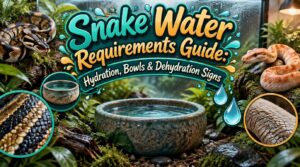
Up to 30% of reptile health emergencies trace back to dehydration, and most owners never see it coming until a shed goes wrong or a snake stops eating. A wrinkled coil, sunken eyes, or skin that stays pinched instead of snapping back, these are urgent signals hiding in plain sight.
Water isn’t just a bowl you refill when you remember. For snakes, hydration comes from multiple sources: water bowls, ambient humidity, even the moisture locked inside prey. Getting that balance right depends entirely on your species, your setup, and your habits.
This snake water requirements guide covers everything you need to keep your snake healthy, responsive, and properly hydrated.
Table Of Contents
- Key Takeaways
- Daily Snake Water Requirements and Drinking Behavior
- Choosing and Placing The Best Snake Water Bowl
- Keeping Snake Drinking Water Clean and Safe
- Species-Specific Water, Humidity, and Soaking Needs
- Signs of Snake Dehydration and When to Seek Veterinary Care
- Frequently Asked Questions (FAQs)
- What water do snakes need?
- How do you tell if a snake plant needs water?
- How long can I go without watering a snake plant?
- How do I know if my snake plant has too much water?
- Can snakes drink distilled or purified water?
- How often do snakes typically drink water?
- Should water bowls be elevated or ground-level?
- Can tap water harm my snakes health?
- Should I offer water right after feeding?
- How do I keep my snake hydrated while traveling?
- Conclusion
Key Takeaways
- Up to 30% of reptile health emergencies stem from dehydration, yet early warning signs like pinched skin that won’t snap back, sunken eyes, and dull wrinkling are easy to miss until a shed fails or feeding stops.
- Hydration isn’t just about the water bowl — ambient humidity and prey moisture both count, so matching your setup to your specific species’ needs (desert drinker vs. arboreal leaf-lapper) is what actually keeps your snake healthy.
- Water quality degrades fast in warm enclosures, so daily water changes, weekly bowl sanitization, and dechlorination aren’t optional habits — they’re the baseline that prevents invisible bacterial buildup from becoming a health crisis.
- If your snake soaks persistently, refuses water, or shows neurological signs like tremors, treat it as urgent rather than a quirk — dehydration often masks deeper systemic illness that requires prompt veterinary attention.
Daily Snake Water Requirements and Drinking Behavior

You won’t find a universal "cups per day" number for snakes, and that’s normal. Daily water intake varies by species, body size, temperature, and humidity. Most snakes drink intermittently, lapping for seconds to minutes rather than sipping continuously.
When in doubt, tracking your snake’s patterns against typical snake drinking frequency and habits can help you distinguish normal intermittent sipping from signs of dehydration.
Watch drinking behavior instead of counting bowl visits. Many snakes drink after feeding, during temperature shifts, or when water is freshly offered. Some individuals barely touch the bowl in humid enclosures because they lose less moisture through skin and breath.
Hydration is multi-source: your water bowl, ambient humidity, and prey moisture all count. Don’t panic over one missed drink. Persistent changes over multiple days are what matter. Learn your snake’s normal rhythm, refresh water daily, and track hydration signals like skin quality and body condition.
Choosing and Placing The Best Snake Water Bowl
Your snake’s drinking habits only matter if the bowl works. Get this right and hydration becomes easy.
Snake water bowls come in three main materials. Ceramic material wins for most keepers: it holds stable water temperature, resists algae, and scrubs clean. Stainless steel is lightweight but heats and cools fast. Plastic scratches, and scratches harbor bacteria.
Size matters too. Choose a bowl holding roughly 10–20% of your snake’s body mass in water. Shallow and wide beats deep and narrow every time.
Bowl placement belongs on the warm side, away from direct heat. Larger enclosures need two stations. Raise bowls 1–2 inches to cut contamination.
For more on sizing and depth, choosing the right snake water dish for soaking and hydration can help you dial in the setup for your specific species.
Quick checklist:
- Preventing spills and drowning: pick shallow, wide bowls
- Match diameter to your snake’s size
- Use a slightly textured rim to encourage licking
- Rotate an ignored bowl 90 degrees
- Skip cracked or odorous bowls immediately
Keeping Snake Drinking Water Clean and Safe
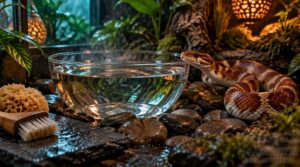
A dirty bowl undoes everything good bowl placement achieves. Water quality degrades fast: warm water doubles bacterial buildup every few hours, and clear water lies. Biofilm forms invisibly, so change water daily, without exception.
Your dechlorination methods matter. Tap water carries chlorine and chloramine. Use a reptile-safe conditioner, or let water sit 24 hours for chlorine only (chloramine won’t off-gas). Sensitive species suffer otherwise.
For a deeper dive into keeping your reptile properly hydrated, reptile water quality and health care basics covers conditioner choices, electrolyte benefits, and testing routines worth bookmarking.
Weekly bowl sanitization isn’t optional. Scrub with hot water and unscented dish soap, rinse twice, then disinfect with diluted bleach (1:10) or reptile-safe cleaner. Rinse again thoroughly. Products like reptile-safe enclosure disinfectants take the guesswork out of the bleach ratio and leave no harmful residue behind.
Replace water immediately after contamination: feces, shed skin, or substrate. Watch for foam, slime, or odor, your signals microbes have won. Keep water tools separate from feeding equipment. Never share containers.
Species-Specific Water, Humidity, and Soaking Needs

Your snake’s hydration needs aren’t one-size-fits-all. Species-specific behaviors determine whether your animal drinks from a bowl, misted leaves, or soaking sessions. Get these details wrong and you’ll miss the warning signs that matter, so here’s exactly what your species requires.
Species-specific Drinking Behaviors
Consider a ball python versus a corn snake. The python, a desert-adapted species, may drink only once or twice weekly, while your corn snake sips daily. Know your species.
Arboreal types, like green tree pythons, often lap droplets off leaves rather than use bowls. Aquatic species drink during immersion but still need separate surface access. Watch intake closely.
Humidity and Shedding Support
When your snake enters the blue, opaque pre-shed phase, humidity becomes critical.
Shed cycles fail when skin dries before separating, causing incomplete sheds and retained eye caps.
Boost humidity to 60–70% and add a humid hide packed with damp sphagnum moss.
Mist lightly, but avoid soaking the enclosure.
If you spot wrinkled skin or stuck shed afterward, offer gentle shedding assistance.
Safe Soaking Guidelines
When you offer a soak, keep it shallow and warm, roughly 80–85°F, so your snake can rest its head above water and exit easily. Limit sessions to 10–15 minutes; prolonged wetness irritates skin. Use clean, additive-free water in an accessible bowl. A low-sided reptile soaking tub makes it easy for your snake to enter and exit without stress, which matters more than size.
If your snake soaks constantly, check humidity and hydration, because persistent soaking signals dehydration or mite problems needing attention.
Signs of Snake Dehydration and When to Seek Veterinary Care
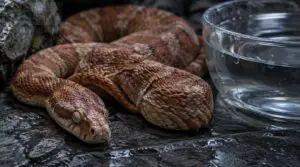
Up to 30% of reptile health emergencies trace back to dehydration that was caught far too late. Recognizing snake dehydration symptoms early is often the difference between a simple fix and a serious crisis.
Catching snake dehydration early is the difference between a simple fix and a serious crisis
Watch for these warning signs:
- Wrinkled, dull skin that doesn’t rebound when you gently pinch it
- Sunken eyes or incomplete shed patches still clinging to the body
- Lethargy with reduced responsiveness during or after handling
- No normal bowel movements over several consecutive weeks
If your snake refuses water or won’t soak, treat it as urgent. Neurological red flags like tremors or abnormal posture need immediate veterinary attention. Preventive veterinary care matters before a crisis hits. Signs of dehydration can often mask systemic illness, so don’t wait.
Frequently Asked Questions (FAQs)
What water do snakes need?
Think of water as your snake’s silent lifeline. Your snake needs clean, dechlorinated water available around the clock in a shallow water bowl. Poor water quality breeds bacteria quickly, and dehydration sneaks up surprisingly fast.
How do you tell if a snake plant needs water?
Your snake needs water if you spot sunken, wrinkled eyes or skin that doesn’t snap back cleanly after a gentle pinch. Sticky mouth mucus and sudden lethargy are also strong dehydration warning signals. Act immediately.
How long can I go without watering a snake plant?
Patience pays off here. Every 2 to 4 weeks is your target watering interval. Wait until the soil is dry 2 to 3 inches deep before watering again. Low-light setups can push that even further.
How do I know if my snake plant has too much water?
Your snake plant signals overwatering when leaves turn yellow and mushy, the base feels soft, or soil stays consistently soggy days after watering. Root rot spreads quickly, so act fast before it kills the plant.
Can snakes drink distilled or purified water?
Picture rain stripped to nothing: zero minerals, zero contaminants, zero life. That’s distilled water. Safe occasionally, but long-term use drains essential minerals. Dechlorinated tap water is the smarter, safer daily choice for your reptile’s hydration.
How often do snakes typically drink water?
Most captive snakes drink 2-4 times weekly under stable conditions. When humidity drops below 40% or temperatures rise, their daily hydration needs increase quickly. Always keep fresh water available so you can catch dehydration early.
Should water bowls be elevated or ground-level?
Ground-level works best for most snakes. Stable bowl placement prevents tipping, reduces spills, and guarantees easy water access throughout your snake enclosure setup. Only use elevated bowls for arboreal species, and always secure them tightly.
Can tap water harm my snakes health?
Tap water can harm your snake. Chlorine and heavy metals compromise water quality and irritate delicate tissues. Prioritize chlorine removal with dechlorination methods, like reptile conditioners, to prevent water toxicity and reduce waterborne disease risk.
Should I offer water right after feeding?
Digestion fires like a furnace inside your snake. Keep water available at all times, including right after feeding. Your snake’s water bowl should stay accessible, but skip handling since stress kills the urge to drink.
How do I keep my snake hydrated while traveling?
Like a desert bloom after rain, your snake drinks when conditions align. Offer fresh water at every stop, use a stable shallow bowl, and discard it immediately if contaminated. Travel stress can suppress voluntary drinking.
Conclusion
Hydration feels simple until it isn’t. A snake that looks fine today can be quietly struggling, and a missed water change or a dip in humidity can tip the balance fast.
This snake water requirements guide exists because the details matter: bowl placement, species habits, soaking limits, and early dehydration signals all connect. Master these, and you’re not reacting to emergencies. You’re preventing them before your snake ever shows a single warning sign.