This site is supported by our readers. We may earn a commission, at no cost to you, if you purchase through links.
Most days, a snake disappears into the background—quiet, coiled, unreadable. Then you catch it: a sudden, sharp clicking sound breaking the silence, turning your curiosity to concern.
Whether that noise rattles from hidden jaws or echoes off the glass of a terrarium, it signals much more than casual reptile chatter. Snakes making clicking sounds aren’t following a script—they’re revealing a world where defense, hunger, stress, and even illness talk loudest through their bodies.
Once you can tune in to these subtle warnings, you’ll navigate snake care with more confidence, knowing what your reptile needs long before trouble strikes.
Table Of Contents
- Key Takeaways
- Common Reasons Snakes Make Clicking Sounds
- Snake Clicking Vs. Other Snake Sounds
- Behavioral Causes of Snake Clicking
- How Snake Anatomy Produces Clicking Sounds
- When Clicking Sounds Indicate a Problem
- Steps to Address Clicking Sounds in Snakes
- Top Products for Snake Health and Safety
- Preventing Future Clicking and Health Issues
- Frequently Asked Questions (FAQs)
- Why does my snake make a clicking sound?
- How to tell if a snake is agitated?
- What does it mean when a snake makes a noise?
- Can wild snakes click for navigation purposes?
- Are some snake species completely silent?
- Can clicking indicate snake age or maturity?
- Do baby snakes click more than adults?
- How do snakes’ senses affect their sound production?
- Conclusion
Key Takeaways
- Clicking sounds in snakes often signal stress, defensive behavior, or health issues like respiratory infections rather than simple, harmless communication.
- Environmental factors such as poor air quality, incorrect humidity, and rough handling can cause or worsen clicking sounds in pet snakes.
- Persistent clicking—especially when paired with wheezing, lethargy, or other symptoms—means it’s time to consult a reptile veterinarian.
- Gentle handling, proper enclosure care, and routine health monitoring are essential for preventing and addressing clicking sounds in snakes.
Common Reasons Snakes Make Clicking Sounds
When your snake starts clicking, it’s natural to wonder what’s going on. These sounds don’t happen randomly—they’re tied to specific behaviors and situations that range from normal communication to signs something needs your attention.
For a deeper dive into common corn snake behaviors and how to read your pet’s mood, check out this helpful guide to corn snake body language and sounds from SnakeSnuggles.
Let’s look at the most common reasons snakes produce these distinctive clicking noises.
Defensive Behaviors and Warning Signals
When a snake feels cornered, clicking sounds often accompany dramatic defensive displays. These behaviors serve as clear warning signs, communicating the snake’s distress and readiness to defend itself. You might notice your snake combining these noises with specific threat response behaviors:
- Raised head and inflated body to appear larger and more intimidating
- Open mouth displays revealing fangs as a deterrent against perceived threats
- Stiff, tightly coiled posture indicating heightened stress and readiness to strike
- Tail movements that break up motion and redirect attention from vulnerable areas
- Jaw snapping or clacking accompanying defensive approaches to warn you away
These defensive posture variations reflect different aggression levels in snake behavior and communication, forming essential reptile defense mechanisms.
Hunting and Feeding Responses
You’ll also hear clicking teeth when your snake is actively hunting or preparing to feed. Prey detection relies on rapid motion and heat signatures, triggering snap decisions—literally.
As snakes use their hunting tactics to zero in on food, their jaws may clack together in anticipation or frustration. These clicking sounds signal their feeding strategies are engaged, showcasing reptile behavior and communication through distinct animal defense mechanisms tied to food preferences and snake vision.
Stress or Environmental Triggers
Beyond feeding, your snake’s environment plays a massive role in clicking sounds. Noise pollution from nearby speakers or traffic disrupts normal breathing patterns, while temperature fluctuations and poor humidity control irritate airways. Enclosure design matters too—cramped spaces and rough handling techniques increase stress levels.
These environmental stressors compromise reptile health and animal welfare, causing your snake to click as its body struggles to adapt.
Snake Clicking Vs. Other Snake Sounds
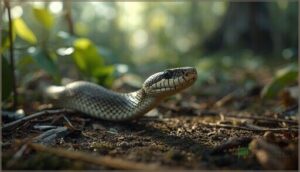
Snakes don’t have a large vocal repertoire, but each sound they produce plays a distinct purpose in their survival toolkit. Clicking stands apart from the more familiar hissing and rattling in both how it’s made and what it generally signals.
Understanding these differences helps you identify whether your snake is simply communicating or showing early warning signs of a health issue.
Differences Between Clicking, Hissing, and Rattling
When you hear a snake’s warning, recognizing what sound you’re dealing with can make all the difference. Each noise carries distinct acoustic properties and defensive strategies. Clicking sounds are short, sharp bursts in the kilohertz range—like a rapid-fire alert. Hissing, by contrast, offers a raspy, continuous stream of air forced through the glottis, lasting several seconds. Rattling delivers rhythmic pulses at lower frequencies, creating that unmistakable buzz.
These auditory cues represent different defensive behaviors: clicking often signals stress or respiratory issues, hissing warns of immediate threat, and rattling screams “back off now.” Understanding these vibrational signals helps you interpret snake communication and respond appropriately. Research reveals that there are several beyond just clicking, hissing, and rattling.
| Sound Type | Acoustic Character | Primary Function | Duration Pattern |
|---|---|---|---|
| Clicking | High-pitched, sharp bursts | Stress/respiratory signal | Brief ( Clicking sounds from your snake can be more than quirky—they often signal respiratory infections or other serious health issues |
Let’s look at the health issues you need to watch for and the warning signs that mean it’s time to act.
Respiratory Infections in Snakes
When your snake’s clicking turns into persistent noise, respiratory disease might be the culprit. Snake pneumonia and tracheal infections create airway obstructions that produce audible breathing difficulties. Bacterial infections are most common, though viral causes exist too.
You’ll notice these respiratory problems in snakes alongside wheezing, nasal discharge, and open-mouth breathing—clear signs that respiratory issues demand immediate attention to protect your reptile health.
Parasites and Other Underlying Conditions
Sometimes the real threat lurking beneath clicking sounds isn’t respiratory—it’s an invader working inside your snake. Internal parasites wreak havoc on snake anatomy and overall snake health issues, often causing respiratory problems in snakes alongside those telltale clicking sounds. Effective parasite control in reptiles demands vigilance:
- Lungworms inhabit airways and trigger wheezing plus audible breathing
- Intestinal roundworms weaken immunity, making infection prevention harder
- Blood parasites compromise oxygen transport, affecting respiratory issues
Health monitoring and proper snake care and maintenance catch these conditions early, protecting your pet through targeted parasite control.
You can learn more about types of parasitic infections that may affect snakes and other animals.
Signs of Illness to Watch For
Ever notice a snake making clicking sounds alongside labored breathing or sudden hiding? That’s your cue for health monitoring. Breathing difficulties in snakes, digestive problems, skin lesions, and behavioral changes often signal underlying respiratory issues or other snake health problems. Watch for these warning signs:
| Issue | Example |
|---|---|
| Respiratory Problem | Wheezing, open mouth |
| Digestive Problems | Vomiting, bloating |
| Skin Lesions | Ulcers, dull patches |
| Behavioral Changes | Lethargy, aggression |
Behavioral Causes of Snake Clicking
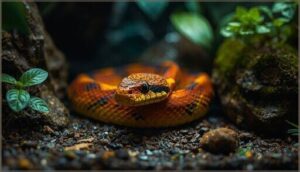
Clicking sounds in snakes often tie back to what they’re feeling or trying to say. You might notice these noises pop up during certain interactions or changes in their environment.
Let’s look at the main behavioral reasons your snake might start clicking.
Communication With Other Snakes
Did you know clicking sounds can act like secret handshakes in reptile communication? In snake behavior and ecology, these quiet noises—paired with snake pheromones, visual cues, and tactile signals—help establish social hierarchy and guide environmental communication.
You’ll notice that snake sounds, including clicks, often signal proximity or intent, shaping wildlife communication without drawing unnecessary attention.
Mating and Territorial Displays
Picture a quiet standoff at dawn—clicking sounds often punctuate the Courtship Rituals and Territorial Marking that define Snake Mating and Breeding.
These Display Behaviors, woven into Breeding Cycles, signal Mate Attraction and boundary defense.
In Snake Behavior and Ecology, such clicks act as subtle cues in Animal Communication and Social Behavior, blending Defensive Behavior with competitive intent.
Reaction to Handling or Disturbance
When you handle a snake, clicking sounds often signal Defensive Behavior—especially if restraint is sudden or rough. Gentle Support and proper Handling Techniques calm the animal, reducing stress and Snake Behavior issues. Watch for:
- Quick jaw pops during Snake Restraint
- Increased clicking with repeated handling
- Flattened head or gaping mouth
- Hissing mixed with subtle Clicking Sounds
Stress Reduction matters for Animal Defense.
How Snake Anatomy Produces Clicking Sounds
Understanding how snakes make clicking sounds starts with their unique anatomy. Several body parts work together to create these noises, each with its own role.
Here’s what you need to know about the main mechanisms behind clicking in snakes.
Jaw and Teeth Mechanisms
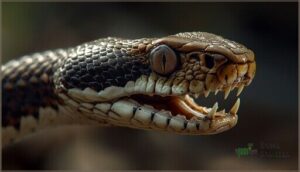
Tooth alignment and jaw movement play a key role in producing clicking sounds in snakes. When muscle control shifts the mandible, the dental structure can snap together, especially during defensive behavior or feeding.
Bite forces vary, and quick jaw motion may create animal noise and sound. Understanding reptile anatomy and physiology helps you recognize how snake behavior links to these subtle clicks.
Airflow and Respiratory Structures
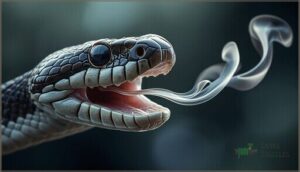
After jaw movement, it’s the snake’s unique respiratory anatomy that becomes the focus. As air moves down the trachea, a narrowed airway or sticky mucous can create clicking sounds.
Problems like airway constriction from an upper respiratory illness or a respiratory problem can lead to labored breathing, so pay attention; consistent clicking may signal deeper issues with your snake’s lung structure.
Lack of Vocal Cords in Snakes
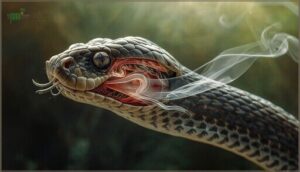
Snakes make clicking sounds without vocal cords, relying instead on their Tracheal Structures and Laryngeal Anatomy. These reptiles use Airflow Dynamics through the glottis to generate Snake Sounds—clicks, hissing, and subtle noises—rather than true vocalizations.
It’s an adaptation that shapes their behavior and body language, blending respiratory adaptations with the unique communication style of snakes.
When Clicking Sounds Indicate a Problem
If your snake starts making clicking sounds, it’s worth paying close attention to what comes next. These noises can be harmless, but sometimes they point to something more serious brewing beneath the surface.
Here’s what to watch for if those clicks aren’t going away.
Frequency and Duration of Noises
Ever notice how clicking sounds in snakes come in short bursts—often less than 0.2 seconds each, yet sometimes stretching to a couple of seconds in stressed moments? These distinct noise frequencies, buried inside broader sound wave patterns, serve as clear auditory signals.
Careful acoustic analysis and vibration detection help distinguish clicking from hissing, rattling, or other vocalizations in healthy versus distressed snake sounds.
Associated Symptoms (Wheezing, Lethargy)
A telltale sign—wheezing paired with clicking sounds—often flags Respiratory Issues in your snake. If you notice Snake Lethargy, labored breathing, or rapid, shallow breaths, suspect Airway Obstruction or a deeper Respiratory Problem.
Mouth gaping, nostril flare, and Energy Loss after activity can signal Breathing Problems, urging you to monitor for worsening, Lethargic behavior.
When to Seek Veterinary Help
Vigilance in snake care means watching for Emergency Signs—wheezing, labored breathing, or sudden jaw swelling demand prompt Veterinary Care for Snakes.
If Snake Symptoms persist, like refusal to eat or oral discharge, don’t wait. Medical Intervention by a reptile vet ensures animal welfare.
Quick Health Checks and attention to Snake Behavior and Body Language protect your snake’s long-term health.
Steps to Address Clicking Sounds in Snakes
If your snake is making clicking sounds, there are a few practical steps you can take to help. Addressing the environment and handling can make a real difference in your snake’s health. Let’s look at some key options you’ll want to explore.
Environmental Checks and Adjustments
Is your snake’s clicking a sign the habitat needs a tune-up? Even a well-kept enclosure can slip out of balance. For best results, check these five essentials:
- Air Quality: Fresh air, low dust
- Temperature Control: Stable gradients
- Humidity Levels: Consistent, species-specific
- Lighting Adjustments: Reliable cycles
- Enclosure Maintenance: Clean substrate, safe hides
Improving Humidity and Temperature
Think your humidity control is just a side note? It’s central to healthy snake behavior and reptile communication. Keep temperature gradients steady—aim for 78–88°F basking, cooler zones at 72–80°F. Use well-placed heat sources and reliable ventilation systems.
Proper enclosure design avoids moisture traps, supporting smooth shedding and clear breathing, so clicking sounds don’t signal deeper animal behavior issues.
Safe Handling and Stress Reduction
Ever notice how a snake’s clicking sound ramps up after rough handling? Your approach matters. To keep stress low and reptile communication clear, follow these steps:
- Practice Gentle Handling
- Create Calm Environments
- Monitor Stress during sessions
- Use effective Handling Techniques
- Encourage healthy Snake Socialization
These habits reduce defensive hissing and clicking, supporting balanced snake behavior.
Top Products for Snake Health and Safety
Choosing the right products makes a real difference in your snake’s health and safety. You’ll find options for both care and protection, whether you’re a keeper or just want peace of mind around your property.
Here are some reliable choices to explore.
1. Snake Encyclopedia Book by DK Publishing

Curiosity drives understanding, and DK Publishing’s Snake Encyclopedia is a prime resource for anyone wanting clarity about snake behaviors—including odd sounds like clicking. You’ll find full-color photos, detailed fact sheets, and expert commentary on over 220 species.
The book’s large pages make it easy to compare scale patterns or spot subtle anatomical features. Whether you’re checking a species’ habitat or learning about defensive signals, this guide helps you build confidence and knowledge, supporting safer interactions and informed care at home.
| Best For | Curious kids, teens, or adults who want an easy-to-understand, visual guide to snakes from around the world. |
|---|---|
| Product Type | Snake guide book |
| Primary Use | Education |
| Intended Audience | All ages |
| Main Material | Paper |
| Dimensions/Size | Large pages |
| Notable Limitation | High reading level |
| Additional Features |
|
- Big, colorful photos make identification and learning fun.
- Covers over 220 species with clear facts on habitat and dangers.
- Inspires interest in herpetology without overwhelming details.
- Reading level may be tough for very young children without adult help.
- Some species info isn’t super in-depth.
- Packaging can be flimsy, so the book might arrive with minor damage.
2. Pufado Snake Repellent Granules
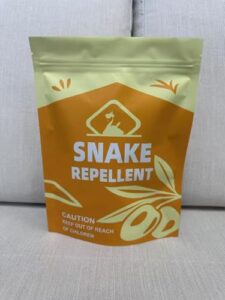
Once you’ve built your understanding of snake behavior, it’s natural to want practical ways to keep them at bay. Pufado Snake Repellent Granules offer a straightforward solution—just place the garlic, gypsum, and sulfur packs around your yard or garden.
These granules create a scent barrier that repels copperheads, rattlesnakes, and cottonmouths for up to three months. They’re rain resistant and safe for pets and plants if used as directed, making them a gentle option for protecting your space.
| Best For | Homeowners and gardeners looking for a natural, pet-safe way to keep common snakes away from outdoor spaces. |
|---|---|
| Product Type | Snake repellent packs |
| Primary Use | Snake deterrent |
| Intended Audience | Homeowners |
| Main Material | Essential oils/gypsum |
| Dimensions/Size | 7.99×6.73×2.56 in |
| Notable Limitation | Strong scent |
| Additional Features |
|
- Easy to use—just place the packs where you need protection.
- Made from natural ingredients and safe for pets, people, and plants.
- Lasts up to 2-3 months, so you don’t have to reapply often.
- Has a strong garlic smell that some people might find unpleasant.
- Not waterproof, so it can break down in wet weather.
- May not work against all snake species or in every situation.
3. GearOz Snake Guard Gaiters
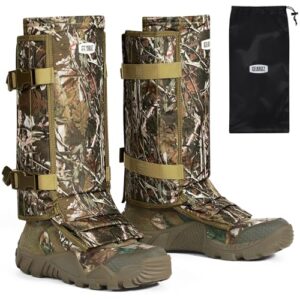
If you’re walking in snake territory, you want more than luck on your side. GearOz Snake Guard Gaiters wrap your lower legs with 12 sturdy polypropylene panels, backed by tough 1000D Oxford fabric. The waterproof coating keeps you dry, while adjustable buckles and elastic straps guarantee a snug fit from 12 to 20 inches.
Hunters, hikers, and farmers find these gaiters lightweight and easy to pack. They’re a practical shield against bites, thorns, and brush—giving you peace of mind outdoors.
| Best For | Outdoor enthusiasts like hikers, hunters, and farmers who need reliable protection from snake bites and rough terrain. |
|---|---|
| Product Type | Snake gaiters |
| Primary Use | Personal protection |
| Intended Audience | Outdoor enthusiasts |
| Main Material | Oxford/polypropylene |
| Dimensions/Size | 77.17×26.77×3.94 in |
| Notable Limitation | May not fit all |
| Additional Features |
|
- Lightweight and easy to carry for long treks.
- Waterproof and adjustable for comfort in wet or cold conditions.
- Provides solid defense against snake bites, thorns, and debris.
- May not fit people with larger calves.
- Can rotate while walking since it doesn’t attach to boots.
- Durability may be less than expected, with some users reporting a short lifespan.
4. Wacky Tracks Fidget Toy
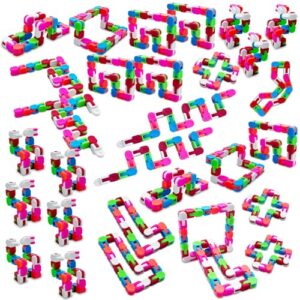
For those who prefer a quieter kind of protection, Wacky Tracks fidget toys offer a clever way to keep hands busy and minds focused—especially during stressful moments, like monitoring a snake’s health. Each bendable segment clicks softly, encouraging fine motor control and sensory engagement without loud distractions.
You can shape them into bracelets or coils, making them practical for quick use at your desk or in the field. Their durable plastic construction means you won’t have to worry about wear and tear.
| Best For | Kids and teens who need a fun, portable way to relieve stress and boost focus during school or group activities. |
|---|---|
| Product Type | Fidget snake toy |
| Primary Use | Stress relief |
| Intended Audience | Kids/teens |
| Main Material | Plastic |
| Dimensions/Size | 11×0.78×0.78 in |
| Notable Limitation | Small pieces |
| Additional Features |
|
- Satisfying snap-and-click action keeps hands busy and minds engaged.
- Flexible design lets you create endless shapes, bracelets, or patterns.
- Compact size fits easily in backpacks, pockets, or on desks.
- Small pieces can separate, so supervision is needed for younger children.
- Clicking sounds might be distracting in quiet settings.
- Plastic segments may wear out with heavy use.
5. Dog Fidget Keychain Toy
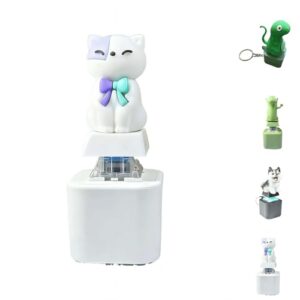
A dog fidget keychain offers a tactile distraction that’s surprisingly effective during long observation sessions. Its movable joints and compact design fit right on your key ring, making it easy to keep close whether you’re at home or in the field.
Made from sturdy ABS plastic, it won’t add bulk but provides enough resistance for meaningful sensory feedback.
For those moments when anxiety creeps in—say, waiting for a snake’s next breath—this simple tool helps refocus your attention and steady your nerves.
| Best For | Adults and office workers looking for a portable, stress-relieving fidget toy they can use anywhere. |
|---|---|
| Product Type | Interactive keychain |
| Primary Use | Stress relief |
| Intended Audience | All ages |
| Main Material | ABS plastic/resin |
| Dimensions/Size | 2.7×2.7×6.7 cm |
| Notable Limitation | Short battery life |
| Additional Features |
|
- Interactive sound and LED lights make it fun and engaging.
- Compact keychain design is easy to carry and attach to bags or keys.
- Durable ABS plastic construction stands up to everyday use.
- Needs regular recharging due to limited battery life.
- Small size makes it easy to misplace.
- Not recommended for young children because of small parts.
6. Halloween Spider Water Fidget Toy
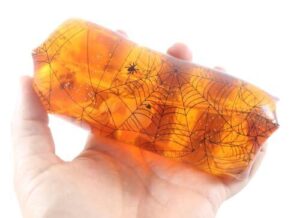
Curiosity often leads you to unexpected solutions—a Halloween Spider Water Fidget Toy, for example, delivers more than a seasonal gimmick. With its liquid-filled body and floating spider figurines, it creates soothing splashing sounds and tactile feedback. The slippery texture demands focus, grounding your attention during stressful moments, whether you’re monitoring a snake’s behavior or calming your nerves.
Its compact size and themed design make it a clever addition to classroom prize bins or as a non-candy treat for Halloween events.
| Best For | Kids and adults who need a fun, hands-on way to relieve stress, fidget, or enjoy a Halloween-themed sensory toy. |
|---|---|
| Product Type | Water wiggler snake |
| Primary Use | Stress relief |
| Intended Audience | Kids/party |
| Main Material | Plastic/gel |
| Dimensions/Size | 5x2x2 in |
| Notable Limitation | Slippery use |
| Additional Features |
|
- Makes a relaxing water splashing sound for calming sensory feedback
- Great for fidgeting and soothing strong emotions like anger or frustration
- Fun Halloween design with spider figurines, perfect for parties and prize bins
- Slippery texture can make it hard to hold onto
- Not safe for young children due to small parts and choking risk
- Only comes in three color options
7. Stainless Steel Wire Mesh Barrier
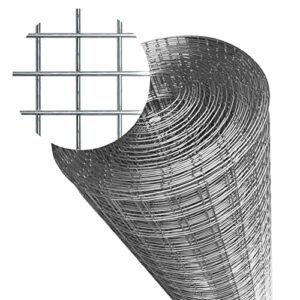
Among practical solutions for safeguarding both snakes and people, a stainless steel wire mesh barrier stands out for its blend of strength and subtlety. Built from 304 stainless steel, this mesh resists corrosion and remains sturdy in harsh conditions—think garden edges or low windowsills.
The 1/2-inch aperture deters snakes, rodents, and unwanted visitors without disrupting natural airflow or visibility. With a reliable weld and polished surface, this barrier makes a wise choice when your aim is long-term, low-maintenance protection for your indoor or outdoor spaces.
| Best For | Homeowners, gardeners, or pet owners who need a tough, long-lasting barrier to keep pests like snakes and rodents out of sensitive spaces. |
|---|---|
| Product Type | Interactive keychain |
| Primary Use | Stress relief |
| Intended Audience | All ages |
| Main Material | ABS plastic/resin |
| Dimensions/Size | 1x1x1 in |
| Notable Limitation | Short battery life |
| Additional Features |
|
- Corrosion-resistant 304 stainless steel holds up well outdoors and in harsh climates.
- Small 1/2-inch mesh blocks most pests but still allows airflow and light.
- Strong welds and sturdy wire make it durable for animal enclosures or fencing.
- Edges can be sharp when unrolling, so gloves and care are needed during installation.
- May need extra support or framing for best results in larger or exposed areas.
- Arrives rolled up, which can make handling tricky and slow down installation.
8. Stainless Steel Wire Mesh Fence
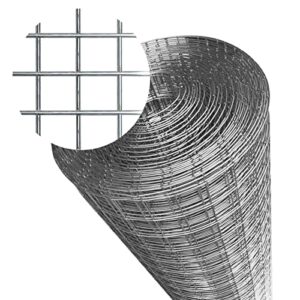
Ever noticed how a strong fence can mean the difference between a safe yard and wildlife chaos? Stainless steel wire mesh fencing brings order to outdoor boundaries with precise welded panels, rust-resistant 304 or 316 steel, and tight apertures that defy climbing or squeezing by snakes.
Properly installed—posts set in concrete, fabric tensioned to prevent sag—the fence blends into the landscape but endures year after year. For anyone wanting lasting protection with minimal fuss, this option stands up where others fall short.
| Best For | Homeowners or gardeners looking for tough, long-lasting protection against animals and pests in outdoor spaces. |
|---|---|
| Product Type | Interactive keychain |
| Primary Use | Stress relief |
| Intended Audience | Adults/office |
| Main Material | ABS plastic/resin |
| Dimensions/Size | 2.7×2.7×6.7 cm |
| Notable Limitation | No sound control |
| Additional Features |
|
- Stands up to rust, harsh weather, and animal attempts to chew through
- Tight mesh keeps out a wide range of critters, from snakes to raccoons
- Looks neat in the yard and lasts for years with minimal upkeep
- Edges can be sharp when handling, so it’s easy to get scratched
- Needs proper support and installation to be truly effective
- Coverage plans have strict timing and don’t cover existing fence problems
Preventing Future Clicking and Health Issues

Keeping your snake healthy starts with good habits and consistent care. There are a few key steps you can take to help keep those clicking sounds and other issues at bay.
Here’s what to keep in mind as you look over the best enclosure options.
A roomy, secure terrarium matters most, and this guide to the calmest pet snake breeds for beginners can help you match the right species to the right setup.
Regular Health Monitoring
Think of your snake’s well-being like tuning an instrument—routine Health Monitoring and Weight Tracking help you spot issues early. Keep a detailed Health Log System, recording changes in Snake Breathing or labored breathing.
Daily Symptom Observation, regular Respiratory Checks, and swift attention to Respiratory Issues guarantee you won’t miss subtle Breathing Difficulties needing Veterinary Care.
Proper Enclosure Maintenance
Picture your snake habitat as the foundation for Snake Safety—neglecting Enclosure Cleaning or Ventilation Systems is like leaving the door open for trouble. Regular Humidity Control and Temperature Regulation keep respiratory health in check, while prompt seal and vent repairs prevent moisture and pests.
In Herpetology, these steps support Wildlife Conservation and Ecology, ensuring your snake’s well-being and longevity.
Routine Veterinary Checkups
Once your enclosure is tidy and balanced, it’s time to schedule routine vet visits. Snake Health Checks help catch early signs of respiratory problems or parasites, and a practiced herpetologist uses fine-tuned Reptile Exam Techniques. Bring notes on feeding, shedding, and behaviors to each Vet Visit Prep:
- Review Pet Wellness Plans together
- Discuss Veterinary Care Tips
- Update records for Snake Identification
Frequently Asked Questions (FAQs)
Why does my snake make a clicking sound?
You might be surprised to hear a clicking noise from your snake—this sound isn’t typical vocalization. Clicking sounds often signal a respiratory problem or stress.
Closely observing Snake Behavior and breathing will reveal much about their Respiratory Health.
How to tell if a snake is agitated?
Spot Agitation Signs in snakes by observing Snake Posture—flattened neck or S-curve—paired with Hissing, Rattling, or Growling.
A tense Threat Response, rapid defensive movements, and persistent Warning Signals are all classic Defensive Behavior and Stress Indicators.
What does it mean when a snake makes a noise?
When a snake makes a noise, it’s relaying information. Through hissing or rattling, it signals danger, while clicking sounds, subtle changes in noise patterns, or rare vocalizations serve as Snake Communication and important auditory cues or warnings.
Can wild snakes click for navigation purposes?
Imagine trekking through dense brush and suddenly pausing, listening for clicking sounds in hopes of catching a snake’s path—don’t count on it.
Snake navigation depends on scent trails, ground vibrations, and visual cues, not clicking mechanisms or acoustic signal processing.
Are some snake species completely silent?
Some Silent Species rely on stealthy Snake Vocalization strategies. They lack vocal cords and produce almost no audible Sound Production.
Instead, their Auditory Adaptations favor subtle vibrations, making Snake Communication mainly through movement or chemical cues in Reptile Behavior.
Can clicking indicate snake age or maturity?
Contrary to what you might expect, clicking patterns aren’t reliable growth indicators or Maturity Signs in snakes. Instead, Age Assessment Methods in reptiles depend on size, development stage, and observed behaviors—not on clicking sounds or Snake Species alone.
Do baby snakes click more than adults?
Yes, baby snakes click more than adults, especially during early feeding and stress. Their rapid jaw movements and developing coordination make clicking sounds common in neonate communication, offering insight into Snake Clicking Patterns and early Snake Development Stages.
How do snakes’ senses affect their sound production?
It’s almost comical that snakes, with no outer ears, still beat many animals in Vibration Detection. Their Sensory Perception hinges on sound waves and ground cues, giving Acoustic Signal Processing in animals a surprising twist in herpetology research.
Conclusion
When your snake starts “clicking,” it’s not just making noise—it’s spelling out a message in scales, urging you to listen up. Detecting a snake making clicking sounds means you’re fluent in body language most people overlook.
You’re equipped to distinguish curiosity from concern, health from hazard. Each sound is a clue, not a crisis, guiding your next steps.
Stay observant, keep conditions ideal, and you’ll master the silent conversation happening inside your terrarium every day.