This site is supported by our readers. We may earn a commission, at no cost to you, if you purchase through links.
Your snake finishes its shed, and the skin comes off in one perfect piece. But the eyes stay cloudy, and a milky disc clings stubbornly over each one. That’s a retained shed eye cap, one of the most common husbandry-related problems in captive snakes.
It looks minor, but a stuck spectacle traps debris and bacteria against the cornea, and forceful removal at home can cause permanent eye damage. The real cause is rarely the eye itself. Low humidity, dehydration, poor nutrition, and missing rough surfaces all sabotage a clean shed.
Below, you’ll learn what went wrong, how to fix it safely, and how to prevent it from happening again.
Table Of Contents
- Key Takeaways
- What Are Retained Shed Eye Caps?
- Causes of Retained Eye Caps
- How to Identify Retained Eye Caps
- Safe Treatment and Veterinary Warning Signs
- Preventing Retained Eye Caps
- Frequently Asked Questions (FAQs)
- My snake isn’t shedding its eye caps. What should I do?
- What causes eye shedding?
- How to help a snake shed its eyes?
- My ball python has a shed and the eye caps are stuck. What should I do?
- How to tell if your snake has retained eye caps?
- How to help a snake shed eye caps?
- How do you treat retained spectacles?
- Can retained eye caps cause permanent blindness?
- How long between sheds for healthy snakes?
- Do all snake species shed eye caps?
- Conclusion
Key Takeaways
- Retained eye caps are almost always a husbandry problem—low humidity, dehydration, poor nutrition, or a lack of rough surfaces—not an eye issue, so fixing the environment usually fixes the shed.
- Never pull a stuck eye cap off yourself; instead, raise humidity, offer a warm damp hide or shallow soak for 24–48 hours, and let it release naturally.
- Confirm a retained cap by checking the shed skin: clear eye holes mean a complete shed, while cloudy discs signal the spectacle is still stuck—always verify against the actual eye.
- See a reptile vet urgently if you notice white or yellow fluid under the spectacle, bulging, bleeding, facial swelling, or repeated retained caps across consecutive sheds, since these can lead to permanent eye damage.
What Are Retained Shed Eye Caps?
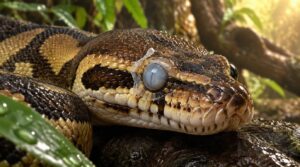
Retained eye caps are one of the most common—and misunderstood—shedding problems in captive snakes. Before you can recognize or treat them, it helps to understand what spectacles are and how they’re supposed to come off. Two things matter most here: the anatomy of the snake’s eye and the mechanics of a normal shed.
If you’re ever unsure whether a shed was fully successful, our guide to safe snake shedding assistance walks you through checking and handling common problems. It also covers gentle aftercare steps like a warm soak, which our guide to bathing a snake after the shedding process explains in detail.
Snake Spectacle Anatomy
Two fused eyelids form the spectacle, a transparent modified scale covering your snake’s eye. It’s voided of all muscles and glands.
A narrow fluid-filled space separates it from the cornea.
Understanding reptile eye anatomy helps you spot retained shed eye caps early. The spectacle naturally sloughs during ecdysis or skin shedding, turning bluish-white just before the shed occurs. A retained eye cap directly puts your snake at serious risk of:
- Bacterial infection
- Vision loss
- Corneal damage
Normal Shedding Mechanics
The spectacle sheds as part of a coordinated shedding cycle. During ecdysis, a hormone triggers fluid accumulation between skin layers, loosening the bond and creating that bluish-white opacity you’ll recognize.
The snake molting process then turns mechanical: your snake rubs its snout against rough surfaces, peeling the old skin backward from head to tail in one continuous piece, spectacles included.
Causes of Retained Eye Caps
Retained eye caps don’t happen randomly — they’re almost always tied to specific, correctable conditions in your snake’s environment or health. Understanding what triggers incomplete spectacle detachment is the first step toward preventing it from recurring. The following factors are the most common culprits.
If you’re already dealing with one, our guide to safely removing retained eye caps walks you through the process step by step. It covers gentle methods like warm water soaks and mineral oil, plus the warning signs that mean it’s time to call a reptile vet instead.
Inadequate Humidity
What seems like adequate humidity in your home can be dangerously low for a shedding snake.
The eye spectacle needs clean separation from the tissue beneath, and inadequate humidity stiffens the shed layer before that happens.
Eye cap retention results when dry conditions interrupt this process, leaving an opaque fragment clinging over the eye while the rest of the shed finishes.
Systemic Dehydration
Low humidity is a surface problem. Systemic dehydration is a deeper one.
When your snake’s hydration drops enough to reduce circulating blood volume, perfusion to skin and integument falls with it. The shed layer dries out and won’t separate cleanly, leaving retained shed eye caps behind. Fluid loss from illness can push this risk higher than inadequate water intake alone.
Nutritional Deficiencies
Malnutrition disrupts the shed cycle from within. Three imbalances commonly cause retained shed eye caps:
- Vitamin A shortage triggers hyperkeratosis, thickening cells at the eye cap
- Low protein weakens skin-layer adhesion each cycle
- Vitamin C loss impairs collagen, leaving skin fragile and thin
Nutritional deficiencies may cause corneal ulceration. Correcting reptile nutrition balance requires consistent prey sizing and feeding frequency.
Insufficient Shedding Surfaces
Without adequate textured surfaces, your snake can’t generate the friction needed to peel the spectacle cap during ecdysis. Even with good humidity control, smooth substrates limit effective rubbing contact.
Incomplete shedding stalls at the eye cap because this area needs mechanical separation. Firm objects like cork bark give your snake shedding surfaces it needs to avoid a retained eye cap.
Underlying Disease Or Injury
A ball python recovering from respiratory illness may struggle with consecutive retained caps despite ideal humidity. Systemic illness disrupts normal skin detachment, especially at the eye.
Corneal ulceration and ocular inflammation make shed material cling tightly. Eye infections worsen cap adhesion. You’ll need veterinary assistance when this recurs, and reptile veterinary care can identify the root cause before lasting damage occurs.
Setting up a proper humidity routine with a beginner-friendly reptile misting system can help prevent those stubborn caps from sticking in the first place.
How to Identify Retained Eye Caps
Catching a retained eye cap early gives you the best chance of resolving it without veterinary intervention. There are two reliable ways to assess whether your snake’s spectacle didn’t shed cleanly: observing the eye and behavior directly, and examining the shed skin after ecdysis. Knowing what to look for in each area will help you act quickly and confidently.
Eye and Behavior Changes
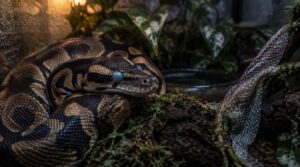
Retained eye caps produce recognizable signs. Watch for:
- Cloudy eyes that fail to clear once the rest of the shed completes
- Decreased tongue-flicking or sluggish response to stimuli
- Increased hiding or remaining unusually still
- Head positioning that limits direct eye exposure during movement
These snake behavioral indicators stem from snake vision impairment. Behavioral changes like motionlessness signal discomfort. Act quickly.
Inspecting The Shed Skin
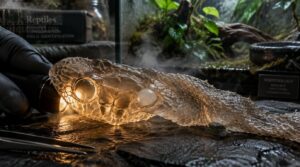
Here’s a reliable trick: lay the shed skin flat and shine a light through it. Two clear eye holes mean a complete shed. Cloudy discs signal a retained spectacle still stuck on your snake.
| What you see | What it means | Your action |
|---|---|---|
| Clear, intact holes | Complete shed | Routine care |
| Cloudy or opaque discs | Retained spectacle | Increase humidity |
| Torn head fragments | Incomplete shedding | Inspect the eye directly |
| No eye holes visible | Shed skin incomplete | Check postshed appearance closely |
Always confirm against the actual eye, not just the shed skin.
Safe Treatment and Veterinary Warning Signs
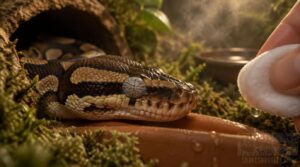
Once you’ve confirmed a retained eye cap, your next step matters as much as your diagnosis.
The right approach starts gentle, because forceful removal can damage the spectacle underneath.
Below you’ll find safe treatment steps, followed by the warning signs that mean it’s time to stop home care and call your veterinarian.
Gentle Humidity Support
You can often resolve a retained spectacle at home if you act during the active shed window. Your enclosure setup should deliver steady, gentle moisture, never a soaked patch.
- Humidity control works locally, not by room averages.
- Brief misting dries back too fast to loosen the cap.
- Rehydration softens the shed layer, reducing skin-to-eye friction.
- Over-wetting traps debris and raises irritation risk.
Keep conditions consistent so softening completes before the skin re-hardens.
When Veterinary Care is Urgent
Humidity support has limits, and you need to recognize them. Seek veterinary care immediately if you see white or yellow fluid under the spectacle, a bulging spectacle, bleeding, or facial swelling.
Open-mouth breathing, lethargy, mouth discharge, or sudden blindness signals systemic disease.
Never pull a cap yourself; permanent eye damage follows easily. Multiple retained eye caps across consecutive sheds also warrant professional evaluation.
Never pull a retained eye cap yourself—permanent eye damage follows easily, and repeated sheds warrant veterinary evaluation
Preventing Retained Eye Caps
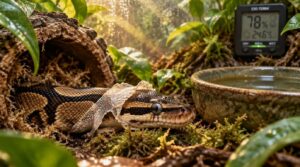
Prevention beats treatment every time, and the good news is that most retained eye caps trace back to husbandry you can control.
Start with humidity control. Match your species’ requirements, verify them with a calibrated hygrometer, and raise ambient humidity slightly during each shedding cycle. A humid hide lined with damp sphagnum moss gives your snake a moist microclimate exactly where it matters.
Hydration comes next. Provide clean water in a bowl large enough for soaking, and refresh it daily. Pair that with a varied, nutritionally complete diet, since chronic underfeeding weakens shed quality and hydration status.
Frequently Asked Questions (FAQs)
My snake isn’t shedding its eye caps. What should I do?
You’d think a snake could simply blink away a stuck eye cap. It can’t, so you’ll need to help. Place your snake in a humid hide for 20-30 minutes. Never attempt manual removal.
What causes eye shedding?
Your snake sheds its eye caps when low humidity, dehydration, poor nutrition, lack of rough shedding surfaces, or eye injury prevents the spectacle from separating. Each disrupts normal snake shedding, causing eye cap retention.
How to help a snake shed its eyes?
If your snake has a retained spectacle, don’t peel it. Instead, provide humidity support: a warm, humid hide or damp towel box for 24–48 hours, plus a shallow soak and hydration support. Most eye caps release naturally.
My ball python has a shed and the eye caps are stuck. What should I do?
Don’t pull the retained spectacle off; you can tear delicate eye tissue. Instead, raise humidity to 70–80%, offer a warm damp hide, and let soaking loosen it. If it won’t release within a few days, see your exotics vet.
How to tell if your snake has retained eye caps?
Here’s a theory worth testing: if your snake just shed but one eye still looks cloudy blue, that’s not a pre-shed cycle restarting.
Check the shed skin for missing eye caps, watch for rubbing, visual impairment, or a stuck Eye Cap confirming Spectacle Dysecdysis.
How to help a snake shed eye caps?
You shouldn’t pull a stuck eye cap off yourself. Instead, raise humidity, offer a damp hide, and provide rough surfaces for gentle rubbing. If the spectacle stays adhered, schedule veterinary eye cap removal.
How do you treat retained spectacles?
Start with hydration: soak your snake in chin-deep, cage-temperature water for 30 minutes, or apply artificial tears over an hour. Then attempt manual removal with scotch tape or a moistened swab. If firmly adhered, wait for the next shed.
Can retained eye caps cause permanent blindness?
Yes, in rare cases. A retained spectacle that stays on long enough can abrade the cornea, leading to corneal opacity, secondary infections, and, in severe reptile ophthalmology cases, permanent blindness. Prompt humidity support and veterinary evaluation prevent this.
How long between sheds for healthy snakes?
There’s no fixed interval: your snake’s shedding cycle depends on age, growth rate, and health. Juveniles shed every 4–6 weeks, while adults shed roughly every 3 months. Track your individual’s pattern, since consistency matters more than a set number of days.
Do all snake species shed eye caps?
Ironically, the answer isn’t as universal as snakes themselves. Nearly all species shed a transparent spectacle during ecdysis, but attachment varies, so shedding completeness differs. Some individuals retain retained spectacle material despite normal snake shedding cycle conditions.
Conclusion
Picture a ball python that sheds cleanly after you raise its humidity to 60 percent and add a damp hide. That’s the whole fix in most cases.
Retained shed eye caps aren’t an eye problem; they’re a husbandry signal, and your snake is handing you the diagnosis. Check the shed, correct the environment, and only escalate to your vet when swelling, discharge, or repeated failures appear.
Fix the cause, and the next shed comes off perfectly intact.