This site is supported by our readers. We may earn a commission, at no cost to you, if you purchase through links.
A single mite infestation can strip a snake’s skin barrier within weeks, leaving open wounds that invite bacterial infection before you notice anything is wrong. Snake mites skin damage progresses quietly, hiding in scale folds and sheltered zones while the population doubles every few days under warm enclosure conditions.
The consequences reach beyond cosmetic lesions. Compromised skin loses moisture, resists healing, and exposes your snake to systemic illness that becomes harder to reverse the longer mites go unchecked.
Knowing what to look for, how to treat it, and how to prevent recurrence gives you real control over your animal’s recovery.
Table Of Contents
- Key Takeaways
- Snake Mite Biology and How They Spread
- How Mites Damage Your Snake’s Skin
- Signs Your Snake Has a Mite Problem
- Treating Snake Mites and Healing Damaged Skin
- Preventing Snake Mite Infestations for Good
- Frequently Asked Questions (FAQs)
- Will rubbing alcohol kill snake mites?
- Can snake mites infest humans?
- Does Dawn soap kill snake mites?
- Is it hard to get rid of snake mites?
- Can snake mites cause permanent scarring on snakes?
- Do different snake species react differently to mites?
- How long does skin healing take after treatment?
- Are there natural predators that control snake mites?
- Can snake mites develop resistance to common treatments?
- Can mite bites cause scarring on snake skin?
- Conclusion
Key Takeaways
- Mite populations can double every few days in warm enclosures, so a small undetected infestation rapidly becomes a systemic health crisis that’s far harder to reverse.
- Treating your snake alone guarantees failure—every surface in the enclosure harbors eggs, and both must be addressed simultaneously with veterinary-timed acaricide cycles.
- Behavioral changes like prolonged soaking, refusal to eat, and constant wall-rubbing are early warning signals that often appear before visible skin lesions develop.
- Strict quarantine of all new snakes for at least 30 days, combined with dedicated tools per enclosure, is the only reliable way to stop mites from entering or re-entering your collection.
Snake Mite Biology and How They Spread
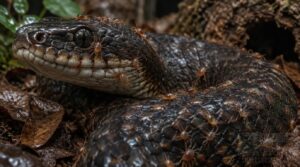
Although snake mites appear as tiny, barely visible specks, Ophionyssus natricis is a serious bloodfeeding parasite with a resilient life cycle that’s hard to break completely. Eggs hatch into larvae, progress through a nymph stage, and mature into adults within days under warm, humid conditions. Warmer temperatures shorten each generation, so populations rebuild rapidly after incomplete treatment. Every stage can survive off the host in substrate, hides, and enclosure crevices.
Understanding the full snake mite life cycle and treatment timeline helps explain why a single round of cleaning rarely eliminates an infestation for good.
Ectoparasite transmission happens fast. Adult mites leave your snake to disperse, then reattach when they detect body heat or direct contact. They transfer readily on contaminated towels, tubs, and shared bedding. If you’re introducing a new snake without proper isolation, you’re giving mites an immediate pathway into your entire collection.
A dedicated reptile quarantine tub enclosure keeps new arrivals fully isolated, cutting off the exact contact and shared surfaces that let mites spread.
How Mites Damage Your Snake’s Skin
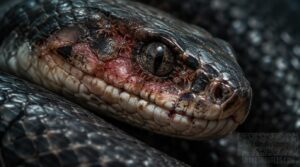
Once Ophionyssus natricis establishes a feeding cycle, the skin damage compounds fast. These bloodfeeding parasites don’t just extract blood. They pierce superficial tissue, triggering inflammation that disrupts the skin barrier and delays healing.
Here’s how the damage progresses:
- Mouthpart penetration causes mechanical tissue disruption at each feeding site.
- Repeated bites at the same spots create persistent abrasions and localized skin lesions.
- Inflammation prevents normal re-epithelialization, leaving raw areas cycling between breakdown and partial healing.
- Compromised barrier function increases fluid loss and traps moisture, worsening maceration.
- Open wounds create direct access points for bacterial invasion and opportunistic infection.
Mites cluster on your snake’s thin-skinned, sheltered regions where feeding pressure is highest. Heavy infestations spread skin lesions broadly, accelerating deeper systemic compromise.
Signs Your Snake Has a Mite Problem
Catching a mite infestation early can mean the difference between a quick fix and a lengthy, costly recovery. You’ll need to look at both your snake’s skin and its behavior — because mites don’t always announce themselves with obvious visible clusters. Three key indicator categories will tell you what you’re dealing with.
Knowing exactly what signs to watch for — from subtle scale lifting to restless soaking behavior — is covered in detail in this guide to common snake skin parasites and their treatments.
Visual Signs on Snake Skin
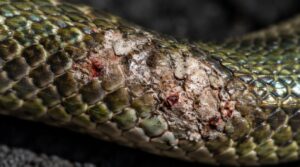
Picture your snake’s scales under bright light: pale, dusty patches clustered along the body signal a serious problem. These abnormal spots aren’t shedding artifacts. They’re skin irritation from repeated mite feeding.
Look for pinpoint redness or shallow abrasions where scale damage is active. Mite Debris, tiny dark specks, collects near feeding sites. Skin lesions crust and expand fast without treatment.
Behavioral Clues Your Snake Shows

Skin irritation doesn’t stop at visible scale damage. It drives the snake behavior changes you can observe before lesions worsen.
Watch for:
- Reduced feeding or complete anorexia
- Constant rubbing against enclosure walls
- Prolonged soaking near the water dish
- Defensive striking during routine handling
- Restless thermal zone shifting across gradients
Anorexia and lethargy together confirm active mite infestations stress your snake.
Recognizing these early warning signs is essential — understanding what triggers snake dysecdysis can help you address mite infestations before they seriously compromise your snake’s health.
Telling Mites Apart From Other Issues
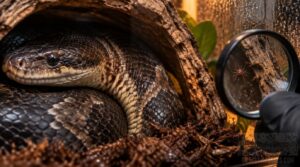
Damage patterns reveal more than individual lesions ever could. Ectoparasitic infestation from snake mites concentrates in sheltered zones and shifts with movement, while Scale Rot anchors to fixed moisture contact points.
Your visual inspection shouldn’t stop at the snake’s body; check enclosure seams and fixtures, where mites hide between feedings. A reptile magnifying inspection light makes it far easier to spot mites lurking in tight seams and shadow gaps.
Skin lesions worsening after reintroducing the same habitat confirm mites.
Treating Snake Mites and Healing Damaged Skin
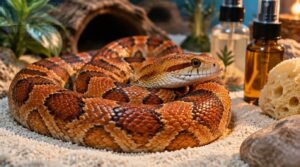
Treating an active mite infestation means hitting it from two directions at once: your snake’s body and its entire living environment. Treatment fails without both. Here’s what that process looks like across three critical phases.
A dedicated reptile enclosure disinfectant spray makes the environmental side of treatment far more thorough and reliable.
Beating snake mites demands simultaneous treatment of both the snake and its environment — one without the other guarantees failure
Veterinary Treatment and Acaricide Cycles
Effective mite removal starts at your vet’s office. Veterinary-prescribed acaricides kill actively feeding mites but can’t reach eggs, so your vet builds a treatment protocol timed to the mite’s life cycle. Each re-treatment hits newly hatched mites before they can reproduce. Skipping doses lets the population reset. Confirmed species identification guides drug class selection and reduces your chance of resistance.
Enclosure Reset and Home Care
Your tank is contaminated territory, every surface hiding eggs.
- Remove all substrate and bag it immediately.
- Use paper towels; replace every 2-3 days.
- Scrub with 3% bleach solution throughout.
- Boil porous hides; soak plastic items in water.
- Move your snake to a sterile quarantine tub.
Enclosure sterilization and reptile quarantine work hand in hand. Leave the tank empty for 60-80 days. For a chemical-free approach, consider using predatory mites like Hypoaspis to biologically control any remaining mite populations in the enclosure.
Monitoring Recovery After Treatment
A corn snake finishing its second treatment may look improved but still carry hatching eggs. Track these recovery metrics carefully each day. Mite clearance precedes skin healing.
| Day | Skin Status | Next Step |
|---|---|---|
| 1-3 | Mites visible, crusting active | Continue full acaricide dose |
| 4-7 | Mites reduced, scaling present | Monitor skin closely each day |
| 8-14 | No new lesions appearing | Confirm clinical recovery complete |
Preventing Snake Mite Infestations for Good
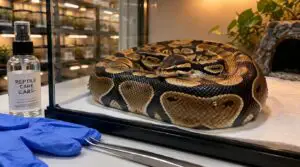
One mite hitching a ride on a used hide can restart everything you just cleared. Preventing reinfestation isn’t luck; it requires a deliberate prevention strategy built around tight biosecurity protocols.
Quarantine protocols are non-negotiable. Hold every new snake in a separate space for at least 30 days before it contacts your collection or shares tools. A dedicated reptile quarantine isolation bin keeps new arrivals physically separated without pulling resources from your established enclosures.
Keep clean and dirty zones distinct. Assign dedicated tools to each enclosure, wash your hands between animals, and handle new arrivals last. These habits close the most common entry paths before mites establish.
Environmental sanitation eliminates off-host mites before populations rebuild. Remove porous decor, disinfect enclosures regularly, and avoid secondhand items without thorough treatment. Consistent parasite control means these mites don’t get a second chance. A reptile-safe enclosure disinfectant used on a regular schedule keeps off-host mites from gaining any foothold between cleanings.
Frequently Asked Questions (FAQs)
Will rubbing alcohol kill snake mites?
Rubbing alcohol can kill exposed mites on contact, but it misses those hiding in scale crevices and shed skin. It won’t touch eggs in the enclosure, and repeated use risks stressing your snake’s skin barrier.
Can snake mites infest humans?
Ophionyssus natricis can temporarily bite humans, but true human infestation is rare. You’re not a suitable host. Bites usually happen during handling and cause itchy clusters on exposed skin, not a lasting zoonotic disease risk.
Does Dawn soap kill snake mites?
Dawn soap isn’t a reliable acaricide. It may remove some mites on contact, but it won’t eliminate eggs or hidden life stages. Ophionyssus natricis infestations need targeted, veterinary-approved treatments to actually break the mite cycle.
Is it hard to get rid of snake mites?
Harder than most realize. Snake mites reproduce fast, and their eggs can survive initial treatments. Without eliminating every life stage and thoroughly addressing the entire enclosure, you’ll find mite infestations returning even after apparent control.
Can snake mites cause permanent scarring on snakes?
Even thousands of snake mites don’t automatically lead to permanent scarring.
In reptile dermatology, true scarring always requires actual dermal damage. Secondary bacterial infection is the real culprit, deepening skin damage and disrupting skin healing.
Do different snake species react differently to mites?
Think of snake species as different vessels carrying the exact same slow leak. All are susceptible, but juvenile and smaller snakes simply can’t compensate for Ophionyssus natricis blood loss the way larger, healthier adults can.
How long does skin healing take after treatment?
Mild irritation clears in 1 to 2 weeks once mite feeding stops. Deeper wounds, crusting, or secondary infection can push healing to several weeks, often spanning multiple shed cycles before your snake’s skin looks normal.
Are there natural predators that control snake mites?
Picture a predator actively hunting Ophionyssus natricis inside your enclosure. That predator doesn’t reliably exist. No natural predator controls snake mites in captivity. Hypoaspis mites show some promise, but evidence stays anecdotal. Trust acaricides instead.
Can snake mites develop resistance to common treatments?
Can Ophionyssus natricis outsmart your treatments? Yes. Repeated acaricide exposure drives selection pressure, favoring resistant mite genotypes. Snake mites treated with one active ingredient across multiple cycles will compromise parasite control and mite infestation management.
Can mite bites cause scarring on snake skin?
In heavy infestations, scarring is real. Snake mites create skin damage that overwhelms reepithelialization, generating keratinocyte stress across shed cycles. Chronic scale pathology and secondary infection make the damage you’re seeing far harder to reverse.
Conclusion
A snake sliding smoothly through clean substrate, scales flush and entirely unbroken, is the goal every treatment plan works toward. Snake mites skin damage is reversible, but only when you act fast and follow through completely.
Weekly enclosure checks, strict quarantine protocol, and consistent acaricide treatment cycles close the gap between exposure and infestation. Don’t wait for wounds you can see. Your snake’s skin is its boundary between survival and infection, so guard it accordingly.