This site is supported by our readers. We may earn a commission, at no cost to you, if you purchase through links.

Your ball python’s cloudy eyes won’t clear up, and the shed that should’ve happened two weeks ago is still clinging in patches along its body. You check the gauge—35% humidity. There’s the culprit. Most new snake owners don’t realize that humidity isn’t just about comfort; it’s the difference between smooth, healthy sheds and respiratory infections that require a vet visit.
Tropical species like ball pythons and boa constrictors need 50-70% humidity, while desert dwellers like corn snakes do fine around 40-50%. Getting this balance right means choosing the right substrate, tweaking your enclosure setup, and sometimes adding a misting system or two.
Once you understand how these elements work together, you’ll keep your snake shedding smoothly and breathing easy year-round.
Table Of Contents
- Key Takeaways
- Ideal Humidity Levels for Snake Tanks
- Choosing The Best Substrates for Humidity
- Enclosure Setup for Humidity Control
- Misting, Fogging, and Water Systems
- Top 3 Products for Maintaining Humidity
- Frequently Asked Questions (FAQs)
- How to keep humidity up in a snake tank?
- How humid should my snake tank be?
- How do I raise the humidity without misting?
- How does room temperature affect tank humidity levels?
- Can live plants help maintain humidity naturally?
- What causes sudden humidity drops in snake tanks?
- How often should humidity levels be checked daily?
- Conclusion
Key Takeaways
- Humidity needs vary by species—tropical snakes like ball pythons require 50-70% while desert species like corn snakes thrive at 40-50%, so match your setup to your snake’s natural habitat.
- Wrong humidity causes stuck sheds, respiratory infections, and mold growth, but a reliable hygrometer and species-appropriate substrate (like cypress mulch or coconut fiber) prevent these problems.
- Enclosure design matters more than expensive gear—use glass or solid plastic tanks with adjustable ventilation, add water dishes on the cool side, and consider foggers or misting systems for consistent moisture.
- Check humidity twice daily during setup and weekly once stable, because catching drops early prevents health issues that cost time and vet bills down the road.
If humidity still isn’t cutting it during a stubborn shed, soaking your snake to loosen stuck shed can help finish the job safely.
Blending coconut fiber, cypress mulch, and sphagnum moss in a 60/30/10 ratio helps release moisture gradually, which is one of the easiest fixes covered in this guide on preventing snake tank humidity fluctuations.
Ideal Humidity Levels for Snake Tanks
Getting humidity right is a must for any snake enclosure, but the sweet spot depends on the type of snake you have. Each species brings its own set of needs to the table, so it pays to know your resident reptile.
Start by checking species-specific humidity requirements to ensure your setup mirrors their native environment.
Let’s take a closer look at the ideal humidity ranges for some popular snake setups.
Humidity Requirements for Common Snake Species
Regarding Species Humidity, think of your reptile tank as a finely-tuned instrument. Corn snakes do well at 40–50% humidity, ball pythons thrive between 50–70%, and boa constrictors need 60–70%.
Use a hygrometer to track levels, adjust misting as needed, and keep humidity ranges steady for ideal Snake Behavior and Reptile Health.
Proper humidity helps prevent common health issues as explained by.
Tropical Vs. Desert Snake Humidity Needs
Once you’ve figured out your snake’s ideal range, note that tropical climates call for constant humidity gradients—aim for 70–90%. Tropical species expect regular misting and humidity sensors, much like a rainforest. Desert species, however, thrive with drier air—20–40% humidity.
Watch your snake behavior and use humidity control tools like a hygrometer to strike that balance, ensuring proper temperature regulation. For more on why these are essential, see expert guidance.
Risks of Incorrect Humidity Levels
Spot-on humidity control in your reptile tank isn’t just a nice-to-have—it’s non-negotiable. Humidity swings are sneaky troublemakers; they open the door to mold growth, trigger respiratory issues, and can make skin infections stubborn guests.
With a reliable hygrometer and mindful misting, you’ll dodge these problems while helping your snake avoid:
- Persistent metabolic stress
- Stuck shed and poor healing
- Quick bacterial blooms
Choosing The Best Substrates for Humidity
Finding the right substrate can make all the difference when you’re trying to keep humidity steady in your snake’s tank. Each option has its own perks and quirks, so picking the right one really matters.
Here’s what you should know before making your choice.
Benefits of Cypress Mulch and Coconut Fiber
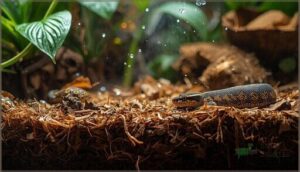
Ever notice how cypress mulch and coconut fiber seem to work magic in a reptile tank? These substrates excel at moisture retention and humidity control, creating stable microclimates that support healthy snakes.
Pairing these materials with properly designed humid hides ensures your snake benefits from consistent moisture levels exactly where they need it most.
Their fibrous structure also keeps humidity levels steady between misting, aids substrate mixing, and promotes gentle aeration—an ideal foundation for your snake’s comfort and well-being.
Mixing Substrates for Optimal Moisture

Substrate Blending is a bit like crafting the perfect soup—get your ratios right, and humidity control becomes second nature. Combine coconut husk with pine bark for moisture retention, and stir in a dash of sphagnum moss for water balance.
Layering and soil mixing help keep humidity levels steady, while a trusty hygrometer lets you fine-tune your reptile tank with every misting.
Substrates to Avoid for High Humidity
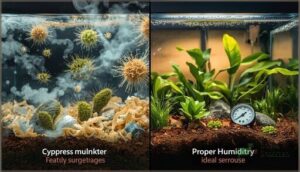
Managing substrate risks is essential if you want stable humidity levels and a healthy snake tank. Some popular options bring real humidity hazards:
- Pine and cedar shavings (toxic oils)
- Loose topsoil (shifts moisture, breeds mold)
- Newspaper (clumps, traps bacteria)
- Fine coral sand (locks in surface moisture)
- Dense gravel or clay (creates persistent damp, mold)
Opt for safer substrate alternatives and keep your reptile tank’s moisture control on point.
Enclosure Setup for Humidity Control
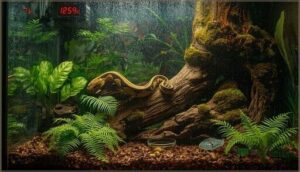
Setting up a snake’s enclosure for humidity takes more than just picking any old tank and calling it a day. There are a few key choices that can make all the difference in keeping moisture where it belongs.
Let’s walk through what to look for in the best enclosure setups for humidity control.
Selecting The Right Tank and Lid
Think of your reptile tank as a mini rain forest—every detail counts. Glass or solid plastic enclosures hold humidity better than mesh, especially with tight sealing options like rubber gaskets.
Skip a full screen top; instead, try a custom lid with adjustable lid ventilation or a fitted piece of plexiglass to fine-tune humidity levels and keep your snake comfortable.
Using Water Features and Humidity Boxes
Humidity isn’t a guessing game; it’s an ongoing dance between water features and humidity boxes. A shallow recirculating water feature or a fogger system can boost evaporation rates, keeping humidity levels up.
Add a humid hide lined with damp moss, and watch your snake instinctively seek comfort.
Pair misting techniques, like fine sprays, with a digital hygrometer for precision.
Preventing Mold and Excess Moisture
Mold prevention starts with smart moisture control—you want humidity balance, not a swamp. Install ventilation systems like mesh vents or adjustable fans to keep air moving without drying out your snake.
Clean water features weekly, swap soggy substrate patches immediately, and wipe condensation within thirty minutes. Pair careful misting with a hygrometer, and you’ll maintain humidity levels that support health without inviting fungal hitchhikers.
Misting, Fogging, and Water Systems
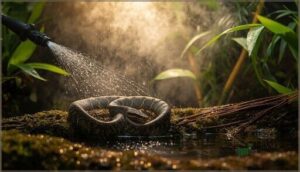
Once you’ve got the right enclosure and substrate, it’s time to focus on keeping that moisture in the air where your snake needs it.
Whether you prefer a hands-on approach or want to automate the process, you’ve got several solid options to choose from.
Let’s look at the main methods and how to make each one work for your setup.
Manual Vs. Automatic Misting Methods
When you’re deciding between manual and automatic misting techniques, think of it like choosing between stirring soup yourself or using a slow cooker. Manual misting gives you direct control over mist timing and lets you adjust humidity levels on the fly with a spray bottle, but you’ll use more water and create uneven patterns if you’re not careful.
Automatic misting systems deliver precise, repeatable humidity control through timers, reducing your daily workload while maintaining stable moisture levels.
Both approaches need hygrometers to verify consistency, so pick what matches your routine and your snake’s needs.
Installing Foggers and Drip Systems
Once you’ve explored basic misting techniques, stepping up to a fogger installation or drip system gives you automated humidity control that runs on a timer. Here’s how to set it up right:
- Use filtered water to prevent mineral buildup in nozzles and emitters
- Position fogger heads 6 to 12 inches above substrate for even coverage
- Install pressure regulators at 10 to 20 psi to keep flow steady
Regular system maintenance keeps your reptile fogger running smoothly.
Placement and Maintenance of Water Dishes
Your water bowl anchors humidity control and snake hydration just as effectively as misting. Place the dish on the cool side to slow evaporation, then clean it daily with hot, soapy water and a vinegar soak every week for proper dish sanitizing.
Fresh, room-temperature water quality prevents bacterial blooms, and a shallow 6-to-8-inch ceramic dish keeps humidity levels stable without tipping.
Top 3 Products for Maintaining Humidity
You’ve got the knowledge—now let’s talk tools. The right products can make humidity control straightforward instead of a daily guessing game.
Here are three essentials that’ll keep your snake’s environment stable and your stress levels low.
1. ThermoPro Digital Hygrometer Indoor Thermometer
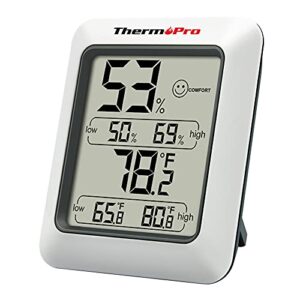
Accuracy matters when you’re managing your snake’s environment, and this compact hygrometer delivers readings within ±1°F for temperature and ±2–3% RH for humidity. You’ll get fresh data every 10 seconds, so you can spot shifts before they become problems.
The display shows current conditions plus daily highs and lows, helping you track patterns over time.
With a tabletop stand and magnetic back, you can position it right where you need it—whether that’s inside the enclosure or nearby for quick checks.
| Best For | Snake owners who need reliable temperature and humidity tracking to maintain a stable enclosure environment. |
|---|---|
| Primary Use | Humidity monitoring |
| Brand | ThermoPro |
| Material Type | Plastic/Electronic |
| Weight | 0.06 Kilograms |
| Installation | Tabletop/Magnetic mount |
| Suitability | Indoor monitoring |
| Additional Features |
|
- Updates every 10 seconds so you catch environmental changes quickly
- Tracks daily highs and lows to help you spot patterns in your enclosure
- Magnetic back and stand give you flexible placement options inside or outside the tank
- LCD display may start failing after about a year of use
- Not weatherproof, so it’s indoor-only
- Accuracy of ±2–3% RH might not be tight enough for species with very specific humidity needs
2. Zilla Coconut Husk Bedding
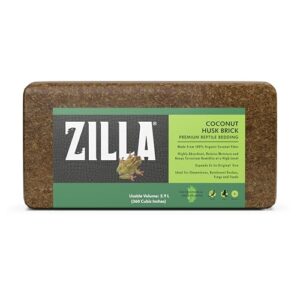
Once you’ve dialed in your readings, you’ll need a substrate that holds moisture without turning into a swamp. Zilla Coconut Husk Bedding checks both boxes.
Made from 100% organic coconut fiber, it expands up to five times its brick size when you add hot water, covering a 55-gallon tank in one go. It’s soft enough for burrowing, absorbs moisture efficiently, and stays fresh for weeks.
Plus, it’s non-toxic and biodegradable—good for your snake and the planet.
| Best For | Reptile owners who need a natural, moisture-retaining substrate for tropical species like chameleons, rainforest geckos, frogs, and toads, or for breeders setting up egg incubation areas. |
|---|---|
| Primary Use | Substrate/humidity control |
| Brand | Zilla |
| Material Type | Coconut Fiber |
| Weight | 1.3 Pounds |
| Installation | Spread in enclosure |
| Suitability | Tropical reptiles |
| Additional Features |
|
- Expands up to 5 times its original size when hydrated, covering large terrariums efficiently
- Holds moisture well for weeks, maintaining proper humidity without constant rehydration
- 100% organic and biodegradable coconut fiber that’s safe for reptiles and environmentally friendly
- Takes time and effort to fully rehydrate and break up clumps when preparing
- Can be messy during the initial setup and fluffing process
- Not suitable for all reptile species or invertebrates like jumping spiders
3. Misting Water Irrigation Equipment
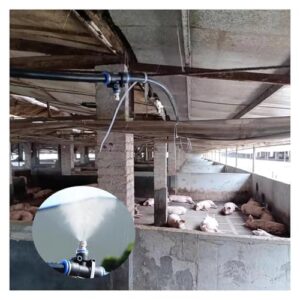
If your snake needs regular misting, the CHEN HAI ZONG DP system offers serious efficiency. Its brass nozzle delivers a 60 cm spray diameter with adjustable flow between 0.03 and 0.08 liters per minute—perfect for maintaining steady ambient moisture.
The push-on connectors make installation a breeze, and the 0.5 mm hole produces fine droplets that evaporate quickly without soaking your substrate.
Just remember to cut the tubing to fit your enclosure and clean the nozzle regularly to prevent mineral buildup.
| Best For | Reptile keepers who need automated, adjustable humidity control for larger enclosures or multiple tanks without constantly hand-misting. |
|---|---|
| Primary Use | Misting/humidity creation |
| Brand | CHEN HAI ZONG DP |
| Material Type | Brass/Metal |
| Weight | 3.53 ounces |
| Installation | Push-on connectors |
| Suitability | Irrigation/cooling systems |
| Additional Features |
|
- Adjustable flow rate (0.03-0.08L/min) lets you dial in the exact humidity level your snake needs
- Push-on connectors make setup quick and tool-free, so you can get it running in minutes
- Fine 0.5mm spray creates a gentle mist that won’t drench your substrate or stress your snake
- You’ll need to cut tubing to custom lengths yourself, which takes some planning
- Mineral deposits can clog the tiny nozzle if you don’t clean it regularly
- Product photos might not match exactly what you receive due to manufacturing variations
Frequently Asked Questions (FAQs)
How to keep humidity up in a snake tank?
Struggling to keep your enclosure from drying out? Start by placing a wide water dish near the warm side—it’ll boost humidity by up to 10 percent through steady evaporation alone.
How humid should my snake tank be?
Your humidity target depends on your snake’s natural habitat. Tropical species like ball pythons thrive at 60–70 percent, while desert dwellers such as rosy boas prefer a drier 40–50 percent range.
How do I raise the humidity without misting?
You can skip misting entirely by placing multiple shallow water dishes near warm spots to promote steady evaporation, layering damp substrate like coconut fiber, and adding live plants for natural transpiration.
How does room temperature affect tank humidity levels?
Room temperature directly impacts how much moisture the air can hold. When your room heats up, tank humidity drops unless you add more water vapor.
Cooler rooms trap moisture better, naturally boosting relative humidity readings.
Can live plants help maintain humidity naturally?
Verdant varieties very much do. Tropical plants transpire moisture throughout the day, releasing water vapor into the air.
You’ll notice ferns, mosses, and leafy species create humid microclimates around your snake’s habitat naturally.
What causes sudden humidity drops in snake tanks?
A few culprits can sneak up on you fast. Temperature swings in your room dry out tank air quickly, while heating vents or fans near mesh tops pull moisture away before you notice.
How often should humidity levels be checked daily?
You might think once a day is enough, but check twice daily—morning and evening—to catch fluctuations.
During setup or species acclimation, bump it to three times until readings stabilize consistently.
Conclusion
Ironically, the answer to keeping your snake healthy isn’t more complicated equipment—it’s just paying attention to the air around them. Grab a reliable hygrometer, choose substrate that holds moisture without turning swampy, and check readings weekly.
Now that you know how to maintain humidity in snake tank setups, those patchy sheds and respiratory scares become preventable footnotes. Your snake won’t thank you in words, but clear eyes and perfect sheds tell the whole story.