This site is supported by our readers. We may earn a commission, at no cost to you, if you purchase through links.
Your bearded dragon won’t touch her crickets anymore. She used to chase them down like a tiny velociraptor, but now she turns her head away the moment you dust them with vitamin powder. This scene plays out in countless homes every week.
Picky reptile eaters don’t suddenly develop nutritional superpowers—they still need vitamin A for their immune system and D3 for strong bones. The challenge is getting those nutrients into a creature that can spot a suspicious white powder from across the tank.
The right reptile vitamins for picky eaters solve this problem by disguising themselves better. Some use liquid formulas that absorb into food. Others rely on flavored powders that don’t trigger rejection. A few even come as sprays that coat insects without leaving a visible dust trail.
Table Of Contents
- Key Takeaways
- Best Reptile Vitamins for Picky Eaters
- 1. Zoo Med Reptile Vitamins Supplement
- 2. Herptivite Reptile Multivitamin Supplement
- 3. Zilla Reptile Vitamin Supplement Spray
- 4. Exo Terra Reptile Multivitamin Powder
- 5. Fluker’s Reptile Vitamin Supplement
- 6. Fluker’s Reptile Calcium Supplement
- 7. Exo Terra Reptile Vitamin Powder Supplement
- 8. Gargeer Reptile Probiotic Supplement
- 9. Exo Terra Calcium Powder Supplement
- Key Nutrients Essential for Reptile Health
- Challenges of Supplementing Picky Reptile Eaters
- Comparing Liquid Vs. Powdered Reptile Vitamins
- Effective Ways to Administer Vitamins
- How to Choose Safe, High-Quality Supplements
- Tips for Successful Supplementation With Picky Eaters
- Frequently Asked Questions (FAQs)
- What vitamins to give a picky eater?
- What is ReptiVite good for?
- Can I use human vitamins for my reptile?
- How often should I replace expired supplements?
- Do different reptile species need different vitamins?
- What happens if my reptile refuses all supplements?
- Are natural food sources better than commercial vitamins?
- Conclusion
Key Takeaways
- Picky reptiles often reject visible vitamin powders, so liquid formulas, flavored powders, and spray-on supplements disguise nutrients better and increase acceptance without triggering food refusal.
- Vitamin A, D3, and calcium with a 2:1 calcium-to-phosphorus ratio are essential for preventing metabolic bone disease, since common feeder insects like crickets and mealworms have dangerously inverted ratios around 1:9.
- Start supplementation at one-quarter the recommended dose and gradually increase while monitoring appetite, stool quality, and behavior to avoid overdosing fat-soluble vitamins that can cause toxicity.
- Store vitamin supplements in cool, dry conditions and replace them every six to twelve months because potency degrades over time, rendering expired products ineffective at preventing nutrient deficiencies.
Best Reptile Vitamins for Picky Eaters
Finding the right vitamin for a picky reptile doesn’t have to feel like a guessing game. Some formulas work better than others, especially when your pet refuses to eat anything that looks or smells “off.”
Many owners who keep hognose snakes as pets find that offering varied prey items reduces the need for additional supplements altogether.
These nine picks are worth your attention.
1. Zoo Med Reptile Vitamins Supplement
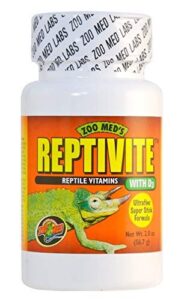
Zoo Med ReptiVite was originally developed for the San Diego Zoo — and that pedigree shows. It’s a complete vitamin, mineral, and amino acid supplement with a 2:1 calcium-to-phosphorus ratio that helps strong bones and helps correct soft-shell problems in turtles.
The ultra-fine powder sticks well to insects without heavy clumping, so even picky eaters won’t notice it’s there. Use it two to three times per week, and choose between the with-D3 or without-D3 version based on your reptile’s UVB setup.
| Best For | Reptile owners — especially those keeping geckos, box turtles, or pacman frogs — who want a vet-trusted supplement to support healthy bone growth and overall vitality. |
|---|---|
| Form | Powder |
| Brand | Zoo Med |
| Weight | 1.6 ounces |
| Life Stage | All Life Stages |
| Contains Vitamin D3 | Yes |
| Application Method | Dust/Mix |
| Additional Features |
|
- Developed for the San Diego Zoo, so you know it’s the real deal — complete with vitamins, minerals, and the full amino acid complex
- The 2:1 calcium-to-phosphorus ratio is spot-on for bone health and can help correct soft-shell issues in turtles
- Comes in a with-D3 or without-D3 version, so you can match it to your reptile’s UVB lighting setup
- The powder isn’t always fine enough to stick well to insects, which means some of it ends up at the bottom of the feeder dish
- The bottle often arrives less than full, which feels a little short for the price
- Shipping can be hit or miss, so don’t wait until you’re on your last scoop to reorder
2. Herptivite Reptile Multivitamin Supplement
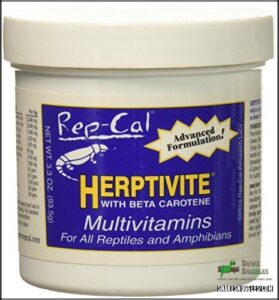
If your reptile already tolerates dusting but you worry about vitamin A buildup over time, Herptivite is worth a close look. It swaps preformed vitamin A for beta carotene, which your reptile’s body converts only as needed — a smart safety net for daily or weekly supplementers.
The alfalfa and kelp base gives it a whole-food feel, and the fine powder coats crickets and greens without clumping. Pair it with a separate calcium powder for a complete setup.
| Best For | Reptile owners who supplement frequently and want to avoid vitamin A toxicity while still covering essential micronutrients. |
|---|---|
| Form | Powder |
| Brand | Rep-Cal |
| Weight | 3.3 ounces |
| Life Stage | All species |
| Contains Vitamin D3 | No |
| Application Method | Dust |
| Additional Features |
|
- Uses beta carotene instead of preformed vitamin A, reducing the risk of overdose with regular use
- Fine powder texture adheres well to feeders and vegetables without clumping
- Alfalfa and kelp base provides a more natural, whole-food ingredient profile
- Requires a separate calcium supplement to meet complete nutritional needs
- Pricier than some competing multivitamin powders on the market
- Lack of independent lab testing raises questions about consistency and potency
3. Zilla Reptile Vitamin Supplement Spray
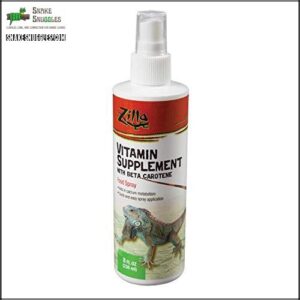
For picky eaters that dodge dusted food, a spray format can be the workaround you need. Zilla’s vitamin spray mists directly onto insects, greens, or prepared meals without coating them in visible powder.
The formula includes ascorbic acid, B vitamins, and cholecalciferol to support metabolism and calcium use, plus beta carotene as a safer vitamin A source. Shake the bottle, spray your reptile’s meal, wait fifteen seconds for it to dry, then serve.
You’ll still need a separate calcium supplement, but this spray makes hiding vitamins much easier.
| Best For | Reptile owners dealing with picky eaters who refuse dusted supplements or need an easier way to add vitamins to daily meals. |
|---|---|
| Form | Liquid |
| Brand | Zilla |
| Weight | 0.6 pounds |
| Life Stage | All species |
| Contains Vitamin D3 | Yes |
| Application Method | Spray |
| Additional Features |
|
- Spray-on application makes it simple to coat food without visible powder that might deter finicky reptiles
- Contains a comprehensive vitamin blend including B vitamins, vitamin D3, and beta carotene for safe vitamin A supplementation
- Works on multiple food types—insects, greens, and prepared meals—giving you flexibility in how you feed
- Doesn’t include calcium, so you’ll need to buy a separate calcium supplement for complete nutrition
- Some users report the spray nozzle sticks or breaks after repeated use
- Can be messy to apply and requires a 15-second wait time before serving
4. Exo Terra Reptile Multivitamin Powder
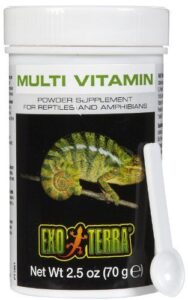
Fine powder gives you control when a fussy eater won’t touch heavily dusted crickets. Exo Terra Reptile Multivitamin Powder uses beta carotene for safer vitamin A delivery, plus D3 and E at levels that support bone health and immune health.
Mix it one-to-one with calcium powder, then dust insects or blend roughly half a tablespoon per cup of chopped greens. The nearly invisible coating lets you adjust coverage—start with a light sprinkle and watch your reptile’s response before applying a heavier layer.
| Best For | Reptile owners who need a flexible multivitamin that works for picky eaters and pairs easily with calcium supplements. |
|---|---|
| Form | Powder |
| Brand | Exo Terra |
| Weight | 0.1 kilograms |
| Life Stage | All species |
| Contains Vitamin D3 | No |
| Application Method | Dust/Mix |
| Additional Features |
|
- Fine, light powder gives you control over how much coating ends up on food
- Uses beta carotene instead of straight vitamin A, which is safer and less likely to cause toxicity
- Mixes well with calcium powder for a complete nutrition setup
- Some reptiles dislike the taste and may refuse dusted food at first
- The powder’s gritty texture can be noticeable on certain foods
- Hard to tell if it’s actually working since the effects aren’t immediately visible
5. Fluker’s Reptile Vitamin Supplement
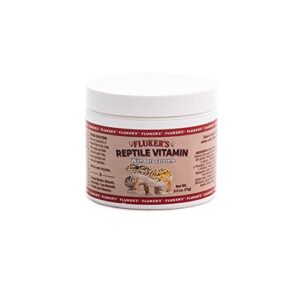
A 2.5-ounce powder delivers 50,000 IU of vitamin A and trace minerals through beta carotene, D3, and E, plus amino acids that support growth. Fluker’s Reptile Vitamin Supplement dusts onto crickets or mixes into chopped fruit without leaving a heavy film, so selective feeders keep eating.
While snakes eating whole prey rarely need added vitamins, reptiles on irregular feeding schedules may benefit from occasional supplementation during growth phases.
Sprinkle a light layer on live insects before serving or stir a pinch into moist vegetables. The fine texture adheres well when you mist greens slightly, and you can start with half the usual amount to ease cautious reptiles into consistent vitamin intake.
| Best For | Reptile owners looking for an all-in-one vitamin supplement that boosts color and health without fussy application. |
|---|---|
| Form | Powder |
| Brand | Fluker’s |
| Weight | 3.84 ounces |
| Life Stage | All Life Stages |
| Contains Vitamin D3 | No |
| Application Method | Dust |
| Additional Features |
|
- Fine powder sticks easily to insects and vegetables, so even picky eaters get their nutrients
- Packs vitamin A, D3, E, and amino acids in one formula instead of buying multiple bottles
- Works for any reptile at any age, from baby geckos to adult bearded dragons
- No scoop included, so you’re eyeballing portions or using your own measuring tool
- Dosage instructions are vague—users mostly figure out weekly schedules on their own
- Easy to over-supplement if you’re not careful about how much you’re sprinkling on
6. Fluker’s Reptile Calcium Supplement
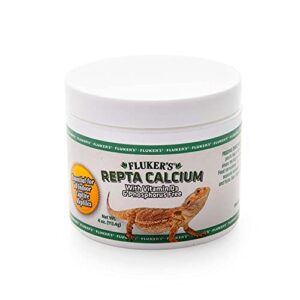
A 4-ounce powder gives your indoor reptile 38 percent calcium plus vitamin D3 to absorb every mineral before bone problems start. Fluker’s Repta Calcium with Vitamin D3 dusts onto crickets when you shake insects in a plastic bag or blends into chopped vegetables at one tablespoon per pound of food.
If your reptile stays outdoors under strong UVB, grab the D3-free version instead. The phosphorus-free formula prevents deficiency pain and keeps selective eaters healthy without leaving sticky residue on their food.
| Best For | Indoor reptile owners who need a calcium supplement with vitamin D3 for pets that don’t get natural UVB exposure. |
|---|---|
| Form | Liquid |
| Brand | Fluker’s |
| Weight | 4.48 ounces |
| Life Stage | All Life Stages |
| Contains Vitamin D3 | Yes |
| Application Method | Dropper |
| Additional Features |
|
- High calcium content (38%) with added D3 for better absorption and bone health
- Easy application—just dust feeder insects or mix into food
- Phosphorus-free formula helps prevent deficiencies without interfering with diet balance
- Not suitable for reptiles with strong UVB access (they need the D3-free version instead)
- Dosage instructions aren’t clearly specified on the product
- Effectiveness depends on proper storage since moisture can degrade powder supplements
7. Exo Terra Reptile Vitamin Powder Supplement
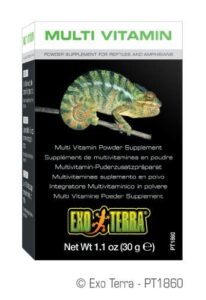
This 1.1-ounce blend delivers 90,000 micrograms of vitamin A per kilogram plus 22,000 IU of D3 for strong bones, all built on a base of seaweed, yeast, and oyster shell.
The fine texture of Exo Terra Multi Vitamin Powder clings without clumping when you mix half a tablespoon with calcium powder per cup of food, and it sticks to damp crickets or salad. The 14 percent protein content from yeast helps mask the supplement for fussy lizards or tortoises that dodge powdered meals.
| Best For | Reptile and amphibian owners looking for a comprehensive vitamin supplement that supports growth, bone health, and reproduction in species like bearded dragons, chameleons, and tortoises. |
|---|---|
| Form | Powder |
| Brand | Fluker’s |
| Weight | 4 ounces |
| Life Stage | All species |
| Contains Vitamin D3 | Yes |
| Application Method | Dust/Mix |
| Additional Features |
|
- High vitamin A and D3 levels promote strong bones and overall health
- Fine powder texture sticks well to live food and salads without clumping
- 14% protein content from yeast helps improve palatability for picky eaters
- Some users report the powder has a gritty or granular texture
- May not be palatable to certain reptiles, requiring mixing with other foods
- Difficult to measure effectiveness since results are subjective
8. Gargeer Reptile Probiotic Supplement
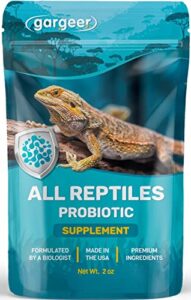
A two-ounce bag holds 200 million colony-forming units per gram of Lactobacillus acidophilus, Lactobacillus casei, and Enterococcus faecium to steady your reptile’s gut flora when stress or diet shifts throw digestion off track.
Mix one teaspoon per pound of food once a week. The ultrafine powder sticks to damp crickets without obvious clumps that picky lizards dodge.
Gargeer built the formula with a Ph.D. herpetologist and tests every batch through Midwest Laboratories, so you’re feeding proven live bacteria that actually compete with harmful microbes.
| Best For | Reptile owners looking for a science-backed probiotic to support digestive health during stressful periods like shedding, relocation, or diet changes. |
|---|---|
| Form | Powder |
| Brand | Exo Terra |
| Weight | 1.1 ounces |
| Life Stage | All species |
| Contains Vitamin D3 | No |
| Application Method | Dust |
| Additional Features |
|
- Formulated with herpetologist expertise and third-party lab testing for reliable live bacteria counts
- Ultrafine powder texture makes it easy to dust onto insects or mix with wet food without reptiles rejecting it
- Targets multiple digestive and immune benefits with 200 million CFU per gram of proven probiotic strains
- Dosage instructions (one teaspoon per pound of food weekly) may be impractical for owners of very small reptiles
- Some customers report receiving damaged or broken containers during shipping
- Lacks detailed guidance on potential interactions with other supplements or specific reptile species requirements
9. Exo Terra Calcium Powder Supplement
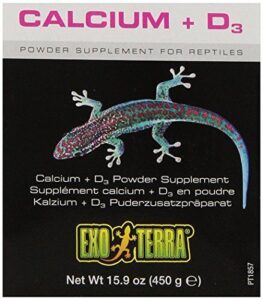
Ground oyster shell and calcium carbonate combine to deliver 35 to 37 percent pure calcium with no added phosphorus, so you won’t tip your dragon’s mineral balance into dangerous territory.
Dust half a tablespoon onto 500 grams of chopped veggies or shake it onto crickets in a bag. The ultrafine grains coat food invisibly, which means even finicky geckos won’t turn their noses up at treated meals.
| Best For | Reptile owners who need a phosphorus-free calcium boost for their geckos, bearded dragons, or other insect-eating pets without the chalky residue that picky eaters reject. |
|---|---|
| Form | Powder |
| Brand | Zoo Med |
| Weight | 2 ounces |
| Life Stage | All Life Stages |
| Contains Vitamin D3 | No |
| Application Method | Mix with food |
| Additional Features |
|
- Ultra-fine powder sticks to crickets and veggies without clumping, so your pet actually eats the calcium instead of shaking it off
- Includes vitamin D3 to help your reptile’s body absorb the calcium properly and build stronger bones
- Phosphorus-free formula keeps your dragon’s mineral ratio in the safe zone and prevents metabolic bone disease
- The product details don’t mention any drawbacks, but you’ll want to measure carefully since too much calcium can cause problems
- May not work for every reptile species, so check with your vet before adding it to your pet’s diet
- At 15.9 ounces, you might run out quickly if you’re dusting food daily for multiple reptiles
Key Nutrients Essential for Reptile Health
Your reptile’s body runs on a handful of vitamins and minerals that work together like a team. Without the right balance, even well-fed pets can develop serious health problems over time.
Let’s look at the three nutrients that matter most and how they protect your reptile from disease.
Importance of Vitamin A, D3, and E
Think of Vitamin A, D3, and E as the foundation of Reptile Nutrition—without them, your pet’s health unravels.
Vitamin A keeps Eye Health Benefits sharp and promotes Skin Regeneration while blocking infections at entry points for Immune System Support. Vitamin D3 drives calcium absorption for strong bones. Vitamin E protects cells from oxidative stress.
Together, these Reptile Vitamins create Vitamin Interactions that make Vitamin Supplementation essential for balanced care. Proper bone development in reptiles depends on vitamin D3 and calcium balance.
Calcium-to-Phosphorus Ratios
Your reptile’s Calcium Balance hinges on the right Mineral Ratios—most thrive with a CalciumtoPhosphorus Ratio between 1.5:1 and 2:1, where calcium slightly outweighs phosphorus for Bone Health.
Crickets sit around 1:9 and mealworms near 1:10, so Reptile Vitamin Supplements bridge that gap. You’ll need dusting or liquid calcium to boost Nutrient Absorption and keep Phosphorus Levels from undermining Reptile Health and Nutrition.
For an in-depth explanation of why this balance matters, see the importance of the golden ratio in reptile diets.
Preventing Metabolic Bone Disease
Once your Calcium to Phosphorus Ratio is dialed in, the next step is preventing Metabolic Bone Disease by combining the right Reptile Vitamin Supplements with UVB lighting.
Vitamin D3 helps with Nutrient Balance and calcium uptake, but it works only when basking spots stay within species temperature ranges.
Without proper heat, Dietary Needs go unmet, Bone Health suffers, and Metabolic Support collapses—so Reptile Care means pairing supplements with strong husbandry for Reptile Health and Nutrition.
Challenges of Supplementing Picky Reptile Eaters
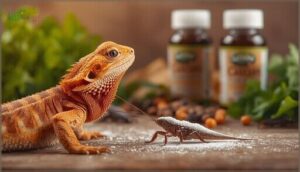
Picky eaters make supplementation feel like an uphill battle.
Your reptile might ignore dusted insects or refuse water that smells different.
Understanding these feeding challenges helps you spot nutritional gaps before they turn into serious health problems.
Common Feeding Issues in Reptiles
Environmental stress often triggers appetite changes in your reptile. Feeding environments with incorrect temperatures, humidity, or lighting disrupt normal eating patterns.
Dietary variety matters too—offering only one feeder type breeds boredom in picky eaters. Respiratory infections, parasites, and metabolic issues can suppress reptile appetite entirely.
Without addressing these feeding issues first, even the best reptile vitamins won’t correct nutrient deficits or prevent vitamin deficiency in your reptile care routine.
Signs Your Reptile Needs Vitamins
Once you spot the feeding issue, watch for the warning signs that scream vitamin deficiency. Swollen eyelids or eyes crusted shut signal low vitamin A, especially in turtles.
Softening shells, rubbery jaws, or limb tremors point to calcium and D3 gaps—metabolic issues that threaten reptile health. Weight loss, dull skin, or reluctance to climb often reveal nutrient imbalance your reptile care routine must address with proper nutritional supplements for pets.
Impact of Selective Eating on Nutrition
Selective menus create nutritional therapy nightmares because picky eaters skip the foods that pack vitamin deficiency protection. When your reptile refuses balanced staples, dietary imbalance builds fast.
Picky eaters skip nutrient-rich staples, turning balanced diets into nutritional therapy nightmares that fuel vitamin deficiency fast
- Insect-only diets deliver protein but almost no calcium, since feeders run high in phosphorus.
- Fruit-loving herbivores miss fiber, minerals, and fat-soluble vitamins.
- Single-prey snakes lack bone content from whole rodents.
- Limited variety weakens immunity and growth.
Smart feeding strategies and reptile vitamins reverse these nutrient deficits before health consequences appear.
Comparing Liquid Vs. Powdered Reptile Vitamins

Choosing between liquid vitamins and powdered vitamins isn’t about which one is “better”—it’s about which one your reptile will actually take. Liquids slip past picky eaters who dodge powdered insects, while powders stick to food without changing water taste.
Let’s break down what each type brings to the table so you can pick the right match for your stubborn eater.
Benefits of Liquid Supplements for Picky Eaters
Liquid supplements solve a big headache: picky reptiles that refuse powder-dusted insects. Liquid nutrition offers flavored options—often fruit or B12-boosted appetite stimulant formulas—that blend into water or drip straight onto treats, so your pet actually takes in essential vitamins. Droppers let you measure exact doses, which is safer than guessing with dusty coatings.
| Advantage | Why It Matters for Picky Eaters |
|---|---|
| Flavored formulas | Match natural fruit or nectar preferences in selective species |
| Precise droppers | Deliver exact milliliters, preventing overdose or waste |
| Mix flexibility | Drip on insects, blend into water, or combine with recovery solutions |
| Better absorption | Calcium lactate and balanced vitamins support consistent nutrient uptake |
| Illness support | Appetite-boosting B12 helps weak or recovering reptiles start eating again |
Feeding strategies built around liquid vitamin and mineral supplementation give you multiple ways to deliver nutrients—in the mouth, on food, or through drinking water—so even finicky feeders get the dietary supplement support they need for solid reptile health.
Pros and Cons of Powdered Formulas
Powdered Formula supplements are a staple in reptile care and maintenance. You get shelf-stable Reptile Vitamins that treat hundreds of feedings, but dosing can be tricky. Nutrient Balance often depends on how much sticks to insects or greens. Supplement Safety is a concern—overusing powders risks Vitamin Toxicity.
Here’s a quick comparison:
| Benefit | Drawback | Practical Tip |
|---|---|---|
| Shelf-stable | Imprecise dosing | Use sparingly |
| Flexible use | Nutrient loss | Mix with greens |
| Cost-effective | Risk of toxicity | Monitor intake |
Ease of Mixing With Food or Water
You need products that fit your Reptile Care and Management routine without fuss. Water Dosage with fully soluble powders is straightforward—1 gram per 250 milliliters dissolves in seconds. Liquid Supplements spray on in moments and set within 15 seconds for reliable Food Adhesion.
Mixing Ratios matter less when you follow clear label directions, and Solubility Tests show which Dietary Supplement blends disappear versus clump.
| Feature | Why It Helps |
|---|---|
| Water-soluble powder | Dissolves fast in cool water |
| Spray formula | Coats food evenly in seconds |
| Clear mixing directions | Removes guesswork from dosing |
| Adhesion to greens | Ensures vitamins stay on each bite |
Effective Ways to Administer Vitamins
Getting vitamins into a picky reptile takes a bit of supplementation strategy. The good news is you have several proven methods that work even for the most stubborn eaters.
Here are three practical approaches that make supplementation easier and more effective.
Mixing Vitamins Into Water or Food
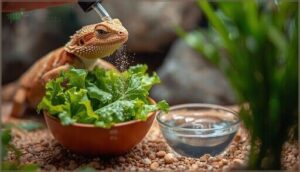
Mixing reptile vitamins into water or food can feel like sneaking medicine into a toddler’s snack—but it really does work for picky eaters. Vitamin stability matters, so replace fortified water within 24 hours to preserve nutrient absorption.
Here’s how to do it right:
- Add about 2 drops per ounce for water dosage
- Dust salads or insects lightly for food fortification
- Time supplement timing with daily feedings for best results
Direct Oral Dosing Techniques
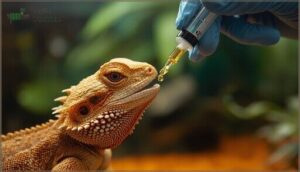
When your reptile refuses every trick in the book, syringe methods let you take control. Small 0.5 ml syringes give precise vitamin delivery without choking risk.
Slide the tip into the side of the mouth and aim toward the midline. Gentle mouth restraint keeps the head steady while you dose.
Most liquid reptile vitamins need oral dosing twice weekly for adults, four times for juveniles.
Dripping Vitamins Onto Treats or Insects
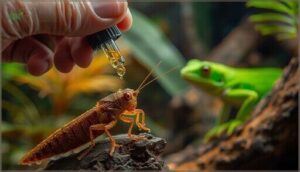
If syringe dosing feels like a wrestling match, try coating live prey instead. Placing one or two drops on a cricket’s back or near a worm’s head lets your reptile eat its nutritional supplement without the fight.
Three smart vitamin placement strategies:
- Target the head – Drip onto a cricket’s thorax so your gecko strikes the treated zone first
- Limit coated insects – Dose only two or three feeders per session for accurate control
- Roll softer prey – Spread drops over hornworms with a gentle finger roll to prevent beading
Counting drops per insect keeps total intake safe. One drop covers a small gecko’s cricket; adults tolerate two or three on larger roaches. This dose control prevents over-supplementing fat-soluble vitamins like A and D3, which can build up over time.
Pair vitamin-dripped insects with your reptile’s favorite treat. Strongly scented waxworms or superworms mask mild vitamin smells that might scare off picky eaters. Offer the coated insect early in the feeding session when hunger overrides hesitation.
Use disposable gloves while handling treated prey. Prepare vitamin-dripped insects over a separate tray so spills don’t contaminate your main insect tub. Discard any uneaten supplemented feeders after the meal to keep doses predictable and your enclosure clean.
How to Choose Safe, High-Quality Supplements
Not all reptile vitamins are created equal. Some brands cut corners with fillers or outdated formulas that won’t help your picky eater at all.
Here’s what to look for when you’re shopping so you bring home a supplement that’s actually safe and effective.
Checking Ingredient Safety and Allergen-Free Claims
You’ll see allergen-free or hypoallergenic on many vitamin supplements, but those claims don’t guarantee safety without ingredient labeling that names every component.
Reptile vitamin supplements with vague terms like natural flavors hide potential toxicity risks and nutrient interactions that matter for dietary requirements for reptiles. Read the full list to spot hidden dairy, soy, or synthetic additives that trigger vitamin deficiency through poor absorption.
Allergen testing and safety verification start with your eyes on that label.
Recognizing Authentic and Reputable Brands
Once you’ve confirmed ingredients are safe, brand verification and authenticity checks protect your reptile from counterfeit products.
Look for the NASC Quality Seal, which signals third party testing and manufacturing standards that real brands pass every two years. Reputable companies list production locations, batch numbers, and expiration dates on every bottle.
They sell through known pet stores or vet clinics, not random online sellers. Clear labeling and tamper evident seals confirm you’re buying genuine reptile vitamin supplements that support reptile health through quality control.
Tips for Successful Supplementation With Picky Eaters
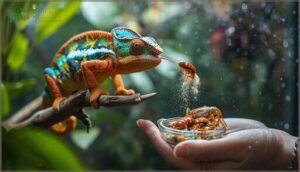
Getting your picky reptile to accept vitamins takes patience and a smart strategy. You can’t just dump supplements into their dish and hope for the best.
Here are three proven approaches that help stubborn eaters get the nutrients they need without the struggle.
Starting With Low Doses and Gradually Increasing
Think of dose titration as a gentle introduction your picky eater can trust. Many keepers start at one quarter of the label dose to see how their reptile reacts to new smells. Gradual increase prevents overwhelming your pet while still preventing vitamin deficiency.
- Lightly dust only a portion of feeder insects at first
- Increase from weekly to twice weekly over several weeks
- Watch for food refusal and adjust accordingly
- Keep vitamin A below 10,000 IU per kilogram initially
Monitoring Appetite, Stool, and Behavior
Regular appetite tracking and stool analysis tell you whether vitamin supplementation is actually helping your picky eater. Log each meal and bowel movement in a simple notebook so behavioral signs like lethargy or sudden hiding become obvious.
Nutrition monitoring catches slow weight loss before it’s visible, while health checks with your vet confirm that reptile vitamins support reptile health without causing problems.
Proper Storage and Avoiding Overdosing
Store vitamin powders in a cool dry spot around 50 to 70 degrees Fahrenheit and keep the lid tightly closed to protect vitamin stability and prevent breakdown from heat or moisture.
Replace supplements every six months to one year for proper shelf life management. Follow the label dosage and use multivitamins only once or twice weekly to avoid overdosing fat-soluble vitamins like A and D3.
Frequently Asked Questions (FAQs)
What vitamins to give a picky eater?
Most picky eaters need vitamin A for vision and skin, vitamin D3 for calcium absorption, and vitamin E for immune support, delivered through multivitamins that match their feeding habits and prevent deficiency.
What is ReptiVite good for?
ReptiVite delivers extensive multivitamin benefits with a calcium-based formula that aids bone health and prevents metabolic bone disease.
It includes amino acid support for tissue repair and offers flexible vitamin supplementation through both D3 and non-D3 versions.
Can I use human vitamins for my reptile?
Never share your multivitamins with your scaly friend. Human vitamin supplements pose serious vitamin toxicity risks to reptiles because the dosages and formulations don’t match reptile nutrition needs, creating dangerous supplement risks and pet safety concerns.
How often should I replace expired supplements?
Most vitamin powder supplements lose strength six to twelve months after opening. Write the date on the jar and toss them yearly to protect your reptile’s health and keep potency reliable.
Do different reptile species need different vitamins?
Yes, each reptile species has unique vitamin needs. Herbivores convert beta carotene differently than carnivores, desert dwellers need more D3 than nocturnal species, and calcium balance varies widely across reptile diets.
What happens if my reptile refuses all supplements?
When your pet won’t accept any supplements, nutrient deficits build quietly over weeks. Refusal strategies like gut-loading insects or switching to fortified diets become essential before health consequences like metabolic bone disease appear.
Are natural food sources better than commercial vitamins?
Whole foods deliver nutrients in natural proportions that match your reptile’s evolutionary dietary needs, reducing overdose risks common with concentrated commercial supplements.
However, captive diets often require targeted vitamin and mineral supplements to fill predictable gaps.
Conclusion
What’s the point of stocking the perfect tank if your reptile can’t absorb the nutrients she needs? The best reptile vitamins for picky eaters work because they slip past her defenses—liquid drops on insects, flavored powders she won’t detect, or sprays that disappear into her diet.
Start with small doses. Watch her energy levels climb. You’ve already done the hard part by choosing quality supplements. Now let her body do the rest.