This site is supported by our readers. We may earn a commission, at no cost to you, if you purchase through links.
A bearded dragon sitting on the wrong substrate won’t announce its discomfort—it’ll just stop thriving. Sand composition, grain size, and moisture control aren’t minor details; they’re the difference between a reptile that burrows naturally and one developing chronic respiratory inflammation or a life-threatening impaction.
Desert species evolved alongside specific soil profiles, and replicating those conditions closely enough to matter requires more precision than most care guides suggest. Getting substrate bedding for desert species right means understanding particle physics, organic layering, and maintenance schedules that work together as a system—not a bag of sand dumped into a tank.
Table Of Contents
- Key Takeaways
- Choosing The Right Substrate for Desert Species
- Moisture Management and Drainage in Desert Setups
- Step-by-Step Guide to Setting Up Desert Substrate
- Top 6 Substrate Bedding Products for Desert Species
- Maintenance and Health Risks of Desert Substrates
- Frequently Asked Questions (FAQs)
- What is the best substrate for desert reptiles?
- What is the best substrate for desert scorpions?
- How to make arid bioactive substrate?
- What is terra Sahara substrate?
- Can desert reptiles share substrate with other species?
- How does substrate affect desert reptile shedding cycles?
- Which substrates work best for desert reptile eggs?
- Do hatchlings need different substrate than adult reptiles?
- How often should substrate be fully replaced annually?
- Conclusion
Key Takeaways
- Grain size between 0.1–1mm matters more than most guides admit—go too fine and you’re risking respiratory inflammation; go too coarse and impaction becomes a real threat.
- A 50/33/remainder blend of sand, soil, and clay isn’t just naturalistic—it’s the structural foundation that lets your animal burrow, thermoregulate, and behave like it would in the wild.
- Substrate depth under 4 inches doesn’t just limit burrowing—it removes a biological need entirely, which shows up as wall-scratching and chronic stress.
- Moisture management isn’t about keeping things dry; it’s about maintaining a moisture gradient—drier on the basking end, slightly humid on the cool side—and catching failure signals like musty odors or stuck sheds before they become vet visits.
Choosing The Right Substrate for Desert Species
Getting the substrate right is one of those decisions that shapes everything downstream—your animal’s health, behavior, and long-term comfort all hinge on it.
If you’re working with a larger setup, this guide on substrate and bedding for large enclosures walks through what actually holds up at scale.
The wrong choice isn’t just inconvenient; it can cause impaction, respiratory problems, or chronic stress. Here’s what to think about before you put anything on the enclosure floor.
Importance of Mimicking Natural Desert Environments
A desert habitat isn’t just scenery—it’s a functional system your reptile depends on to regulate temperature, behavior, and health.
Thermal gradients, natural lighting, and burrowing behavior aren’t optional extras; they’re biological necessities. Desert reptile substrates that mirror natural substrates from real desert ecosystems give your animal the environmental enrichment it needs to thrive.
Bioactive substrates take this further, turning an arid environment terrarium setup into a living, responsive landscape. For a closer look at naturalistic reptile care approaches, consider integrating bioactive concepts into your setup.
Particle Size and Composition for Safety
Particle size is where substrate safety and risks begin. Most desert reptile substrates work best when grain size stays between 0.1 and 1 millimeter—fine enough to pack, coarse enough to drain. Your substrate mix matters just as much as individual components.
- Particle Safety: Avoid gravel and walnut shell; both carry blockage risk
- Sand Quality: Washed, rounded quartz sand minimizes abrasion on scales and joints
- Dust Control: Clay or topsoil blended into sand binds loose particles, reducing airborne irritants
- Substrate Composition: A 50% sand, 33% soil, remainder clay blend creates a stable, naturalistic floor
- Grain Size: Talc-fine dust irritates eyes and airways—sift out ultrafine particles before use
It’s important to review the to guarantee both safety and natural behavior.
Digestibility and Ingestion Risks
Even non-toxic labels don’t eliminate ingestion risks. Calcium sand is a prime offender—its added flavor actively encourages licking and swallowing, and once wet inside the gut, it clumps into masses that cause digestive blockage.
Even non-toxic calcium sand can clump inside a reptile’s gut and cause fatal digestive blockage
Substrate toxicity and gut impaction are real reptile health concerns, especially for juveniles whose narrower digestive tracts make impaction risk substantially higher. Feed insects in smooth-sided dishes, not directly on loose substrate.
Substrate Depth and Burrowing Needs
Depth matters more than most keepers realize. For burrowing species like Uromastyx or bearded dragons, shallow substrate depth of just an inch or two leaves natural burrowing behavior completely unmet—you’ll notice scratching at enclosure walls instead of tunnel formation.
Aim for 4 to 6 inches of compacted natural substrates to support burrow stability, letting substrate layers approximate the thermal gradients wild desert species rely on daily.
Moisture Management and Drainage in Desert Setups
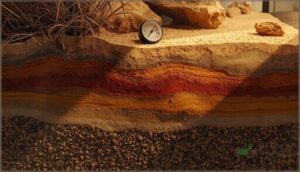
Desert setups aren’t just about keeping things dry—moisture balance is more nuanced than most keepers expect.
Get it wrong, and you’re looking at mold, respiratory infections, or a stressed animal that can’t thermoregulate properly.
Here’s what you need to know about managing humidity and drainage in an arid enclosure.
Balancing Humidity for Arid Species
Humidity control in arid environments isn’t about keeping things bone dry—it’s about balance. Inland bearded dragons do best around 30–40% ambient humidity, while leopard geckos tolerate 20–40%.
For solid arid species care and reptile hydration, use a humidity gradient: drier on the basking side, slightly more humid on the cool end. Two hygrometers make substrate moisture management and environmental balance far easier to maintain.
Preventing Mold and Respiratory Issues
Mold doesn’t need much of an invitation—stagnant air and a trace of moisture will do. Poor ventilation systems let exhaled humidity linger, creating conditions where respiratory disease develops quietly.
Prioritize air quality through cross-ventilation, spot-clean daily, and commit to full substrate sanitizing monthly. Bioactive substrates demand consistent humidity control and moisture retention checks; respiratory care depends entirely on substrate safety you actively maintain.
Clay, Sand, and Soil-Sand Mixes for Moisture Control
Each substrate type in arid environments handles moisture differently — and that difference shapes everything from thermal regulation to burrowing behavior. Clay holds moisture for 24–72 hours in deep layers while the surface stays dry, closely mirroring natural desert ecosystems. Sand drains fast; soil-sand mixes hit a useful middle ground.
- Clay substrates maintain stable underground moisture without surface saturation
- Pure sand drains within hours — poor burrowing mediums for deep tunnels
- A 1:2 sand-to-soil ratio balances substrate moisture for roots and microfauna
- Commercial blends combining substrate composition elements like clay, sand, and decomposed granite best replicate natural substrates for desert species
Monitoring and Adjusting Substrate Moisture
Getting substrate moisture wrong is one of the fastest ways to compromise a desert enclosure. Daily surface checks—running a finger across the top layer—tell you immediately whether conditions are drifting toward dangerous extremes.
| Signal | Likely Cause | Action |
|---|---|---|
| Dusty surface, rising particles | Insufficient moisture retention | Spot watering one corner |
| Shiny wet patches | Over-watering | Improve ventilation, reduce misting |
| Stuck shed on extremities | Humidity too low | Add humid hide, adjust moisture dynamics |
| Musty odor | Hidden wet pockets | Excavate and replace affected substrate |
Hygrometer use at multiple enclosure points reveals your moisture gradient’s health—animal cues like burrowing patterns and shedding quality confirm what the numbers suggest.
Step-by-Step Guide to Setting Up Desert Substrate
Getting the substrate right starts before you pour a single grain of sand. The setup process has a few distinct stages, and doing them in order makes a real difference for your reptile’s health and comfort.
Here’s how to build it out correctly, from base prep to optional bioactive finishing touches.
Preparing The Enclosure Base
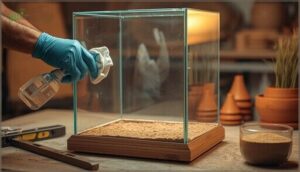
Before a single grain of sand goes in, base preparation sets the tone for everything that follows. Wipe the enclosure clean with a dilute chlorhexidine solution, rinse thoroughly, and dry completely—chemical residue trapped under substrate is a genuine substrate safety hazard.
Seal wooden bases with Drylok or aquarium-safe silicone along seams, add barrier layers for moisture control, and confirm the stand is level before your desert species moves in.
Layering and Compacting Substrate Materials
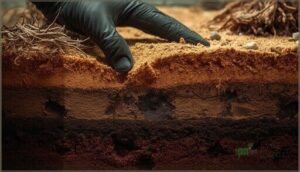
Think of layering like building a road—each compacted lift holds up everything above it. Start with a 1-to-2-inch clay-rich base for burrow stability, then add 2-to-4 inches of 60/40 soil-sand mix for desert terrain depth.
Moisture balance matters here: dampen each layer until it clumps, compact firmly, and let it partially dry before adding the next for reliable substrate safety and moisture retention.
Adding Bioactive Components (Optional)
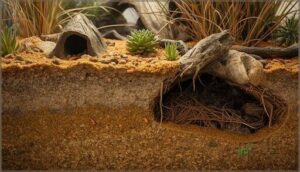
Once your layers are set, you can take reptile substrate selection further by going bioactive. A bioactive cleanup crew—powder orange isopods and arid springtails—breaks down waste continuously, reducing your maintenance load.
Live desert plants stabilize the mix and close the nutrient loop. Keep one small moist pocket beneath a hide so microfauna survive without disrupting your moisture gradients across the surface.
Top 6 Substrate Bedding Products for Desert Species
With the setup process behind you, the next step is picking a substrate that actually works for your specific animal. Not all products are created equal, and the difference between a safe enclosure and a problematic one often comes down to what’s on the floor of the tank.
Here are six substrate options worth considering for desert species.
1. Zoo Med Reptile Soil
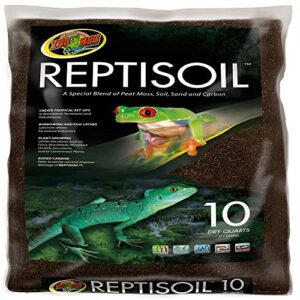
Zoo Med ReptiSoil isn’t a pure desert sand, but don’t write it off for arid setups. This blend of humus, peat moss, sand, and coconut carbon earns its place as a burrowing and egg-laying medium—especially in humid hides or planted corners where desert species still need diggable, moisture-retaining zones.
Keep it drier than you’d for tropical use, and consider topping it with a sand-soil mix. The carbon component actively reduces odors by supporting beneficial bacterial colonization in deeper substrate layers.
| Best For | Tropical lizards, amphibians, hermit crabs, tarantulas, and other invertebrates that need a humid, diggable substrate with plant-friendly qualities. |
|---|---|
| Material | Coconut fiber/carbon |
| Odor Control | Yes, via coconut carbon |
| Easy to Clean | Yes |
| Animal Suitability | Lizards, amphibians, tarantulas |
| Natural Material | Yes |
| Humidity Support | High |
| Additional Features |
|
- Coconut carbon helps cut down odors by giving beneficial bacteria a place to grow deep in the substrate.
- Great for animals that like to burrow or lay eggs — it holds its shape well and stays loose enough to dig through.
- Works well in bioactive setups since it supports live plants and holds moisture without getting waterlogged.
- Some bags have come with sharp rocks or large wood splinters mixed in, which can be a real hazard for smaller animals.
- It can get dusty on its own, so mixing it with another substrate is usually a good idea.
- It’s pricier than a lot of other options out there, which adds up if you’re maintaining a large enclosure.
2. Zilla Reptile Terrarium Bedding Liner
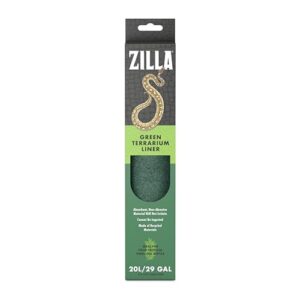
Unlike the soil-forward approach of ReptiSoil, Zilla’s Terrarium Bedding Liner takes a completely different direction—no loose particles, no ingestion risk. Made from polyethylene and polypropylene felt, it’s treated with biodegradable enzymes that actively break down waste and curb odor between cleanings.
For juvenile bearded dragons or clumsy feeders prone to gulping substrate, that solid surface is genuinely protective. Cut it to fit any tank, rinse monthly, and replace every 30 days to keep the enzyme action effective.
| Best For | Beginner reptile owners and those raising juvenile reptiles like bearded dragons who want a low-fuss, mess-free substrate option. |
|---|---|
| Material | Polyethylene/Polypropylene |
| Odor Control | Yes, enzyme-treated |
| Easy to Clean | Yes |
| Animal Suitability | Snakes, lizards, turtles |
| Natural Material | No |
| Humidity Support | Low |
| Additional Features |
|
- Easy to clean and reuse—just rinse it off and you’re good to go
- Enzyme treatment actively fights odors between cleanings, not just masks them
- No loose particles means zero ingestion risk, which is a real win for clumsy eaters
- Doesn’t allow burrowing, so reptiles that like to dig won’t be happy here
- Can snag on teeth or nails over time, which is worth keeping an eye on
- Needs trimming to fit odd-shaped tanks, and the enzyme effectiveness fades after about 30 days
3. Zoo Med Forest Floor Bedding
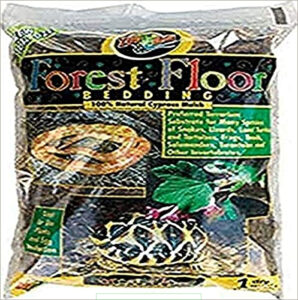
Solid liners work well for desert setups, but some keepers prefer a more naturalistic look—and that’s where Zoo Med Forest Floor Bedding earns a mention, with one important caveat: it’s a moisture-retentive cypress mulch, making it better suited for humid-adjacent microclimates than strictly arid enclosures.
At a 2-inch minimum depth, it accommodates live plants and amphibian-tolerant species effectively. Spot clean daily, replace every three months, and mist selectively to avoid saturating a substrate that’s already designed to hold water.
| Best For | Keepers housing snakes, amphibians, tropical tortoises, or invertebrates who want a natural forest floor look with solid humidity retention. |
|---|---|
| Material | Natural cypress mulch |
| Odor Control | Moderate, spot cleaning needed |
| Easy to Clean | Yes |
| Animal Suitability | Snakes, lizards, tortoises, frogs |
| Natural Material | Yes |
| Humidity Support | High |
| Additional Features |
|
- Natural cypress mulch holds moisture well, making it easy to maintain humidity without constant misting
- Looks great in the enclosure — that earthy, forest floor aesthetic is hard to beat
- Works for a wide range of species, from frogs and salamanders to tarantulas and land turtles
- Can get expensive fast if you’ve got a large enclosure to fill
- Spotting waste is tricky when you’re using it on its own — easy to miss things
- Larger pieces sometimes turn up in the bag, which means a bit of sorting before it’s safe to use
4. Zilla Alfalfa Reptile Bedding
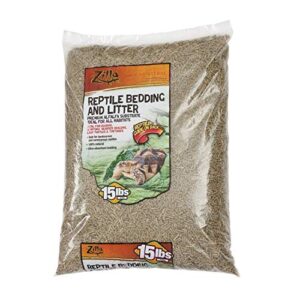
Alfalfa has no business being reptile bedding — until you see it work. Zilla’s 100% natural alfalfa meal pellets are digestible if accidentally ingested, which makes them a practical choice for juvenile bearded dragons and monitors prone to grabby feeding responses.
The pellets absorb moisture and localize odor efficiently, so spot cleaning stays manageable at 1–2 inches depth. One caveat: keep humidity low. Soggy alfalfa molds fast, making this substrate a poor fit for anything approaching tropical conditions.
| Best For | Owners of carnivorous reptiles like bearded dragons or Chinese Water Dragons who want a natural, digestible substrate and keep their enclosures dry. |
|---|---|
| Material | Alfalfa meal pellets |
| Odor Control | Yes, bacteriostatic agent |
| Easy to Clean | Yes |
| Animal Suitability | Bearded dragons, carnivorous reptiles |
| Natural Material | Yes |
| Humidity Support | Low |
| Additional Features |
|
- 100% natural and biodegradable — safe if your reptile accidentally eats some
- Absorbs moisture and reduces odor, making spot cleaning pretty straightforward
- Reptile-safe bacteriostatic agent helps keep bacterial growth in check
- Gets soggy and molds quickly with any humidity, so it’s a hard no for tropical setups
- The natural alfalfa smell can be strong and not everyone’s a fan
- Needs frequent cleaning when soiled — not great as a standalone substrate
5. Sukh Sphagnum Moss for Reptiles
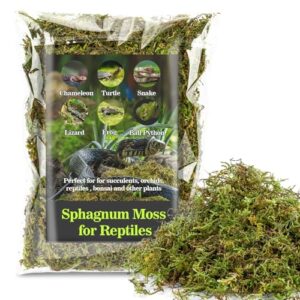
Sphagnum moss isn’t a desert substrate — but it earns a spot in your desert enclosure anyway. Sukh’s dried sphagnum moss works best as a localized humidity tool: line a moist hide with it, and you’ve built a reliable shedding chamber without saturating the rest of your arid setup.
It holds moisture far longer than sand or soil, releases it gradually, and its natural acidity resists bacterial growth. Just don’t use it as primary flooring — constantly damp conditions will stress most desert species fast.
| Best For | Reptile owners keeping humidity-loving species like frogs, geckos, snakes, or turtles who need a reliable way to maintain moisture in hides or egg-laying setups. |
|---|---|
| Material | Sphagnum moss |
| Odor Control | Moderate, requires maintenance |
| Easy to Clean | Requires regular maintenance |
| Animal Suitability | Snakes, turtles, frogs, geckos |
| Natural Material | Yes |
| Humidity Support | High |
| Additional Features |
|
- Holds moisture really well and releases it slowly, making it great for shedding chambers and incubation
- Natural acidity helps resist bacteria, so it stays cleaner longer than most substrates
- Versatile — works as a hide liner, nesting material, or egg incubation medium
- Can get dusty and break down into powder over time, so it needs replacing regularly
- Has a noticeable smell that some people (and sensitive reptiles) might not love
- Not a standalone substrate — needs to be used alongside a proper primary flooring setup
6. Quozuo Reptile Hideout Wooden Bridge
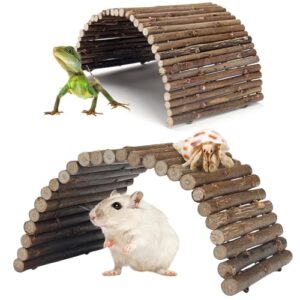
Technically not a substrate, the Quozuo Reptile Hideout Wooden Bridge belongs in your desert setup anyway.
Bent into a semicircle over quartz sand or a sandy soil mix, it becomes an instant shaded retreat — the kind of rock-crevice analog that ground-dwelling desert reptiles actively seek out.
The internal wire core holds whatever shape you need: tunnel, ramp, arch. Apple wood slats stay stable in dry conditions, and spot-cleaning with a reptile-safe disinfectant takes about two minutes.
| Best For | Small desert reptiles and ground-dwellers that need a shaded hideout or climbing structure in their terrarium setup. |
|---|---|
| Material | Apple wood |
| Odor Control | Limited, may emit odor |
| Easy to Clean | Yes |
| Animal Suitability | Hermit crabs, lizards, small animals |
| Natural Material | Yes |
| Humidity Support | Low |
| Additional Features |
|
- The bendable wire core lets you shape it into a tunnel, arch, or ramp — whatever your setup needs
- Apple wood looks natural in a desert enclosure and pairs well with quartz sand or sandy soil
- Easy to spot-clean and holds its shape well in dry conditions
- Known to have a strong odor out of the box, which might stress sensitive animals
- Can mold or degrade if the enclosure gets too humid — not ideal for tropical setups
- Pretty small, so it won’t work as a hide for anything larger than a small lizard or similar-sized reptile
Maintenance and Health Risks of Desert Substrates
Getting the substrate right is only half the job — keeping it that way is where most keepers slip up.
Poor maintenance doesn’t just look bad; it can genuinely sicken or kill your animal through impaction, respiratory infections, or toxic buildup. Here’s what you need to stay on top of.
Spot Cleaning and Replacement Schedules
Think of substrate maintenance as a non-negotiable rhythm. Daily Spot Checks—removing feces, shed skin, and leftover food—keep bacterial load manageable in loose-sand desert setups. Weekly Deep Cleans refresh water dishes and hard surfaces.
Substrate Type Adjustments dictate full-replacement timing:
- Loose sand: full change every 2–4 weeks
- Sand-soil mixes: monthly replacement, daily scooping
- Clay-based substrates: every 3–6 months with consistent surface cleaning
- Bioactive Substrates: spot-clean only; full reset every several months
- Liners/carpets: machine wash weekly, air-dry completely before reuse
Moisture Retention signals trouble fast—persistent damp clumps in an arid setup mean immediate removal, not mixing in. Terrarium Maintenance stays efficient when Substrate Preparation starts dry and clean.
Impaction and Respiratory Health Warnings
Two silent killers lurk in desert setups: impaction and respiratory disease. Substrate ingestion spikes when insects are fed directly on loose sand, dragging gut motility to a crawl—especially in dehydrated lizards. Dusty bedding dangers compound fast, inflaming airways chronically.
| Risk | Primary Cause | Prevention |
|---|---|---|
| Impaction Risk | Fine particle ingestion | Feeding dishes, 0.5–2mm grain size |
| Digestive Health | Low temps slowing gut | Maintain proper thermal gradients |
| Respiratory Health | Dusty bedding, poor airflow | Low-dust substrate, adequate ventilation |
Reptile health and wellness depends on catching both early signs.
Recognizing Signs of Substrate Failure
Your substrate is speaking—you just need to know what to listen for. Substrate Odors signal anaerobic waste buildup, while Fungal Growth points to Moisture Retention failures.
Compaction Signs like crusted, hardened surfaces cut airflow and increase Impaction Risk. Pest Infestations and Visual Changes—dark tide marks, dusty clouds—tie directly to Respiratory Disease and collapsing Digestive Health. Act on these signals promptly.
Safe Practices for Long-Term Reptile Wellness
Acting on those substrate failure signals is only half the equation—keeping your desert habitat consistently safe over time is what actually protects your animal.
Monthly weight checks, routine veterinary exams, and daily spot cleaning anchor solid reptile hygiene. Pair that with species-appropriate reptile substrate selection, careful moisture retention monitoring, and bioactive environments where suitable, and your desert reptile care routine becomes genuinely preventive rather than reactive.
Frequently Asked Questions (FAQs)
What is the best substrate for desert reptiles?
For desert reptile care, a 70/30 topsoil-to-play sand mix best fosters substrate safety, burrowing needs, and natural desert habitat replication—making it the top choice for reptile terrarium substrate composition and overall reptile health.
What is the best substrate for desert scorpions?
A sandy, clay-blended mix around 4–6 inches deep gives desert scorpions the burrow stability they need while keeping substrate moisture low and substrate toxicity risks minimal in arid environments.
How to make arid bioactive substrate?
Mix 60–70% chemical-free topsoil with 30–40% washed play sand as your Base Soil Mix, add excavator clay for structure, then layer Organic Additions like leaf litter to activate your Arid CUC.
What is terra Sahara substrate?
Terra Sahara is The Bio Dude’s handcrafted bioactive substrate — a soil, sand, and clay arid substrate mix engineered to hold burrows, support cleanup crews, and sustain a living desert ecosystem inside your enclosure.
Can desert reptiles share substrate with other species?
Sharing substrate between species sounds efficient, but cohabitation strategies often fall apart in practice.
Species compatibility hinges on matching humidity, temperature, and burrowing needs — mismatches create chronic stress and real health risks for every animal involved.
How does substrate affect desert reptile shedding cycles?
Think your desert reptile just sheds on a schedule? It doesn’t. Substrate humidity and moisture gradients directly control shedding cycles, burrowing behavior, and clean skin release in every desert species you keep.
Which substrates work best for desert reptile eggs?
For desert reptile eggs, perlite and vermiculite are your most reliable incubation media—perlite aerates, vermiculite retains moisture. A 1:1 mix by weight keeps humidity stable without waterlogging the clutch.
Do hatchlings need different substrate than adult reptiles?
Yes — hatchlings need simpler, solid substrates. Their smaller digestive tracts make impaction prevention critical, so paper towel or tile beats loose sand until they’re feeding reliably and growing steadily.
How often should substrate be fully replaced annually?
Replacement frequency depends on your setup: non-bioactive tanks need full substrate changes every one to three months, while bioactive substrates can last years with proper bioactive maintenance and consistent spot cleaning.
Conclusion
The simplest enclosure often demands the most exacting science. Substrate bedding for desert species looks like dirt—but it functions like life support, regulating temperature gradients, preventing impaction, and signaling behavioral normalcy through texture and depth.
Get the particle size wrong, skip the drainage layer, or ignore early warning signs, and the system unravels quietly before you notice. Build it right once, maintain it consistently, and your animal won’t just survive the setup—it’ll disappear into it.
- https://reptifiles.com/does-loose-substrate-cause-impaction/
- https://exo-terra.com/explore/academy/substrates/
- https://www.reptiles.swelluk.com/reptile-supplies/reptile-decor-and-substrate/reptile-substrates/desert-substrates
- https://www.merckvetmanual.com/multimedia/table/important-husbandry-requirements-for-selected-reptiles
- https://showmereptileshow.com/resources/replicating-a-reptiles-natural-habitat-why-it-matters-more-than-you-think