This site is supported by our readers. We may earn a commission, at no cost to you, if you purchase through links.
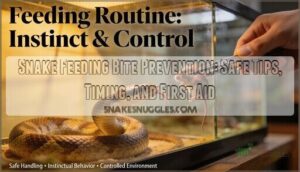
Most snake bites happen not from aggression, but from a case of mistaken identity. Your hand smells like prey, moves like prey, and enters the enclosure at feeding time—so your snake treats it like prey. It’s nothing personal. It’s millions of years of hardwired instinct doing exactly what it was designed to do.
The good news: once you understand what triggers a feeding bite, preventing one becomes straightforward. Snake feeding bite prevention isn’t about luck or quick reflexes—it’s about building habits that work with your snake’s instincts instead of against them.
Table Of Contents
- Key Takeaways
- Why Snakes Bite During Feeding
- Safe Feeding Techniques for Snake Owners
- Handling and Timing to Prevent Bites
- Creating a Bite-Free Feeding Environment
- What to Do if a Feeding Bite Occurs
- Frequently Asked Questions (FAQs)
- How to prevent snakes from biting you?
- How did Native Americans deal with rattlesnake bites?
- What are the four preventive measures of snake bite?
- What repels snakes immediately?
- Can hatchlings be more bite-prone than adults?
- Does feeding frequency affect a snakes aggression?
- How does snake species influence feeding bite risk?
- Should feeding routines change during shedding season?
- Do scented gloves increase the risk of bites?
- Conclusion
Key Takeaways
- Most feeding bites happen because your hand smells, moves, or appears at the wrong time — not because your snake is aggressive.
- Using long tongs (25–40 inches), feeding frozen-thawed prey, and sizing meals to 10–15% of your snake’s body weight removes the most common bite triggers.
- Never handle your snake on feeding day, and always wait at least 48 hours after a meal before picking it up — skipping this window risks regurgitation and real health damage.
- If a bite does happen, wash the wound with soap and running water for three to five minutes, watch for spreading redness or swelling, and then fix whatever habit caused it.
Why Snakes Bite During Feeding
Most feeding bites aren’t random — they follow a clear pattern once you know what to look for.
Once you spot those patterns, it gets a lot easier to avoid common snake feeding mistakes before they happen.
Your snake isn’t being aggressive; it’s just doing exactly what evolution built it to do.
Understanding the three main reasons bites happen during feeding puts you in a much better position to prevent them.
Understanding Food Response Bites
A food response bite isn’t aggression — it’s pure instinct. Your snake’s tongue is constantly flicking, pulling in chemical scents and stacking those snake sensory cues with heat detection and movement.
When feeding behavior patterns align — your hand smells like a rodent, moves quickly — predator instincts kick in automatically.
Understanding these food response triggers is your first real bite prevention strategy. Learning about aggressive behavior after feeding can provide additional insight into preventing bites.
Snake Instincts and Feeding Behavior
Your snake isn’t making decisions when it strikes — it’s running a program. Prey Detection kicks in the moment scent, heat, and movement line up. That’s the feeding cue your snake has been hardwired to follow.
When scent, heat, and movement align, your snake isn’t choosing to strike — it’s simply running the program evolution wrote
Snake appetite is tied directly to energy balance — juveniles eat every 5–7 days, adults every 1–4 weeks. Hunting strategies stay consistent regardless of what’s in front of them.
Feeding intervals and hunger can be influenced by seasonal changes and temperature.
Recognizing Stress and Defensive Triggers
Instinct drives the bite trigger — but stress pulls the trigger. Watch for stress signals like rapid side breathing, tail vibrating, or that tight S-curve in the neck. Those defensive postures mean back off now.
Environmental triggers matter too: too much glass exposure, weak hides, loud vibrations. Strong snake care means reading that body language before your hand ever enters the enclosure.
If you notice wheezing or labored breathing, snake respiratory infection symptoms and care can help you figure out whether stress has already taken a toll on their health.
Safe Feeding Techniques for Snake Owners
The good news is that most feeding bites are completely preventable with the right approach.
A few simple techniques go a long way toward keeping both you and your snake safe during mealtime. Here’s what every snake owner should have in their feeding routine.
Using Tongs and Feeding Tools
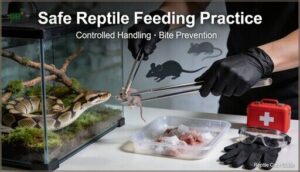
Tong safety is your first real line of defense. A good pair of feeding tongs — ideally 25 to 40 inches long — keeps your hand well outside a snake’s strike zone.
Hold the prey mid-body, wiggle it slowly, and let your snake come to it. After it bites, release gently. No tug-of-war.
Clean your tongs after every feeding session — Salmonella is real.
Choosing Frozen Vs. Live Prey
Frozen prey wins on nearly every front. It removes the bite-back risk — live rodents have been known to chew through a snake’s spine when left unattended.
Frozen benefits extend to feeding safety, snake nutrition, and humane options too, since reputable suppliers flash-freeze prey quickly and cleanly. For consistent snake care and smart prey selection, frozen thawed is simply the safer, more practical choice for snake feeding.
Prey Size and Preparation Tips
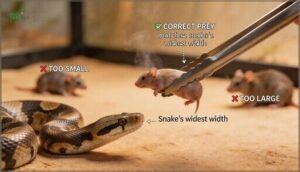
Size matters more than most new keepers realize. A solid rule is to match prey width to the widest part of your snake’s body, and keep the feeding ratio around 10–15% of its body weight per meal.
Thaw frozen prey slowly in lukewarm water, then warm it to 95–100°F before offering. For picky eaters, light scenting options like chicken broth can trigger a strong feeding response.
Handling and Timing to Prevent Bites
Timing matters more than most snake owners realize.
When and how you handle your snake around feeding time can be the difference between a calm interaction and a defensive bite.
Here are two simple rules that make a real difference.
Avoiding Handling on Feeding Days
Feeding day is the one day you keep your hands out of the enclosure — full stop. Your snake’s brain is locked onto one thing: food. Any movement nearby reads as prey. That’s not aggression; it’s pure instinct. Bite Risk Reduction starts with Solid Feeding Day Rules and clear Handling Schedules.
- Mark feeding days on a calendar as “no handling” to support Snake Stress Management
- Use long tongs for Enclosure Access Control — keep your hands out entirely
- Tell everyone in the home: snake feeding means no exceptions to handling safety
- Watch for a coiled, tense posture — key snake behavior that signals peak food drive
- Consistent snake care routines improve snake health and reduce testy, unpredictable responses over time
Waiting After Feeding Before Handling
Your snake just ate — now leave it alone. Most snakes need 48 hours of quiet to digest without stress. Skip that window and you’re risking regurgitation, which damages their esophagus and sets back snake health substantially.
Larger species may need 72 hours. Build this buffer into your feeding schedules, and handling safety becomes almost automatic. Digestion time isn’t optional; it’s snake care basics.
Creating a Bite-Free Feeding Environment
The way you set up your snake’s feeding space matters more than most people realize.
A few simple adjustments can make the whole process calmer and safer for both of you.
Here’s what to focus on.
Approaching The Enclosure Safely
How you open that enclosure matters more than most keepers realize. Approach from the side — never straight on — and crack the door just a few centimeters first to check head position.
Safe entry starts before your hand even crosses the threshold. Use the door frame as a visual barrier, keep your face back an arm’s length, and move smoothly.
Minimizing Distractions and Stressors
Your snake reads the whole room — not just the prey in your tongs. Calming environments and noise minimization make a real difference in reptile behavior during meals.
Here’s what stress reduction actually looks like in practice:
- Quiet the room 15–30 minutes before feeding
- Use visual cues like a feeding-specific tub
- Keep pets out of sight
- Wash hands with unscented soap for scent control
- Dim sudden light changes before offering prey
Proper Enclosure Setup and Maintenance
The enclosure itself does a lot of the heavy lifting for snake feeding safety. Good enclosure design — front-opening doors, secure access locks, proper thermal gradients — sets the stage before you ever pick up the tongs.
Pair that with smart substrate choice and consistent maintenance schedules, and you’re removing most friction points that lead to stress-triggered bites. Solid reptile husbandry and thoughtful enclosure management make every feeding calmer by default.
What to Do if a Feeding Bite Occurs
Even careful snake owners get bitten sometimes — it happens fast, and it’s not always your fault.
What matters most is knowing exactly what to do in the next few minutes.
Here’s what to focus on right away.
Immediate First Aid Steps
First, move your hand out of strike range and calmly secure your snake before anything else. Then shift into bite assessment mode.
Wash the wound with soap and running water for at least three to five minutes — that’s your most important wound cleaning step. Pat it dry, apply antibiotic ointment, and cover it. Check it daily for redness, swelling, or warmth.
When to Seek Veterinary or Medical Help
Most pet snakebites don’t need an ER visit — but some do. Watch closely after first aid.
Infection warning signs like spreading redness, warmth, or pus over the next day or two mean you need a doctor. Any venomous bite symptoms — swelling, dizziness, trouble breathing — are medical emergency signs.
Call 911 immediately. Even a nonvenomous bite warrants a doctor visit, since antibiotic treatment options may be needed.
Reducing Risk of Future Feeding Bites
Getting bitten once is a lesson. Getting bitten twice means something in your feeding routine needs fixing.
Review your snake behavior patterns — is your snake striking before you’ve even offered food? Start separating handling tips from feeding days completely, use tongs every single time, and wash your hands before opening the enclosure. Small safety measures like these make snake feeding safety second nature.
Frequently Asked Questions (FAQs)
How to prevent snakes from biting you?
Understanding snake behavior is your first line of defense. Stay calm around snakes, avoid sudden movements, and never handle venomous species without proper training.
Smart snake handling and consistent bite prevention habits keep both you and your reptile safe.
How did Native Americans deal with rattlesnake bites?
Long before modern antivenoms, tribal medicine leaned on rattlesnake master root, tobacco poultices, and snake spirits rituals.
Cherokee healers even avoided saying “snakebite,” using cultural taboos to show respect — and stay safe.
What are the four preventive measures of snake bite?
Four key snakebite prevention measures include keeping a safe distance from venomous species, wearing protective gear, staying on clear trails, and knowing emergency response steps — simple outdoor safety protocols that dramatically cut your bite risk.
What repels snakes immediately?
Strong scents like clove oil and cinnamon repel snakes almost instantly by irritating their Jacobson’s organ. Vibrating stakes and predator cues also trigger quick retreat, making them reliable first-response tools.
Can hatchlings be more bite-prone than adults?
Yes — hatchlings are often more bite-prone. Their feeding response is sharp, their routine is still forming, and they haven’t learned that your hand isn’t prey.
Growth patterns and hatchling behavior make this phase temporary but real.
Does feeding frequency affect a snakes aggression?
Feeding frequency absolutely shapes snake behavior. Feed too often, and your snake stays locked in food mode — always keyed up, striking at movement.
A steady, species-appropriate feeding schedule keeps things calmer between meals.
How does snake species influence feeding bite risk?
Not all snake species are built the same. Species traits like head shape, dentition, and feeding styles directly shape bite severity and risk factors — so knowing your snake matters.
Should feeding routines change during shedding season?
Absolutely. During the shedding cycle, your snake’s appetite naturally drops.
Simple feeding adjustments — like skipping a scheduled meal or switching prey selection to frozen-thawed — support snake nutrition while cutting stress reduction risks substantially.
Do scented gloves increase the risk of bites?
Scented gloves absolutely raise your snake bite risk. If your gloves smell like prey, your snake’s nose won’t care that your hand isn’t food.
Neutral gloves keep feeding safety tips simple and bites rare.
Conclusion
Every bite that doesn’t happen is the result of a decision you made before you ever opened the enclosure. The right tools, the right timing, the right habits—they add up.
Snake feeding bite prevention isn’t a single trick. It’s a routine that becomes second nature, the same way your snake’s instincts are second nature to it. Respect how your snake is wired, build your approach around that, and most bites simply stop being a possibility.