This site is supported by our readers. We may earn a commission, at no cost to you, if you purchase through links.
A six-foot python slides across a concrete floor, muscles coiled with power. Without the right grip, one wrong move can turn calm control into chaos. Snake handling isn’t about bravado—it’s about precision, equipment, and respect for an animal that doesn’t forgive mistakes.
The right tools—hooks, tongs, gloves, and protective gear—extend your reach and cut the risk. Whether you’re relocating a venomous viper or feeding a reluctant boa, every piece of equipment has its role.
Knowing what tools you need for snake handling means more than safety—it’s what separates confident control from dangerous chance.
Table Of Contents
- Key Takeaways
- Essential Tools for Safe Snake Handling
- Choosing The Right Equipment for Your Snake
- Top 5 Snake Handling Tools to Consider
- Additional Gear for Handling, Transport, and Emergencies
- Frequently Asked Questions (FAQs)
- What equipment is used to handle snakes?
- Is snake handling illegal?
- How to handle snakes for beginners?
- How should I prepare a workspace for snake handling?
- What are the best cleaning tools for snake gear?
- How do I safely release a relocated snake?
- How can beginners practice handling skills safely at home?
- Conclusion
Key Takeaways
- Safe snake handling depends on using proper tools like hooks, tongs, gloves, boots, and protective eyewear.
- Each tool serves a specific role—hooks for distance, tongs for control, gloves and boots for bite prevention.
- Equipment must be matched to the snake’s size and temperament to maintain calm and control.
- Emergency readiness, including first aid kits and secure transport gear, is as vital as the handling tools themselves.
Essential Tools for Safe Snake Handling
Handling snakes safely starts with having the right tools in your hands. Each piece of gear adds a layer of protection and control when working up close.
For a full breakdown of gear essentials and setup tips, the snake enclosure safety guide offers detailed advice for safer handling.
Here are the essentials every handler should have before making contact.
Snake Hooks for Maintaining Safe Distance

Snake hooks are your primary distance control tools, not fashion accessories. Fixed hooks around 36–40 inches keep you outside many strike zones, while telescoping models that reach 57 inches help with defensive or possibly venomous snakes.
Choose stainless steel hooks with rounded U-shaped heads, pair them with solid protective gear, and practice slow, deliberate Safe Approach Strategies and Snake Handling Techniques for real Venomous Snake Safety and Protection. Before any hook work, always wash your hands to prevent disease transfer during handling.
- Hook Safety Tips: keep the snake’s mid-body on the hook, not near the head.
- Distance Control Methods: aim for roughly 1.5 meters between you and the animal.
- Hook Material Selection: favor stainless steel hooks with lightweight alloy shafts.
- Snake Handling Safety Equipment: always combine Snake Hooks with gloves, boots, and eye protection, not just Snake Tongs.
Snake Tongs for Secure Gripping
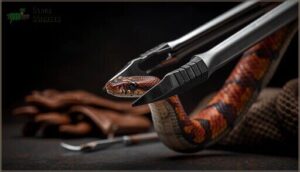
When your hook work isn’t enough, a pair of Snake Tongs provides precise control. Aircraft-grade aluminum is the preferred Tong Material—strong, light, and reliable. Look for wide, rubber-coated jaws for safe Pressure Control, supported by a smooth Grip Mechanism and locking Safety Features.
Together, these Snake Handling Tools complement your Protective Gear like professional-grade Snake Handling Equipment should. Before using them, review the to guarantee proper handling and minimize risk.
Puncture-resistant Animal Handling Gloves

Once your Snake Hooks and tongs are sorted, you need real Hand Protection. Puncture-Resistant Gloves sit between fang and skin, not between you and control. Choose Glove Materials like top-grain leather over Kevlar or SuperFabric for Bite Resistance, Venom Protection, and Snake Safety, then stay disciplined about Glove Maintenance as part of your Snake Handling Safety Equipment, right alongside your Protective Eyewear.
- Use full-coverage gauntlet gloves for forearm protection.
- Pick snug, flexible gloves so you keep fine control.
- Prioritize multi-layer designs for higher Bite Resistance.
- Clean and disinfect after sessions to avoid contamination.
- Replace worn gloves quickly; never trust damaged gear.
Sturdy Leather Boots and Protective Clothing

Once your hands are covered with Puncture-Resistant Gloves, protect your lower half just as seriously. Sturdy leather boots anchor your system, so think Boot Materials, Leather Thickness, and coverage, not fashion. Most venomous bites land below the knee, so pair tall leather with Snake Gaiters, Protective Pants, and other Protective Clothing that emphasize Fabric Resistance over comfort. Thick Gloves, Snake Hooks, and even Protective Eyewear all work better when your legs aren’t the weak link.
| Gear Type | Key Focus | Field Note |
|---|---|---|
| Leather Boots | Leather Thickness, height | Treat as last line, never first strategy. |
| Snake Gaiters | Fabric Resistance layers | Wrap from boot top toward knee for overlap. |
| Protective Pants | Dense weave, snug fit | Denim or canvas slows fangs and venom. |
Protective Eyewear for Eye Safety

Your eyes need the same discipline as your hands and boots. Choose Protective Eyewear with polycarbonate or Trivex Lens Materials that pass serious Impact Testing, and treat them as non‑negotiable Eye Protection against Venomous Snakes and flying tools in your Snake Handling Safety Equipment.
For more guidance on how to keep yourself calm and secure while managing large snakes, check out these professional boa constrictor handling techniques.
For spitting species, layer sealed Venom Shields with indirect‑vent, Fog Resistance goggles to stay clear‑sighted and inside your Safety Protocols for real‑world Snake Handling and Safety.
Choosing The Right Equipment for Your Snake
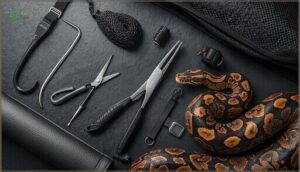
Not every snake responds the same way to handling gear, so choosing tools that match your animal’s size and temperament matters. The right setup keeps both you and the snake calm, reducing stress and bite risk.
Here’s how to select equipment that fits your needs before you handle your next reptile.
Matching Tools to Snake Species and Size
Think of Snake Size Considerations as your starting map, not an afterthought. You match Snake Hooks, Snake Tongs, tubes, and bags to Species Specific Tools, girth, and length, then you adjust Handling Technique Variations and Equipment Calibration Methods to keep control without crushing or dropping. Use Tool Material Selection, PunctureResistant Gloves, Protective Eyewear, and well-fitted Snake Handling Equipment every single time.
- Small neonates under 1 cm: short neo hooks, small tubes, narrow jaws.
- Medium snakes to about 6 feet: 14–24 inch hooks, mid-width jaws, standard buckets.
- Giant constrictors over 12 feet: 36–52 inch hooks, wide padded jaws, 70-liter containers.
Considerations for Venomous Vs. Non-venomous Snakes
Two things matter here: Venom Risk and honest Species Identification. With Venomous Snakes, you treat every move like it can cost you a limb, so you lean on Snake Hooks, tubes, and strict Handling Protocols backed by real Emergency Response plans.
For calmer non-venomous work, you still use Snake Handling Safety Equipment, Puncture-Resistant Gloves, and Protective Eyewear, but your margin for error is wider.
Selecting Appropriate Hook and Tong Lengths
Hook Size Selection isn’t guesswork; it’s your first real layer of control. For small juveniles, a 24‑inch Snake Hook keeps Reach And Precision high without sagging, while mid‑length 36–40 inch hooks suit most adult colubrids and vipers.
Longer hooks or 1.5 m Snake Tongs extend bite distance, but fatigue and shaky control can ruin Safe Handling Techniques. So you match Tong Length Considerations to your strength, terrain, and typical Snake Control Methods.
Use shorter Snake Handling Tools for tight enclosures, longer ones for field removals, and always pair them with solid Protective Gear when Handling Snakes.
Importance of Ergonomic and Non-slip Handles
A steady hand starts with a steady grip. Ergonomic Design keeps your wrist neutral and your focus sharp, while textured Handle Materials like rubber or foam improve Grip Security in rain or heat.
These Safety Features turn Snake Hooks and Tongs into extensions of your control, increasing Control Precision and confidence when Handling Snakes with proper Protective Gear.
Top 5 Snake Handling Tools to Consider
If you’re working with snakes, the right tools aren’t optional—they’re essential. Each piece of gear fulfills a specific purpose, whether you’re lifting, guiding, or checking temperature.
Here are five reliable tools that make safe handling far more controlled and predictable.
1. Stainless Steel Snake Hook Tool
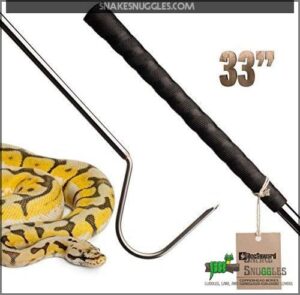
You want a hook that feels like an extension of your hand, not a gamble with your safety. A stainless steel snake hook gives you that control, combining an aircraft‑grade 9/32 inch hook with a lightweight shaft so you can move snakes up to around 10 pounds without flexing or bending.
The U‑shaped tip, about 1 ¾ inches wide, cradles the body securely, while a golf‑club style or rubberized grip keeps your hand steady during precise lifts and cage work.
| Best For | Keepers who want a strong, well-balanced hook for safe and controlled handling of small to medium snakes and lizards. |
|---|---|
| Material | Copper & Stainless Steel |
| Primary Color | Black/Silver |
| Safe Handling | Yes |
| Reptile Use | Snakes & Lizards |
| Grip Design | Rubber grip handle |
| Portability | Fixed 33 inches |
| Additional Features |
|
- Lightweight copper ferrule and stainless steel build offer durability without bulk.
- Secure rubber grip gives confidence and control during handling.
- Excellent craftsmanship makes it both reliable and visually appealing.
- Fixed 33-inch length limits reach for larger enclosures.
- Not telescoping, so less adaptable for varied setups.
- May not handle very large or aggressive snakes safely.
2. Zoo Med Snake Hook Tool
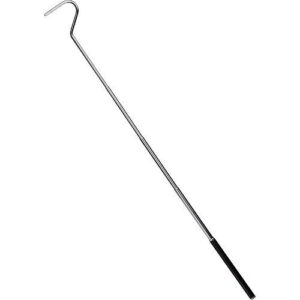
Not every job calls for heavy-duty gear. The Zoo Med Deluxe Collapsible Snake Hook is built for smaller species and everyday terrarium work, extending from 7.25 inches to a full 26 inches with a simple telescoping mechanism.
That range gives you enough buffer when lifting nervous animals or shifting cage furniture without crowding the enclosure. The easy-grip handle stays secure even with damp hands.
Compact enough to pocket, it’s a smart starter tool for any keeper working with small, non-venomous snakes.
| Best For | Beginners and reptile keepers who need a lightweight, portable hook for handling small, non-venomous snakes. |
|---|---|
| Material | Rubber |
| Primary Color | Black |
| Safe Handling | Yes |
| Reptile Use | Small Snakes |
| Grip Design | Easy grip handle |
| Portability | Collapsible 7-26 inches |
| Additional Features |
|
- Adjustable length from 7.25″ to 26″ gives good reach in tight spaces.
- Collapsible design makes it easy to pack and store.
- Comfortable grip handle offers steady control.
- Too light for large or strong snakes.
- Not ideal for handling venomous species.
- Can bend or wear out with heavy use.
3. Vorcool Stainless Steel Feeding Tongs
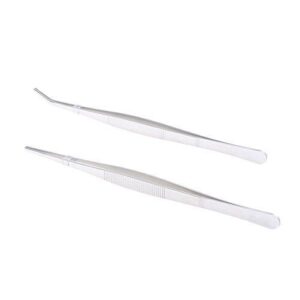
After working with lighter hooks, you’ll appreciate the control of the Vorcool Stainless Steel Feeding Tongs. Each set includes one straight and one curved tong, both 25 cm long. That length gives enough space to feed safely without losing precision.
The stainless steel build is rust-resistant and easy to sterilize between feeds. Serrated tips grip prey firmly, while ribbed grips stay secure when wet. Simple, sturdy, and reliable—these tongs make feeding cleaner, safer, and more predictable every time.
| Best For | Pet owners, hobbyists, and reptile keepers who need precise, easy-to-clean tools for feeding or delicate handling. |
|---|---|
| Material | Stainless Steel |
| Primary Color | Silver |
| Safe Handling | Yes |
| Reptile Use | Snakes & Lizards |
| Grip Design | Pincer grip |
| Portability | Fixed 25cm pair |
| Additional Features |
|
- Durable stainless steel that resists rust and is easy to sterilize.
- Comes with both straight and curved tongs for flexibility.
- Serrated tips provide strong grip and steady control.
- Metal can feel light and less solid than higher-end models.
- Some units may have minor finish imperfections.
- Limited 25cm length may not fit all reach needs.
4. IcIclover Snake Grabber Tool
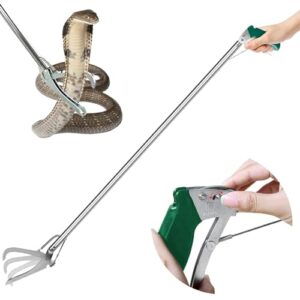
When you need more reach and control, the IcIclover Snake Grabber Tool stands out. Its 47-inch stainless steel shaft keeps your hands safely away, while the smooth, wide jaw grips without harming. The auto-lock feature lets you secure a snake fast, minimizing escape risk.
For fieldwork, the pistol grip handle feels natural, even with gloves. If you’re handling venomous species or relocating snakes from tight spaces, this tool’s sturdy build and humane design give you the confidence to act safely.
| Best For | People who need a safe, extended-reach tool for catching or relocating snakes without harming them. |
|---|---|
| Material | Stainless Steel |
| Primary Color | Silver |
| Safe Handling | Yes |
| Reptile Use | Snakes |
| Grip Design | Pistol grip handle |
| Portability | Fixed 47 inches |
| Additional Features |
|
- Long 47-inch shaft keeps hands at a safe distance.
- Smooth, wide jaw provides a firm grip with minimal snake injury risk.
- Durable stainless steel build with an easy auto-lock feature.
- Slightly heavy and harder to steady with one hand when extended.
- Handle may feel bulky for smaller hands.
- Locking mechanism can loosen with frequent use and may need tightening.
5. Etekcity Digital Infrared Thermometer Gun
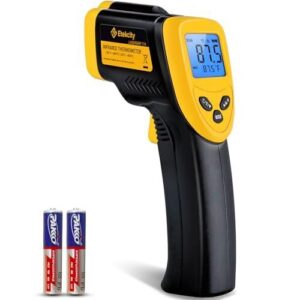
After you’ve secured the snake, you still have to manage its environment. The Etekcity Digital Infrared Thermometer Gun lets you check basking spots, hides, and cool ends without opening the enclosure or risking a bite.
With a 12:1 distance-to-spot ratio and a built-in laser, you can measure surface temperatures precisely from outside the glass. The quick 0.5-second response and backlit LCD make it easy to spot dangerous hot spots or cold patches, so you keep your snake safe and stress-free.
| Best For | Reptile owners, DIYers, and home users who need quick, non-contact surface temperature checks for safety and accuracy. |
|---|---|
| Material | Plastic & Rubber |
| Primary Color | Black/Red |
| Safe Handling | Yes |
| Reptile Use | Environment Monitoring |
| Grip Design | Rubber grip body |
| Portability | Handheld compact |
| Additional Features |
|
- Fast 0.5-second readings with clear backlit LCD display.
- Built-in laser and 12:1 distance-to-spot ratio for precise targeting.
- Versatile for cooking, car maintenance, or pet enclosures.
- Not suitable for measuring body temperature.
- Fixed emissivity may limit accuracy on certain materials.
- Rubber grip can wear down with heavy use.
Additional Gear for Handling, Transport, and Emergencies
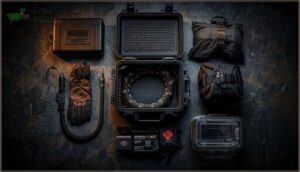
Beyond the basic tools, there’s gear that keeps both you and the snake safe once handling begins. These items help with controlled transport, secure containment, and fast response when things go wrong. Here’s what every serious handler should have ready.
Snake Handling Bags and Secure Containers
Think of snake bags and containers as your mobile snake enclosures, not just sacks and boxes. Choose breathable cotton or canvas Snake Bags with solid Bag Materials, Proper Ventilation, and clearly labeled Secure Closures, then back them up with Rigid Containers that clip tight and resist crushing.
Build in strict Hygiene: disinfect bags and hard tubs after each trip to protect Reptile Safety and the rest of your Snake Handling Equipment and Gear, plus your Protective Gear.
Restraining Tubes for Safe Inspection
Restraining tubes are one of the most underused pieces of Snake Handling Safety Equipment — and that’s a mistake. Clear acrylic or polycarbonate tubes, matched closely to your snake’s body diameter, let you perform inspections without gripping the neck directly. That’s smart Snake Restraint Methods in practice.
Clean them with chlorhexidine after each use. Tube Maintenance Best practices keep bacteria out and clarity intact.
Dedicated Snake Bite First Aid Kits
Every snake handler needs a dedicated first aid kit within arm’s reach. Look for kits built around pressure bandages with tension indicators, clear wound care supplies, and printed first aid guides specific to snake bites.
Modern emergency kits skip venom extraction pumps — medical consensus has moved past that. Pack yours with antiseptic wipes, a splint, and laminated instructions. That’s real emergency response and first aid.
Field Transport and Emergency Preparedness
You don’t just move snakes, you move risk, so treat Snake Transport like any other high‑stakes field operation built on Vehicle Safety and clear Field Protocols. You secure rigid, ventilated containers in the rear cargo area, keep labeled bags with venomous snakes away from passengers, and back all of it with an Emergency Kits plan that links Snake Hooks, Snake Tongs, Protective Eyewear, and a bite-focused First Aid Kit into one coherent Emergency Response and Rescue Planning system.
- Secure all transport boxes low in the vehicle so sudden braking doesn’t launch a venomous snake forward toward you.
- Double-bag field captures, then lock bags inside rigid tubs for two physical barriers between the animal and people.
- Keep printed route notes to the nearest antivenom-capable hospital next to your First Aid Kit, not buried in your phone.
- After each trip, disinfect any container that touched a snake, then log the move in your field notebook as part of your ongoing Field Protocols and Rescue Planning discipline.
Frequently Asked Questions (FAQs)
What equipment is used to handle snakes?
Silent, steady Snake Hooks and Snake Tongs top your basic Snake Handling Gear, while a Snake Grabber, Protective Eyewear, layered Protective Gear, clear Handling Techniques, solid Safety Equipment, and compact Emergency Kits keep you in control.
Is snake handling illegal?
It depends on where you’re from. Most U.S. states restrict venomous snake laws around religious and public handling. West Virginia remains the exception. Always check local legal status before working with venomous snakes.
How to handle snakes for beginners?
Slow down. One wrong move and the snake strikes. Use a hook, stay calm, support its body, avoid the head, and keep sessions short — five minutes max.
How should I prepare a workspace for snake handling?
You prepare a safe snake handling workspace by using a Dedicated Workspace with Safe Flooring, clear walkways, and sealed gaps for Escape Prevention.
Ensure bright lighting, strong Hygiene Practices, and Emergency Planning.
Equip the area with Snake Handling Safety Equipment, Protective Clothing, Snake Hooks, Snake Tongs, and a visible First Aid Kit.
What are the best cleaning tools for snake gear?
Like dial-up in a fiber world, dirty gear quietly sabotages control.
For snake cleaning, lean on reptile-safe Disinfectant Solutions in labeled Spray Bottles, stiff Scrub Brushes, Microfiber Cloths, Protective Gloves, and reserved towels for Snake Hooks, Snake Tongs, and Protective Clothing.
How do I safely release a relocated snake?
To safely release a relocated snake, choose a Release Site Selection that matches its original habitat, and follow Release Distance Guidelines of roughly a quarter- to half-mile.
Set the container down facing cover, open it, step back, and let the snake exit on its own using calm Handling Techniques, Snake Hooks, or Snake Tongs only if needed, while wearing Protective Gear.
Conduct brief Post Release Monitoring from a distance during appropriate Snake Release Timing in mild, calm weather to complete ethical Snake Removal with minimal stress.
How can beginners practice handling skills safely at home?
You build Safe Practice Routines by starting in a Calm Environment Setup: a closed, clutter-free room with good light, blocked gaps, and no pets or kids.
Use Snake Handling Basics and Gentle Touch Techniques, keeping sessions short and ending before either of you feels stressed.
Conclusion
Use the hook for distance, use the tongs for control, use the gloves for protection. Each tool you choose shapes the outcome of every encounter. So ask yourself: what tools do you need for snake handling right now?
Think like a technician, move like a handler, prepare like a medic. Check gear before contact, after contact, and before storage.
Master the tools, and the snake stops being a guess. That means control, calm, and certainty.
- https://www.africansnakebiteinstitute.com/articles/guide_to_buying_snake_handling_equipment/
- https://www.acornnaturalists.com/products/animal-worlds/amphibians-reptiles/reptile-snake-hooks-handling-equipment.html
- https://www.reptiles.swelluk.com/reptile-supplies/reptile-care-equipment/reptile-handling-equipment