This site is supported by our readers. We may earn a commission, at no cost to you, if you purchase through links.

A boa constrictor without a proper hide isn’t just uncomfortable—it’s running on stress hormones that suppress its immune system and throw off its feeding response.
Keepers often chase humidity levels and feeding schedules before realizing the enclosure’s missing something far more fundamental: a place where the snake feels genuinely hidden.
Boas are ambush predators by design, hardwired to spend most of their time tucked away from open space.
When that option disappears, everything else in your husbandry starts working against you.
The right hide for boa constrictors does more than fill floor space—it anchors your setup’s temperature gradient, supports clean sheds, and gives your animal the behavioral baseline it needs to thrive.
Table Of Contents
Key Takeaways
- A boa without a proper hide stays locked in chronic stress, which suppresses its immune system and disrupts feeding—making hides a health necessity, not just a comfort perk.
- Your hide placement directly controls your temperature gradient: warm side at 86–90°F for digestion, cool side at 75–80°F for rest, and your boa does the rest on its own.
- Size and material aren’t interchangeable—your snake needs a snug fit (not just shelter), and non-porous resin or cork bark outperforms generic options for hygiene and humidity control.
- Clean hides on a real schedule—spot-clean daily, swap moss every 2–4 weeks, and replace plastic hides every 12–18 months—because a neglected hide quietly undoes everything else you’re doing right.
Why Boa Constrictors Need Quality Hides
A boa without proper hide isn’t just comfortable — it’s stressed, and that stress quietly chips away at its health over time. Quality hides do more than give your snake a place to hide; they regulate body temperature, support clean sheds, and keep your boa feeling secure enough to actually thrive.
Choosing the right fit matters too — snake hides sized for smaller boas make all the difference in helping your snake feel truly snug, not just sheltered.
A hideless boa isn’t just uncomfortable — it’s slowly stressed into poor health
Here’s what you need to know before choosing one.
Stress Reduction and Security Benefits
Without a proper hide, a boa constrictor stays in survival mode around the clock.
Reptile hide boxes solve this directly — they trigger calm behavioral indicators like steady tongue‑flicking and relaxed coiling, while naturally reducing defensive response and stress hormone levels.
An extra large hide box facilitates security‑driven feeding and psychological enrichment, making it a cornerstone of effective boa constrictor care.
Owners should also note the boa’s long lifespan of boas, which underscores the importance of durable, well‑maintained hides.
Role in Thermoregulation and Health
Security is only half the story.
Your boa’s hides are also where thermoregulation actually happens.
A boa shuttling between an 88–90°F warm hide and a 75–80°F cool hide isn’t just comfortable — it’s actively supporting metabolic rate optimization, immune function support, and core temperature maintenance without burning unnecessary energy.
- Warm hides drive digestion post-feeding at consistent 85–90°F
- Cool hides prevent dehydration and support hydration balance during rest
- Dual-hide setups promote reptile health and wellness year-round
A thermostat-controlled heat source(https://www.swiftailvet.com/exotic-pet-care-sheets/boa-constrictor) is essential for maintaining proper temperature gradients.
Impact on Shedding and Humidity Control
Shedding is where humidity control becomes non‑negotiable. When your boa constrictor’s eyes cloud over, that’s your cue to boost enclosure humidity to 80–90% using moss‑lined snake hides.
Sphagnum moss excels at moisture retention, softening old skin for clean, one‑piece sheds. Monitor humidity regularly, balance airflow optimization to prevent mold, and your reptile enclosure will support healthy shed timing every cycle.
Key Features of Boa Constrictor Hides
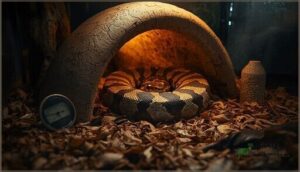
Not every hide works for a boa — size, material, and airflow all matter more than most keepers realize.
Before picking one off a shelf, it helps to know exactly what separates a good hide from a stressful one. Here are the key features to look for.
Ideal Hide Size and Dimensions
Size is everything regarding reptile hides.
A hide that’s too big defeats the purpose—snakes feel safest when snug, so check out this guide on choosing the right snake hide size and fit before picking a plastic one.
For juvenile boa constrictors under five feet, juvenile size guidelines point to hide boxes around 12 by 8 by 4 inches internally. Adult hide measurements scale up to 15 by 15 by 7 inches for six-to-eight-foot snakes.
Apply growth scaling rules quarterly, and keep your height-to-width ratio at roughly 1.5 times the snake’s thickest point.
Safe and Durable Hide Materials
Material choice shapes how long your hides last and how safe they’re for your boa.
Cork bark and manzanita wood offer eco-friendly sourcing with natural moisture resistance, while resin and ABS plastic hide boxes deliver non-porous design that wipes clean in minutes. Verify material toxicity before purchasing — food-grade resins and reptile utility hide boxes consistently pass longevity testing without cracking or leaching.
Ventilation and Moisture Considerations
Even the best hide fails if moisture and airflow aren’t balanced properly. Poor enclosure design traps stale air, turning humid hides into mold factories fast.
- Use intentional Ventilation Hole Design — two opposing holes per hide for cross-airflow
- Practice Airflow Mist Balance — mist lightly, never soak
- Apply Moisture Retention Strategies — partial screen covers maintain 55–75% humidity
- Prioritize Mold Resistant Materials — non-porous resin wipes clean easily
- Commit to Humidity Sensor Calibration — digital hygrometers, calibrated monthly, keep readings accurate
Types of Snake Hides for Boa Constrictors
Not all hides are built the same, and the right choice depends on your boa’s size, your enclosure setup, and how much upkeep you’re willing to do. Each material and style comes with its own trade-offs worth knowing before you buy.
Here are the four main types to think about.
Plastic and Resin Hides
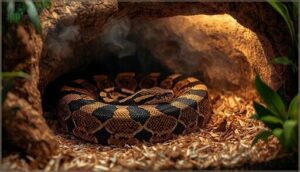
Plastic and resin hides are the go-to choice for most boa constrictor keepers, and it is easy to see why. Their non-porous materials pass durability testing easily, resisting warping and mold even in humid reptile enclosures.
Cost efficiency is strong, moisture retention inside the cavity is controllable, and aesthetic integration into naturalistic setups is smooth. Lightweight yet sturdy, they give your boa genuine security.
Wooden and Cork Bark Hides
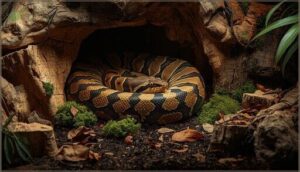
Cork bark and wooden hides bring natural texture and genuine character to reptile enclosures that plastic simply can’t match.
Cork’s moisture absorption helps regulate local humidity without soaking the substrate, and its lightweight build passes durability testing without risking injury if it shifts.
For boa constrictor keepers prioritizing aesthetic integration and naturalistic decor, these hides offer real security alongside a look that feels authentically wild.
Tunnel, Barrel, and Bioactive Hides
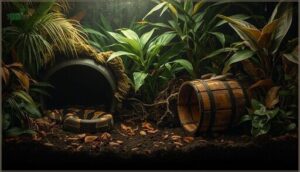
PVC tunnels (4–6 inches in diameter) take burrow simulation seriously — they create underground passages that your boa can fully disappear into.
Barrel-style resin hides add enclosure aesthetics while supporting humidity zoning between 60–70%.
Bioactive substrate setups enhance environmental enrichment further:
- Isopods aerate soil for natural mold control
- Leaf litter allows genuine microhabitat integration
- Live plants evolve with your boa constrictor care setup
DIY Hide Options
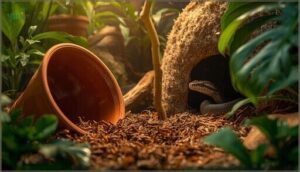
You don’t need to spend a fortune to give your boa constrictor a solid hide.
A cardboard box with a single entry hole cut to your snake’s girth works surprisingly well short-term, while a foam rock or concrete slab adds durability.
Inverted flower pots buried partway into the substrate create snug, humid retreats.
Whatever materials you choose, prioritize smooth interiors and correct enclosure placement.
Top 4 Snake Hides for Boa Constrictors
Now that you know what to look for, it’s time to put that knowledge to work.
These four hides stand out for their size, durability, and how well they meet a boa’s real needs. Here’s worth your attention.
1. Zoo Med Reptile Rock Corner Water Dish
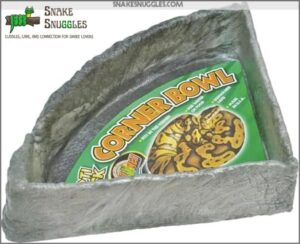
Zoo Med Reptile Rock Corner Water Dish earns its place in boa setups for reasons beyond just holding water.
The X-Large version — roughly 14 x 14 x 3.5 inches — gives adult boas enough room to fully soak, which is critical during shed cycles.
Its corner-fit design reclaims floor space, and the non-porous recycled plastic surface won’t harbor bacteria between cleanings.
You can scrub it down or run it through the dishwasher. Simple, effective, and built to last.
| Best For | Reptile owners with adult snakes or larger amphibians who need a spacious, easy-to-clean soaking dish that fits neatly in a corner of the enclosure. |
|---|---|
| Material | Plastic |
| Color | Assorted |
| Easy Clean | Yes |
| Reptile Compatible | Yes |
| Durable Build | Yes |
| Weight | 3.8 lbs |
| Additional Features |
|
- Fits snugly in corners, so it doesn’t eat up valuable floor space in the tank
- Super easy to clean — dishwasher safe and non-porous, so bacteria doesn’t build up
- Big enough for adult boas and similar-sized reptiles to fully soak during shed cycles
- The depth can make it tricky for smaller pets to reach food or water without struggle
- It’s on the larger side, so it won’t work well in compact enclosures
- Colors are assigned randomly, so what you get might not match your setup
2. Zilla Rock Lair Reptile Hide
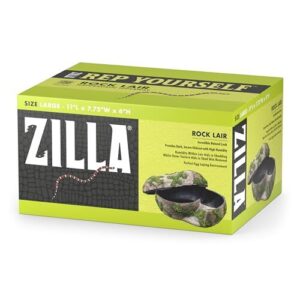
If your boa needs more than just a water dish to feel at home, the Zilla Rock Lair delivers exactly that. The large version — 11 × 7.75 × 6 inches — gives adult boas enough room to coil snugly without rattling around inside.
Its side-entry design blocks ambient light, creating a burrow‑like darkness that actually calms them. The non‑porous plastic traps interior humidity while staying simple to wipe down. That textured exterior? It pulls double duty during sheds, helping loosen sloughing skin naturally.
| Best For | Reptile owners looking for a realistic, functional hide that supports shedding and humidity needs for lizards, snakes, and geckos. |
|---|---|
| Material | Plastic |
| Color | Grey |
| Easy Clean | Yes |
| Reptile Compatible | Yes |
| Durable Build | Yes |
| Weight | 5.51 lbs |
| Additional Features |
|
- The dark, enclosed interior helps reptiles feel secure and stress-free
- Built-in humidity retention makes shedding easier and more natural
- Textured exterior actively helps remove loose skin during the shed process
- Shipping damage is a known issue — some arrive cracked or chipped
- The solid design makes it hard to check on your pet without disturbing them
- It’s on the heavier side, so rearranging your setup takes a bit more effort
3. Pangea Large Reptile Hide Box
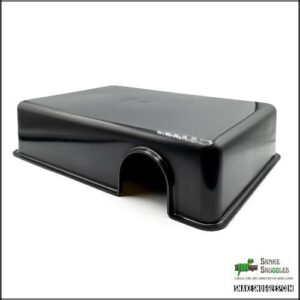
Where Zilla leans into texture and height, the Pangea Large Reptile Hide Box keeps things clean and low-profile — and that’s exactly what most boas prefer.
It measures 13.25 × 9 × 3.25 inches, fitting comfortably in 28–41 quart tubs without crowding the floor space.
The smooth ABS plastic wipes down in seconds and won’t absorb moisture or warp over time.
That offset entrance pulls your boa into a darker interior, reducing light exposure and keeping stress levels noticeably lower.
| Best For | Reptile keepers with ball pythons, boas, kingsnakes, or leopard geckos who want a simple, low-profile hide that fits standard rack setups and stays easy to clean. |
|---|---|
| Material | Plastic |
| Color | Black |
| Easy Clean | Yes |
| Reptile Compatible | Yes |
| Durable Build | Yes |
| Weight | 9.1 oz |
| Additional Features |
|
- Smooth plastic inside and out makes cleaning quick — no scrubbing, no odor buildup
- Fits most standard rack units without eating up too much floor space
- Works well for a range of popular species, not just one or two
- Might be too roomy for smaller or younger snakes under 500 grams
- You’ll want to measure your enclosure carefully before buying — it’s on the bigger side
- May need to be sectioned off temporarily until your snake grows into it
4. PUEUTU Extra Large Resin Reptile Hide Cave
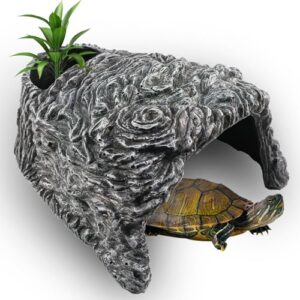
If Pangea’s minimalist design appeals to your sense of practicality, the PUEUTU Extra Large Resin Hide Cave takes a different approach — and boas respond well to it.
The realistic rock texture and gray‑brown tones blend naturally into bioactive setups, while the high‑grade resin manages humidity up to 80 percent without warping.
It accommodates temperatures between 70 and 95°F, making warm‑side placement straightforward.
The smooth interior won’t snag scales, and cleanup is simple — rinse it off or run it through the dishwasher.
| Best For | Reptile and aquatic pet owners looking for a sturdy, realistic hide that doubles as a basking platform for bearded dragons, turtles, snakes, or fish. |
|---|---|
| Material | Resin |
| Color | Gray |
| Easy Clean | Yes |
| Reptile Compatible | Yes |
| Durable Build | Yes |
| Weight | 4.8 lbs |
| Additional Features |
|
- Built from solid resin with a realistic rock look that fits right into bioactive or natural setups
- Smooth interior keeps scales safe, and cleaning is a breeze — just rinse it off and you’re done
- Works as both a hide and a basking spot, so it pulls double duty in the enclosure
- Despite the "extra-large" label, it may feel cramped for a full-grown adult turtle
- The hole in the back is a bit awkward — some pets struggle with it, and there’s a small risk of getting stuck
- Not ideal for very large or aggressive species that need more space or a more durable setup
Placement, Cleaning, and Maintenance Tips
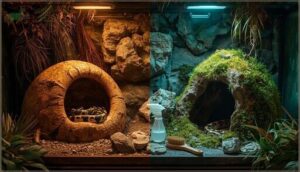
Getting the hide placement right matters just as much as choosing the right hide in the first place.
Once your boas are settled, keeping those hides clean and structurally sound becomes part of your regular routine.
Here’s what you need to know to do it right.
Strategic Hide Placement for Temperature Gradients
Placement makes or breaks your temperature gradient. For warm hide positioning, set one hide directly under the heat source where internal temps hold steady at 86–90°F — that’s where your boa will retreat after meals.
Cool hide location goes on the opposite end, targeting 75–80°F. This dual hide strategy lets your boa thermoregulate freely. Use digital probes inside both to monitor placement accuracy daily.
Cleaning Routines and Mold Prevention
Consistent cleaning prevents the bacterial buildup that turns your enclosure into a health hazard. Follow this schedule to stay ahead of mold and keep hides safe:
- Daily Spot Cleaning: Remove feces and debris immediately
- Moss Replacement Schedule: Swap sphagnum every 2–4 weeks
- Disinfectant Dilution: Use F10SC or 3% hydrogen peroxide, rinse thoroughly
- Drying Time Guidelines: Air dry 24 hours before returning hides
Proper Airflow Management — cross ventilation with low intake and high exhaust — keeps humidity between 55–75%, protecting shedding health without fostering mold growth.
Monitoring and Replacing Worn Hides
Tracking your boa’s behavior tells you more than any visual inspection alone.
A solid monitoring routine combines a Crack Detection Schedule, Sharp Edge Inspection, and Stability Testing Protocol with Usage Pattern Logging — if your snake spends less than 50% of its time in the hide for seven straight days, something’s wrong.
Follow Replacement Timing Guidelines: plastic hides every 12–18 months, wood every 24 months.
Consistent monitoring is real Boa Constrictor Care.
Frequently Asked Questions (FAQs)
How many hides does a boa constrictor need?
Every boa constrictor needs a minimum two hides — one cool side hide and one on the warm end.
Age-based count matters too, so make growth adjustments as your snake gets bigger.
Can boas share a hide with other snakes?
No, boas shouldn’t share hides.
Boa constrictor snake behavior is naturally solitary, and hide competition triggers serious aggression risks, chronic stress, and even cannibalism dangers.
Isolation benefits each snake’s security and overall health considerably.
Do boas need hides during the day?
boa constrictors need hides during the day.
Their circadian rhythm drives daytime rest, and without visual privacy, stress spikes fast.
Hides support energy conservation, predator avoidance, and environmental enrichment around the clock.
How often should boa hides be replaced?
Replace hides every 12–18 months for adults, or every 6 months for fast-growing juveniles. Humidity, shedding frequency, and visible wear indicators like cracks or persistent odor should always drive your replacement schedule.
Can a boa outgrow its hide quickly?
Absolutely. Juvenile boa constrictors can grow 12 to 18 inches annually, meaning a snug hide that worked at six months may feel cramped within just a few shedding cycles.
Conclusion
The devil is in the details regarding snake hides for boa constrictors—and now you have the details that actually matter.
A correctly sized, well-placed hide doesn’t just give your boa somewhere to retreat; it stabilizes thermoregulation, helps clean sheds, and keeps stress hormones from quietly undermining every other aspect of your husbandry.
Choose durable materials, maintain a consistent cleaning routine, and your boa’s enclosure stops being a source of friction and starts working the way it should.