This site is supported by our readers. We may earn a commission, at no cost to you, if you purchase through links.

Snakes are the only vertebrates that basically peel themselves inside-out on a regular schedule—and most owners miss the early signs until things go wrong.
A snake entering shed isn’t sick, stressed, or uncomfortable. It’s running a precise biological program, one tied to growth rate, ambient temperature, and nutritional status. But when humidity drops too low or a feeding schedule slips, that program stalls. Understanding the adult snake shedding timeline means reading your animal’s signals before problems surface, not after the shed comes off in ragged, stubborn pieces.
Table Of Contents
Key Takeaways
- Shedding unfolds over 7–14 days in four distinct stages—pre-shed, blue phase, clear phase, and slough—and spotting early signs like dull skin and appetite loss keeps you ahead of problems.
- Humidity between 60–80% is the single biggest factor in a clean shed; let it drop and you’re almost guaranteed stuck skin, retained eye caps, or worse.
- Shedding frequency varies widely by species—garter snakes shed every 2–3 weeks while boa constrictors take 10–12 weeks—so knowing your snake’s normal rhythm is how you catch health issues early.
- Two or more incomplete sheds in a row, retained eye caps, or signs like wheezing and weight loss mean it’s time to call a reptile vet, not adjust the humidity and hope for the best.
Adult Snake Shedding Timeline Overview
Shedding isn’t a single moment — it’s a process that unfolds in predictable stages over one to two weeks. Understanding the full timeline helps you know what’s normal and when to step in.
Each stage has its own telltale signs, and this blue phase snake shedding timeline breaks down exactly what to expect from start to finish.
what to expect from start to finish.
Typical Shedding Duration
From start to finish, the shedding process usually takes 7 to 14 days for adult snakes.
Species timing matters — corn snakes often wrap up in 4 to 7 days, while ball pythons lean toward the full two weeks.
Temperature, humidity levels, age growth rate, and nutrition all affect shedding duration.
Older snakes with stable humidity and good snake health stay consistent.
Juvenile shedding frequency is about every 4‑6 weeks.
Key Stages of Shedding
The shedding timeline unfolds in four distinct stages, each driven by hormonal triggers and keratin renewal beneath the surface.
- Pre-shed: Skin dulls, behavioral shifts kick in, and your snake hides more
- Blue phase: Eyes cloud milky grey — physiological indicators of fluid buildup
- Clear phase: Eyes clear as environmental cues reset internally
- Slough: Old skin peels off, inside‑out
Watch for pre‑shedding symptoms early — humidity levels determine everything.
During shedding, snakes rub against hard objects to aid the process.
Timeline Differences by Species
Not all snakes run on the same clock. A ball python might shed every 4–6 weeks, while a large boa constrictor takes 2–3 months. Python vs Boa, Colubrid Speed, and Size Impact all shape the shedding timeline. Tropical vs Temperate origins also drive seasonal variations in shedding duration across snake species.
| Snake Type | Avg. Adult Shedding Cycle |
|---|---|
| Ball Python | Every 4–6 weeks |
| Boa Constrictor | Every 10–12 weeks |
| Corn Snake | Every 8–12 weeks |
| Garter Snake | Every 2–3 weeks |
Shedding Stages and What to Expect
Shedding doesn’t happen all at once — it unfolds in stages, each with its own signs. Knowing what to look for helps you stay ahead of problems before they start.
Here’s what each phase looks like and what your snake is going through.
Pre-Shed Signs and Behaviors

Before cloudy eyes appear, your snake sends quieter signals. Appetite loss often hits first — even strong feeders refuse prey outright.
You might also notice their colors looking washed out and scales going powdery — a full breakdown of ball python shedding warning signs can help you tell normal from concerning.
You’ll notice skin dullness, with colors looking flat and washed out.
Hiding behavior increases, and your snake stays buried for hours.
Watch for increased rubbing along décor and reduced activity overall.
These pre-shedding symptoms and behavioral changes are your early warning system.
Blue Phase Indicators

A few days into pre-shed, things shift noticeably. Your eyes go cloudy — that milky, blue-grey look signals fluid building between old and new eye caps.
Dull skin deepens. Reduced appetite and increased hiding are common.
Moisture demand rises too, so check your humidity levels.
These pre-shedding symptoms tell you blue phase has begun. Snake health depends on your attention here.
Clear Phase Changes

Watch for the clear phase — it sneaks up fast. Your snake’s eyes shift back to normal almost overnight, and that eye clarity timing signals the final countdown. Skin brightness shifts closer to normal too, though still slightly dull.
Behavioral activation picks up; feeding interest may return.
This is your cue for a humidity adjustment — top off that humid hide now.
The Actual Shedding Event
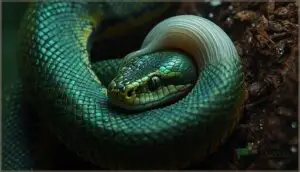
Once those eyes clear, the shedding process kicks off fast. Your snake starts rubbing its chin against rough surfaces — that’s Rubbing Initiation. Then Muscular Pushing takes over, contracting forward while old skin peels backward.
- Shedding Direction runs head to tail
- Event Timing: 30–60 minutes usually
- Skin Appearance: inside-out, single tube
- Humidity levels must stay high
- Stuck shed signals a problem
Normal Shedding Frequency for Adults
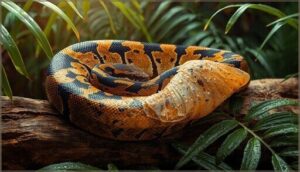
Adult snakes don’t shed on a fixed schedule — it shifts depending on the snake and its environment.
Knowing what’s normal for your specific snake helps you spot problems early.
Here’s what shedding frequency usually looks like for adults.
Average Shedding Intervals
Most healthy adult snakes shed every 2 to 4 months — roughly 3 to 6 times a year.
Temperature correlation matters here: warmer enclosures boost metabolic rate and shorten intervals. Dietary influence is real too — well-fed snakes shed more often.
Captive vs wild conditions also shift shedding frequency, since stable humidity levels and consistent feeding keep captive adults on a predictable schedule that promotes long-term reptile health and wellness.
Species-Specific Patterns
Not all snakes run on the same clock. Species shape everything — from Blue Phase Duration to Post‑Shed Skin quality.
- Ball pythons: blue phase lasts 7–10 days; clear phase 24–48 hours
- Corn snakes: faster cycle, blue phase 5–7 days
- Boa constrictors: similar to balls, 7–10 days opaque
- King snakes: shorter shedding duration, 4–6 days
- Garter snakes: quickest process, 3–5 days
Factors Affecting Shedding Duration

Not every snake sheds on the same schedule, and that’s completely normal. A few key factors shape how long the process takes for your specific snake. Here’s what actually matters.
Environmental Conditions (Humidity, Temperature)
Your enclosure’s environmental conditions are the engine behind every shed. Humidity levels between 50–70% keep skin separation smooth, while tropical species like ball pythons need 60–80%.
Temperature fluctuations over 10°F daily can derail the shedding process entirely. Watch your heat source placement and ventilation management closely.
Seasonal humidity shifts — especially in winter — quietly trigger dysecdysis before you notice anything is wrong.
Health, Nutrition, and Hydration
Beyond humidity, what your snake eats — and drinks — shapes every shed. Poor Protein Quality leads to thin, fragile skin that tears mid‑shed.
Without proper Vitamin Supplementation, eye caps stick and patches refuse to release. Water Access matters more than most keepers realize; dehydration quietly stretches the shedding process for days.
Watch for these Body Condition red flags:
- Visible spine ridges or pronounced weight loss
- Dull, patchy sheds recurring across multiple cycles
- Refusal to eat well outside normal Feeding Timing windows
Role of Genetics and Species
Genetics runs the show in ways nutrition never can. A ball python’s Lineage Shedding Genes mean it sheds every 6–10 weeks — that’s just a built‑in Genetic Metabolism Rate at work.
Colubrids like corn snakes shed far more often. Morph Shedding Variability adds another layer; some morphs carry Heritable Dysecdysis tendencies. These Evolutionary Shedding Adaptations are species‑deep — you can support them, but you can’t override them.
Corn snakes shed far more often than pythons — genetics runs deep, and no amount of husbandry can override it
Recognizing Shedding Problems
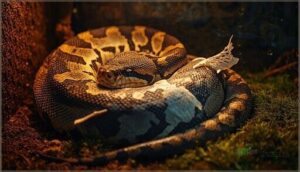
Most sheds go smoothly, but sometimes things don’t go as planned. Knowing what to watch for can save your snake from real discomfort.
Here are the key shedding problems every owner should recognize.
Prolonged or Delayed Shedding
Sometimes a shed that won’t finish is your first real warning sign. Blue Phase Extension beyond 10 days, Temperature‑Induced Delays from enclosures running below 80°F, and Nutritional Deficiency Effects from poor diet can all stall the cycle.
Infection Mimicry can look identical to delayed shedding, and a Stress‑Triggered Abort resets everything. When humidity levels drop or snake health declines, consult a reptile vet early.
Incomplete or Stuck Shed
A shed that finishes in fragments isn’t just messy — it signals something went wrong earlier. Stuck shed most often shows up as:
- Eye Cap Retention — cloudy, wrinkled spectacles that blur your snake’s vision
- Tail Ring Constriction — dry bands that cut circulation and risk tissue loss
- Belly Scale Patches — thin, papery remnants clinging after the main skin releases
Low humidity levels are usually the culprit. Fix it fast with Humidity Hide Solutions and Gentle Soaking Techniques — 15–30 minutes in lukewarm water softens stuck shed effectively. Persistent issues mean calling a reptile vet.
Warning Signs Requiring Attention
Some warning signs go beyond a rough shed — they point to something deeper.
| Warning Sign | Possible Cause | Action |
|---|---|---|
| Wheezing, open-mouth breathing | Respiratory distress | Vet visit immediately |
| Dramatic weight loss + dull skin | Poor nutrition or infection | Review diet and humidity levels |
| Skin lesions with stuck shed | Parasites or bacterial infection | Isolate and seek treatment |
Behavioral changes like refusal to eat, constant hiding, or restlessness — especially paired with temperature fluctuations — signal real trouble. Don’t wait.
How to Support Shedding Snakes

When your snake starts shedding, what you do next really matters.
The right setup makes the difference between a clean shed and a frustrating, stuck mess.
Here’s what to focus on during that window.
Maintaining Optimal Humidity
single biggest lever you control during the shedding process. For most species, target 70–80% during pre‑shedding symptoms.
Use a hygrometer placement at mid‑enclosure level — not near heat sources.
Build a humidity gradient design: drier warm side, moister cool side. Adjust your misting schedule twice daily, and fine‑tune ventilation balance to prevent mold without drying things out.
Providing Shedding Aids and Surfaces
Giving your snake the right tools makes all the difference. Think of it like setting up a good workspace — everything should be within reach.
- Add Rough Branches and cork bark for natural friction
- Place Shed Boxes lined with damp sphagnum moss inside the enclosure
- Use Spray Formulas like Zoo Med’s jojoba-based aid on stubborn patches
- Try Fabric Rubbing with a warm damp pillowcase for stuck shed
- Apply Natural Oils like coconut oil sparingly to dry areas
Hydration and Nutrition During Shed
Water is your snake’s best ally during the shedding process. Keep a clean, tip-resistant bowl available at all times — water bowl management matters more than most keepers realize.
Watch for hydration monitoring cues like wrinkled skin or chalky urates.
Hold off on large meals; feeding timing and prey size adjustment reduce digestive stress. Skip electrolyte supplementation unless a vet recommends it.
Reducing Stress and Handling
When PreShedding Symptoms appear, treat your snake like a patient in recovery. Use Quiet Handling, Gentle Support, and Minimal Disturbance, especially in Low‑Light Environments when vision is cloudy.
Build Scheduled Rest Periods into your Snake Care and Maintenance routine, adjusting Humidity Levels instead of handling. Watch Animal Behavior closely and reserve hands‑on time for essential Veterinary Care and Medicine only.
Post-Shedding Care and Observations
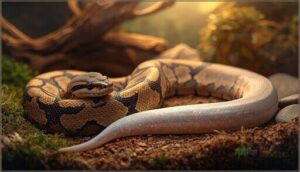
Once your snake has finished shedding, your job isn’t over yet. This is the moment to check how the shed went, make small tweaks to the enclosure, and watch for any red flags.
Next, we’ll walk through the key things to look for so you know exactly what to check and what to adjust.
Checking for Retained Skin
Think of this step as a Visual Retention Test for your snake.
Start with Eye Cap Inspection, then Tail Tip Check for dull, papery rings of shedding skin. Use Shed Skin Comparison to match length and look. Do a gentle Skin Texture Assessment.
Note past humidity levels and preShedding Symptoms; these guide snake care and maintenance, and protect snake health.
Assessing Health After Shedding
After checking for retained skin, assess Snake Health now that the Shedding Process is over.
- Eye clarity sharp; no haze or dents.
- Mouth moisture normal, lips close fully.
- Scale gloss even, patterns crisp, behavioral activity calm‑alert.
- Weight monitoring steady; no thinning spine or sagging sides.
Healthy Snakes and stable Humidity Levels reflect real Reptile Health and Wellness after each shed.
When to Seek Veterinary Help
Most shedding problems respond well to better husbandry. But some don’t.
If your snake shows persistent dysecdysis — two or more incomplete sheds in a row — call a vet.
Retained eye caps, skin infection signs, or systemic illness indicators like wheezing or weight loss signal something deeper.
Emergency respiratory distress needs immediate care.
Reptile Care and Veterinary Medicine go hand in hand for serious Snake Health concerns.
Frequently Asked Questions (FAQs)
How long does a snakes shedding process take?
For most snakes, ecdysis takes 7 to 14 days from first signs to finished shed. The actual skin removal? Just minutes. Snake species, humidity levels, and metabolic rate all influence shedding duration.
Do snakes stop shedding when fully grown?
No, fully grown snakes never stop shedding — like a river that keeps flowing, skin renewal necessity drives lifelong ecdysis. Indeterminate growth means adults still shed three to six times yearly.
Can shedding behavior indicate a snakes age?
It can hint at life stage, but not exact years.
Growth Rate Correlation matters most — frequent sheds suggest juveniles, while slower shedding frequency points to adults.
Genetic Shedding Patterns and Health Age Indicators add useful context.
Does shedding frequency change after illness or injury?
Yes, illness or injury shifts shedding frequency noticeably.
Injury-Triggered Surge speeds cycles as skin regeneration accelerates.
Illness-Induced Delay slows them.
Watch for Dysecdysis Indicators — they signal your reptile health needs attention.
How does brumation affect a snakes shedding schedule?
Brumation triggers a metabolic slowdown that spaces sheds further apart. Some snakes drop from six annual sheds to just one or two.
Expect a post‑brumation surge once warming and feeding resume.
Can two snakes in the same enclosure shed simultaneously?
Two snakes in the same enclosure can shed simultaneously.
Shared humidity effects and identical feeding schedules act as synchrony triggers.
This creates identification challenges and co-habitat stress, so smart management strategies include temporarily separating both snakes.
Conclusion
Think of your snake like a tree shedding bark to grow wider—the process only fails when the environment fights it. Every keeper who masters the adult snake shedding timeline learns the same truth: the animal rarely causes the problem. The enclosure does.
Get humidity right, offer a rough surface, and stay hands‑off during the blue phase. Do that consistently, and your snake won’t just shed cleanly—it’ll thrive.
- https://www.petassure.com/new-newsletters/snakes-jump-out-of-their-skin-too/
- https://animalhotels.com/gb/blog/reptiles-and-amphibian/snake-skin-why-and-how-often-do-snakes-shed-their-skin
- https://habitatlfs.org/expert-guide-to-your-snakes-shedding-essential-tips-for-a-seamless-and-healthy-experience.php