This site is supported by our readers. We may earn a commission, at no cost to you, if you purchase through links.

A snake that can’t access clean water will stop eating, struggle to shed, and develop respiratory issues faster than most keepers expect.
Water matters that much—yet the dish holding it often gets picked off a shelf without a second thought.
The wrong size can drown a hatchling or force an adult to drink with its head cranked sideways.
The wrong material quietly breeds bacteria between cleanings.
Getting this choice right isn’t complicated, but it does require knowing what to look for—bowl dimensions, shape, materials, placement, and hygiene all play a role in keeping your snake healthy long-term.
Table Of Contents
- Key Takeaways
- Choose The Right Bowl Size
- Pick The Right Bowl Shape
- Select Safe Bowl Materials
- Improve Placement and Hygiene
- Top 6 Snake Water Dishes
- Frequently Asked Questions (FAQs)
- How do I choose the best water bowls for my Pet?
- What is the best water dish for a pet?
- What kind of reptiles eat resin?
- How big should my snakes water dish be?
- What to use as a snake water bowl?
- Why do people put pennies in reptile water dishes?
- How often should I replace my snakes water dish?
- Can two snakes share a single water dish?
- How do I stop my snake from defecating in water?
- Should hatchlings have a separate dish from adults?
- Conclusion
Key Takeaways
- Match the bowl size to your snake’s widest body section, because a dish that’s too small prevents proper soaking while one that’s too large eats up valuable enclosure space.
- Non-porous materials like ceramic, glass, stainless steel, or food-grade resin are the safest choices, since porous surfaces trap bacteria and can quietly make your snake sick.
- Placement matters just as much as the dish itself — keeping the bowl on the cool side of the enclosure slows bacterial growth and supports steadier humidity levels.
- Change the water daily and replace the dish immediately if you spot cracks or scratches, because even a hairline fracture can harbor harmful biofilm between cleanings.
Choose The Right Bowl Size
Getting the size right is honestly the most important part of picking a water dish.
If you’re second-guessing your choice, this guide on ball python water bowl sizing breaks down exactly what to look for.
Too small and your snake can’t soak properly; too large and it takes over the whole enclosure. Here’s what to think about before you buy.
Match The Dish to Your Snake’s Length and Girth
Your snake’s girth measurement technique matters more than length when sizing a bowl. Measure the widest body section, then choose a dish that matches that width with about half an inch of clearance on each side.
This length-to-diameter ratio keeps drinking comfortable and stress-free.
Reassess size and shape after every shed — growth-stage resizing ensures the water bowl capacity stays appropriate as your snake develops. Remember that proper enclosure size promotes overall health, as outlined in the minimum enclosure length guidelines.
Allow Full-body Soaking for Species That Bathe
For bathing species like boas and pythons, your bowl needs large capacity to allow full submersion without cramping. Submerge your snake in water around 30–35°C for ideal water temperature, keeping sessions under 15–20 minutes to respect soak duration limits.
The skin hydration benefits are real—soaking loosens stuck shed effectively.
Watch for stress observation tips like frantic movement, and always follow up with post‑soak drying using a warm towel.
Choose a tip resistant design with smooth and nonporous material for easy cleanup.
Use Shallow Depths for Hatchlings and Juveniles
Younger snakes need very different conditions than adults. A shallow basin with low sides and a gentle slope lets hatchlings drink safely and exit without struggling.
Aim for 1–1.5 inches of depth — enough for shedding support and hydration benefits without submersion risk.
The low-profile design also helps with temperature regulation and stress reduction, and tracking how your snake uses the dish facilitates growth monitoring.
Increase Depth and Diameter for Adult Snakes
As your snake grows, the rules shift. Adults need a bowl with real depth — around 2–3 inches — and a diameter at least 1.5 times their body width.
Size and shape considerations for snake water dishes matter more here because deep bowl ergonomics support hydration efficiency and behavioral stress reduction during soaking.
- Large capacity bowls accommodate full-body comfort
- Sturdy plastic or ceramic adds thermal mass increase
- nonporous surface keeps water volume scaling hygienic
- Wide diameter lets adults drink without awkward head angles
Balance Bowl Capacity With Available Enclosure Space
A bowl that’s too big turns your snake’s home into an obstacle course. When planning your enclosure layout, keep the floor space ratio in mind — the dish shouldn’t eat up more than a third of usable ground.
bowl depth influences capacity. These spatial efficiency guidelines help balance capacity versus mobility:
| Enclosure Size | Recommended Bowl Diameter |
|---|---|
| 10–20 gallons | 4–6 inches |
| 30–40 gallons | 6–8 inches |
| 50–75 gallons | 8–10 inches |
| 75–100 gallons | 10–12 inches |
| 100+ gallons | 12+ inches |
Always leave clearance buffer zones of at least 1.5× the bowl’s width for free movement.
Pick The Right Bowl Shape
Bowl shape matters more than most people realize for keeping your snake safe and hydrated. The wrong design can make drinking awkward, cause spills, or even put smaller snakes at risk.
Here are the key shape features to look for.
Wide, Shallow Bowls for Safe Drinking Access
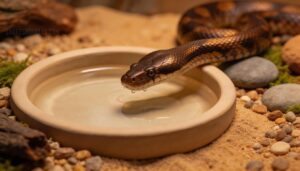
A wide, shallow design is one of the simplest ways to make hydration safer and more accessible. A dish with low sides lets your snake dip its snout without straining, and a nonslip bottom with a nonporous surface keeps things hygienic and stable.
The right size and shape, paired with a bowl anchor system, facilitates consistent hydration monitoring and prevents spills.
Low Sides and Sloped Edges for Easy Entry
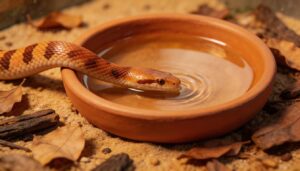
Think of sloped edges as a ramp your snake actually wants to use. A dish with low sides and a gentle incline removes every barrier between your snake and easy accessibility to clean water.
- Rim height stays between 0.5–2 cm for easy entry
- Entry angle stays gradual, reducing splash and stress
- Non-skid base prevents tipping mid-soak
- Scale-friendly edges with smooth edges protect delicate skin
- Nonporous surface resists biofilm near the entry lip
Round Vs Rectangular Designs for Different Enclosures
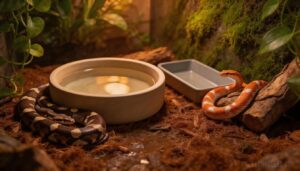
Your enclosure geometry fit matters more than you might think. Round bowls leave central floor space open and work naturally in cylindrical or compact setups, while rectangular dishes align better along long tank walls, improving space utilization efficiency.
Round designs also offer better stability on substrate because weight distributes evenly.
Species-specific shape preference matters too — ground dwellers often settle more comfortably with rectangular options placed along retreat zones.
Corner Bowls for Space-saving Setups
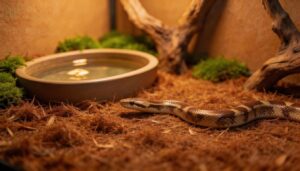
Corner bowls are space-saving solutions that tuck neatly into your tank without stealing floor real estate. Their Corner Integration Design and Modular Enclosure Layout make them ideal for snakes that like open central space to roam.
Here’s why corner placement works:
- Hidden Water Reservoir effect keeps water accessible without visual clutter.
- Low-profile design with a stable base prevents tipping on loose substrate.
- Nonporous surface simplifies daily cleaning routines.
Shape Features That Reduce Splashing and Tipping
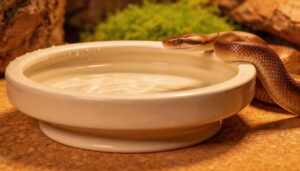
Splashing and tipping usually come down to size and shape. A bowl with Curved Interior Walls and Angled Rim Contours channels water back inward instead of onto your substrate.
Pair that with a Non‑Slip Base Design and Stabilizing Foot Rings and the dish stays put even when your snake leans in hard.
| Feature | What It Does | Why It Matters |
|---|---|---|
| Integrated Splash Guard | Redirects water inward | Keeps substrate dry |
| Low Sides + Wide Rim | Allows easy access | Reduces tipping risk |
| Stable Base + Foot Rings | Anchors dish in place | Prevents spills during soaking |
Select Safe Bowl Materials
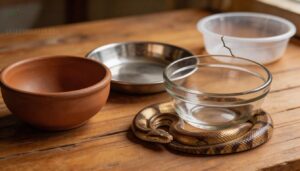
The material your snake’s water dish is made from matters more than most people realize. The wrong choice can lead to bacteria buildup, chemical leaching, or a bowl your snake tips over on day one.
The wrong water dish material invites bacteria, chemical leaching, or a spill on day one
Here’s what to look for before you buy.
Benefits of Ceramic, Glass, and Stainless Steel
Ceramic, glass, and stainless steel each bring something solid to the table.
Ceramic offers natural heat retention, weight stability, and a dishwasher safe, nonporous surface that resists bacterial inhibition.
Glass lets you spot biofilm at a glance without moving the bowl.
Stainless steel wins on impact resistance and long-term durability.
All three are easy to clean and genuinely safe for your snake.
When Food-grade Plastic or Resin Works Well
Not every keeper needs a ceramic fortress.
Food-grade resin and BPA-free formulations offer lightweight durability that’s practical for smaller setups.
These materials feature a nonporous surface that resists biofilm, and handle chemical compatibility with common reptile disinfectants, and are dishwasher safe for quick turnarounds.
Transparent inspection is easy too — you’ll spot residue fast.
For snake hydration on a budget, food-grade plastic genuinely delivers.
Why Non-porous Surfaces Matter for Hygiene
Surface texture matters more than most keepers realize. A nonporous surface doesn’t give bacterial growth anywhere to hide — no tiny pores trapping debris, no rough patches where biofilm prevention breaks down.
Mineral scale control stays manageable too, since smooth materials release buildup during routine cleaning.
Better disinfectant contact, scratch resistance, and odor reduction all follow naturally, making cleaning and maintenance best practices for snake water dishes far less of a chore.
Avoiding Toxic Coatings, Rust, and Porous Materials
That nonporous surface only protects your snake if the material itself is safe. Coating safety standards matter here — rust, toxic leaching, and porous absorption are the three problems worth avoiding.
- Metal rust prevention starts with choosing anodized or galvanized options.
- Epoxy sealing and powder coating durability make plastics long‑lasting and inert.
- Ceramic glaze safety and food‑grade resin keep nontoxic materials genuinely safe.
Smooth Interiors and Weighted Bases for Safety
Two features often overlooked can make or break a water dish: smooth interiors and weighted bases.
rough seams scratch scales; a bowl that tips, soaks the substrate instantly.
| Feature | Why It Matters |
|---|---|
| Smooth Rims | Prevent skin irritation during drinking |
| Glazed Interiors | Nonporous surface resists biofilm |
| Weighted Bases | Heavy base improves tipping prevention |
| Non-slip Pads | Grip glass floors for stability |
| Adjustable Ballast | Fine-tune weight after placement |
Improve Placement and Hygiene
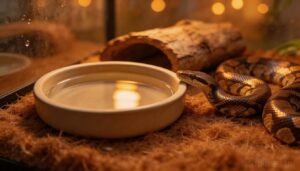
Even the best water dish won’t do much good if it’s sitting in the wrong spot or hasn’t been cleaned in a week. Where you place it and how you maintain it can make a real difference in your snake’s health.
Here’s what you need to know to get both right.
From their preference for soft-bodied insects to how seasonal availability shapes their diet, what rough green snakes eat in the wild tells you a lot about how to feed one well in captivity.
Positioning The Water Dish Within The Enclosure
Where you place the water dish matters more than most keepers realize.
A corner tucked away from heat sources is often ideal, as covered in this guide to choosing snake water dishes for humid climates—where placement directly affects humidity balance and your snake’s comfort.
Cool Side Placement keeps evaporation slow and humidity steadier. Practice Heat Source Avoidance by keeping the bowl well away from basking zones.
Hiding Spot Proximity encourages natural drinking behavior. Maintain a Clearance Buffer of at least two inches around the dish, and use Behavioral Observation to fine-tune the ideal spot over time.
Keeping The Bowl Stable on Different Substrates
Different substrates challenge bowl stability in different ways.
Base Weight Optimization means choosing a bowl heavy enough — ideally 300+ grams — to resist tipping on smooth glass or acrylic. Friction Pad Usage adds grip on loose coconut fiber or mulch. Suction Cup Mounting means it will hold firmly on glass floors.
Low-profile design improves weight distribution, while Rim Grip Enhancements steady the bowl on shifting substrate.
Changing Water Daily to Support Hydration
Fresh water isn’t just convenient — it’s essential. A daily water change routine keeps microbial growth control in check, since warm enclosure air speeds bacterial buildup quickly.
Stick to this simple routine:
- Swap in room-temp water every morning
- Check for cloudiness or odor — freshness monitoring takes seconds
- Identify contamination sources like substrate debris or post-soak residue
Consistent hydration starts here.
Cleaning Biofilm, Debris, and Shed Residue
Even a clean-looking bowl can hide a slimy biofilm layer beneath the surface. Follow these cleaning and maintenance best practices for snake water dishes to stay ahead of bacterial growth:
| Step | Method |
|---|---|
| Warm Soak Pre‑clean | Soften residue with warm water |
| Non‑abrasive Scrubbing | Loosen biofilm without scratching |
| Antimicrobial Rinse | Eliminate lingering bacteria |
| Complete Drying | Prevent regrowth between uses |
Regular Visual Checks on your smooth nonporous surface keep it easy to clean and safe.
Replacing Cracked or Damaged Dishes Promptly
A cracked bowl isn’t just ugly — it’s a health hazard. Do a Microfracture Check whenever you clean, because hidden fractures trap bacteria quickly.
An Urgent Swap within 12 hours prevents biofilm buildup on your nonporous surface. After Secure Disposal, sanitize the area and log the swap as your Replacement Record.
Durable construction and material safety features make future cracks far less likely.
Top 6 Snake Water Dishes
Finding a water dish that actually works for your snake doesn’t have to be complicated. These six options cover a solid range of sizes, shapes, and materials — so there’s something here whether you’re housing a hatchling or a full-grown boa.
Here’s what’s worth considering.
1. Zoo Med Rock Corner Water Dish
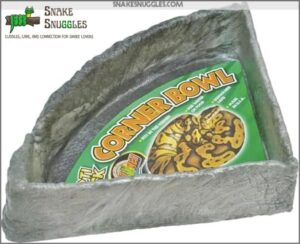
The Zoo Med Rock Corner Water Dish is a smart pick if your snake’s enclosure is running out of floor space. Its triangular shape tucks neatly into tank corners, so you’re not sacrificing room for hides or décor.
At 13.8 × 13.2 inches, with over a gallon capacity, it provides full-body soaking for most adult snakes.
The nonporous plastic surface cleans up easily, and the dishwasher-safe design keeps maintenance simple.
Just note that its 3.2-inch depth may challenge smaller or younger snakes.
| Best For | Owners of large snakes or reptiles (in enclosures 65+ gallons) who need a space-saving water dish that supports full-body soaking without eating up floor space. |
|---|---|
| Material | Plastic |
| Dimensions | 13.8 × 13.2 × 3.2 in |
| Easy to Clean | Dishwasher safe |
| Aesthetic Style | Assorted colors |
| Multi-functional | Water, food, or dig box |
| Species Suitability | Snakes, dragons, turtles, frogs |
| Additional Features |
|
- Corner-fit design keeps floor space free for hides and décor
- Holds over a gallon of water, great for full-body soaks and better hydration
- Dishwasher safe and easy to clean, so hygiene stays low-effort
- 3.2-inch sides can be tough for smaller or younger reptiles to climb in and out of
- Color is randomly assigned, so what you get may not match the product photo
- At 3.8 lbs, it’s a bit of a hassle to move around once it’s in the enclosure
2. Flushbay Extra Large Reptile Bathing Bowl
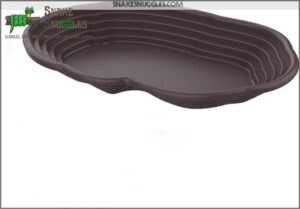
If floor space isn’t your constraint but your snake loves a long soak, the Flushbay Extra Large Reptile Bathing Bowl is worth a look.
At 13.39 × 9.84 inches with a ramp built right in, it makes entry and exit genuinely stress‑free — especially for juveniles who hesitate at the water’s edge.
The non‑porous plastic resists bacteria, and the shallow 1.97‑inch depth keeps things safe.
One heads‑up: those interior crevices need a little extra attention at cleaning time.
| Best For | Reptile owners with spacious enclosures who want a multi-use bowl that doubles as a soaking spot, feeding dish, and water source — great for turtles, tortoises, and snakes alike. |
|---|---|
| Material | Environmentally friendly plastic |
| Dimensions | 13.39 × 9.84 × 1.97 in |
| Easy to Clean | Smooth surface, rinse clean |
| Aesthetic Style | Naturalistic river design |
| Multi-functional | Water, food, or bath |
| Species Suitability | Turtles, snakes, lizards, tortoises |
| Additional Features |
|
- The built-in ramp makes getting in and out easy, especially for younger or slower-moving reptiles
- Works as a water bowl, food dish, and bathing pool all in one
- Non-porous plastic resists bacteria and wipes down quickly
- Takes up a decent chunk of floor space — not ideal for smaller tanks
- The shallow depth won’t cut it for reptiles that need a deep soak
- Those interior crevices can be a pain to scrub clean thoroughly
3. Exo Terra Extra Large Reptile Water Dish
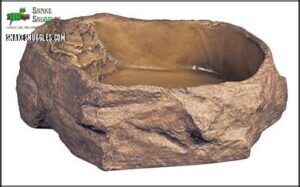
Want something a little more polished-looking without sacrificing function? The Exo Terra Extra Large Reptile Water Dish brings both to the table.
Its realistic rock exterior blends into desert and tropical setups alike, while the smooth, non-porous interior wipes clean in seconds.
At 9.7 × 10 × 2.5 inches and 16‑ounce capacity, it accommodates large snakes comfortably.
Built-in safety steps keep smaller animals from getting stuck, and the weighted base stays put even when your snake decides to bulldoze through it.
| Best For | Large reptile and amphibian owners who want a water dish that actually looks good in their terrarium setup. |
|---|---|
| Material | Stone-like resin |
| Dimensions | 9.7 × 10 × 2.5 in |
| Easy to Clean | Non-porous interior |
| Aesthetic Style | Rock-like exterior |
| Multi-functional | Water and soaking |
| Species Suitability | Reptiles, amphibians, insects |
| Additional Features |
|
- The rock-like exterior blends naturally into both desert and tropical enclosures
- Smooth interior makes cleaning quick and easy
- Safety steps protect smaller critters from drowning, and the stable base stays put
- Pricier than basic dishes doing the same job
- Reported dimension inaccuracies mean you should double-check sizing before buying
- Too big for smaller tanks — it’ll eat up a lot of floor space
4. Exo Terra Large Reptile Water Bowl
Step down a size and you’ve got the Exo Terra Large Reptile Water Bowl — a smart pick for medium to large snakes that don’t need an Olympic-sized pool. At 8.7 × 6.7 × 2 inches and weighing about 2.2 pounds, it stays firmly in place without dominating the enclosure.
The food-grade resin interior is smooth and non-porous, so cleaning takes minutes. Built-in safety steps protect smaller tank mates, and the natural rock finish looks right at home in almost any setup.
| Best For | Medium to large reptiles like ball pythons, tortoises, and toads that need a stable, easy-to-clean water source without taking over the enclosure. |
|---|---|
| Material | Food-grade resin |
| Dimensions | 8.7 × 6.7 × 2 in |
| Easy to Clean | Non-porous, biofilm resistant |
| Aesthetic Style | Rock-like exterior |
| Multi-functional | Water and soaking |
| Species Suitability | Tortoises, snakes, frogs, insects |
| Additional Features |
|
- Smooth, non-porous interior resists bacteria and wipes clean in minutes
- Built-in safety steps let smaller tank mates climb out safely
- Heavy base stays put even when animals bump or splash around
- Only comes in one size, so it may be too big for small or juvenile animals
- Shallow 2-inch depth won’t work for species that need to fully submerge
- At 2.2 lbs, it’s a bit of a hassle to move during tank cleanouts
5. Zoo Med Rock Water Dish
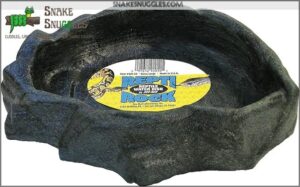
If you’re working with a Zoo Med Rock Water Dish, it keeps things simple without cutting corners. At roughly 4.3 × 2.8 inches, it’s compact but functional — ideal for hatchlings or juveniles that don’t need a full soaking pool.
The molded interior stairs are a smart safety touch, reducing drowning risk for smaller reptiles sharing the enclosure.
Made from recycled foamed polystyrene, it’s non-porous, easy to wipe clean, and stable enough that active snakes won’t send it sliding.
| Best For | Small reptiles and amphibians like hatchlings, frogs, and juveniles that need a shallow, safe water source in their enclosure. |
|---|---|
| Material | Recycled polystyrene |
| Dimensions | 4.3 × 2.8 × 0.2 in |
| Easy to Clean | Non-porous, wipe clean |
| Aesthetic Style | Rock-shaped |
| Multi-functional | Water or food dish |
| Species Suitability | Dragons, frogs, snakes, birds |
| Additional Features |
|
- Interior molded stairs lower the drowning risk for tiny reptiles and amphibians
- Non-porous recycled plastic wipes clean easily and won’t harbor bacteria
- Rock-like design blends naturally into terrariums and stays stable on loose substrates
- Only about 2 cm deep, so larger snakes or species that love a good soak will find it lacking
- Color is random — you might not get the shade you were hoping for
- Molded edges can come out slightly rough, so a quick inspection before use is a good idea
6. KooingTech Tortoise Water Bowl
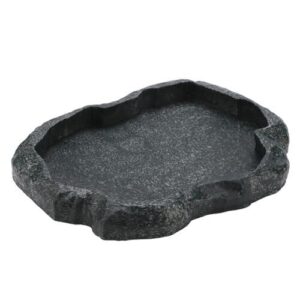
The KooingTech Tortoise Water Bowl is a solid pick if you’re housing smaller or mid-sized snakes on a budget. At $12.99, the ABS resin construction is non-porous, lightweight, and genuinely easy to clean — just a quick rinse and wipe keeps it fresh.
The shallow, wide profile gives your snake easy access without drowning risk, and the imitation stone finish blends naturally into most enclosures.
Just keep an eye on stability; active snakes can tip it.
| Best For | Budget-conscious reptile keepers housing smaller reptiles like geckos, bearded dragons, or juvenile tortoises who want a naturalistic-looking dish that’s easy to maintain. |
|---|---|
| Material | ABS resin |
| Dimensions | 7.09 × 5.51 × 0.79 in |
| Easy to Clean | Smooth, soap and water |
| Aesthetic Style | Imitation stone |
| Multi-functional | Water, food, or decor |
| Species Suitability | Snakes, lizards, geckos, tortoises |
| Additional Features |
|
- Non-porous ABS resin cleans up fast — soap, water, and a quick scrub and you’re done.
- Shallow design keeps water accessible without putting small or young reptiles at drowning risk.
- Imitation stone finish looks natural in any enclosure without the weight of real rock.
- Lightweight build means active or heavier animals can tip it over easily.
- Too shallow for larger turtles or species that need deeper water access.
- Can warm up under heat lamps, so placement in the enclosure matters.
Frequently Asked Questions (FAQs)
How do I choose the best water bowls for my Pet?
Think of a snake’s water dish as its personal oasis — get the size, shape, and material right, and you’re already halfway there.
Match the bowl to your snake’s size, choose non-porous materials, and keep it clean daily.
What is the best water dish for a pet?
The best water dish for your snake is one that fits its size, stays stable, and is easy to clean.
Ceramic or food-grade resin bowls with low sides and non-porous surfaces work great for most species.
What kind of reptiles eat resin?
No reptiles truly eat resin. It’s not digestible, offers no real nutrition, and can physically harm their teeth or jaws. Stick to species-appropriate prey or plant matter instead.
How big should my snakes water dish be?
Your snake’s water dish should be wide enough for one full coil and deep enough to allow soaking — roughly 2 to 3 inches for adults, shallower for hatchlings.
What to use as a snake water bowl?
Ceramic, glass, stainless steel, and food-grade resin are your best options. Each is non-porous, easy to clean, and safe for your snake. Avoid porous or toxic materials that trap bacteria.
Why do people put pennies in reptile water dishes?
Some keepers drop a pre-1982 penny into the water dish believing copper’s natural antimicrobial properties help slow bacterial growth between cleanings.
It’s a popular DIY hack, but most vets don’t recommend it.
How often should I replace my snakes water dish?
Change the water daily and replace the dish immediately if you spot debris, cracks, or scratches. After each feeding or shedding, swap it out to prevent bacteria buildup.
Can two snakes share a single water dish?
It’s best to avoid sharing. Two snakes in one dish raises the risk of bacterial spread, territorial stress, and contamination. Give each snake its own bowl to stay safe.
How do I stop my snake from defecating in water?
Most snakes defecate in water because soaking relaxes the cloaca.
Daily water changes, moving the dish away from their usual resting spot, and using a shallower bowl can break that habit quickly.
Should hatchlings have a separate dish from adults?
Yes, hatchlings need their own dish. A shallow bowl — no deeper than 1–2 cm — keeps them safe from drowning and makes daily cleaning far easier without disturbing adults.
Conclusion
Think of water as your snake’s lifeline—a quiet necessity that ripples through every aspect of their health. Choosing the right dish isn’t just practical; it’s a commitment to their survival.
By prioritizing how to choose a water dish for snakes—matching size to their body, selecting non-porous materials, and placing it thoughtfully—you create a sanctuary where hydration and safety flow together.
This small detail anchors their well-being, ensuring they thrive in the world you’ve built for them. Your care makes all the difference.