This site is supported by our readers. We may earn a commission, at no cost to you, if you purchase through links.

Your ball python tips its head sideways, corkscrews its neck, and lunges in the wrong direction. Your first instinct is to back off and call it aggression. That instinct is understandable, but it’s wrong.
Ball python head wobble isn’t a temperament issue. It’s a congenital neurological condition rooted in malformed vestibular structures, and what looks like defensive posturing is often a snake struggling to orient itself. Misreading these signals leads to handling mistakes that spike stress and worsen visible symptoms.
Understanding what’s actually happening changes how you manage everything from the enclosure to the feeding dish.
Table Of Contents
- Key Takeaways
- Is Ball Python Head Wobble Aggression?
- Why Ball Python Wobble Happens
- What Head Wobble Looks Like
- Wobble Triggers and Misread Behaviors
- How to Calm a Wobbly Python
- When Head Wobble Needs Veterinary Care
- Frequently Asked Questions (FAQs)
- Why does my ball python’s head wobble?
- How to tell if a ball python is being aggressive?
- What is the wobble syndrome in ball pythons?
- How to tell if a snake has neurological problems?
- Can wobble worsen as the snake ages?
- Do wobble snakes recognize their owners over time?
- Are wobble snakes legal to sell everywhere?
- Can diet affect wobble symptom severity?
- Do wobble snakes experience pain from their condition?
- Can wobble affect a ball pythons overall lifespan?
- Conclusion
Key Takeaways
- Ball python head wobble is a congenital neurological condition caused by malformed inner-ear (vestibular) structures, not aggression or temperament—what looks like lunging is usually disorientation.
- The condition is genetic and often inherited through breeding lines, so responsible breeders must track lineage and disclose wobble history; there’s no universal ban on selling affected snakes.
- You can’t cure wobble, but you can reduce episodes with stable temperatures (88–90°F warm side, 76–80°F cool side), 60–70% humidity, slow side-approach handling with two-point support, and calm tong-feeding of prekilled prey.
- Seek a reptile vet immediately if the wobble rapidly worsens, or if you see seizure-like thrashing, inability to right itself, or repeated falls—these signal deterioration or illness beyond baseline wobble.
Is Ball Python Head Wobble Aggression?

Head wobble is a neurological symptom, not a personality or temperament trait. When your ball python tilts, sways, or loses control of its head positioning, that’s a motor and vestibular sign, not evidence that it wants to bite you.
Recognizing these signs early matters, since preventing respiratory infections in ball pythons is far easier than treating a serious neurological or pulmonary condition after it takes hold.
Ball python head wobble is a neurological symptom, not a sign of aggression
Ball python head wobble aggression is one of the most common misreads owners bring to me. A snake that stumbles forward or tilts awkwardly can look like it’s lunging, but unsteady movement and defensive behavior are genuinely separate things. True defensive behavior is context-driven: it shows up when the animal feels cornered, restrained, or directly threatened, not simply because it lost its balance.
Your snake isn’t angry because it wobbles. Focus on the triggers behind any strike, not the motion itself.
Why Ball Python Wobble Happens

Ball python head wobble isn’t random—it traces back to specific structural and genetic causes that are worth understanding before you make any husbandry or breeding decisions. Two factors drive the condition, and knowing both changes how you manage an affected snake. Here’s what’s behind it.
Inner Ear Malformations
Although it looks behavioral, head wobble is a neurological condition rooted in the inner ear. Malformed vestibular structures send corrupted orientation signals to the brainstem, disrupting your snake’s ability to properly stabilize its head during movement.
This disruption mirrors the broader pattern of vestibular dysfunction and abnormal posturing in snakes, where faulty inner-ear signals cascade into visible neurological symptoms.
Vestibular system dysfunction is congenital, meaning it’s present from hatching. Balance loss episodes worsen under stress, and a reptile vet can confirm the diagnosis.
A reptile veterinary care guide can help you understand what to expect at that first appointment and how to track symptom patterns over time.
Breeding Ethics and Risk
The vestibular malformation doesn’t appear in isolation. Ball python wobble stems from a genetic mutation that propagates when breeders pair affected or related animals, raising your odds of purchasing an impaired animal.
Responsible breeding practices require tracking lineage, documenting wobble history, and disclosing known risk. Without that transparency, animal welfare suffers across generations, and breeding ethics collapse under commercial pressure.
What Head Wobble Looks Like
Once you understand what structurally drives this condition, recognizing it in your own snake becomes much clearer.
The most visible sign is a side-to-side head tremor during movement or handling. Some snakes show only mild swaying; others display erratic corkscrewing of the head and neck. A few can even strike and feed while inverted. You may also notice:
- Difficulty tracking a straight path, with the body veering unpredictably side to side
- Inhibited righting reflex, leaving the snake upside down and unable to self-correct
- Loose tail grip and noticeably poor muscle tone
Balance loss episodes can vary a lot in severity. Wobble syndrome can range from barely detectable to constant, severe coordination loss. Younger snakes often show the most pronounced head wobble.
Handling affected snakes with the calm, supportive techniques used in comfortable snake handling positions can help reduce stress that may otherwise worsen wobble episodes.
Wobble Triggers and Misread Behaviors
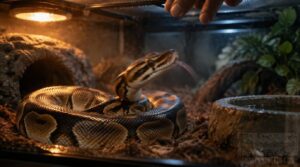
Often, what looks like defensive vs aggressive behavior in a ball python with wobble syndrome is actually a sequence of environmental triggers amplifying a neurological deficit.
Startle response overload is one of the most common culprits. Opening the enclosure quickly from above, approaching with fast movements, or disturbing the snake mid-rest can spike arousal and increase visible head instability. Many keepers misread this heightened movement as a threat display when it isn’t one.
Feeding sessions add another layer of confusion. When you offer prey near the animal’s head, feeding-focused reaching can overlap with wobble, making a misdirected lunge look hostile.
Watch for stress signals like rapid tongue-flicking and persistent body tension. These repeated handling mistakes cement the misread over time.
How to Calm a Wobbly Python
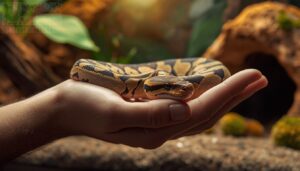
You can’t eliminate the wobble, but you can greatly reduce how often it disrupts your snake’s daily life. Three main management areas make the biggest difference: enclosure setup, handling technique, and feeding method. Each one targets a specific stressor that amplifies vestibular symptoms.
Low-Stress Enclosure Setup
Your enclosure’s doing more work than you’d think. In reptile husbandry, a snake with neurological deficits is far more sensitive to environmental instability.
Keep a steady temperature gradient: warm side at 88-90°F, cool side at 76-80°F. Maintain humidity levels around 60-70% with adequate airflow. Provide a snug hide on each side so your python can fully conceal without stress-driven roaming.
Safer Handling and Support
Hold your wobbly python like a fragile branch, not a rope. Approach from the side, keep the head pointed away from your face, and use two-point support: one hand behind the head, one under the midsection. If you’re new to handling, reptile snake handling gloves can give you extra confidence while you build the steady, calm grip your python needs to feel secure.
Your slow handling technique lets the snake wrap around you for stability. Watch for the S-shaped strike posture; it means return the snake.
Handling safety depends on gentle grips, never tail-hanging. Always follow proper handling frequency guidelines, limiting sessions to 1-2 times weekly to keep your ball python tame without causing unnecessary stress.
Easier, Safer Feeding Methods
Switching to prekilled prey items isn’t a compromise, it’s smarter care for a wobbly snake. Ball python head wobble aggression at mealtime is often feeding time overstimulation, not true hostility.
- Use tongs, not bare hands
- Offer fully thawed prey only
- Feed in a separate, calm container
- Try assisted feeding if feeding refusal persists
Adjust your approach before you escalate contact.
When Head Wobble Needs Veterinary Care

Most ball pythons with baseline wobble live stable, manageable lives, but certain signs demand a reptile vet appointment without delay.
Rapid worsening of wobble, seizure-like thrashing, inability to right itself, or repeated falls are urgent neurological symptoms. These aren’t behavioral quirks you can manage at home with better lighting or handling technique.
Ball python head wobble aggression is sometimes confused with neurologic deterioration, which is why veterinary diagnosis matters. A vet can distinguish baseline inherited wobble from infectious disease, inner-ear injury, or metabolic imbalance through a thorough clinical exam.
Consistent snake health monitoring gives you a baseline. When your python’s wobble suddenly intensifies, takes on new postures, or appears alongside vomiting or open-mouth breathing, call your vet that same day. A reptile health log journal makes it easy to spot these warning patterns early by keeping dated notes on wobble frequency, appetite, and posture in one place.
Frequently Asked Questions (FAQs)
Why does my ball python’s head wobble?
Like a ship with a failing gyroscope, your snake has simply lost reliable, steady balance. Ball python wobble is a neurological condition rooted in vestibular malformation, and it’s most often inherited through selective breeding lines.
How to tell if a ball python is being aggressive?
Studies show nearly all ball python bites occur as purely defensive responses, not true aggression. You’ll spot true defense by a coiled strike posture, the head tracking your hand, and a very tense, rigid neck.
Knowing these warning signs can prevent most incidents, and understanding ball python bite behavior and prevention helps new keepers build confidence handling their snake safely.
What is the wobble syndrome in ball pythons?
Wobble syndrome isn’t a personality quirk or a passing behavioral phase. It’s a genetic neurological condition causing involuntary head tremors and uncoordinated movements in ball pythons, and it appears consistently from early in life onward.
How to tell if a snake has neurological problems?
Watch for head tremors at rest, an inability to right itself, disorganized movement, or persistent mouth-gaping. These neurological symptoms, especially when they progress quickly, strongly point to a serious neurological condition needing prompt veterinary assessment.
Can wobble worsen as the snake ages?
Some owners report increased severity over time, but confirmed longitudinal data doesn’t exist yet. Stress, poor husbandry, and handling changes can worsen symptoms at any age, making true progression difficult to distinguish from care failures.
Do wobble snakes recognize their owners over time?
Your snake recognizes you through scent, not sight. Its vomeronasal organ detects your unique chemical signature, and weeks of gentle handling teach it you’re safe. Expect calmer muscle tone and relaxed exploration, not affection.
Are wobble snakes legal to sell everywhere?
The theory that wobble snakes are banned everywhere is false. No universal ban exists; they’re legal in the US and most countries. The IHS restricts spider sales at UK shows only, though ethical breeding practices demand disclosure.
Can diet affect wobble symptom severity?
Like fueling a car with better gas won’t fix a bent axle, diet won’t straighten a neurologic wobble. No evidence shows prey type or nutrients alter severity; focus instead on reducing feeding refusal, gastrointestinal irritation, and parasite-induced inflammation.
Do wobble snakes experience pain from their condition?
You can’t confirm pain from wobble alone. The condition stems from vestibular defects, so your snake likely experiences disorientation rather than pain unless secondary injury or inflammation develops. Watch for distress, and discuss pain management in reptiles with your vet.
Can wobble affect a ball pythons overall lifespan?
Here’s the irony: everyone asks about lifespan first, yet no verified evidence links ball python wobble to shortened longevity. This neurological condition may affect quality of life, but lifespan impact remains unproven. Prioritize proper reptile care.
Conclusion
Picture a snake trying to navigate a world that keeps tilting beneath it. That’s your ball python during a wobble episode, and it changes everything about how you respond.
Ball python head wobble aggression is a mislabel, not a diagnosis. Once you see the corkscrew as disorientation rather than defiance, you can build low-stress routines that actually work.
Your snake isn’t attacking you. It’s asking for steadier ground, and now you know how to provide it.